
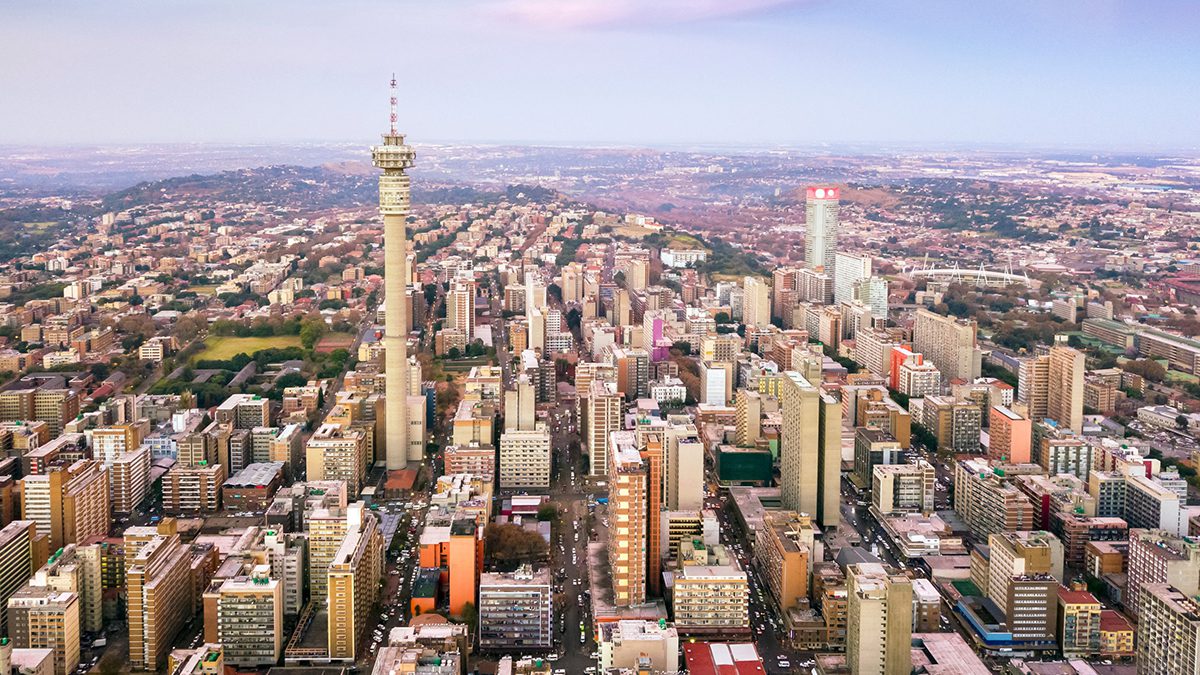
With the national government halting funding to Johannesburg and major metros, local councils face mounting pressure to resolve budget shortfalls and settle utility arrears. Treasury insists the freeze is a corrective, short-term measure, pending strict compliance with statutory financial management requirements.
By Staff Reporter
National Treasury has blocked a massive financial transfer to the City of Johannesburg and dozens of other local governments, utilising its toughest constitutional powers to crack down on persistent municipal financial mismanagement.
The decision means the national government is temporarily withholding the July tranche of the municipal equitable share allocation—an unconditional grant that local councils rely upon heavily to fund basic operations and provide free basic services to impoverished households.
Johannesburg is part of a broad fiscal crackdown, with the Treasury halting funding to approximately 60 non-compliant municipalities across South Africa, including other prominent metropolitan hubs such as Mangaung, Nelson Mandela Bay, and Buffalo City.
Constitutional Enforcement and Structural Triggers
The intervention is being driven directly by Finance Minister Enoch Godongwana, who invoked Section 216(2) of the Constitution to halt the funding. National Treasury confirmed that the drastic step was taken due to a severe and ongoing disregard for statutory financial frameworks.
In an official statement issued on behalf of the Minister, National Treasury outlined the legislative basis for the freeze: “The decision to withhold these funds follows the failure of the affected municipalities to meet critical statutory requirements, including the adoption of fully funded budgets as mandated by the Municipal Finance Management Act (MFMA), and the failure to honour undisputed long-outstanding debts owed to Eskom and various Water Boards.”
The structural failures prompting the intervention include:
Unresolved Wasteful Spending: Municipalities have consistently failed to process, investigate, or implement consequence management for Unauthorised, Irregular, Fruitless and Wasteful Expenditure (UIFWE) via their Municipal Public Accounts Committees.
The Adoption of Unfunded Budgets: Several cities approved spending plans for which there was no actual revenue, a direct violation of the MFMA.
Mounting Bulk Utility Arrears: The affected municipalities have failed to pay bulk utility providers on time, leaving Johannesburg alone facing an Eskom debt of approximately R3.73 billion and a Rand Water exposure of R1.23 billion. Treasury noted that this non-compliance is “threatening the financial sustainability of water boards and Eskom.”
The R10.3 Billion Johannesburg Wage Pact: Tensions between Treasury and Johannesburg escalated significantly after the metro agreed to a multi-billion rand salary agreement with municipal unions—a deal Minister Godongwana previously warned was both illegal and completely unaffordable.

The City of Johannesburg Pushes Back
The temporary withholding of funds is expected to place immense pressure on Johannesburg’s liquidity as it attempts to fund its recently approved R97.1 billion budget for the 2026/27 financial year.
However, the office of Johannesburg Executive Mayor Dada Morero has downplayed the severity of the standoff, rejecting assertions that the continent’s primary economic hub is facing insolvency.
Morero previously maintained that the metro remains financially viable and confirmed that the administration has already submitted formal remedial frameworks to the national government to resolve the budget and governance dispute.
The South African Local Government Association (Salga) has adopted a measured approach as the crisis unfolds: “Salga will in due course communicate its position in relation to the current process,” said spokesperson Motalatale Modiba.
Strict Conditions for the Release of Funds
National Treasury has emphasised that the enforcement of Section 216(2) is a “constitutional mechanism aimed at restoring fiscal discipline” and is intended to be a corrective short-term measure rather than a permanent punishment. Consequently, the department stated that it does not foresee an immediate impact on day-to-day service delivery.
Nevertheless, the national funding will remain frozen until Johannesburg and the other affected councils meet strict, non-negotiable compliance benchmarks. Godongwana has stipulated three primary criteria for the immediate release of the money:
Formally Approved Repayment Plans: Municipalities must submit formal, council-approved repayment plans and signed service-level agreements concluded with Eskom and the relevant Water Boards to clear historical debt.
Credible Budget Adjustments: Municipalities that adopted unfunded budgets must provide a credible, council-approved plan illustrating how the municipality will adjust its budget to a funded position during the upcoming mid-year budget assessment.
Proof of Current Account Payments: Councils must provide verifiable proof of payment for their current Eskom and Water Board accounts for June 2026 to ensure no further debt accumulates.
National Treasury has committed to a rapid turnaround once compliance is achieved, confirming that the withheld equitable share allocations will be released to the respective municipalities within 48 hours of satisfying these conditions.