

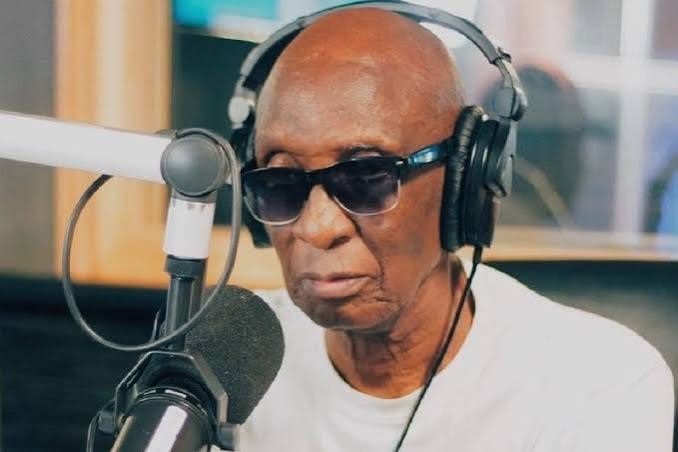
Babsy Mlangeni’s career was built on talent, perseverance and an instinctive understanding of what makes a song endure. From the All-Rounders to his solo recordings, he made music that crossed boundaries of language, disability, geography and time.
By Staff Reporter
For nearly six decades, Babsy Mlangeni gave South African music a voice that could carry tenderness, longing, humour and resilience in the same breath.
A singer, guitarist and multi-instrumentalist who refused to let blindness define the limits of his life or his music, he became one of the country’s most enduring Black musicians, with songs that travelled across language, geography and generations.
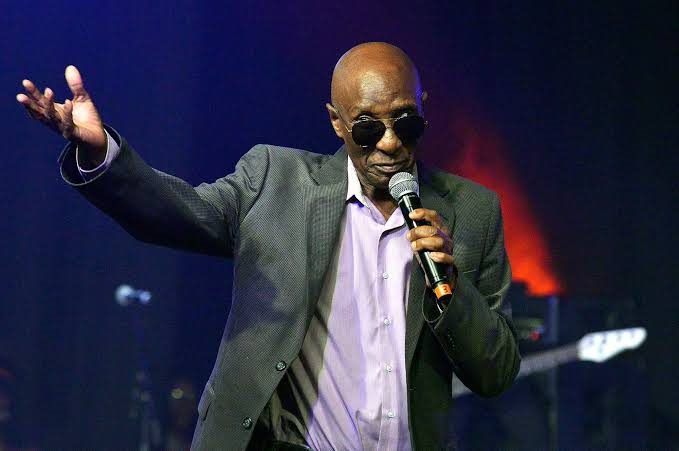
At the heart of that legacy was his ability to make a song feel intimate even when it belonged to an entire country. Sala Emma, the tender Sesotho ballad he wrote for his wife, Emma, was a love song in the most personal sense, yet it escaped the boundaries of the private and became part of the soundtrack of South African life.
Decades after its release, Mlangeni could still marvel at the way it had travelled beyond the language in which it was written. The song had found its own audience in KwaZulu-Natal, the Eastern Cape, Cape Town and far beyond, carried by something more instinctive than translation.
That was Mlangeni’s particular gift. He understood that music does not need to speak the same language as its listener to reach them. A melody can cross a border before a word does; a voice can carry the feeling of a place, a time and a life without explaining itself.
Through the All-Rounders and his solo work, across Sesotho, isiZulu and isiXhosa, Mlangeni helped shape a strand of South African soul that was unmistakably local yet never confined by locality.
He died on Thursday, 1 October 2026, aged 83, after a short illness, leaving behind a body of work that had long since outgrown the circumstances in which it was made. His career was forged in an era of racial discrimination, limited opportunity and widespread misunderstanding of disability, yet his enduring achievement was not that he overcame those barriers. It was that he made music of such conviction that the barriers became secondary to what people heard.
Mlangeni’s story is therefore not only one of perseverance. It is the story of a musician who knew what a good song could do, and spent a lifetime proving it.
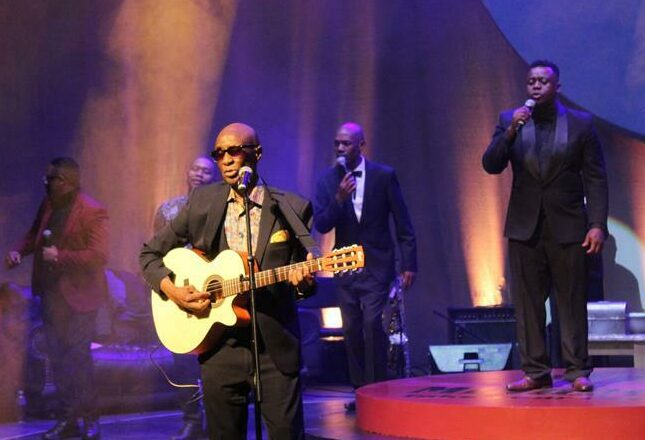
The Boy Who Heard Music Everywhere
Bernard “Babsy” Mlangeni was born on 24 February 1943 in Orlando East, Soweto. He lost his sight at the age of three, at a time when blindness was poorly understood, and children could be cruel towards anyone who appeared different.
His parents worked full-time and eventually sent him to Athlone School for the Blind in Bellville, outside Cape Town. It was there that music began to offer him something larger than a pastime. He joined a student band and discovered the possibilities of playing with other musicians, while the instinct to make music had already been alive in him for years.
As a child, he had fashioned his own guitar from old oil cans. It was a modest instrument made from whatever was available, but the impulse behind it was anything but modest. Mlangeni wanted to make sound. He wanted to understand how an instrument worked and what could be drawn from it.
His mother later bought him a radiogram and a guitar. He bought records and listened closely, absorbing the music around him. That habit of listening would become as important to his musicianship as the instruments he learned to play.
He became a multi-instrumentalist, moving between guitar, harmonica, saxophone, flute and piano, as well as developing the voice that would become his most recognisable instrument.
Music was not something he approached from a single direction. He heard its different parts and understood how they could sit together.
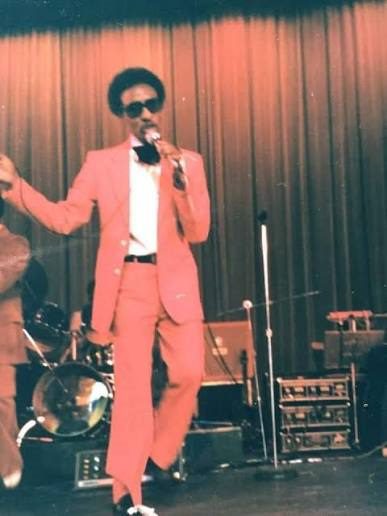
He completed his Junior Certificate, equivalent to Grade 10 and the highest secondary-school qualification available to African pupils in those years, but the classroom was never going to be the full measure of his education. His deeper schooling was taking place through records, instruments, rehearsals, performances and the musicians with whom he shared the stage.
The All-Rounders And The Birth Of A Sound
In 1962, in Mapetla, Soweto, The All-Rounders came together.
The early group included composer and multi-instrumentalist Jimmy Mojapelo, Mlangeni on lead vocals, Koloi Lebona on guitar, Simon Falatsi on guitar, saxophone and vocals, Munich Sibiya on drums and John Mothopeng on piano.
For young musicians in that era, forming a band was not merely about entertainment. It was about finding a way into a world that offered very few doors. The All-Rounders gave these musicians a place to experiment, perform and develop a sound of their own.
The group eventually broke up when most of its blind members chose the security of permanent employment. Mlangeni and Lebona made a different decision. In 1967, they chose music as a profession.
The new All-Rounders brought together Mlangeni as lead singer, Moses Tau on vocals, Lebona on lead guitar, Clive Ncaphayi on rhythm guitar, Peter Sexwale on bass and Mickey Lebona on drums.
What followed was not simply a successful band career. The All-Rounders were part of a musical movement that was giving South African audiences something that sounded both familiar and new. Their debut album, Coming Home, produced Sala Emma, and the song announced Mlangeni as a singer whose emotional range could turn a personal story into a communal one.
The sound that emerged around this period would come to be associated with South African soul. It carried the influence of the music Mlangeni had absorbed from records, but it was not an imitation of elsewhere. It belonged to the streets, townships, dance halls and homes of South Africa.
And at its centre was a voice that did not need to shout to command attention.
A Love Song That Belonged To Everyone
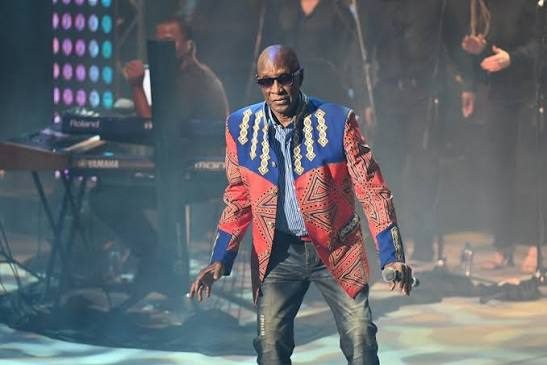
Mlangeni met Emma in 1966. They married in 1968.
It is difficult to separate the Sala Emma from the man because the song contains something essential about the musician. It is affectionate without becoming sentimental, intimate without becoming insular. Written for the woman he loved, it travelled far beyond the room in which that love was first expressed.
In 2025, Mlangeni told 702 that Sala Emma had become a favourite in KwaZulu-Natal, the Eastern Cape and Cape Town, despite being sung in Sesotho. He could not quite explain why the song had been selected as a single all those years earlier.
“I don’t know what made us choose that song,” he said. “It just came, and I think it’s how God planned it.”
There is something revealing in that answer. Musicians can write a song, record it and release it, but they cannot dictate what happens afterwards. A song acquires a life of its own once it enters the ears and memories of listeners.
Bua Nnete, released in 1972, followed, and Mlangeni continued to build a repertoire that moved between languages and musical registers. Years later, the song would find its way into the Grade 10 to 12 music curriculum, giving generations of South African pupils another route into his work.
His catalogue grew through the decades: Soul of Babsy in 1977, Nansi Lendoda in 1979, Music Was Born In Africa in 1983, Special Angel in 1985, Babsy 2001 in 2001 and Awukho Umsebenzi in 2006.
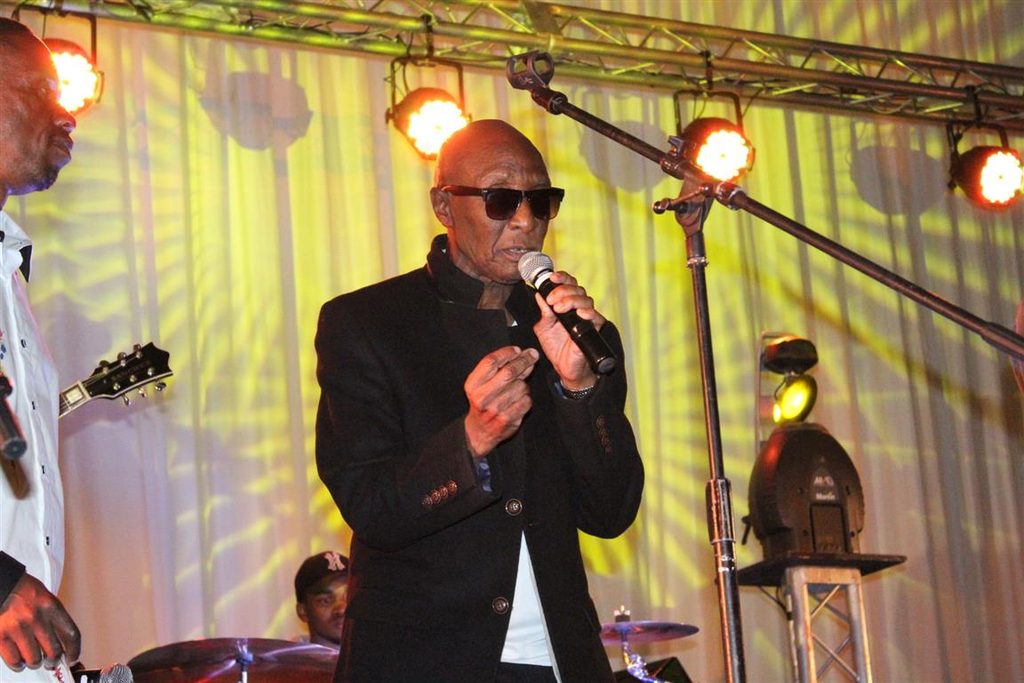
The singles told their own story: Sala Emma, Bua Nnete, Thekeni, Hey Mr Taxi Driver, Mapule and Music Was Born In Africa.
But a list of titles cannot quite explain what Mlangeni contributed. His importance lies in the space between the words, in the way his voice sat against the instruments, in the emotional intelligence of a melody and in the ability of a song to sound rooted in its own country while remaining open to anyone willing to listen.
He Wanted The Music To Speak
Blindness was always part of Mlangeni’s story, but he resisted allowing it to become the story.
He knew the prejudice that surrounded disability. He knew what it meant to enter rooms in which people had already decided what a blind man could or could not do. In 2025, he recalled the attitude he had encountered throughout his life.
“People actually thought blind people are just there to beg,” he said.
His answer was not a speech. It was a career.
Mlangeni wanted listeners to hear the music for what it was, rather than constantly measuring it against his disability. His blindness shaped the circumstances of his life, but it did not determine the range of his musicianship.
That is why the description of him as a blind musician, while factually important, can never be the whole story. He was a singer who could carry a lyric, a guitarist who understood the conversation between rhythm and melody, and a musician who moved comfortably among several instruments. He was also a composer and bandleader whose work helped open a path for other musicians.
Among those who followed that path was Steve Kekana.
When Kekana died in 2021, Mlangeni recalled that the younger musician had looked at his own circumstances and asked himself: if Babsy Mlangeni can make it, why can’t I?
The significance of that memory was not that one blind musician had somehow become an inspirational symbol for another. It was that visibility can change possibility. When people see someone like themselves occupying a space they had been told was closed to them, the walls of that space can begin to look less permanent.

Mlangeni and Kekana helped prove that a musician did not have to see the world in the conventional sense to make other people see it differently through music.
The Recognition Came Later
The honours accumulated over the years, although by then Mlangeni’s music had already established its place.
In 2017, he received a South African Music Award for Lifetime Achievement alongside Rebecca Malope and Don Laka.
In December 2018, he was named in a National Assembly debate alongside Miriam Makeba, Dorothy Masuka, Mahlathini and the Mahotella Queens as part of a discussion of artists whose work reflected the apartheid era and the society in which they lived.
In August 2025, at the National Arts and Culture Awards at Sun City, he received the Artist Living With Disability Award.
The awards mattered, but they did not create the legacy. They recognised work that had been travelling through South African homes and memories for decades.
By the time he turned 82, Mlangeni had spent 58 years making music professionally, and he still did not describe himself as retired.
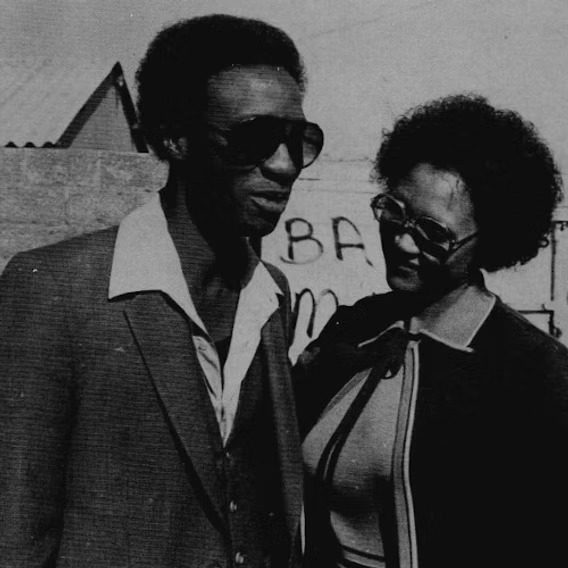
At a birthday tribute hosted by the Siphiwe Msimango Foundation at Diepkloof Hall in Soweto on 23 February 2025, the eve of his birthday, there was still the familiar warmth and humour that had accompanied him through his career.
He joked: “Now every blind man is called Babsy!”
The joke carried more than laughter. It showed how thoroughly the name had travelled. Babsy Mlangeni had become shorthand for a possibility that once seemed unlikely: a Black blind man could become a star, build a career in music and leave a body of work that would outlive the circumstances that produced it.
What A Musician Leaves Behind
Tributes after his death described him as a major figure in South African music. The South African Music Rights Organisation remembered him as an influential voice whose career stretched across nearly six decades. Others spoke of his humour, generosity and the way his music had accompanied generations.
One admirer, Bhoza Mphela, captured something central to Mlangeni’s musicianship when he said that music is not only seen but felt deep within the soul.
That is perhaps why Mlangeni’s work has endured.
He understood something that every great musician eventually learns: the audience does not remember the technical details of a career in the way historians do. They remember what a song did to them. They remember where they were when they heard it, who they were with, who they loved, who they lost, how young they were, how old they had become. They remember the voice before they remember the date on the record.
For Mlangeni, that journey began with a boy making a guitar from old oil cans and listening intently to music on a radiogram. It passed through Athlone School for the Blind, the All-Rounders, township stages, recording studios and decades of performances. It moved through Sesotho, isiZulu and isiXhosa. It passed through Bua Nnete, Mapule, Music Was Born In Africa and all the other songs that filled out his remarkable career.
But it keeps returning to Sala Emma.
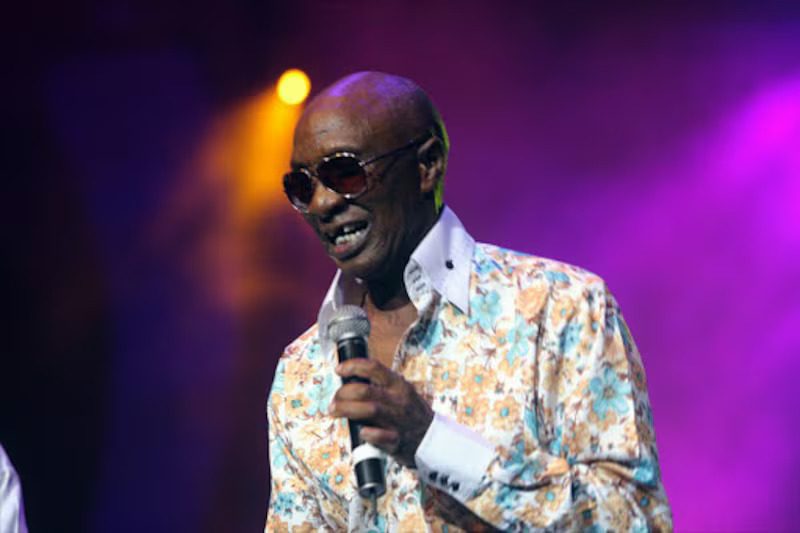
A man wrote a song for his wife. He sang it, recorded it and sent it into the world. Somehow, without losing its intimacy, the song became something thousands of other people could call their own.
That may be the most beautiful measure of Babsy Mlangeni’s contribution to South African music. He did not only make songs. He made room inside them for other people’s lives.
And when the music reached them, they heard themselves there.