By Themba Khumalo
The news of his passing on the evening of 15 July 2026 did not register as a headline; it felt like a sudden, quiet hush falling over a crowded room. At the age of 63, Seputla Sebogodi—the boy from Selborne who once herded cattle under the vast Limpopo sky—took his final bow.
For South Africans, he was not an actor who stepped into a frame when the cameras rolled; he was a mirror to our collective soul.
To watch him perform was to witness a master craftsman at work, a man who understood that the distance between a roar of laughter and a silent tear is only a heartbeat.
The Final Act
There is a singular, heartbreaking poetry in the way Seputla Sebogodi chose to close his script.
Barely a fortnight before his passing, as winter gripped the Eastern Cape, the Dicks venue at the Monument in Makhanda was filled with the familiar, electric crackle of live theatre. There, on stage at the National Arts Festival, stood Sebogodi.
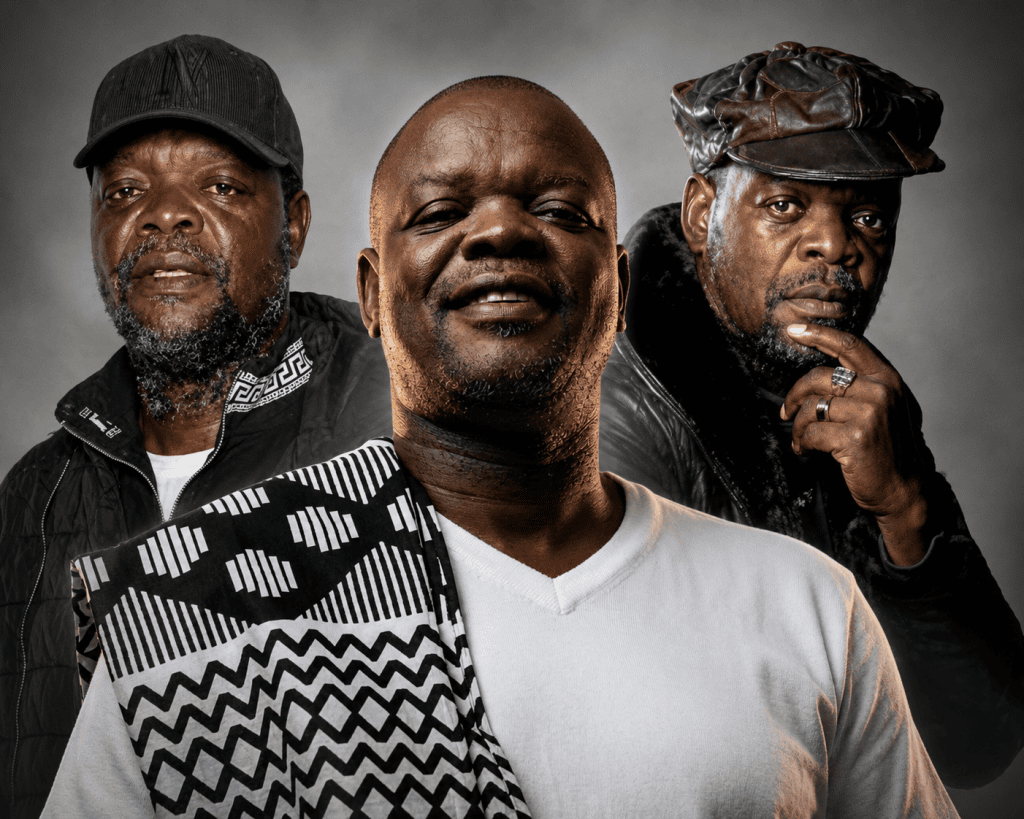
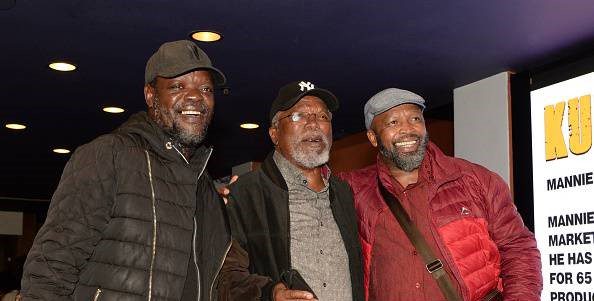
Alongside fellow giants Jerry Phele and Patrick Sanku Bokaba, he was breathing raw, ancestral fire into Black Moon—the eighty-eighth stage production of his life—and holding the theatre in his thrall.
He was not just acting; he was breathing life into a story of pain, pride, and our tangled history. He was where he always belonged: under the hot, unforgiving glare of the stage lights, holding an audience in the palm of his hand.
It was a fitting final act. Sebogodi did not fade away in quiet retirement; he exited the stage with the dust of the boards still on his boots.
From the Dusty Earth of Selborne to the Lights of the City
To understand the sheer magnitude of Sebogodi’s contribution to our national cultural landscape, one must look back to where the river began.
Born in Pretoria’s Selborne in 1962, his early years were defined by the quiet rhythms of Limpopo, where he worked as a herd boy. Yet, even amongst the cattle and the thorn trees, a performance was brewing.
His father’s sermons as a pastor in the Zion Christian Church provided his earliest grounding in the power of the spoken word, the cadence of delivery, and the spiritual weight of gospel music.
He did not walk a paved path into the arts; he carved it out of sheer willpower. In 1982, a young Sebogodi stepped into the orbit of Gibson Kente—the undisputed father of township theatre—and was cast in Now is the Time. It was a baptism of fire.
The production, a raw and politically charged piece of protest theatre also associated with My Troubled Land, was deemed so dangerous by the apartheid regime that it was swiftly banned. Yet, the censor’s gavel could not extinguish what had been ignited.
Under Kente’s rigorous tutelage, Sebogodi did not just learn how to act; he learned how to survive.
In that creative crucible, he discovered that a true performer must be a chameleon: able to sing, to dance, to direct, and to command a space through nothing but physical presence.
This forty-four-year journey was one of constant reinvention. When he burst onto our television screens in 1988 as the slick, silver-tongued Nkwesheng in the Sepedi drama Bophelo ke Semphego, he became an overnight sensation. He captured the restlessness, the charm, and the contradictions of a generation standing on the cusp of major change.
The Canvas of a Chameleon: From the Flicker of the Screen to the Sacred Boards
To look at the vast expanse of Seputla Sebogodi’s four-decade career is to witness an extraordinary study in artistic shape-shifting. He refused to be contained by a single medium, moving effortlessly between the intimacy of the living room screen, the grandeur of the cinema lens, and the sacred, dusty boards of the theatre.
He lived a hundred lives in one, ensuring that South Africans never quite knew where his own spirit ended and his characters began.
His television journey was a chronicle of our collective transition. Following his breakout as the slick, silver-tongued Nkwesheng, he pivoted to comic warmth, becoming a beloved fixture of the mid-1990s as a series regular in the groundbreaking sitcom Suburban Bliss, whilst also lending his talents to early television dramas like Konings, Big Time II, and Winner/Loser.
By the time he entered the boardroom of Generations as Kenneth Mashaba in the mid-2000s, he was ready to redefine South African television. As the cold-eyed, sharp-suited corporate emperor, Sebogodi did not just play a villain; he elevated the archetype to Shakespearean tragedy, earning a SAFTA Award in 2010.
With a tilt of his head, a narrowing of those piercing eyes, and a voice that rasped like dry autumn leaves, he created a character we loved to despise, proving that popular television could be a space for high art.
Yet, he never allowed the industry to pigeonhole him. In his later years, he painted on a far wider dramatic canvas. He brought a quiet, menacing gravity to The Republic as Moses—a performance honoured with another SAFTA for Best Supporting Actor—and bared his teeth as the formidable ex-prisoner Mohumi Ditshwene in the telenovela The River.

Whether he was breathing life into Solomon in Rhythm City, Mthethwa in the faith-based drama Redemption, or occupying his long-running role in Scandal!, his presence was magnetic.
Perhaps his most daring departure came in 2025 with Six in the City, where he shed all previous personas to deliver an acclaimed, highly versatile performance as a gay taxi owner, proving that his artistic courage remained undiminished to the very end.
On the silver screen, Sebogodi’s face was a landscape of unspoken history. His early film work in the 1990s and early 2000s—including Taxi to Soweto, Ligstraal, In Broad Daylight, and The Quarry—helped lay the foundations of a democratic South African cinema.
He brought an undeniable, gritty authenticity to street-level stories like Hijack Stories, The Long Run, and Critical Assignment, while showing a lighter touch in commercial hits like Mr Bones and Max and Mona.
As South African cinema matured, so did his roles. In Beat the Drum, he helped tell a story of quiet devastation, but it was his turn in the 2019 film The Story of Racheltjie de Beer that truly showcased his late-career power. As Lazarus, the silent observer, he commanded the screen without speaking a word, his face reflecting the harsh beauty and tragedy of the land.
It was this monumental presence that ultimately carried him onto the global stage, earning him a role in the historical epic The Woman King alongside international stars.
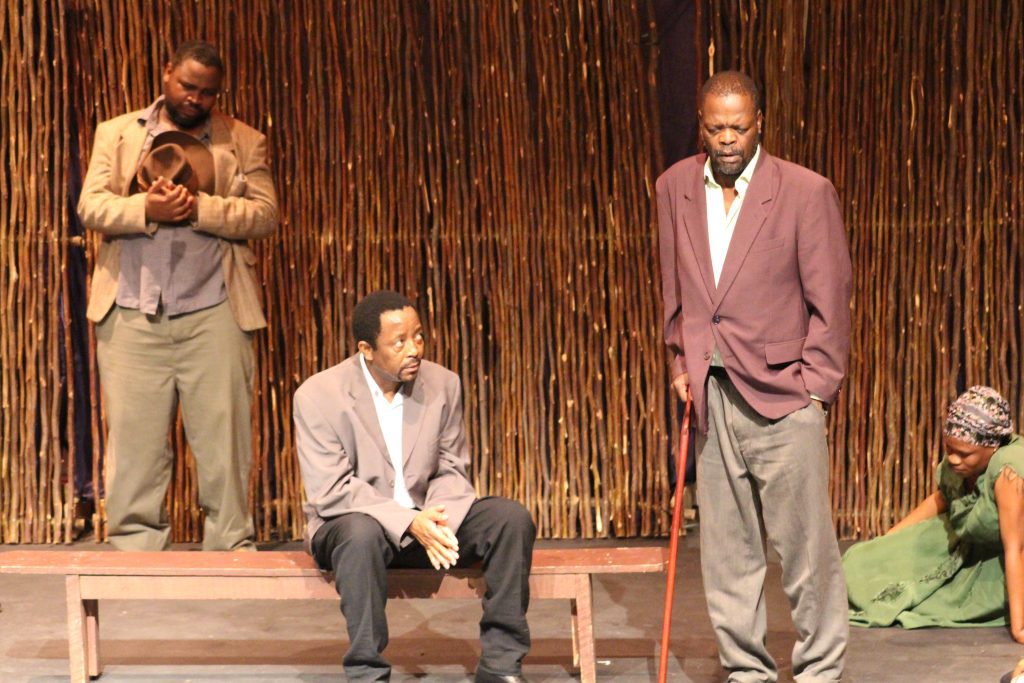
Yet, if television made him a star and film gave him scale, it was the theatre that kept him honest. Throughout his lifetime, Sebogodi contributed to eighty-eight professional stage productions—not as a visitor from television, but as a disciple of the craft who viewed the stage as a sacred space.
After his banned debut with Gibson Kente, he spent the late 1980s mastering the classical and contemporary canon. He walked through the tragedies of Women of Troy and Die Prys in 1987, stepped into the surreal worlds of Jean Genet’s The Balcony in 1988, and tackled the sharp social critiques of The Little Foxes and Jean Genet’s The Blacks in 1989.
He proved his classical mettle in Koning Lear and Macbeth in 1990, and explored the heights of African political drama in John Kani’s The Meeting and Once a Pirate.
His theatrical genius, however, extended far beyond acting. He was an author, songwriter, and choreographer, creating the music and movement for Ngamasa at the 1987 PACT Potpourri Festival.
In the early 1990s, he co-starred as the unforgettable Stix Letsebe in Paul Slabolepszy’s acclaimed Mooi Street Moves at the Market Theatre, taking a slice of South African reality on a triumphant international tour.
In 2001, he took on the major challenge of playing Vladimir in Waiting for Godot in Africa at the National Arts Festival, and later channelled the terrifying absurdity of power as the tyrant Idi Amin in the 2005 revival of Big Dada. He lent his gravitas to the historical courtroom drama The Rivonia Trial and stepped into the director’s chair for Tastes Like Strawberry, earning the accolade of Best Director.
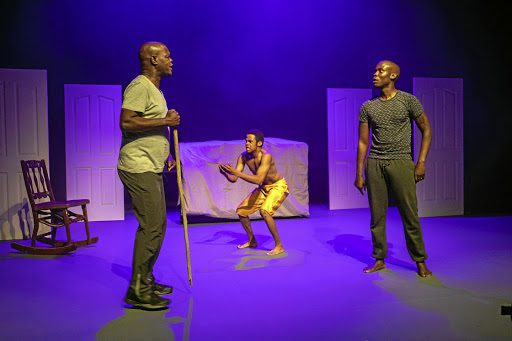
In a beautiful merging of his personal and professional lives, he also directed and shared the stage with his actor son, Thapelo Sebogodi, in the intimate family production Flak My Son.
It was this lifetime of theatrical devotion that culminated in July 2026 at the National Arts Festival. With Black Moon—a production he wrote, directed, and starred in alongside Jerry Phele and Patrick Bokaba—he brought his final, eighty-eighth vision to life, closing a circle that began forty-four years prior in the rehearsal rooms of township protest theatre.
The Final Curtain
There is an old theatrical saying that the stage is a demanding mistress, but for Seputla Sebogodi, it was home.
His passing leaves South Africa poorer, but his legacy is written in the very soil of our creative industry. He leaves us with a body of work that spans eighty-eight plays, dozens of films, and characters that have become part of our national vocabulary.
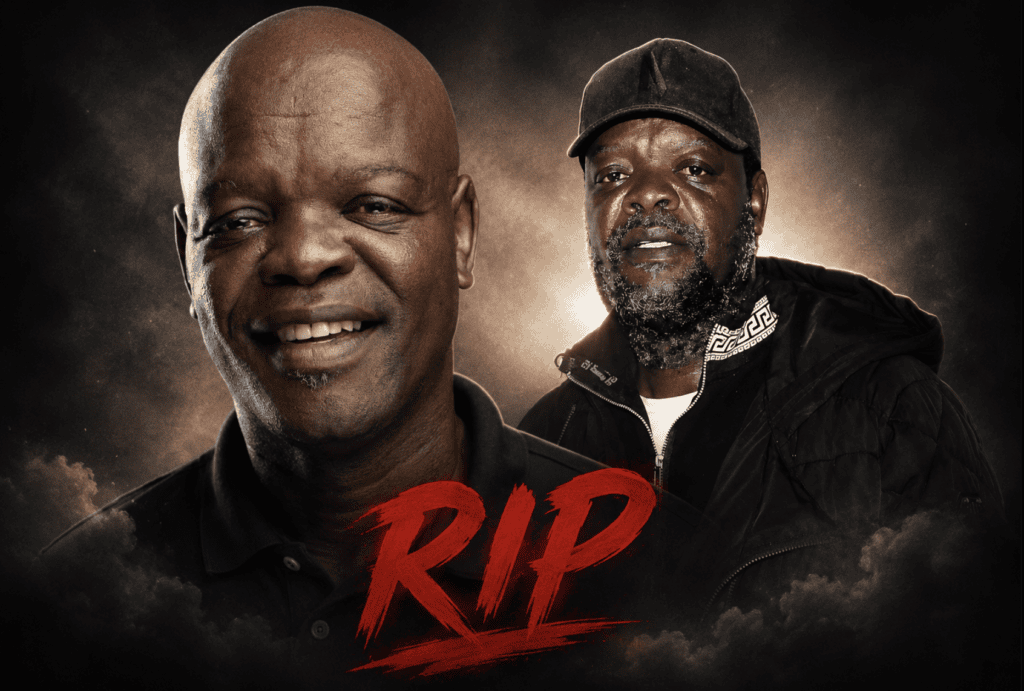
He taught us that art is not a luxury—it is a necessity, a way to interrogate our past and imagine our future.
As we mourn his departure, we also celebrate a giant who gave everything to his craft. The lights on our stages may seem a little dimmer today, but the echo of his voice, his laughter, and his incomparable presence will reverberate in our theatres and our hearts for generations to come.
Robala ka khotso, Steez. Your final bow was magnificent.
Get the morning briefing
Our editors’ choice of the day’s stories, in your inbox at six.

Comments
No comments yet.