
By Jonathan Deal
On Friday 30 October, two documents landed on the President’s desk. Between them, they tell you most of what you need to know about the Firearms Control Amendment Bill.
The first was an open letter from attorney Martin Hood, acting for the South African Arms and Ammunition Dealers Association. It asks a question a child could understand: where is the impact assessment? Before the government drafts legislation on this scale, it must complete a Socio-Economic Impact Assessment (SEIAS).
The Civilian Secretariat for Police told role-players at NEDLAC that it had handed the assessment to the Presidency on 24 November 2025. The Presidency has confirmed this in writing. Yet eleven months of formal access-to-information requests have produced nothing.
The Secretariat said the document was attached. It was not. The Presidency acknowledged the request late, took the access fee, asked for more time to ‘find’ the document, and on 28 October sent the matter back to the Secretariat.
One department says it handed the document over, the other says it has it, and nobody can show it to the public.
The second was a press release from the SA Gunowners’ Association, backing the dealers and calling for the Bill to be halted until a lawful assessment is published.
A Bill that cannot produce its own justification is a Bill in trouble. And the missing paperwork is the smallest of its problems.
The ground has shifted
Crime has not gone away. Murders are falling, but slowly. Between April and June 2026, SAPS recorded 5,427 murders, a 5.9 per cent drop on the same three months last year. That is still roughly 60 people killed every day. South Africans can count, and they know the citizen who can defend themselves is not the problem.
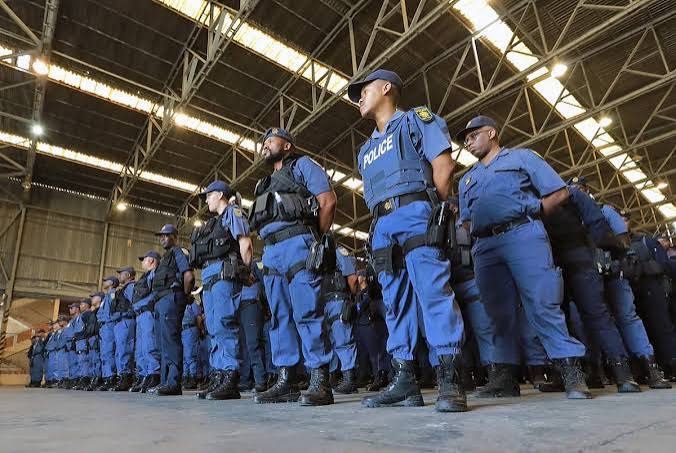
The police are in disarray. This year, the National Commissioner was suspended for six months. The Deputy National Commissioner was dishonourably discharged while in custody on serious criminal charges. The Police Minister has been on leave for more than a year. Asked to account for its performance, SAPS met only 52.13 per cent of its targets in 2025/26, while spending every cent of its R120.9-billion budget.
The Madlanga Commission, set up after KZN Police Commissioner Nhlanhla Mkhwanazi’s media briefing of 6 July 2025, has heard months of testimony about criminality in the senior ranks. Its final report is due on 16 November 2026.
The state’s own evidence points away from licensed owners. On 7 October, a senior SAPS general told Parliament’s police committee that unlicensed firearms reach the criminal economy from several sources, including SAPS itself. We know illegal guns flow steadily over our borders. We know that arms caches left over from political parties before 1994 still account for many of the guns used in violent crime.
A former head of the Civilian Secretariat has said that about 30,000 police-issued firearms were reported lost or stolen between 2003 and 2023, and that they are recovered far less often than civilian guns.
The SANDF and other state bodies do not reliably report their losses to the Central Firearms Registry at all.
The illegal pool is fed from many taps, and the state’s own taps are among the least accounted for. Yet the Bill goes after the one group that has been vetted, registered and inspected: the licensed citizen.
Private security has said no. The draft PSIRA regulations would push armed officers out of malls, schools and residential streets. The industry has hit back hard, with nearly 30,000 objections filed and major employers on record against the plan. This is no fringe lobby. SAPS had 151,492 Police Act members at 31 January 2026, while industry figures put active private security officers at about 675,000 in 2024. That is close to four private guards for every police officer, and the state proposes to disarm them.
The public mood has turned. The loud calls for a gun-free South Africa have gone quiet. Many people who will never own a firearm have watched the police leadership crumble and reached their own conclusion: a trained, lawful, armed neighbour is part of the answer, not the threat. Even long-standing opponents of private ownership now talk less about disarmament and more about enforcement.
Time for the state to step back
The Government of National Unity is under pressure to show that it can govern. The police are waiting on a commission report that may reshape their leadership. Voters go to the polls on Wednesday’s municipal elections. This is exactly the wrong moment to spend political capital on a Bill that would disarm the people who obey the law, and that cannot even produce the assessment it was supposedly built on.
The sensible path is to leave lawful owners alone and fix what is actually broken. Safe Citizen calls for four things:
- Publish the SEIAS now, with the date it was completed and the evidence it relied on, or withdraw the Bill.
- Bin the Firearms Control Amendment Bill and the draft PSIRA firearm regulations.
- Audit and secure state armouries, and publish annual loss figures for SAPS, the SANDF and every other state entity.
- License the person, not the firearm. Vet law-abiding citizens once, thoroughly, and keep track of them through the local station rather than a collapsing central registry.
South Africa’s police are in crisis; its murder rate is still among the worst in the world, and the state cannot even find its own impact assessment. This is no time to go after the lawful citizen. The licensed owner and the private security officer are the country’s force multipliers. Leave them be, and go after the criminals and the guns the state keeps losing.
Jonathan Deal is the Executive Board Member and National Co-ordinator at Safe Citizen.
Get the morning briefing
Our editors’ choice of the day’s stories, in your inbox at six.




Comments
No comments yet.