By Sandile Memela
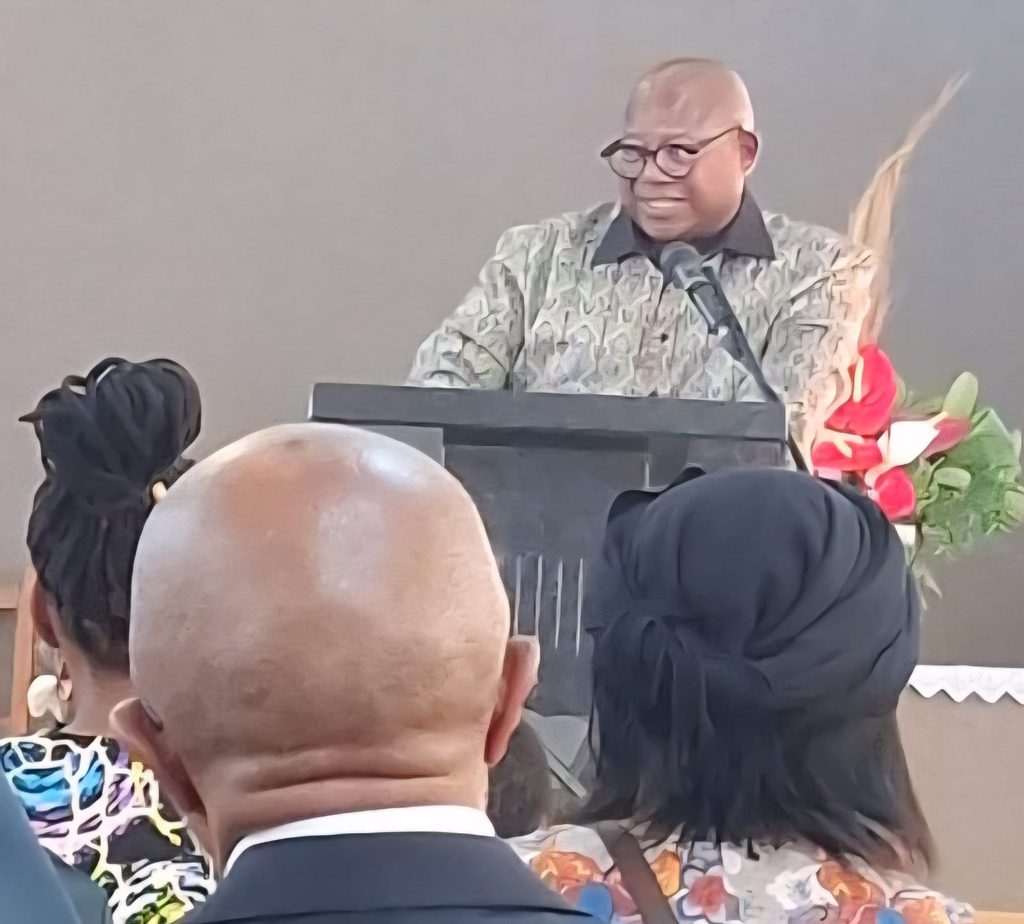
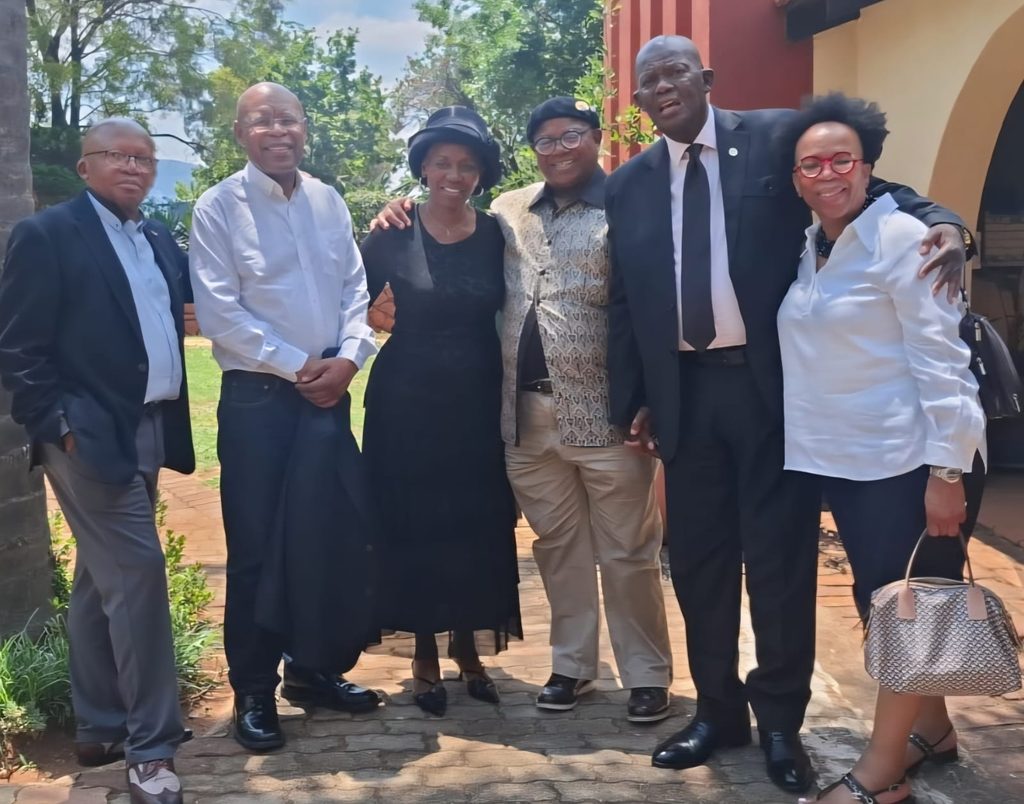
I drove to Hartbeespoort for the memorial service of a former colleague and brother, Chris Ntofiki More, on Thursday.
He was a saintly journalist who epitomised warmth and kindness. He was quite a fearless character, unafraid to ask hard questions.
Otherwise, I would have had no business driving to Harties, as it is popularly known.
It was a rare occasion, but I did not drive through it. I intentionally drove to it to attend the service at the Good Shepherd Catholic Church. That matters, because Harties is not on the way to anywhere for a black person from the township; you have to decide to go there.
I left Johannesburg early. The N4, the R511, the road that winds past Flora Park, past the Magaliesberg. And the moment I left the city, the country opened up.
Let me be honest: South Africa is achingly beautiful. God did not make a mistake when He made this place and gave it to African people. The mountains of the Magaliesberg are older than humanity itself – 2.3 billion years old. The dam was blue and still. The jacarandas were still holding late purple. The road was smooth. Inviting. No potholes. White lines freshly painted. Signs that work.
I gazed out of the window and was intrigued. Everywhere I looked around, I saw the promised land.
This is what Moses saw from the mountain. This is what our grandfathers were told they would get in 1994.
And then it hit me: This promised land is already occupied.
What I saw in Harties is not a town. It is a private state within a state. It is an exclusive white state.
Let me explain what I mean, because I have lived for over 60 years and I have eyes.
In the township where I grew up and lived, and in the rural areas where my extended family and cousins live, we live in congestion. Houses on top of houses. One toilet for eight people. Roads that have not been tarred since 1987. When it rains, we swim. When the transformer blows, we wait three weeks. Children play in streets with open sewers. Taxis hoot at 4 am. There is no quiet. There is no privacy. There is no peace.
In Harties, I saw the opposite. I saw what white South Africa built for itself, and what a few black people who made it can now buy into.
Private security. Not one company. Three. Armed response. Boomed estates. Electric fences that hum. Guards with clipboards who ask you “where to?” before they lift the boom.
Armed guards. Young white men with bulletproof vests, with guns on their thighs, guarding a Spar. Guarding a house that is empty for 11 months a year.
Tarred roads. No potholes. Not one. I drove for 40 kilometres and did not hit one pothole. In Soweto, you cannot drive 20 metres without hitting one. Who maintains these roads? The municipality? No. The residents’ association. Private.
Private exclusive schools. Beaulieu. Eagle Canyon. Curro Harties. Fees that are R150,000 a year. My pension after 40 years of work cannot pay for one term. Highly expensive, and deliberately so. Because price is the new pass law. The new apartheid. You don’t need a dompas to keep black children out. You just need fees.
Health clinics and wellness spas. Not clinics – spas. Places where you go to get a massage because you are stressed from too much peace. In my Diepkloof township, the clinic has one nurse for 400 people and no Panado.
Above all: peace, quiet, safety, security, and comfort.
I spoke at the memorial service and declared that we woke up in a beautiful country that is a manifestation of God’s love for us. Yes, it is a beautiful and racist country.
I cruised around the tarred streets. And the only sound was birds and a boat in the distance. No loud music. No gunshots. No nyaope boys shouting. No police sirens. Just quiet. The kind of quiet that rich people buy.
And I am at that age when I am retired. I have worked for over 40 years of my life. I have been a writer, a journalist, a government man, a hustler. I have paid taxes. I have buried friends. I have voted in every election since 1994.
I will not afford to buy a house in Harties.
Not because I did not work hard. But because of economic discrimination and exclusion. White people own and monopolise the wealth of this country. Of course, it is not ALL white people.
Let us be honest about this country: we ended political apartheid, but we kept economic apartheid. We gave people the vote, but we did not give them the land. We gave people freedom of movement, but we did not give them the money to move.
A house in Harties costs R3.5 million for a small one. On the estate, R8 million, R15 million, R25 million. Where does a black man who was taught under Bantu Education, who worked at the Sowetan or City Press for R20K a month in the 80s, get R3.5 million? Where does a nurse, a policeman, a clerk get that?
They don’t. That is the point.
Blessed with privilege are those who live in Harties – both black and white. They have inherited heaven on earth.
And inheritance is the key word. Most of the people who live there did not buy heaven. They inherited it. Their grandfather got land in 1913 when my grandfather was declared a squatter. Their father got a loan from Volkskas in 1965 when my father could not get a loan to buy a bicycle. They went to a private school in 1985, when I was tear-gassed in Soweto. They got a job in 1990 because their uncle knew someone. And now they live in heaven, and they call it hard work.
I am not jealous. I am not even angry anymore. I am over 60. Anger is for young men.
I am just clear.
I went to attend the memorial service of a former colleague and brother, Chris More. The drive to Harties reminded me that we are blessed to live in one of the most beautiful countries in the world. But beauty in South Africa is privatised.
The mountain is beautiful, but the estate owns the view. The dam is beautiful, but the boat club owns the water. The road is beautiful, but the boom gate owns the road.
We got democracy. They kept heaven.
And I drove back to the township, back to congestion, back to potholes, back to noise, knowing that African people – the majority – would never enjoy this. Not in my lifetime. Not in my children’s lifetime. Unless something radical changes.
Because what I saw in Harties is not development. It is separation. A private state within a state, with its own roads, its own security, its own schools, its own clinics, its own peace.
While outside, the rest of us queue for the broken state.
That is what I saw on the road to Harties. I went for a memorial service to remember a man who was a student leader in 1976. He gave his life to become a journalist who told the story of South Africa and the struggle of African people for justice and equality.
And we have seen how the myopic leadership of the ANC and white greed have buried the promise of 1994 long ago, behind a boom gate, in a beautiful house overlooking a dam.
Blessed are those who live there. Truly blessed.
For the rest of us, we have the view from the road.
Get the morning briefing
Our editors’ choice of the day’s stories, in your inbox at six.

Comments
No comments yet.