

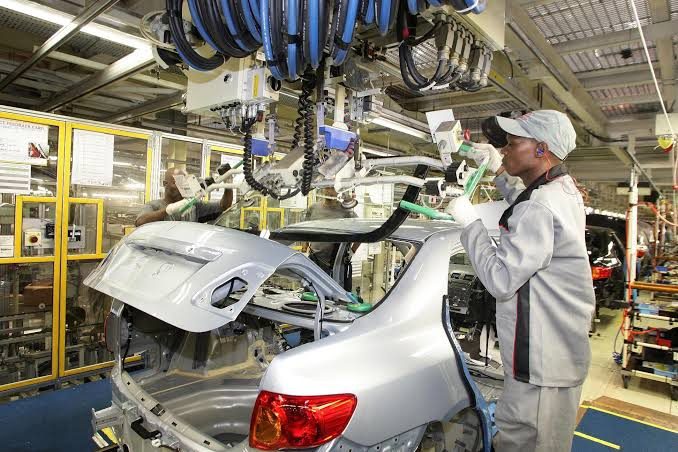
South Africa should stop confusing an assembly line with an industrial base. The deeper value lies in components, tooling, engineering, supplier development and technical knowledge. If those remain offshore, the country is assembling vehicles without capturing enough of their value.

By Christiaan Botha
SA has spent years rewarding vehicle assembly as though it were manufacturing. It is not. An SKD (Semi-Knocked Down). operation imports most of the value in a vehicle and assembles the kit here.
Manufacturing creates more of that value here through local components, tooling, engineering and technical skills. When both receive industrial support without sufficient distinction, importing wins. Why invest in tooling for a local component when it can be imported?
Why develop a local supplier when the parent company’s supplier can put it into the kit? Why transfer engineering capability when the product architecture can remain offshore? From the outside, both can look like manufacturing: a factory, production line, workers and finished vehicles leaving the gate.
Follow the money. With SKD, much of the engineering, tooling, component manufacture, supplier margin and technical knowledge has already been paid for elsewhere. SA gets final assembly.
The countries making the components get the deeper industrial value. The DTIC’s (Department of Trade, Industry and Competition) review of SAAM 2035 and the APDP (Automotive Production Development Programme) has considered time limits on SKD operations to force progression towards CKD (Completely Knocked Down) production.
Due in September 2026, the review has passed its deadline without a final published outcome. SKD can be used to enter the SA market, but it cannot be a permanent industrial model.
Government has not published the deadline for moving to CKD, localisation milestones, consequences for missing them or transition requirements for existing SKD operations.
Existing SKD operations should not be protected because they arrived under the old rules. Give them a transition period, establish what they must localise, put dates against it and make future incentives conditional on compliance. That takes political courage and negotiating skill. Manufacturers will protect their investments.
Government should protect SA’s industrial base with equal determination. SA brings a substantial market, automotive infrastructure, incentives and an established supplier base to that negotiation.
The return should be deeper productive investment. The Automotive Business Council reports R137-billion in audited local value addition in 2025. Local content is approximately 40% at OEM level and 50% at Tier 1. Raising those numbers means moving economic activity out of imported kits and into SA factories and suppliers.
The DTIC is also reviewing production rebate certificates, the ad valorem tax structure and parameters governing local value addition. All come down to the same commercial decision: import the value or create it here? Allow SKD as an entry route.
Put a deadline on it. Require increasing localisation. Move operators towards CKD. Apply the transition to existing operations and new investment. Then enforce it.
Christiaan Botha is the Director of Operations at FMC Logistics/ Commercial Warehousing & Logistics Solutions/ 25+ Years in African Trade/ National Distribution & Cargo Management.