

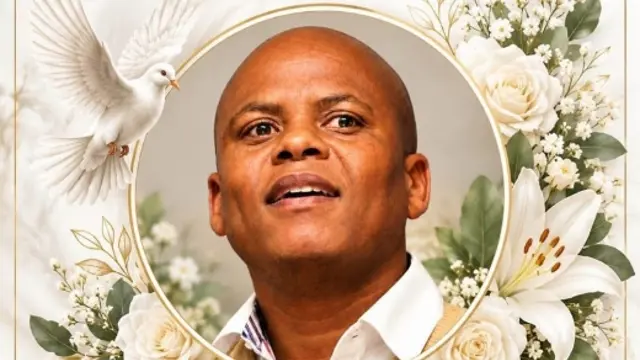
A spokesperson does not control the war, only the telling of it. Khulu Phasiwe understood this better than most. At Eskom, he stood between institutional failure and public anger, absorbing the insults, threats and frustration while trying to tell South Africans what remained true.

By Sandile Memela
Former Eskom spokesman Khulu Phasiwe once said something that left an indelible impression on my mind.
702 radio host Stephen Grootes conducted an exit interview to pay tribute to him. And it was there that Phasiwe described and likened his 10-year-long tenure as an Eskom spokesperson to being “a war correspondent”.
For me, he was accurate and truthful in his definition of being a spokesman in 2015.
It is easy to imagine Phasiwe ducking under mortar fire from South African citizens, both in the townships and suburbs, at the height of rolling blackouts.
The real danger about his war correspondent role was not just the emotional expletives and verbal bullets. It was everything that comes before and after the bullet.
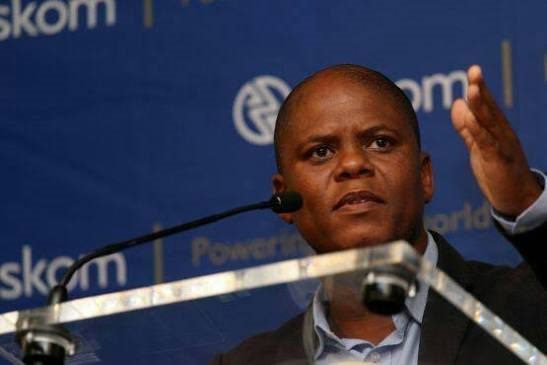
The Risks and Danger
A spokesperson does not fight, but is fought over. Everybody wants to tell him how to do his job.
He was not an army general but had a small team of communicators for support. He was not an ordinary civilian, so he could not shrug his shoulders in resignation.
He always had to choose sides. And he could not side with the people who demanded answers.
Thus, something in him died every time he had to address the nation that saw him as a lying spin doctor. The irate citizens dismissed his utterances as white lies. He was viewed as a government propagandist and spin doctor who did not tell the truth. He was protecting his bosses and tried to whitewash the image of an institution that plunged the nation into darkness.
He faced danger not on the frontline; everywhere was the frontline.
The Psychological Trauma is Cumulative
Coming from a disadvantaged background himself, he knew what the blackouts did to people and businesses. But he had to describe the impact of power outages in calm sentences. Almost apologetic, justifying this failure.
His interviews had to address a mother who had just lost her children in the dark. Worse, he had to jump from one radio, television and newspaper interview to another for them to file before deadline.
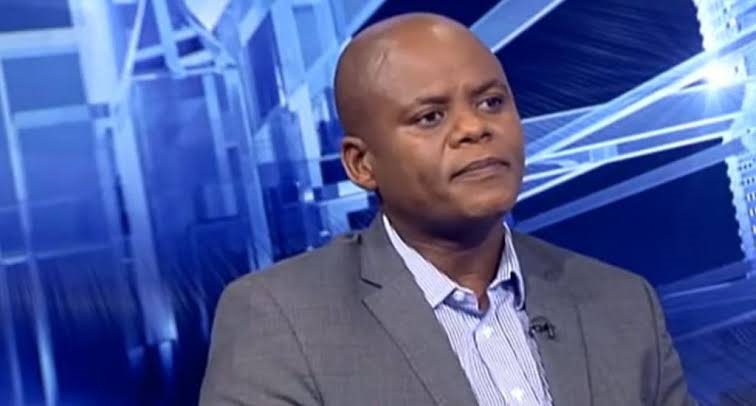
He had no time to empathise with crumbling businesses and people who may have died because of blackouts. The emotional toll of his work was stored in the body.
Many war correspondents-cum-spokespersons suffer PTSD, insomnia, alcoholism and broken marriages. Phasiwe was in the frontline and had seen too much and had nowhere to put it.
The Perpetual Moral Dilemma
Do you represent the frustrated and angry citizen or do you appeal to them to accommodate the institutional failure? Do you report the truth about Eskom and why it claimed to run out of coal or do you protect your executives?
Do you tell the story your CEO and Minister wants, the simple story of the problem being solved? A problem that could have been avoided with proper planning. Or the true story, which is complicated and cannot be shared with the nation, about coal price-fixing?
Phasiwe had to navigate not just war in his organisation but the politics of business deals.
The Loneliness and Distrust
In a country at war with itself, nobody tells the truth. People have been betrayed. But, of course, institutions must protect their image.
The executives sweep information under the carpet to look good. The government and the ruling party must look good. The opposition does not tell the whole truth, either.
And sometimes the spokesperson does not tell the whole truth to protect his job. And he lives in fear and anxiety.
Yet the spokesperson must find a sliver of truth in a blizzard of disinformation and propaganda, while being utterly alone, far from home, with only a cellphone and an internal team he hopes he can trust.
What It Takes to Navigate That
It takes more than courage. Courage is cheap in the first week. It takes discipline. To check and double-check when you are exhausted. To not take sides when your heart is breaking.
To know when to push forward and when to retreat, because dead journalists tell no stories. To tell the bosses that their hole-in-the-sand approach is a wrong strategy.
It takes humility. To know you are a guest in someone else’s suffering. To listen more than you speak. To use your commentary as a balm, not as a weapon to beat the citizens for complaining and cursing.
It takes stamina. To file day after day when nothing changes except the body count. To remain human when everything around you is dehumanising.
Which brings me to former Eskom spokesperson Khulu Phasiwe, who likened his role as spokesperson at the height of power blackouts to a war correspondent. He said something to Grootes.
At first, I laughed. I was intrigued. How can a man in a neat suit in Megawatt Park compare himself to a man in a trench in …, say, Ukraine or …?
But those who have done the job understood exactly what he meant. I was in the crossfire, too.
Consider Eskom between 2015 and 2019, and again from 2022. Load-shedding Stage 6. The grid on the edge of collapse. The nation angry, anxious, in the dark. Every South African an expert, every politician looking for a scapegoat, every journalist calling, every township ready to protest.
And in the middle, one man has to face the nation every day and explain why the lights are off, without starting a panic, without lying, without betraying his engineers who are working 20-hour shifts to keep the country from total blackout.
That Is A War Correspondent’s Job.
He had no control over the war, only over the telling of it. He was not the general, not the soldier, not the coal dealers who charge exorbitant fees for our own coal. He was the person sent to the front to explain the inexplicable. He absorbed the bullets meant for others: the insults, the threats, the memes, the anger of 60 million people who just want to cook for their children.
Like a war correspondent, Khulu operated in an environment where everyone lies. The system lied about maintenance. Politicians lied about state capture. Commentators lied about easy solutions. He had to find the sliver of truth: how many megawatts are lost, which unit tripped, when it will return, and deliver it calmly while the country shouts.
Like a war correspondent, he suffered cumulative trauma. Yes, he appeared cool, calm and collected. But you cannot be shouted at by an entire nation for five or 10 years and remain untouched.
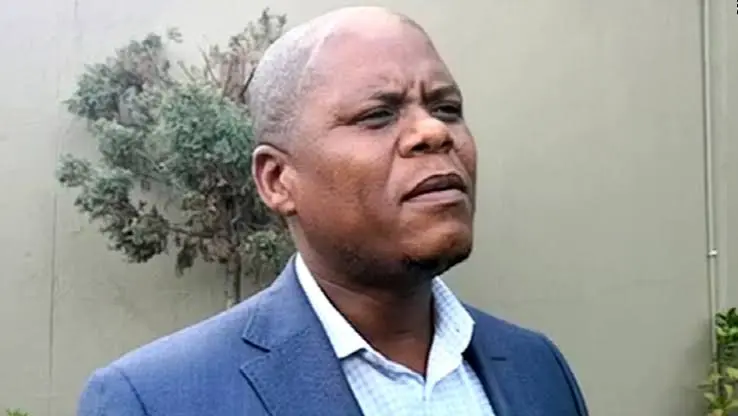
Khulu Phasiwe was one of the most seasoned spokespersons in SOEs precisely because he understood this. He never pretended to be an engineer. He never pretended to have all the answers. He brought what a good war correspondent brings: clarity under fire, humanity under pressure, and a voice that did not shake even when the news was bad.
He taught us that to be a spokesperson in a state-owned entity in crisis is not about spin. It is about service. It is about standing between a failing system and an angry public and saying, “Here is what I know to be true at this hour.”
That takes guts. That takes discipline. That takes the same nerve as wearing PRESS in a war zone.
We were blessed to have him among us. And we pay tribute to him.
Sandile Memela is a former spokesman.