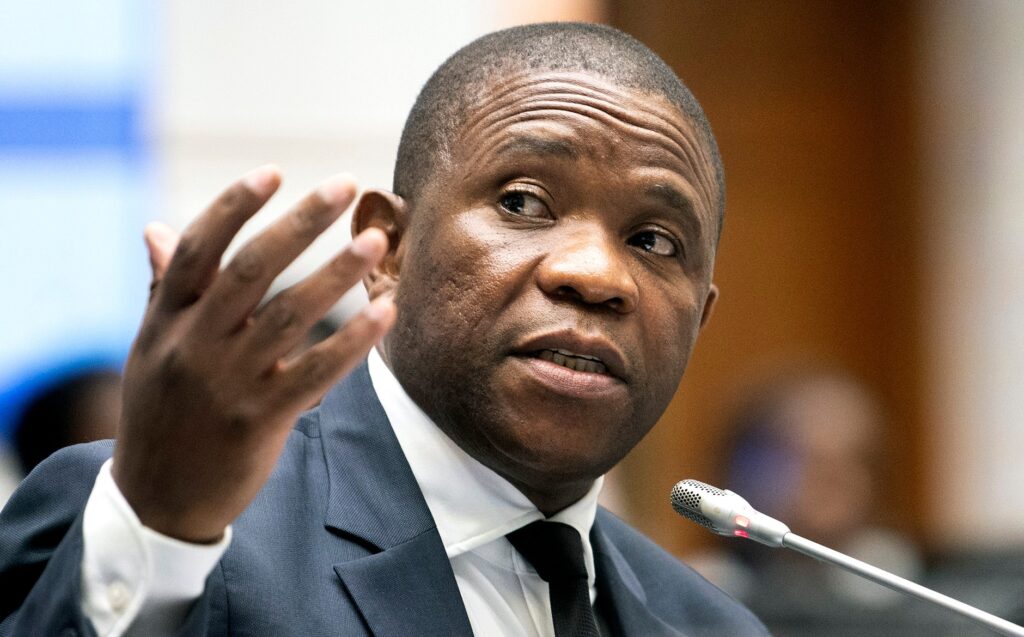
The acting police minister has asked Cabinet to concur with the appointment of the KwaZulu-Natal police commissioner as national head of the Hawks. The post has had no permanent head since May 2025. Forensic investigator Paul O’Sullivan has threatened court action to stop it.
By Staff Reporter
Acting Police Minister Firoz Cachalia has asked Cabinet to approve Lieutenant General Nhlanhla Mkhwanazi as the national head of the Directorate for Priority Crime Investigation (DPCI), commonly known as the Hawks.
In a statement issued on Thursday 29 October, the police ministry said: “The Acting Minister has submitted a Cabinet Memorandum seeking Cabinet’s concurrence for the appointment of Lieutenant General Nhlanhla Mkhwanazi as the National Head of the DPCI.”
The statement added: “The Memorandum will be presented at the earliest opportunity during a Cabinet sitting.”
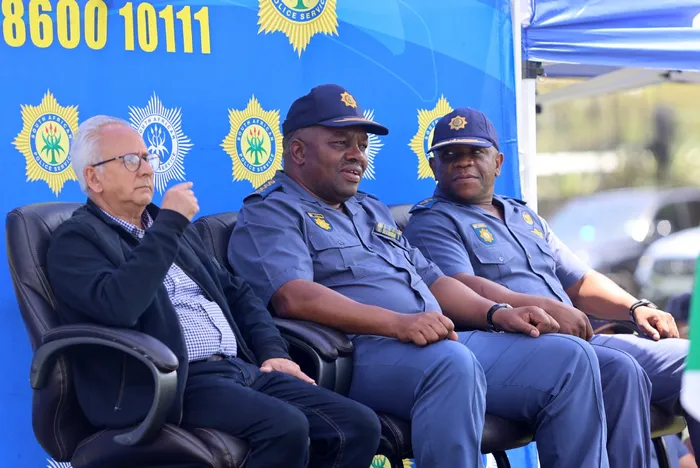
Until it does, Lieutenant General Siphesihle Nkosi remains the acting national head of the Hawks.
How the appointment works
The ministry said Cachalia acted under the South African Police Service Act 68 of 1995. Section 17CA(1) to (3) provides that the national head of the DPCI is appointed by the Minister of Police with the concurrence of Cabinet, and that the appointment is reported to Parliament.
The post has been vacant since General Godfrey Lebeya retired in May 2025. Cachalia has said the position was advertised twice over the past two years and that neither recruitment process produced a suitable candidate. He has also said that he is the appointing authority under the law, but that the appointment requires Cabinet’s concurrence.
The ministry’s statement said: “The DPCI plays a critical role in South Africa’s fight against organised crime, corruption, and other serious priority offences.” It added: “This is a priority for the Police Reset Agenda.”
On the reason for the appointment, the statement said: “The appointment of a National Head is important in ensuring strong leadership, strategic direction and operational effectiveness in addressing these crimes.”
Mkhwanazi’s background
Mkhwanazi has been the KwaZulu-Natal police commissioner since 2018. He is a former commander of the Special Task Force and served as acting national police commissioner in the early 2010s.
On 6 July 2025, he held a media briefing in which he alleged that a criminal syndicate had infiltrated the criminal justice system. President Cyril Ramaphosa subsequently placed then Police Minister Senzo Mchunu on special leave and appointed the Madlanga Commission of Inquiry, whose hearings began in September 2025. A parliamentary ad hoc committee also took up the allegations.
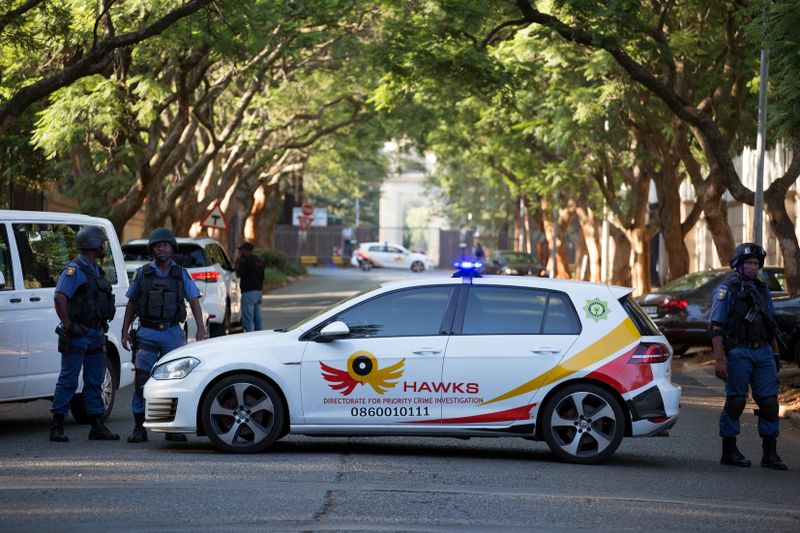
Several law enforcement officials have since been arrested. Among them is former deputy national commissioner for crime detection Shadrack Sibiya, who is in custody and facing criminal charges.
Reaction
ActionSA said it welcomed and supported Cachalia’s recommendation. The party said the proposal signals “a potentially important shift towards stronger leadership” in the fight against organised crime. It also linked the move to its proposed Scorpions 2.0 Bills, which it says would give the Hawks more funding, powers and independence. ActionSA MP Dereleen James said Mkhwanazi’s 2025 exposure led to arrests, suspensions and dismissals among senior police ranks.
Forum4SA also welcomed the proposal, saying the unit needs independent, professional leadership.
Standing Committee on Public Accounts (Scopa) chairperson Songezo Zibi also welcomed the proposal, in comments reported by the Cape Times, but warned that a lack of additional funding could undermine it from the outset.
“Gen Mkhwanazi will be the best appointment of the DPCI to date. However, he will need resources urgently. The Hawks have a 50% vacancy rate, poorly paid forensic financial investigators, a dire need for cyber capacity and a variety of other skills,” Zibi said.
“As committed as he is, he will be set up to fail if his appointment is not accompanied by at least R1bn more for investigations. Otherwise we will once again show that we’re not serious about fighting corruption.”
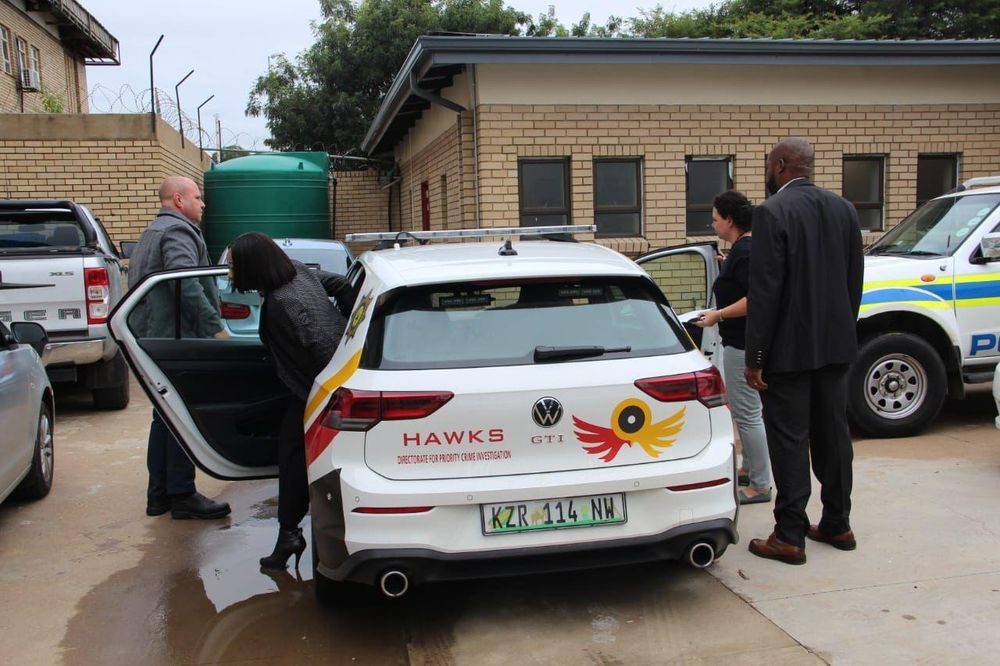
Willem Els, of the Security Initiative of Africa, an NGO focused on organised crime and counter-terrorism, said Mkhwanazi could bring stability, direction and renewed public confidence to the Hawks. He said strong leadership could help address the unit’s challenges despite budget constraints. Els also said Mkhwanazi’s departure would not leave a leadership vacuum in KwaZulu-Natal, because he had built a strong team able to continue the work.
Policing sources cited in reports on Thursday said the appointment would send a strong deterrent message to criminals.
Others have questioned the placement. Security strategist Andy Mashaile, speaking to the Cape Times, argued that appointing Mkhwanazi to the Hawks could limit his influence.
“It is not advisable to appoint Mkhwanazi in that role because the Hawks are a limited institution that reports to the national commissioner,” he told the Cape Times.
“When you give Mkhwanazi that responsibility, you hamstring his energy, his expertise and his skill set.”
Mashaile said Mkhwanazi had earned public trust, and pointed to arrests that followed Madlanga Commission recommendations as evidence of the effectiveness of his intelligence gathering. He said it would be wise to await the commission’s outcomes before beginning the SAPS reset and committing Mkhwanazi to a particular position.
Criminal law expert Dr Lennit Max said Mkhwanazi’s operational background could make a greater contribution as national police commissioner when General Fannie Masemola’s term ends in March 2027. He said the commissioner’s responsibilities extend to visible policing at station level, where officers deal directly with communities.
MK Party MP Mzwanele Manyi, in a post on X, described Cachalia’s announcement as irregular and said Mkhwanazi should remain on the frontline rather than move into an investigative leadership role.
It has also been reported that the proposal is expected to be unwelcome to some people who have previously expressed distrust of Mkhwanazi, including people he has implicated in alleged wrongdoing.
Legal threat
Forensic investigator Paul O’Sullivan has threatened court action to block the appointment. In an email to Cachalia dated 29 October, he wrote that any attempt to appoint Mkhwanazi “will be met with an urgent judicial review to prevent such an appointment”.
It has been reported that O’Sullivan’s organisation, Forensics for Justice, says it will challenge the appointment unless the government suspends the process or opens it to public scrutiny. O’Sullivan argues that Mkhwanazi is not a fit and proper person to lead the Hawks. He has pointed to the 2017 court challenge that overturned the appointment of former Hawks head Berning Ntlemeza, which his organisation supported.
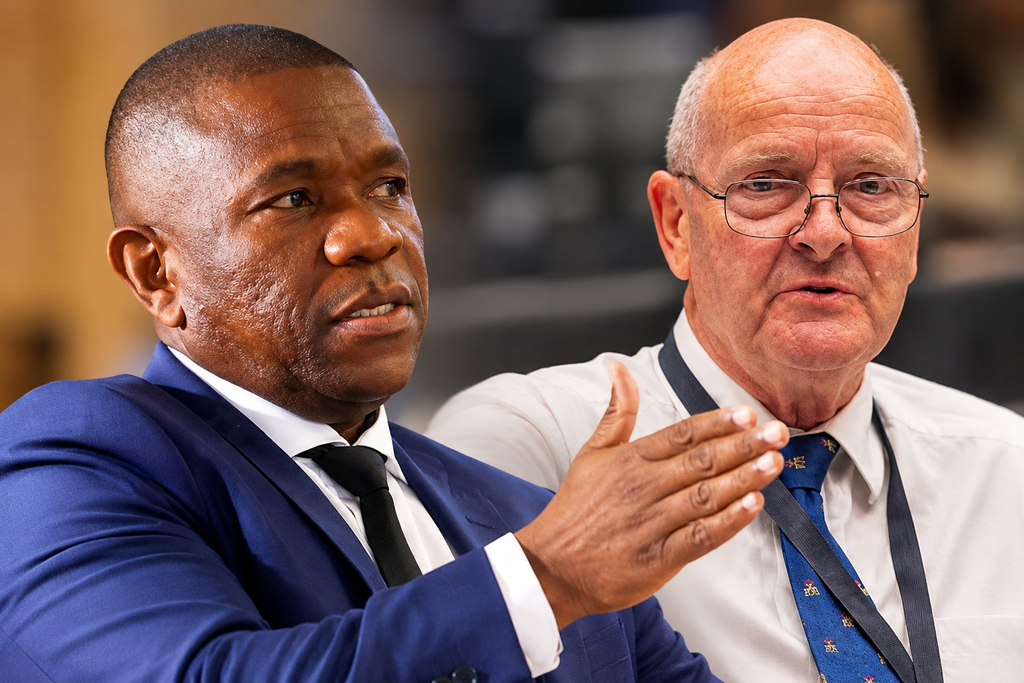
The two men are already in litigation. Mkhwanazi filed a R5-million defamation suit against O’Sullivan in the Johannesburg High Court on 16 September 2025, over public statements in which O’Sullivan accused him of corruption. O’Sullivan later filed a R10-million counterclaim.
The state of the Hawks
Parliament’s police oversight committee chairperson, Ian Cameron, said Mkhwanazi’s operational and senior command experience, including his time as acting national commissioner, is an important strength. He said his suitability should nonetheless be judged against the specific demands of the Hawks: leading complex investigations, protecting investigative independence and building specialist teams.
Cameron pointed to the directorate’s staffing crisis. The Hawks told Scopa in August that they had 2 515 vacant policing posts, including about 1 500 investigator posts. Cameron said no appointment at the top could, on its own, overcome a shortage of that scale. He said the new head would need a costed recruitment and retention plan with deadlines for filling critical posts, backed by funding and administrative support from the minister and SAPS leadership.
Cameron said the new head would also have to deal with stalled investigations, strengthen cooperation with the National Prosecuting Authority and involve prosecutors early in complex cases. He said the Hawks must follow evidence regardless of political connections or seniority, and that their own members should be held to the same standards of integrity and accountability.
It has been reported that the Hawks have faced scrutiny over alleged links between senior police officials and Vusimuzi “Cat” Matlala and Katiso “KT” Molefe. Reports have also referred to testimony before the Madlanga Commission that implicated Hawks officers in the theft of a R200-million cocaine consignment at Port Shepstone in 2021.
What happens next
Cabinet has yet to say when it will consider the memorandum. The ministry’s statement does not say who would lead the KwaZulu-Natal police if Mkhwanazi is appointed. In the coverage reviewed, Mkhwanazi had not been reported as commenting on the proposal or on O’Sullivan’s threat.
If Cabinet concurs, Cachalia can complete the appointment and report it to Parliament.
Get the morning briefing
Our editors’ choice of the day’s stories, in your inbox at six.


Comments
No comments yet.