By Staff Reporter
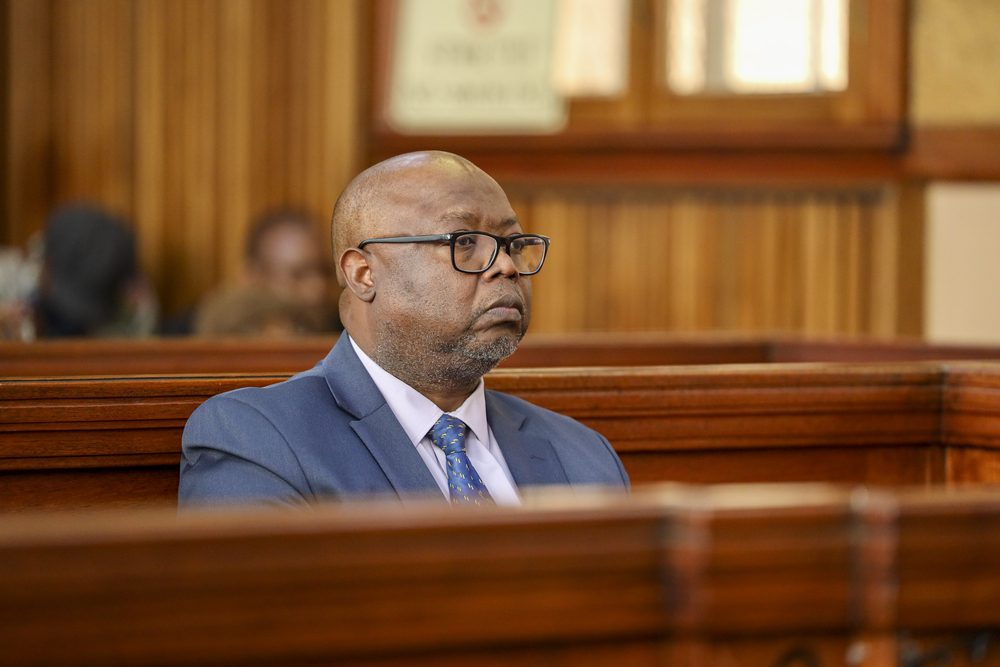
Former acting Crime Intelligence head Mulangi Mphego failed to have a July police raid on his Centurion home declared unlawful. The Pretoria High Court, where the matter was set down for 27 October, ruled that it was not urgent enough to be heard.
Mphego wanted his seized firearms, legal files and phone returned, and the operation declared unconstitutional.
A warrant with no paper trail
His attorneys, BDK Attorneys, found that the Tembisa Magistrate’s Court, where the warrant was issued, had nothing on file for the application or the affidavit that should have supported it.
A senior magistrate, Henro du Plessis, confirmed this by email on 17 September. He wrote that he had issued and signed the warrant on 6 July, but that no copy was entered in the warrant register, and he could not say why. Mphego argued that this left the warrant without a proper procedural footing.
He also accused police of going beyond what the warrant allowed. He said the warrant covered only electronic devices, yet officers took three of his licensed firearms: a CZ 9mm handgun, a Glock .40 S&W handgun and a Czech Small Arms .223 rifle. They also took boxes of hard-copy documents.
He further alleged that private individuals in masks and military-style clothing, wearing no identification, took part in the search, opened his safe and handled his firearms. He said the operation’s leader, Lt-Col Maria Roodt, brushed off his questions and described the men as her own security. The police had not publicly answered these claims at the time of writing.
The cost, in his words
He said the seized SIM card was how he logged in to 14 corporate banking profiles, and that without it he could not pay suppliers or run payroll. As secretary of the Mphego Royal Council, he added, his number was the link to about 7,000 rural community members.
He also said that losing his self-defence firearms forced him to spend more than R680,000 on private close protection. In his affidavit, he put it this way: “The operational, financial, and socio-economic bleeding is happening right now, today.”
Police filed papers opposing the application.
The murder investigation behind the raid
The raid was part of the investigation into the 2021 death of Lt-Gen Sindile Mfazi, the deputy national commissioner for crime detection. He died on 8 July 2021, and police at the time attributed his death to Covid-19. Reports then said he was looking into police purchases of COVID-19 protective equipment worth an estimated R1.6 billion.
His family disputed that. Former Crime Intelligence analyst Pilasande Dotyeni told Parliament they went to court for permission to exhume Mfazi’s body so that it could be tested independently. He also told Parliament in February that Mfazi had uncovered corruption inside the police.
National police spokesperson Brig Athlenda Mathe said on 6 July that the file had been reclassified from an inquest to a murder case. She said the family took their concerns to the then national commissioner, who handed the specific allegations to the Cold Case Unit.
She told reporters, “The team is quite confident they are investigating a murder case.”
Police confirmed that a poisonous substance was found in Mfazi’s body. Dotyeni told Parliament’s ad hoc committee that toxicology results pointed to casting resin in liquid form. He said that would explain the blood found in the room where Mfazi died.
What police said Mphego did
Police said the search was carried out on 6 July. Mphego’s papers described a two-day operation in early July. The NPA described Mphego as a suspect in the Mfazi investigation. According to his court papers, the operation was part of an investigation into conspiracy to commit murder, premeditated murder and defeating the ends of justice.
An affidavit from a former Mfazi associate, reported in August, alleged that Mphego and Sgt Ishmail Phungu removed sensitive documents from Mfazi’s home after his death. It also alleged the pair ordered his iPhone wiped.
Mphego denied this. He said he never entered Mfazi’s home and described Mfazi as his “best friend”. He also said he held no brief for President Cyril Ramaphosa. He is not charged with murder.
The ammunition charge
Mphego, 57, was arrested late on Monday, 19 October and appeared in the Johannesburg Magistrate’s Court the next day. Police said he kept more than 100 rounds of police-issued ammunition, among them R5 and 9mm rounds.
The NPA alleged the rounds were State property, manufactured for police use. Its Gauteng spokesperson, Magaboke Mohlatlole, said Mphego left the SAPS in September 2009 and, the NPA alleged, had no authority to keep such ammunition. His legal team said it would challenge the allegation.
The state did not oppose bail. His lawyer, Piet du Plessis, asked why police waited more than three months after finding the ammunition in July to arrest him. Du Plessis told the court Mphego had a clean record and faced no other warrants.
Magistrate Tshifhiwa Ntoko released him on R5,000 bail. She declined the state’s request that he report to a police station every week and hand over his passport. She barred him from contacting state witnesses, citing his influence and past rank in the service.
Prosecutor Mxolisi Thusi told the court the investigation was finished and the state was ready to hand the defence the docket. The case returns to the Johannesburg court at 08:30 on 3 November, when the defence is due to receive it. A trial date is expected to be set.
A long history
Mphego was acting head of Crime Intelligence before he left the police in September 2009. A charge of defeating the ends of justice, linked to an affidavit that absolved former police chief Jackie Selebi, was struck off the roll by the Randburg court in 2010. In August 2018, he was appointed special adviser to then deputy president David Mabuza.
Get the morning briefing
Our editors’ choice of the day’s stories, in your inbox at six.


Comments
No comments yet.