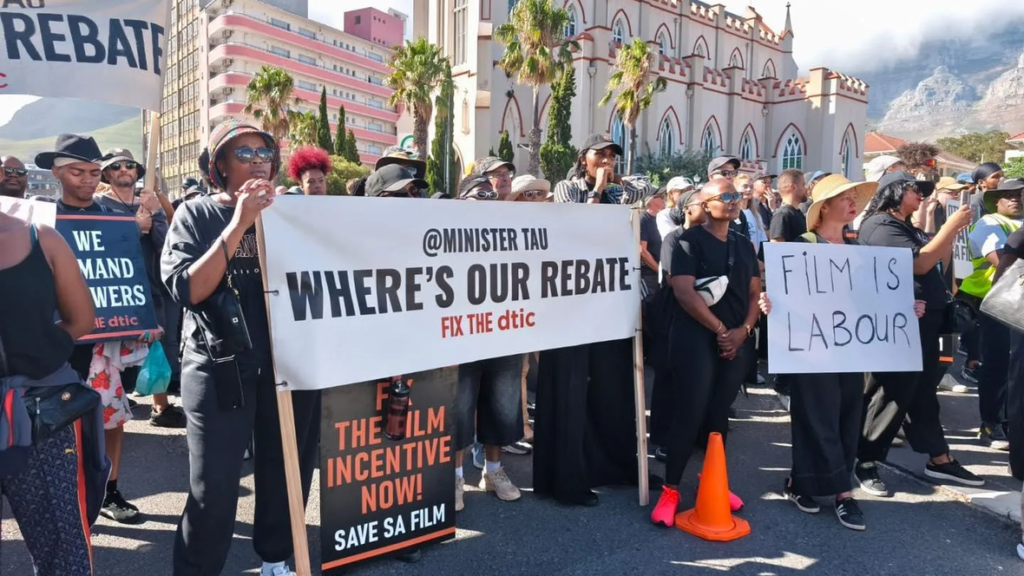
A self-inflicted crisis of government bureaucracy is quietly tearing through one of South Africa’s most vital economic engines.
For nearly two decades, South Africa built a reputation as a premier destination for global screen production. From high-budget foreign studio projects seeking world-class technical crews and varied landscapes to gritty, homegrown cinema reflecting our complex national character, the country held a distinct competitive edge.
Central to that success was the Department of Trade, Industry and Competition film and television production incentive scheme.
The mechanism was built on a straightforward premise: attract local and foreign capital through structured cash rebates, generate skilled technical employment, support black-owned service entities, and inject foreign currency directly into local suppliers, transport operators, and hospitality vendors.
Today, that promise lies buried beneath a mountain of administrative inertia.
The systemic delays and operational dysfunction plaguing the incentive unit at the Department of Trade, Industry and Competition have graduated from mere red tape into a full-scale industrial emergency. Independent domestic producers are routinely forced to take out expensive bridging loans or leverage personal assets to meet weekly crew payrolls while waiting months, and often years, for valid rebate applications to be adjudicated and paid out.
The international picture is equally dire. Global studios, operating on rigid slate schedules and multi-million-dollar financing arrangements, are simply packing up their order books. Production capital is being redirected to competing destinations such as Australia, Colombia, and Eastern Europe, where tax credits and rebate schemes are managed with commercial predictability rather than administrative caprice.
The economic fallout across the domestic supply chain is immediate and brutal. Freelance camera operators, gaffers, sound engineers, art directors, and costume designers – the specialised craftspeople who form the structural backbone of the local screen economy – face catastrophic income losses. Small-to-medium enterprises that scaled up operations to provide specialised gear rental, transport, and catering services are closing their doors.
When official departmental notices warn producers that any pre-production expenditure incurred prior to receiving a formal approval letter is undertaken strictly “at the applicant’s risk”, government is asking an entire sector to operate with zero visibility. Given that approval letters now face indefinite backlogs, this directive effectively freezes pre-production schedules and kills project pipelines before cameras can even roll.
The industry has not taken this lying down. Organised collective action under the Save SA Film and TV Jobs Coalition has repeatedly brought these failures to the steps of Parliament. Formal engagements with Trade, Industry and Competition Minister Parks Tau and the Parliamentary Portfolio Committee on Trade, Industry and Competition have produced direct evidence of the damage. Yet despite public commitments to clear processing backlogs on a “first-in, first-out” sequence and expedite outstanding payouts, operational delivery remains hopelessly stalled. Signed framework agreements and target deadlines have repeatedly slipped, leaving local filmmakers holding the financial bill for departmental neglect.
What renders this crisis so bitter is that the damage is entirely self-inflicted. The collapse does not stem from a shortage of creative talent, a lack of international interest, or diminishing market demand. South African production crews remain among the most skilled and adaptable in the world, local post-production facilities offer high capabilities, and our stories continue to command global attention. The failure is purely administrative.
A functional rebate scheme is not a charity handout to filmmakers; it is a proven economic catalyst that yields significant returns in direct foreign investment, tax revenue, and job creation. By allowing the Department of Trade, Industry and Competition incentive unit to grind to a halt, government is actively dismantling a sector that took decades to build.
If the government is serious about structural economic recovery, protecting specialised employment, and keeping South Africa’s creative voice on the international stage, Minister Parks Tau and the executive must intervene directly. The incentive unit requires an immediate operational overhaul, full transparency on backlogs, and binding statutory turnaround times for application processing.
Leaving a multi-billion-rand industry to choke on institutional incompetence is an unforced policy disaster that South Africa simply cannot afford.
Get the morning briefing
Our editors’ choice of the day’s stories, in your inbox at six.


Comments
No comments yet.