
Story and Pictures by Jabu Kumalo
With the passing of time, the hopes of the residents of Tjovitjo, a squatter camp near Orange Farm, in the south of Joburg, are dissipating.
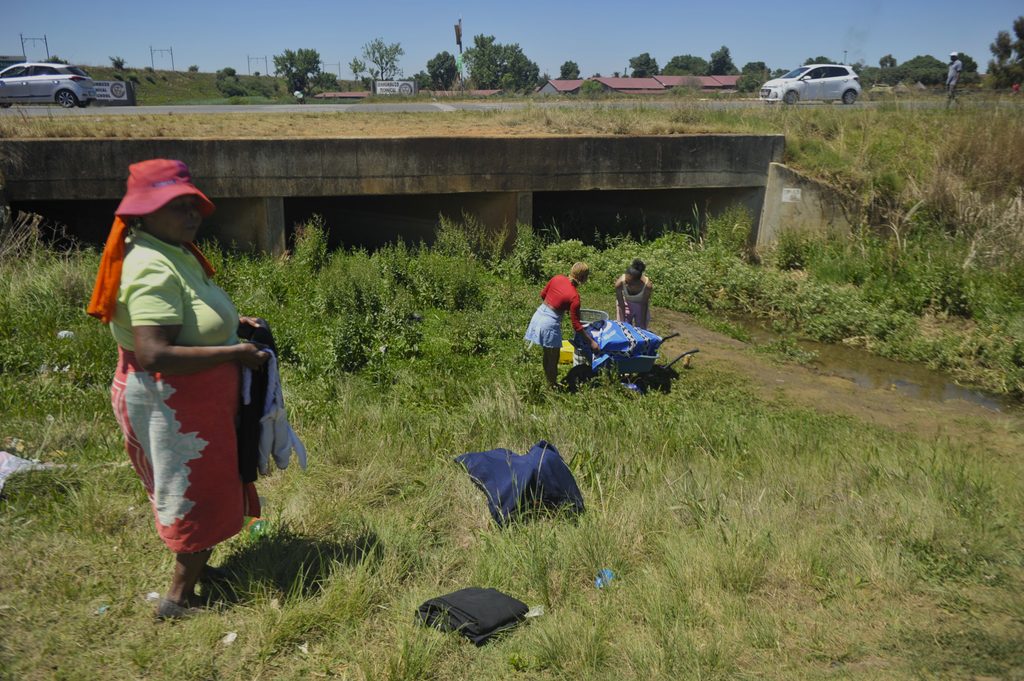
Their everyday pain of having to wake and do the washing in the river, or a stream at the end of their settlement, is becoming unbearable.
The water itself is not as clean as they prefer it to be. But they have no choice.
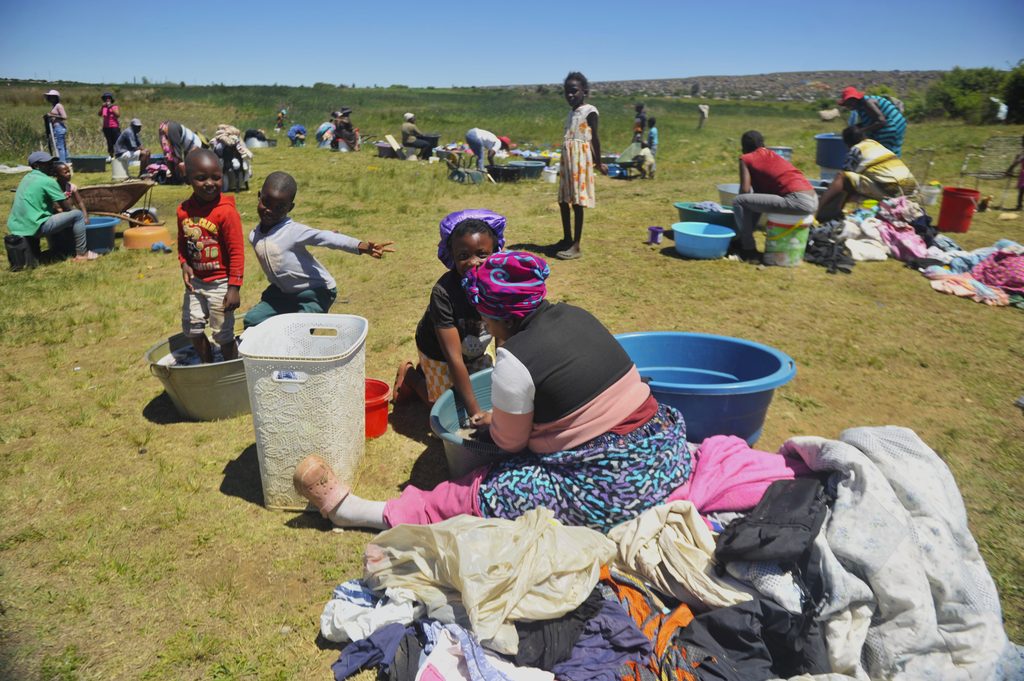
Seeing them doing their washing, you will be forgiven for thinking that you are probably driving in deep rural areas, whereas they stay just 30 km from a world-class African city – Johannesburg.
They also fall under this huge metropolitan municipality.
They were promised that they would soon be getting houses. Nine years later, that hope is more like an illusion. They no longer believe anything said by politicians.
Their biggest pain, besides not having basic services like water, electricity and sanitation, is what they call the “callous arrogance of the politicians” who come to canvass for votes in their area.
They say the nerve of “these people” is just unbelievable.
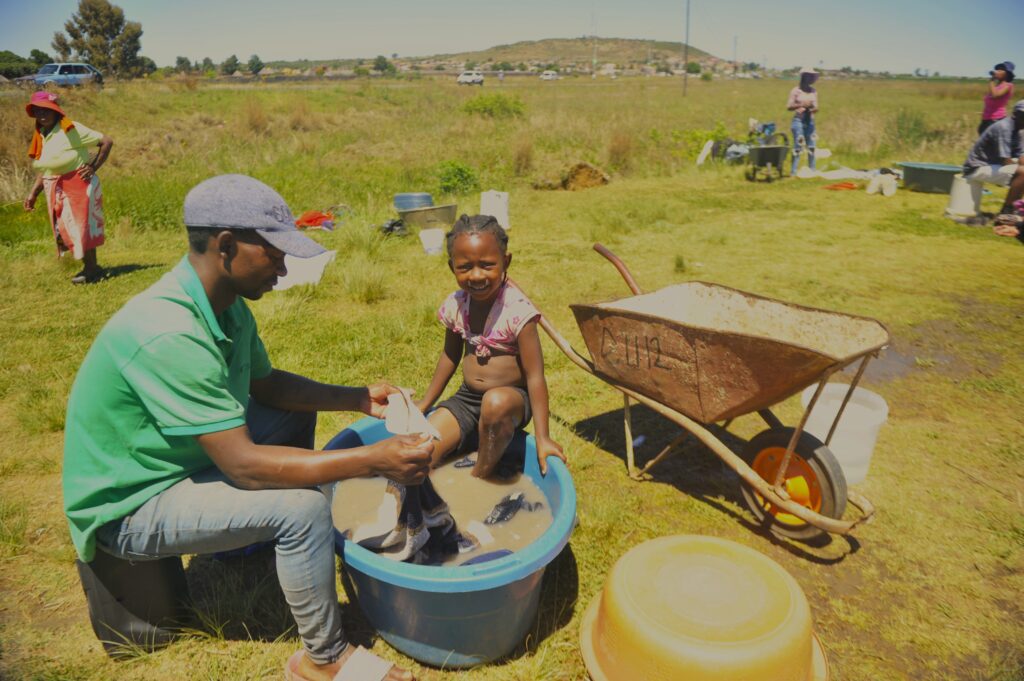
A father, Nkululeko Mofahla, who was busy washing, being helped by his five-year-old daughter, said politicians only come to talk to them about voting and not their daily plight.
Nkululeko said: “Occasionally water trucks come and fill Jojo tanks. Sometimes they tell us they have not been paid, so they will not be coming. This is real hard life. What we are going through is real suffering. What is worse is that there is nowhere to complain. I feel neglected as a citizen. How can I bother to vote if I lack basic services? Why should I vote?”
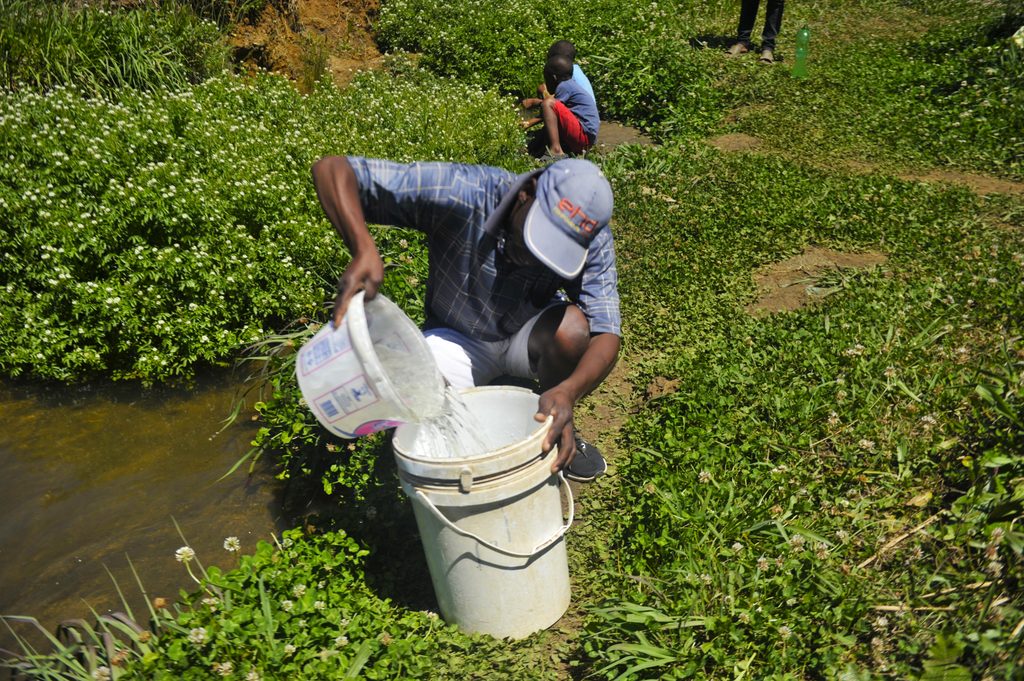
He said one of the most necessary tools one must have in order to survive here was a wheelbarrow.
They need it to fetch and carry drinking water from the neighbouring township, which is about 2 km away.
Some of the residents refused to speak or to be photographed because back home, where they come from, their relatives think they are living a good life in the City of Gold.
Unemployed Slindile Nhlabathi, who was surrounded by washing that looked as if it was going to take the whole day to finish, said: “Our families back home think we are living a great life here in Jozi. They would be shocked to see us living worse than in the bundus where we come from. The politicians are coming to us for votes. But when we talk about employment, they tell us about the 18 to 35 years age restriction. They must tell those young ones to go and vote and leave us who are over 35 years old.”
The Democratic Alliance (DA) said that if the residents put them in power, they would strive to fast-track the Upgrading of Informal Settlements Programme (UISP) funding.
Speaking for the DA, Nonhlanhla Sifumba said: “The DA will set clear and public timelines for formalisation, deliver basic services immediately, and put people, not processes, at the centre of governance.
“The DA has relentlessly fought for informal settlements like Tjovitjo. A motion proposed by the DA to include Tjovitjo as one of the informal settlements to be formalised was rejected. However, should the DA govern, we will add Tjovitjo to the list to ensure formalisation, which will subsequently result in electrification.
“The DA has done this before. In 2019, when we governed in Joburg, an informal settlement situated near Klipspruit West received electricity in three months, and that project was driven by the DA.”
She said the DA has been fighting for Tjovitjo in the City “through debates in council sittings, Section 79 Committee engagements, motions and written questions.”
“The DA has repeatedly held the Government of Local Unity administration accountable for its failure to formalise Tjovitjo and provide basic services. These were not political demands; they are constitutional rights.
“Yes, the people of Tjovitjo have been forgotten and sidelined by the ANC-EFF-PA-led council because they rejected the formalisation of Tjovitjo,” Sifumba said.
She acknowledged that, though it was not a permanent solution but a temporary relief, the party raised funds to buy Jojo tanks and also bought water for the residents.
Said Sifumba: “We were compelled to provide temporary relief and ensure that people who did not have water for weeks and months on end at least have accessible and clean water for their dignity. Furthermore, the DA brought a bulldozer to clean up an overgrown, empty field after a deceased person was found in that area.
“The DA continues to fight for the rights of people of Tjovitjo and Finetown to have access to clean water by taking up their challenges consistently with Joburg Water and the mayor. The fight has not stopped. We are still on the ground and engaging residents daily.”
Another clearly frustrated resident, Dikgang Makeng, who was helping his wife get water from the river, said he had lost any hope of living in a house after nine years of lies and promises by the politicians.
He asked nobody in particular: “Why should we bother to vote when we live like this?”
The communications department at Joburg City did not get back to us for comment by the time of publication, after promising to do so.
The only message Dudu Lushaba sent was: “Please be advised that your enquiry has been received and forwarded to the relevant departments for a response. We will revert once feedback has been received.”
Get the morning briefing
Our editors’ choice of the day’s stories, in your inbox at six.


Comments
No comments yet.