

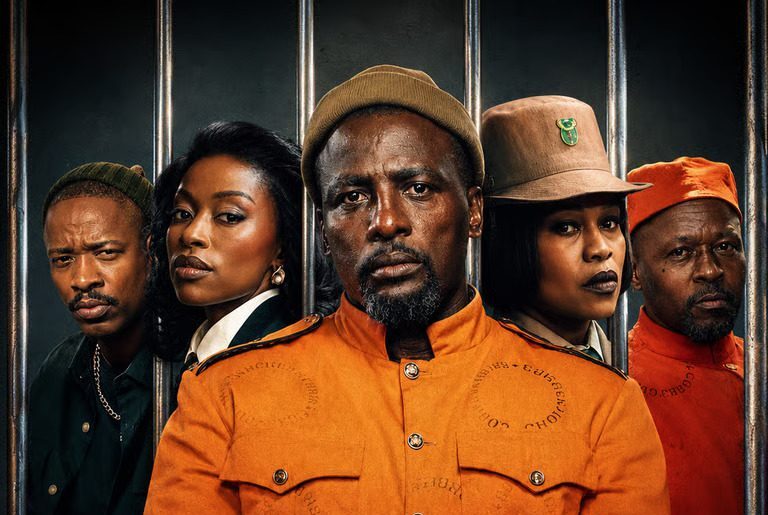
Umthetho demonstrates that South African filmmakers have the talent, skill and technical ability to compete globally. Yet the series raises an uncomfortable question, writes Sandile Memela: why borrow Brazil’s prison mythology when our own history contains extraordinary stories waiting to be told?

By Sandile Memela
We must join the throngs of people who have congratulated the team behind Netflix’s Umthetho.
And the congratulations are deserved. Sincerely.
What we have seen on screen is confirmation, if confirmation was still needed, that we have what it takes to produce world-class work. The production values are undeniable.
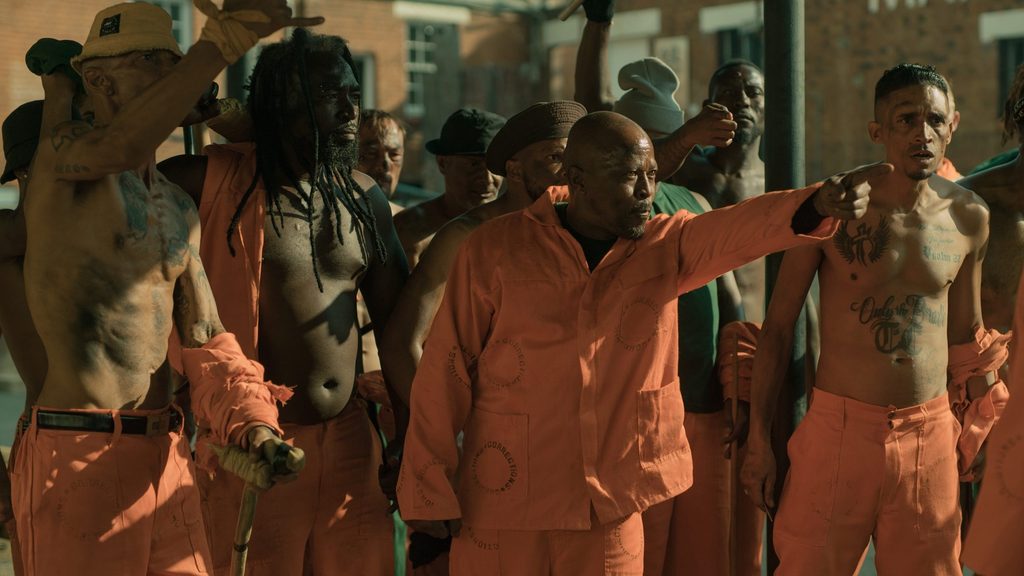
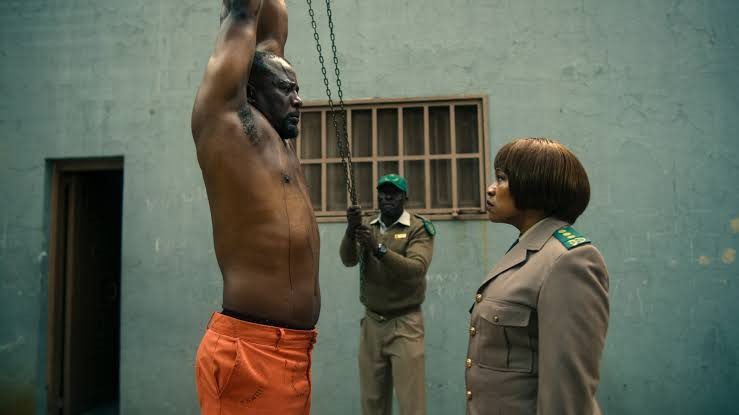
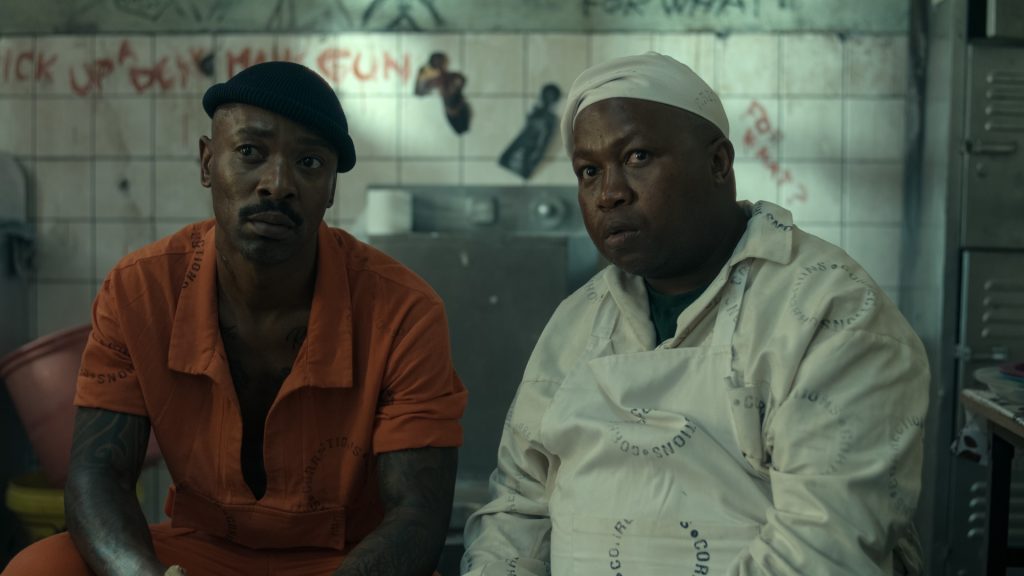
As many viewers and critics have said, the cinematography is exceptional. Every frame is composed with care. All scenes are beautifully shot and visually arresting, from the cold concrete of the cells to the open sky that mocks the inmates with its freedom. The colour palette, lighting, and camera movement are confident, cinematic, and of a global standard.
The music is well chosen, appropriately placed, and carries enormous emotional weight. It does not tell you how to feel; it deepens what you already feel. The sound design is textured and mature.
The quality of acting is top-notch. Tony Kgoroge is … er, exceptional. The cast is outstanding. We have always had actors. Now we have actors who are given space, time, and direction to act, to pause, to be silent. This is what we have come to be known for: brilliant craftsmanship.
South African crews can shoot. South African editors can cut. South African actors can act. On that, Umthetho is a triumph.
But this, for me, is not just about craft. It is about history, storyline and context. It is about the oldest and most important question in art: whose story are we telling?
Of course, this is not a South African story. This is a Latin American story, torn from the pages of Brazil.
Anyone who has watched Carandiru, El Marginal, or even Netflix’s own Sintonia and Prison Cell 911 will recognise Umthetho immediately. The tropes are identical. The all-powerful prison gang with its own constitution, its own court, its own written law – the Umthetho.
The charismatic, almost philosophical gang leader who is more disciplined than the wardens. The corrupt prison system that outsources order to the criminals because it cannot govern. The young, innocent entrant who must learn the law to survive. The violent, baptismal initiation. The state that is absent and present at the same time.
Frankly, this is imitation. Duplication. Adaptation. Cut and paste. Worse, it is artistic and creative suicide.
We cannot continue to do this to ourselves. We have a rich history and universal story that does not need to be imported from São Paulo.
It is not that our creatives are lazy. That would be an unfair and untrue insult. Our writers, our directors, our showrunners work incredibly hard under impossible conditions. The problem is not laziness. The problem is permission. They have allowed themselves to be told what to write and create, how to do their work, what the global algorithm wants, and what sells in Berlin, in Rio, in Los Angeles.
That is the worst form of death for an artist. It deprives you of artistic freedom. Not with a gun, but with a commissioning brief. Not with censorship, but with a note that says, “Make it more like Narcos. Make it more like Prison Break. Make it more like that Brazilian hit that did well in the Top 10.”
These new times are really bad. Netflix dictates. And if you want to be exposed to the world, do as you are told. If you want that global release, that billboard in Braamfontein that says Top 10, you must conform. You must give the platform what its data tells it the world already watches. And what the world already watches is Latin American prison gangs.
So we give them a Brazilian prison, shot in South Africa, with South African accents, and call it a South African story.
It is not.
A little research, a little courage, a little rewriting of Umthetho according to our own history and context would have given us something the world has never seen, and something the world actually needs.
Because we have our own Umthetho. We have lived it.
Think about Robben Island. If you want to tell a story about men confined in brutal conditions who create their own law to survive and to preserve their dignity, you do not need to go to Carandiru. You go to Robben Island.
There, Nelson Mandela and his comrades – Walter Sisulu, Ahmed Kathrada, Govan Mbeki – faced a prison system designed to break them. What did they do? They created their own Umthetho. Their own governing organ, their own constitution in prison. They created rules about how to educate each other, how to discipline informers, how to share food, how to conduct political debate, how to keep hope alive when the state wanted them dead.
That was a real law. A law of liberation, not of extortion. Unlike the criminals in Brazil, these were real champions of human rights. Their struggle was not for control of the prison yard. It was for control of their humanity.
Imagine Umthetho rewritten as that. A drama about how men in Section B built a university in a prison. How they smuggled manuscripts in the Bible. How they turned a limestone quarry into a classroom. How they negotiated with brutal wardens not for cigarettes, but for the right to study. That is visually arresting. That is emotionally weighty. That is universal.
Or, if you want a story closer to the Black Consciousness tradition that shaped so many of us, look at the role and contribution of the Black Consciousness activists who were taken to Robben Island in the 1970s.
This is a story that has never been properly told on screen. After the 1976 uprising, young BC activists arrived on Robben Island – activists of SASO, of the Black People’s Convention, of the Soweto Students Representative Council. They did not fit easily into the existing ANC-dominated prison structure. They were younger, more radical, more influenced by Biko and Fanon than by Marx and the Congress tradition.
And they struggled to demand their rights and assert their dignity, not only against the apartheid wardens, but within the prison itself. They questioned the old guard. They demanded that African culture be recognised. They refused to be absorbed. They had their own Umthetho – a BC Umthetho of Black self-reliance, of refusing to define themselves by the oppressor’s terms, even in prison. Of refusing to collaborate.
Think of the dramatic tension: a 19-year-old from Soweto who has read I Write What I Like in secret, now in a cell with a 50-year-old Rivonia trialist who thinks BC is naive. How do they negotiate coexistence? How do they create a common law? That is South Africa. That is our internal debate, our generational conflict, our ideological struggle, played out in one corridor.
These are rich stories. They have conflict, they have hierarchy, they have codes, they have violence, they have tenderness. They have everything that the Brazilian narrative has, but they have something more: they are true. They are ours.
The Brazilian experience could have been rewritten to tell our own stories. You can take a global genre – prison drama – and localise it with our archive. You do not have to copy the plot. You take the engine, and you put our fuel in it.
But nay, that did not happen. Maybe we do not know our stories. Our history. We do not do research.
And that is my deepest worry. We have become so desperate for global validation that we have stopped digging into our own archive. The archive is dusty; it is painful; it is contradictory; it requires reading, interviewing old men and women, sitting in the Mayibuye Centre at UWC for weeks. It is easier to watch a Brazilian series on Netflix and say, “Let’s do that, but in Zulu.”
It is time to dig into the archive. We must tell our stories and write our own history. Local is not only lekker. Local is universal. We are the world.
This is a fact that every great filmmaker knows. The more specific you are about your own reality, the more universal your work becomes. The world did not fall in love with Tsotsi because it was like a Brazilian film. It fell in love because it was so specifically South African that it became about every township in the world.
The world did not love My Octopus Teacher because it copied a foreign underwater documentary. It loved it because it was so rooted in False Bay.
South Africa is the laboratory of the universal struggle to give the world a human face. Where else in the world did a people build a new constitution in a prison? Where else did prisoners turn a jail into a university that produced two presidents and a Nobel Peace Prize? Where else did young activists debate Steve Biko and Karl Marx while breaking rocks in the sun?
That is Umthetho. Our Umthetho.
So let me end where I started. Congratulations to the team. You have shown that our craftsmanship is world-class. Your cameras are ready. Your actors are ready. Your editors are ready.
Now, let our stories be ready.
We do not need to borrow a Brazilian law to tell a South African story. We have our own law. It was written on Robben Island, in the cells of Pretoria Central, in the interrogation rooms of John Vorster Square, in the exile camps and the underground cells.
It says: we shall not be broken. We shall govern ourselves, even when we are in chains.
That is the Umthetho the world needs to see.
Tell that next time.