

There is a particular kind of exhaustion that characterises our modern public discourse.
Every day, we are bombarded with top-down declarations, grand political promises, and meticulously managed public relations campaigns. Yet, for all the noise, there is a lingering, quiet hunger across our communities for something far more substantial.
We scan the horizon not for more rulers, but for leaders—those rare individuals who understand that true power is not wielded from a dais, but cultivated from the ground up.
The enduring truth of progress is that lasting change never originates in the insulated corridors of power. It begins with unglamorous, everyday acts of service, with a stubborn refusal to abandon hope, and, most crucially, with an unwavering belief in the potential of ordinary people.
When leadership is genuinely rooted in community, inclusion, and the creation of tangible opportunity, it does something extraordinary: it leaves a permanent legacy. It creates a blueprint that inspires subsequent generations to take up the mantle and continue working towards a better future.
The Illusion of the Solitary Hero
For too long, we have bought into the myth of the solitary hero. Our history books often cheat us by condensing massive, complex societal shifts into the biographies of single individuals.
We are taught to look to the charismatic orator or the powerful executive to save us. But this is a dangerous abdication of our own agency.
Real change is not a spectator sport, nor is it a deliverable handed down from a benevolent authority. It is a slow, collaborative, and often untidy process.
When we look closely at the moments that genuinely shifted the trajectory of our societies for the better—whether it was the hard-won fight for workers’ rights, the quiet resilience of community-led integration, or the local initiatives ensuring no child goes to school hungry—the common denominator is never a lone wolf.
It is always a network of people who looked around their neighbourhoods and decided that they were the ones they had been waiting for.
True leadership is about creating space for others to lead. It is about an inclusive vision that does not ask people to fall in line, but rather invites them to pull up a chair.
When opportunity is democratised, and when people feel seen and valued not as electoral statistics but as vital stakeholders, the energy of a community shifts.
The Practicality of Hope
It has become fashionable to view hope with a degree of cynicism. In a world fraught with economic uncertainty and social fragmentation, optimism can easily be dismissed as naïve or twee. But let us not mistake complacency for sophistication. Cynicism is easy; it requires nothing of us but a raised eyebrow and a defeatist shrug. Hope, on the other hand, is a gritty, fierce, and deeply practical discipline.
Hope is the psychological fuel required to face systemic challenges. Without it, action is paralysed. When a leader instils hope, they are not offering a superficial guarantee that everything will be perfect tomorrow. Instead, they assert that the current state of affairs is not permanent, and that our collective efforts are worth the gamble.
Consider the profound difference between leadership that governs through fear and division, and one that governs through collective resilience. The former shrinks our world, making us defensive and suspicious of our neighbours. The latter expands our horizons. It reminds us that our fates are inextricably linked.
An inclusive community is not a utopian fantasy; it is the most stable, prosperous, and secure environment a society can cultivate.
“It Is Possible, We Can Do It”
There is a timeless phrase that echoes through the history of successful social movements: “It is possible, we can do it.”
On its surface, it sounds remarkably simple—almost like a slogan you might find on a corporate motivational poster. But when spoken by a community that has known hardship, it transforms into a radical manifesto of resilience. It is an explicit rejection of the idea that we are helpless victims of circumstance.
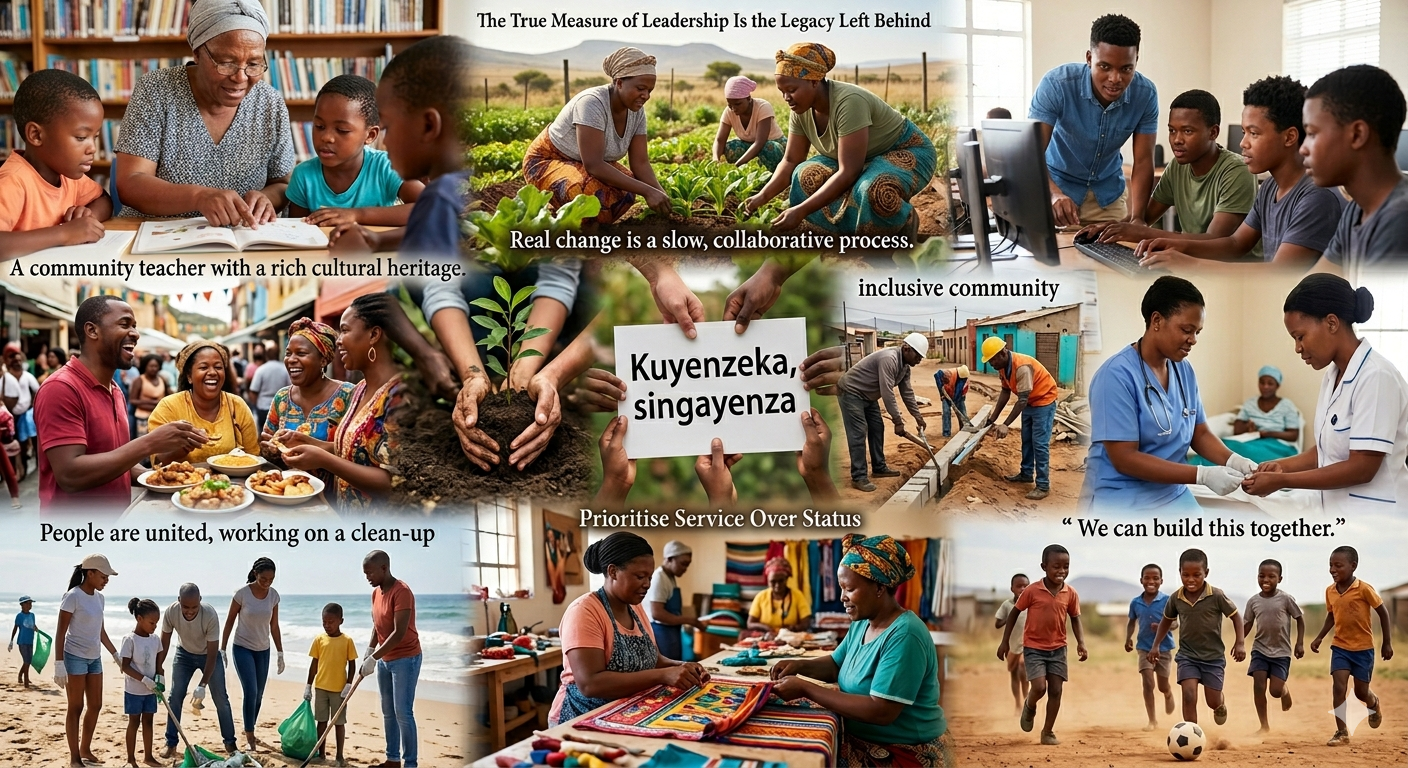
This phrase shifts the locus of power from the singular “I” to the plural “We”. It does not say, “I can fix this for you.” It says, “We can build this together.” That subtle shift changes everything. It transforms passive recipients of aid into active architects of their own destiny.
When people begin to believe that change is possible, the entire psychological landscape of a town, city, or nation changes. Despair gives way to curiosity. Curiosity leads to collaboration. And collaboration breeds results.
The Challenge Before Us
So, how do we operationalise this insight in our daily lives? It requires us to look at our own spheres of influence differently. Whether you are managing a team at work, volunteering at a local youth club, or simply engaging with your neighbours, the principles remain identical.
• Prioritise Service Over Status: Do not ask what your community can do to elevate your standing; instead, ask what your skills can do to elevate the community.
• Foster Deep Inclusion: Intentionally seek out the voices that are usually missing from the room. True unity is not the absence of conflict, but the presence of justice and broad participation.
• Build Competence, Not Just Confidence: Provide people with the actual tools, resources, and opportunities they need to thrive. Inspiration without infrastructure quickly sours into frustration.
A Legacy for the Future
The ultimate measure of any leadership is what happens after the leader steps away. If an organisation or a community collapses the moment a specific individual departs, that leadership has failed. It was a cult of personality, not a movement.
The legacies that endure for generations are those that embed themselves in a people’s culture and institutions. They leave behind a standard of behaviour, a heightened expectation of what is acceptable, and a profound belief in collective capacity.
They ensure that when the next crisis arrives—as it inevitably will—the community does not look around in panic for a saviour. Instead, they look at one another, roll up their sleeves, and remember: it is possible, and we can do it.
Let us stop waiting for permission and start building that future today.