

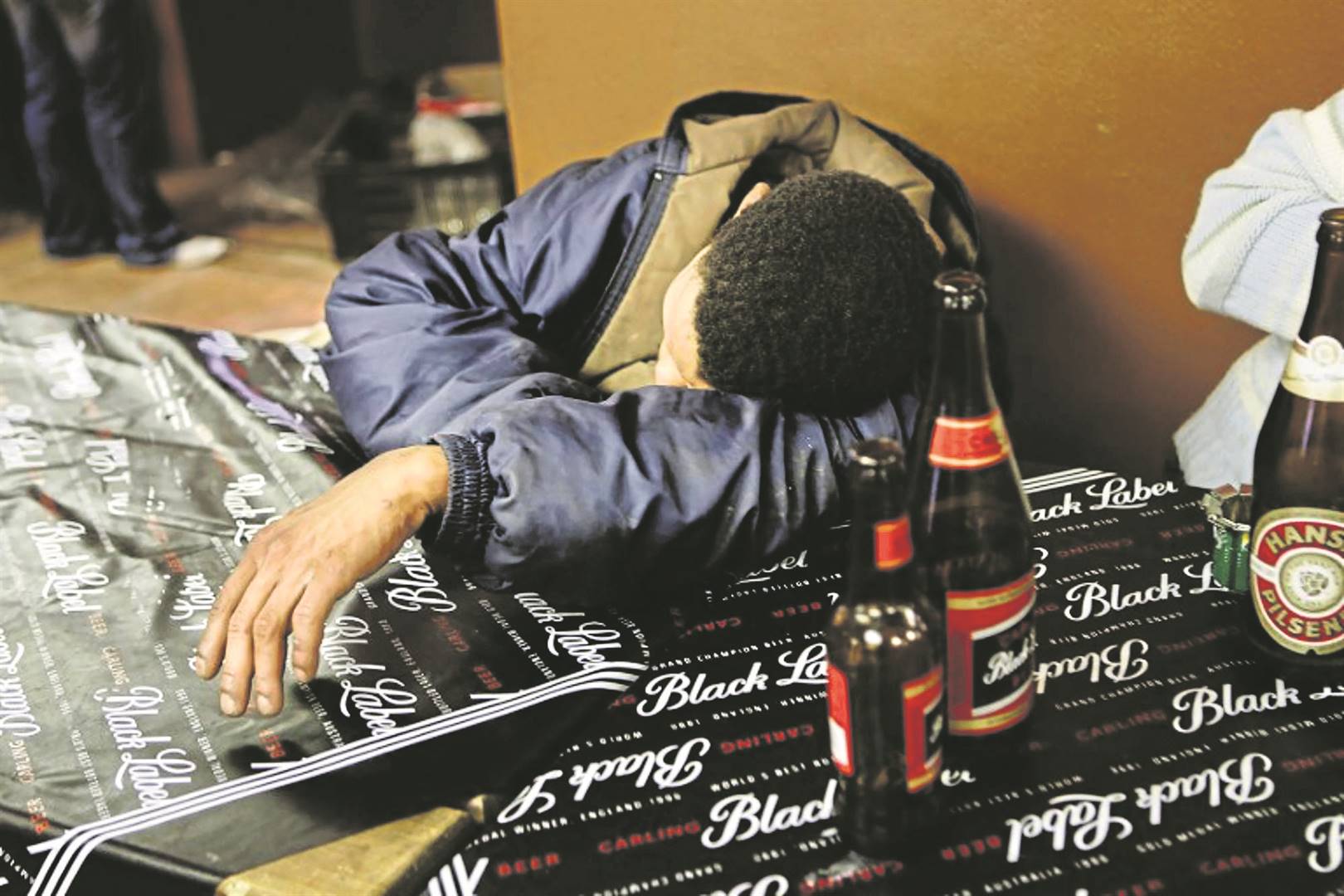
The bottle can become a dangerous hiding place when its presence is explained through amadlozi. For izinyanga and izangoma, the consequences reach beyond drunkenness, touching dignity, relationships, the sacred calling and the painful question of whether alcohol has quietly taken control.

By Gogo Bathini Mbatha
There are mornings from my drinking days that I still remember with a heaviness that has little to do with the headache or the terrible dryness in my mouth.
The worst part was the gradual return of memory and the realisation that, while I had been drinking the previous night, I had once again become somebody I did not like very much.
I would lie there trying to reconstruct the evening from fragments, sometimes remembering an argument but not how it began, or recalling a conversation without remembering what I had said. Then somebody close to me would tell me what I had done, and I would sit with the shame of discovering that I had caused pain while being too drunk to remember causing it.
I was not a pleasant man when I was drunk. I was arrogant, reckless and argumentative, and alcohol gave me a false confidence that made me say and do things I would not have done sober. Yet for a long time, I had an explanation that let me avoid confronting the truth.
Kungenxa kagogo ongasekho…I would justify.
I blamed my drinking on the ancestral spirit that worked through me as a healer. I convinced myself that my drinking was somehow connected to my calling, and that ugogo was responsible for what happened when I drank too much. It was a convenient belief because it placed the blame somewhere beyond myself.
My dear mother, may she continue to rest in eternal peace, saw through that excuse. She once told me that there was no way ugogo could turn me into an alcoholic when she had never touched a drop of alcohol herself.
Those words stayed with me.
Looking back, I understand what she was trying to make me see. I had been given a gift and had somehow persuaded myself that the same ancestral source had also given me the bottle that was destroying my judgement, my relationships and my dignity.
The contradiction should have been obvious, but when you drink destructively, you become very good at constructing explanations that let you keep going.
That is why I become deeply concerned when I see izangoma drinking alcohol in huge quantities and explaining it by saying that it is an instruction from amadlozi. I understand the temptation because I once used the same explanation to protect myself from a truth I did not want to face.
Think of an ithwasa who is supposed to be learning the discipline and humility required by a sacred calling, but whose relationship with alcohol has reached the point where they arrive at the homestead already drunk. Their eyes are heavy, their speech is beginning to run into itself, their movements have lost their certainty, and the smell of alcohol hangs around them. They are supposed to be listening and learning, yet they are struggling to remain present.
When somebody expresses concern, they point towards amadlozi and say the drinking is part of the calling.
That is where I believe we need to be much more honest with ourselves.
Respect for ancestral calling cannot mean accepting every destructive habit simply because it has been given a spiritual explanation. There is a big difference between respecting an ancestral calling and using that calling to shield behaviour that is plainly causing harm.
Alcohol does not always announce itself as destruction. It can begin innocently enough, as something shared with friends or something used to take the edge off a difficult day. Gradually, however, the reason for drinking can change. You drink when you are celebrating, then when you are unhappy, then when you are angry, and eventually you discover that you no longer need a reason at all.
The bottle has become part of how you deal with life.
I know that progression because I lived it.
I also know what happens after the drinking. The alcohol disappears, but the consequences remain. The people you insulted still remember. The person you frightened still remembers. The family member who had to watch you stagger home still remembers. You may not remember everything, but they do.
That is the cruelty of excessive drinking. For a few hours, alcohol can make you feel as though the things troubling you have become smaller, while the damage it leaves behind can become much larger than whatever you were trying to escape.
And when the drinking becomes destructive, the excuse that amadlozi are responsible can become another part of the problem. It can prevent the person drinking from asking the question that matters most: what is happening to me?
I do not say this to mock anyone’s spiritual beliefs. I respect ancestral calling, and I know that it carries profound meaning for many people. My concern is what happens when a spiritual gift is used to make a destructive relationship with alcohol seem untouchable.
If ithwasa is becoming so intoxicated that other people have to get them home, if isangoma is neglecting family because of drinking, if alcohol is making somebody aggressive, unreliable or incapable of fulfilling their obligations, we should be able to speak honestly about what we are witnessing.
We should not have to pretend that the bottle is sacred simply because somebody says the ancestors are behind it.
I had to confront that truth in my own life.
How could the ancestors have bequeathed me the gift of healing and then require me to become a slave to alcohol? How could the calling demand that I help others while I was becoming incapable of controlling myself? How could I claim to honour what had been entrusted to me while using ugogo as an excuse for behaviour that was making me less capable of carrying it?
Eventually, I understood that I had been confusing the calling with the habits I had built around myself.
My ancestors did not need to become the villains in the story of my drinking. I had to look honestly at my own behaviour, including the excuses I had invented to make it easier to continue. That was painful, but it was also liberating because once I stopped blaming ugogo, I could finally confront the thing that had been standing between me and the life I wanted to live.
That is why I worry about izangoma and amathwasa who are drowning in alcohol while insisting that amadlozi are the ones demanding that they drink. I worry because I know how easily such an explanation can become a shelter from the truth, and I know how difficult it can be for the people who love you to watch you disappear into alcohol while being told that there is nothing they can do because it is part of a spiritual calling.
There is nothing disrespectful about telling someone that alcohol is destroying them, particularly when you are telling them because you still believe in the person, the calling and the gift beneath the drinking. Sometimes the most honest thing we can offer somebody is the truth they have been avoiding.
I cannot speak for every ancestral tradition, but I can speak about what my own experience taught me. The gift of healing is too precious to be used as an explanation for self-destruction. A calling should not become a hiding place for an addiction.
The bottle was never my ancestor’s bequest to me. I know that now, and I hope every sangoma, inyanga, ithwasa and traditional healer who find themselves reaching for another drink while telling themselves that it is amadlozi who demand it will one day pause long enough to ask what, exactly, was placed in their hands when they were chosen.
Because there is a terrible sadness in watching someone drown in alcohol while believing that the very spirits who called them to their gift are the ones holding their head beneath the water.
Gogo Bathini Mbatha: Founder of Sober Beings/ Traditional Healer/ Researcher/ Spiritual Educator