


My drinking followed me everywhere: behind the steering wheel, onto motorcycles, into filling stations and along roads between cities. I became so accustomed to surviving dangerous journeys that I began confusing survival with knowing what I was doing.
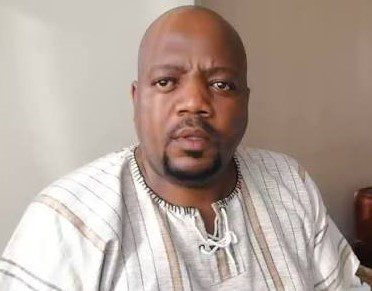
By Gogo Bathini Mbatha
When I look back at the years when alcohol had taken over my life, what troubles me most is the stupid bravado that came with it. I did not just drink heavily; I began to believe that alcohol had somehow changed the rules of life for me.
Things that should have frightened me became stories to laugh about, and surviving behaviour that could easily have killed me became evidence, in my drunken mind, that I was somehow protected.
I used to boast to my friends, “When I get behind the steering wheel, my car gets me home.” I said it with the confidence of a man who believed he had discovered some special talent, when the truth was that I was putting myself and other road users at enormous risk.
Alcohol made me feel fearless, and I mistook that feeling for courage without stopping to consider what had happened to my judgement.
There were many nights when I drove until I could no longer continue, then pulled over and slept on the side of the road or at a filling station. If I eventually made it home, I would tell myself, “My ancestors are always on duty for me.”
Getting home alive became evidence, in my mind, that I was protected, rather than a reason to wonder how close I had come to not getting home at all.
I remember one journey from Johannesburg to Empangeni that took me three days because I kept stopping at fuel stations to sleep. I told that story proudly, as though I had completed some great feat of endurance, and nobody challenged me because I was also the person supplying the alcohol. Who wants to spoil the mood of a sponsor?
That was the strange little world I had created around my drinking. I supplied the alcohol, people enjoyed themselves, and I enjoyed the reputation that came with being the man who could keep the party going. The drinking was part of the entertainment, and I had become so comfortable inside that role that nobody, including me, seemed interested in what was happening underneath it.
In 2017, that same confidence took me into something even more dangerous when I bought my first motorcycle. I had written and passed my learners’ licence test while drunk, applied for motorcycle finance and was approved on the same day. The bike arrived even though I had never ridden a motorcycle before, but that did not seem to trouble me.
I got two instructors, one white and one black, and neither knew that I was drinking before my lessons. My very first motorcycle lesson was undertaken while I was drunk. They thought I was a fast learner, and that fed my ego even further. Instead of making me more cautious, their confidence in my ability confirmed what I already wanted to believe.
On the evening of my third day of training, I went to a friend’s birthday party and drank myself into a stupor. I do not know how I got home. The next morning, with a terrible hangover, I looked at the fact that I had somehow made it through another night and said, “Idlozi liyasebenza, damn.”
I went to training with the hangover still sitting heavily on me. By the fifth day of riding under supervision, I had convinced myself that I was ready to ride all the way to Empangeni, despite having almost no experience on a motorcycle.
I told the white instructor what I intended to do.
“Are you smoking your socks? You’re learning with a 250cc and you want to ride 800 kilometres with a 1200cc with five days’ experience?”
“Yes, I’ve made up my mind.”
The next day I took the machine and went onto the road.
Everything about that journey was wrong. I did not have the riding skills, proper riding gear or experience to understand what I was taking on. I was on the N3 and then took the road towards Standerton. By the time I reached Volksrust, I remembered the Amajuba curves and became frightened because I suddenly understood that I had never ridden a motorcycle independently for even one kilometre.
My stinking thinking still had an answer for the fear beginning to creep in: alcohol.
I bought a nip of whisky and finished it in one go. I waited, expecting the courage I had come to associate with drinking to arrive. When I felt nothing in my head, I bought another, followed by a third “for the road”.
With the whisky in me, I entered the curves like a pro, or at least that is how it felt at the time. The alcohol had not given me riding skills, but it had quietened the fear that might have told me to turn around, slow down or admit that I was not ready. I experienced the disappearance of fear as though it were an improvement in ability.
That trip convinced me that I was a real rider. I had completed the journey, and in the strange logic of my drinking, that was enough to confirm the belief that I could do it. I did not stop to ask why I had needed whisky to give myself the courage to continue.
From then on, whenever I had to ride, I would get myself a 750ml bottle of whisky. The bottle was no longer something I carried for a party or kept at home; it became part of my riding equipment.
At one point, I bought a backpack with a water container and a long straw that came up to my mouth, the sort of arrangement someone might use on a long hike to keep themselves hydrated. I had a different purpose for it. I filled the container with whisky.
Looking back, there was something absurd about the arrangement: the motorcycle, the riding gear, the backpack strapped to my body and the long straw positioned so that I could drink without having to stop. I had taken something designed to carry water on a journey and turned it into a way of keeping alcohol within reach while I was riding. I was preparing for the road around the drinking rather than preparing myself for the road.
The bottle had become part of the journey. I knew where the whisky was, how much I had with me and how easily I could get to it. When fear came, there was a drink. When I became tired, there was a drink. When the road stretched ahead and I wanted to keep going, there was a drink.
The motorcycle might have been designed to take me from one place to another, but I had made sure that the alcohol travelled with me.
Sometimes I would pull over on the side of the road and sleep on the tar when I had drunk too much to continue. At other times I left the motorcycle at friends’ places and got somebody else to drive me because I was too drunk to ride. I do not know how many times I fell on the road, and I believe it is by pure luck that I never had a major accident.
I also spent a lot of money paying for cars I damaged because of my alcoholism. I would pay for the damage, repair what needed repairing and carry on, without allowing myself to sit with what the repeated damage was telling me.
The danger was never mine alone. When I was drunk behind a steering wheel or on a motorcycle, everybody sharing the road with me was exposed to decisions they had no part in making. A family travelling in another car, somebody coming around a bend, a pedestrian beside the road or a person heading home from work could have been caught in the consequences of my drinking.
I did not think about those people then because alcohol had reduced my world to the bottle, the road, the machine and the certainty that I would somehow get through it.
That is what makes some of those memories uncomfortable now. I once told them as funny stories: the three-day journey from Johannesburg to Empangeni, the nights spent at filling stations, the motorcycle trip after barely five days of training, the whisky on the Amajuba curves, the falls and the damaged cars. The stories sounded better because I had survived them. I had learnt to treat getting through another dangerous situation as proof that the situation could not have been as dangerous as it looked.
For years, I confused survival with ability. If I reached home, I believed I had driven well. If I completed a long motorcycle journey, I believed I was a good rider. If I fell and got up again, I treated the fall as part of the adventure rather than asking why I kept putting myself in situations where falling had become normal.
I was that man on the motorcycle, carrying whisky and believing that fear was something a drink could remove. I was also the man behind the steering wheel who believed that his car would get him home. Looking back now, I can see how easily I had turned close calls into anecdotes and danger into entertainment, because I was never forced to confront the ending that could have been waiting for me on any of those roads.
Sometimes I still think about those long stretches between towns when the world seemed to narrow to the motorcycle beneath me, the road ahead and the whisky I had carried with me. I remember the certainty that I would eventually see the lights of home, even when I had no business being on the road at all. I remember how little I understood about the distance between making it home and not making it home, and how easily that distance could have disappeared somewhere along the road.
Those memories have lost the laughter they once carried. What remains is the image of that younger man travelling into the darkness, carrying his whisky and his confidence, while the road ahead kept unfolding beyond what he could see.
Gogo Bathini Mbatha: Founder of Sober Beings/ Traditional Healer/ Researcher/ Spiritual Educator