


It began with a motorcycle rally in Ulundi, a few drinks, and the kind of confidence only alcohol can manufacture. What followed is one of those memories that becomes harder to sneer and jeer at the longer you stay sober.
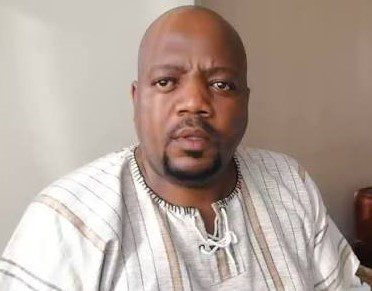
By Gogo Bathini Mbatha
I will never forget one of the stupidest things I ever did on a motorcycle, though at the time I did not have the sense to understand how close I had come to never waking up again.
I had been to a motorcycle rally at Ulundi, and, as usual in those days, I had been drinking. Not drinking in the ordinary sense, but drinking as if sobriety were some distant country in which I had no intention of setting foot. By the time it was time to leave, the guys at the rally could see that I was in no condition to ride, so they warned me not to go and told me I was pissing drunk and should leave the motorcycle and find another way home.
But my ego was drunk too, and a drunk ego is a dangerous passenger because it convinces you that everybody else is worried about nothing while you are perfectly capable of handling everything.
So I climbed onto my machine, started the engine, and took off with the reckless confidence that alcohol had given me.
Somewhere along that road, the alcohol caught up with me. The excitement of the rally had disappeared, the road had become a long ribbon of darkness, and my body was suddenly exhausted, so I remember thinking that I needed to stop for a moment and rest.
“Kanti angibuzanga elangeni.”
I did not know it then, but I had reached the point where my body had surrendered to the alcohol. I pulled the motorcycle to the side of the road, and before I knew what was happening, I was gone into a deep sleep, not a little roadside nap or the kind of rest where you close your eyes for a few minutes, but the kind of sleep in which I was completely unaware of the world around me, as if somebody had carried my bed out of my house and placed it beside the road.
A white man was driving with his family when they noticed my motorcycle standing on the side of the road. They carried on, but when they came back from the party later that night and saw that it was still there, he became concerned and stopped to find out what had happened.
Looking back now, I believe that decision probably saved my life, because he found me sleeping on the roadside as peacefully as though I were lying under a blanket at home, and he woke me and asked, “Bootie, are you okay?”
I cannot even remember what I said, if I said anything at all.
He looked at me and immediately understood what I apparently could not understand about myself. He turned to his wife and said, “My skat, hier’s die man, hy’s poepdronk” (“My darling, this man is absolutely drunk”).
He did not leave me there. He asked his wife to drive to the filling station in Melmoth while he climbed onto my motorcycle and followed behind their car, with his own family travelling ahead of him. A stranger had found a drunk man sleeping on the side of the road and decided that he could not just drive away and leave me there.
He took the trouble to get me somewhere safer, following his wife and family on my motorcycle until they reached the filling station, where they left me.
What makes the whole thing even more difficult to comprehend now is that, after all of this, I went straight back to sleep, as though none of this had happened, as though I had not been riding drunk through the darkness and as though my life had not been hanging by a thread.
The next morning, when the bottle store across the road opened, I was first in line to buy another bottle for the road.
That is the part that makes me look back now with a mixture of disbelief and disgust, because I cannot understand how I could have come so close to death and then woken up the next morning thinking only about booze.
At the time, nothing about the previous night frightened me. I had survived, and in the logic of my drinking mind, survival meant there was no problem. I had reached the bottle store, I had my motorcycle, I had my money, and the sun had come up, so in my mind the case was closed.
Sobriety has a cruel way of reopening those cases.
Today, when I look back at that night, I realise that I was not some fearless rider who could handle his liquor. I was a man who had become so accustomed to danger that he could no longer recognise it when it was standing over him.
Every time I think about that night, I pinch myself and ask the same question: how drunk was I?
This one still sends a shiver through me when I think about it, because that night I had no idea how close I was to something going terribly wrong. That road was bad, with terrible potholes, and there were vehicles travelling along it in the darkness. A truck could have swerved to avoid a pothole and crossed directly into me, while a car could have done the same.
A driver might not have seen a motorcycle standing there until it was too late, and one wrong movement of a steering wheel, one pothole taken at the wrong angle or one moment of distraction could have resulted in me being crushed where I slept.
The thought that I could have died there without ever knowing what had hit me is one of the things that frightens me most now.
Then there was my bag, which was sitting right there on top of the yellow line, exposed to anybody passing by. I had cash with me, I had my phone, and I had possessions that could have made me an easy target for criminals travelling that road at night. Somebody could have stopped, taken the bag and driven away, and I could have been robbed or even killed without ever knowing what was happening around me.
The frightening thing is that I would not have been able to defend myself because I was not even awake. I had surrendered consciousness to alcohol and left my life, my belongings and my safety lying beside a road as though none of them mattered.
I do not know what level of stupidity alcohol had taken me to that night, and I do not know what possessed me to believe that being drunk beyond comprehension was compatible with riding a motorcycle through the darkness.
Looking back now, I can only describe it as a doctorate in stupidity, except that the examination paper was written in blood and the consequences could have been permanent.
For ten years of owning motorcycles, I travelled a long distance sober only once, and I remember how different that journey felt. I was not fighting the road, fighting my own exhaustion or trying to prove that alcohol had no power over me. I was present. I could feel the machine beneath me, see the road properly and arrive knowing that I had been in control of myself from the moment I left until the moment I stopped. At the time, I did not realise how much I had been missing.
Now, when I think about that night on the side of the road, I do not only think about the motorcycle, the potholes or the possibility of being robbed or killed. I think about the man I was back then, and that is much harder to sit with. I look at him now through sober eyes and struggle to understand how a human being could become so careless with his own life that he could sleep beside a dangerous road, wake up the next morning and go looking for another bottle as though the night before had been nothing more than an inconvenience.
That is one of the uncomfortable gifts of sobriety: it gives you back your memory, but it also gives you the eyes to see what you were doing to yourself.
I think about that white man and his family differently now because, at the time, I accepted their help without understanding what it meant. I was too drunk to recognise the kindness of strangers or the danger from which they had pulled me. Today, I understand that somebody stopped for me at a time when I could not stop for myself, and that knowledge has become part of the way I understand my sobriety.
Sobriety has made me understand that my life was worth more than another bottle, more than the bravado of saying I could ride drunk and more than the foolish pride that made me ignore the people who were trying to stop me. I had spent years treating survival as proof that I could keep pushing my luck, when in truth every close call was another warning that I was running out of road.
I cannot go back to that night and take the keys from my hands. What I can do is refuse to become that man again. Every sober morning gives me another opportunity to make the choices he was incapable of making and to treat my own life with the care that I once reserved for everything except myself.
I will probably never know exactly how many things had to go right that night for me to still be here, but I know that a stranger stopped when he could have carried on. For years, I thought I had simply survived another drunken night. Now, when I look back, I understand how recklessly I had been treating my own life.
Gogo Bathini Mbatha: Founder of Sober Beings/ Traditional Healer/ Researcher/ Spiritual Educator