

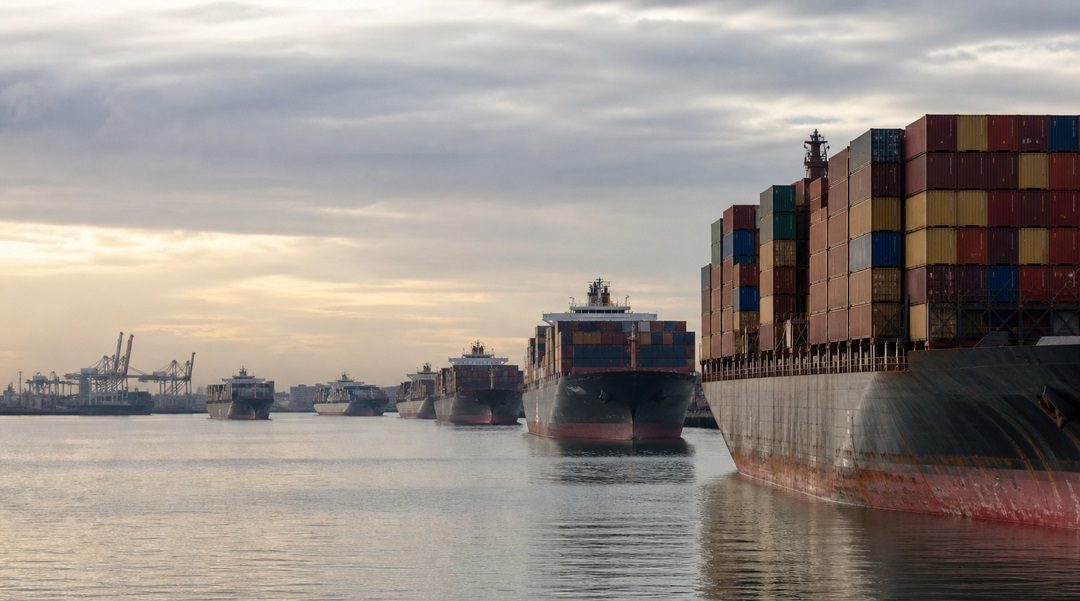
The Durban port crisis is not just about software, broken cranes or ships waiting offshore. It is about a national trade gateway allowed to become dangerously fragile, despite promises that private expertise would deliver better performance and end Transnet’s failures.
By Themba Khumalo
The operational chaos at the Port of Durban, where container ships reportedly spend an average of six to eight days waiting off the coast before they can reach a berth, is a national scandal.
What makes this paralysing logjam unforgivable is that the public-private partnership between Transnet and International Container Terminal Services Inc. (ICTSI) was sold to us as the panacea that would prevent this exact catastrophe.
Instead of delivering a rapid modernisation of South Africa’s primary trade gateway, the transition produced worse chaos. When a country’s flagship commercial hub forces multi-million-dollar vessels to drop anchor for 140 to 210 hours in open water, it is no longer an operational glitch—it is structural collapse.
The core of this mess is a failure of basic execution on three fronts:
1. The Promised “Saviour” Doubled the Delays
The entire rationale for handing Pier 2—the terminal that handles nearly half of South Africa’s total container volumes—to a global private operator was to inject international expertise and capital. Yet, as Transport Minister Barbara Creecy publicly pointed out after descending on the port, ship waiting times doubled after ICTSI assumed operational control, surging to an average of six to eight days, with some vessels trapped in open water for up to 12 days.
A private concessionaire brought in to eliminate public-sector inefficiency oversaw an immediate, sharp degradation in performance.
Confronting the reality on the ground, Creecy laid out the regression under the private operator, noting that waiting times had doubled compared with when the state managed the facility alone, before delivering a stark reality check on historical benchmarks: “So, the target is 24 hours, but obviously when we ourselves were still in charge of the terminal we were not achieving 24 hours, I think our best was about three days… What we have asked our partners to do is to develop a clear plan for dealing with the backlog that would be very specific.”
Stripped of political spin, Creecy’s admission lands like a devastating knockout blow against both Transnet and its private partner. The nation was sold the entire arrangement as a bold deal in which international expertise would step in and do what state bureaucracy could not: run a modern port efficiently. Instead, we have a front-row seat to a partnership in total freefall.
When a minister openly admits that the state’s own mediocre baseline of three days was superior to the chaos produced by the new private management, the union’s primary justification collapses. Transnet was supposed to be rescued by private competence; instead, both entities are dragging South Africa’s most vital economic gateway straight to the bottom.
2. Digital Upgrades Implemented with Operational Blindness
We are asked to swallow the line that a software system change is to blame for this national bottleneck—that the mid-August migration to the Navis N4 command software was an unpredictable disaster rather than a routine management task. The official line throws the software rollout under the bus as the immediate catalyst for the late-2026 queue spike, treating IT migration errors as an acceptable excuse for stranding ships off our coast.
In Durban, this software transition acted like a digital sledgehammer to cargo movement, triggering system bugs, database synchronisation errors and gate-booking failures that choked container flows.
When terminal management insisted that “the implementation of the Navis N4 operating system is a critical milestone… though initial cutover challenges and database alignment issues created short-term operational bottlenecks,” they were offering technical jargon to hide management failure. Blaming software for an operational meltdown masks a total lack of risk management and operational buffers.
Addressing the disruption caused by using the software migration as an umbrella excuse, Creecy was blunt about the fallout across the logistics corridor: “We support this important movement, but we are concerned about the dislocation that it has caused and the frustration that it’s caused for the logistics industry, for truck drivers, and in fact for workers here at the port itself.”
Expressing “concern” and acknowledging “frustration” is polite political hand-wringing that completely sidesteps the real question facing the nation: How many more months or years are South African businesses expected to bleed capital while port bosses figure out how to operate basic software and machinery?
Sympathy does not clear a backlog, nor does it compensate truck drivers sleeping in day-long queues outside port gates or workers trapped in administrative chaos on the docks. Beyond the official regret and gentle admonitions, the country is left asking how long state regulators will tolerate this operational paralysis before enforcing real financial penalties or pulling the plug on a failing management strategy.
As Creecy herself acknowledged when pressing for basic accountability: “What we need right now is a clear timeline for when the spare parts arrive, when the cranes return to full service, and when vessel waiting times will actually drop back to manageable levels.”
3. High-Stakes Gambling on Broken Hardware
A software system cannot lift a steel box; physical cranes do. For years, state enterprise Transnet ran Durban’s physical infrastructure into the ground through deferred maintenance and delayed equipment replacement. Expecting a brand-new software system to magically fix a terminal short on functioning Ship-to-Shore cranes and straddle carriers was delusional. Running peak container traffic through broken, unserviced machinery predictably collapsed crane productivity down to 12–15 moves per hour—less than half of international competitive benchmarks.
The Total Cost of Strategic Incompetence
While port executives hide behind IT rollout timelines and legal friction, the South African economy pays the price. As industry logistics representatives pointedly warned: “Every single day a container vessel sits off the coast of Durban costs shipping lines tens of thousands of dollars. These are not abstract numbers—they manifest directly as congestion surcharges on every container brought into South Africa.”
Those numbers translate directly into compounding economic strain:
- Surcharges and Inflation: Shipping lines levy massive daily demurrage charges for every hour their ships sit idle in open water—costs that are passed directly down to store shelves.
- Factory Floor Stagnation: Manufacturing hubs in Gauteng and KwaZulu-Natal operate on tight, just-in-time delivery models. Holding imported components hostage off the coast forces assembly lines to freeze and puts industrial jobs on the line.
- Regional Diversion: Global shipping lines are bypassing Durban entirely, offloading domestic cargo in regional alternative ports like Maputo and leaving South Africa’s flagship port behind.
An emergency allocation of R737 million for quick-fix crane repairs and a promised R11 billion long-term investment mean little to a ship captain staring at a week-long queue off the coast. Money cannot compensate for a system that cannot reliably move cargo through the country’s most important trade gateway.
The deeper failure is not that a software migration went wrong, that cranes broke down or that ships were delayed. It is that an operation of national economic importance was allowed to become so vulnerable that any one of these failures could bring the entire system towards a standstill.
Durban is not merely a port. It is a critical artery through which South Africa’s manufacturers, retailers, exporters and consumers depend on goods moving predictably and efficiently. When that artery becomes chronically congested, the damage spreads far beyond the harbour walls—into factories, supply chains, prices, investment decisions and ultimately jobs.
The public was promised that private-sector expertise would transform performance. Instead, the country has been handed a familiar combination of failing infrastructure, weak execution and diffuse accountability. That cannot be accepted as the cost of reform.
South Africa does not need another explanation for why the port is failing. It needs measurable performance targets, consequences for sustained failure and a management structure that is held accountable for delivering them.
Until that happens, every ship waiting offshore is more than a vessel caught in a queue. It is a floating bill for institutional failure—and South Africa is the one paying it.