

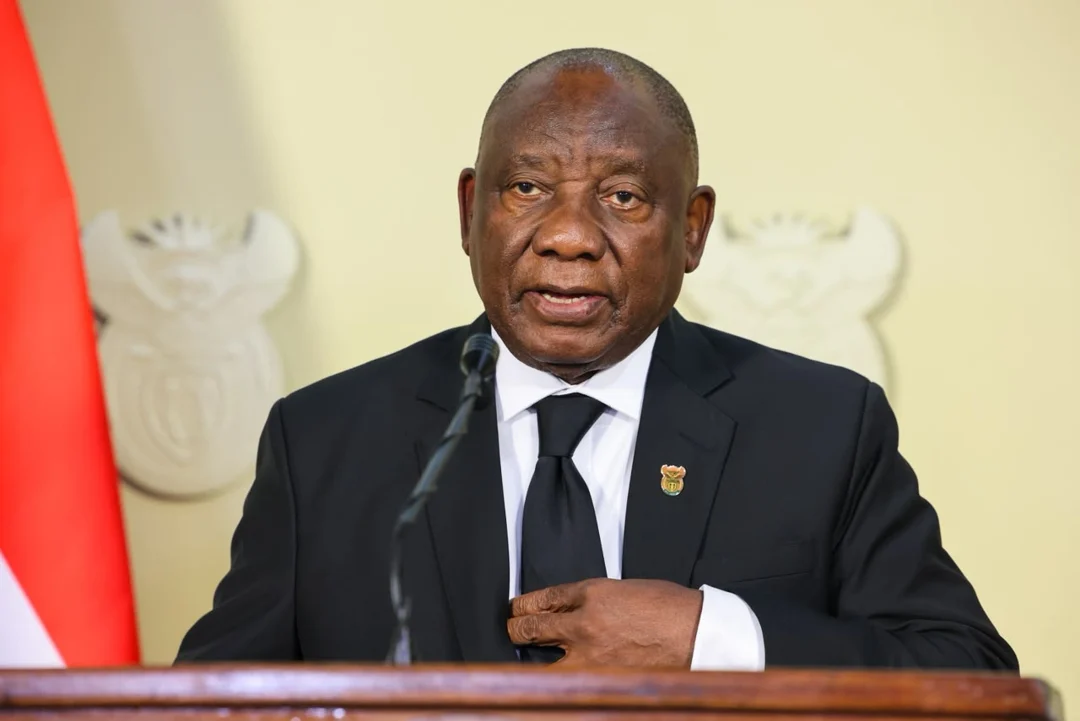
The President’s address on gender-based violence and femicide had no budget figure, no headcount, no target and no conviction goal. Instead, it offered audits, plans, and a reporting schedule. A speech with nothing measurable can never be held against its author.
By Themba Khumalo
On Tuesday night, President Cyril Ramaphosa addressed the nation on the murders of women in Ekurhuleni and South Africa’s failure to stop gender-based violence. It was the second time in seven years that he had stood before the country to speak about this crisis.
Last time, he made a speech. This time, he brought a timetable. Start with the numbers, because he did not provide them.
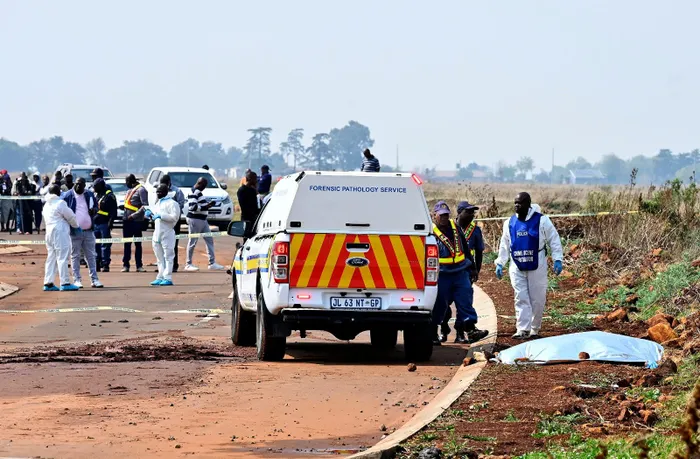
Eleven women’s bodies in Ekurhuleni since July. Four arrests, by his own account, across only three of those eleven deaths. A national address of several thousand words that contained no budget figure, no headcount of detectives, no target for reducing femicide, no conviction-rate benchmark and no date on which a single woman would be measurably safer than she is today.
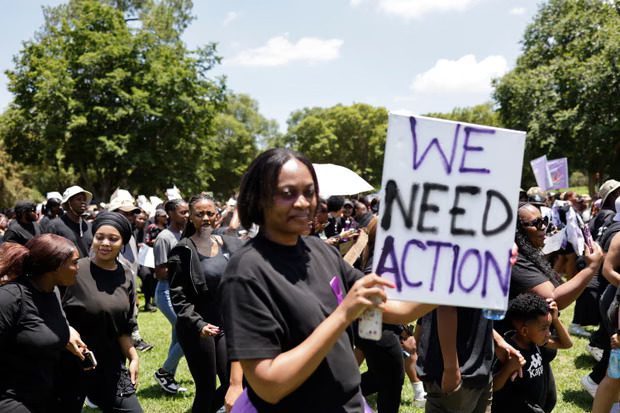
A speech about the deaths of women with almost nothing in it that can be counted is how a speech is built when its author does not wish to be counted against it.
The Grammar Of Non-Responsibility
“What we have done has not been enough.”
Read it as you would a clause in a contract. We is undefined. Done is unspecified. Enough has no threshold. It is a confession engineered so that no person, department or minister can be found guilty of it.
Ramaphosa has been President since 2018. He presides over the police service, the prosecuting authority, the justice department and the forensic laboratories, and he spoke as though he had stumbled upon them in a field.
The passive voice ran through the address. Bodies are “found”. Violence is “being perpetrated”. Dockets are lost, and samples sit unprocessed, apparently of their own volition, in laboratories that nobody runs. A protection order “must not become merely a piece of paper”. It already is one, and that is the entire scandal. He prescribed the absence of a condition that has existed, documented and unaddressed, for years.
This is not leadership. It is a commentary on the weather by the man responsible for the forecast.
Four Measures, None Of Which Touches A Victim
The President announced “four immediate measures”. Consider what the word immediate is made to mean.
One: The case-recovery audit. In sixty days the state will establish how many unresolved cases of murder, rape and sexual offence it is sitting on. Consider that slowly. A state that has spent a quarter of a century and a great deal of public money building specialist units, courts and care centres does not know the size of its own failure, and will take two months to count it. Then, ninety days in, “recovery plans” for the priority cases. A priority case, we are given to understand, is one that gets a plan, which is what priority has always meant in a bureaucracy that has run out of ideas.
Two: The forensic backlog. The relevant authorities must present, within sixty days, a “funded plan” to reduce the backlog. Not to reduce it. To present a plan to reduce it. A murdered woman’s blood sample, left in a queue, will stay in that queue while the plan is drafted. Note the quiet concession in the instruction that priority samples be “ring-fenced”. Ring-fencing is what you do when you cannot clear the queue, and it tells every family whose case falls outside the fence exactly where they stand.
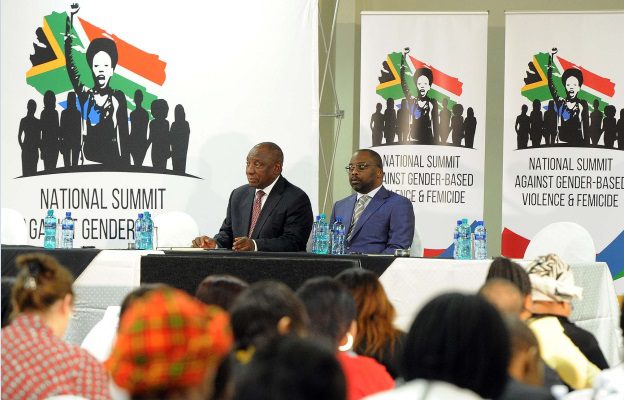
Three: The municipal safety audits. Councils must catalogue broken streetlights, overgrown verges and derelict buildings. Within ninety days of finishing, the worst hazards must be “addressed or included in a funded implementation plan”. Those words are the most instructive in the address, because they turn compliance into stationery. A council that leaves the park dark and files a document describing its intention to light it has met the President’s directive in full. The woman walking home through that park has met something else.
Four: The alcohol package. A “coordinated legislative and enforcement package” will go to Cabinet in sixty days. Not to Parliament, not as a Bill, not as a regulation. To Cabinet: a committee of the President’s own appointees, which will consider a proposal about proposals. He was careful, too, to insist that alcohol “does not cause” gender-based violence, a disclaimer so anxious that one suspects someone in the drafting room has noticed how thin the evidence for enforcement is.
Add them up. An audit, a plan, an audit and a package. Four directives, and not one arrest, one processed sample, one working light or one prosecution.
Every deadline is sixty or ninety days, so the first consolidated progress report falls due in the same ninety-day window as the recovery plans it is meant to evaluate. The state will mark its own homework on the day the homework is handed in.
A Diagnosis That His Own Cure Ignores
To his credit, the President cited the Medical Research Council’s finding that more than sixty per cent of women murdered in 2021 and 2022 were killed by an intimate partner. The primary hotspot, he said, is the home. He is right.
Now look at the treatment. Streetlights. Overgrown parks. Abandoned buildings. Unlicensed liquor outlets. Every measure aimed at preventing violence concerns a public place, while the thing that most reliably kills South African women happens behind a front door, inside a relationship, at the hands of someone the victim knew. The speech identified the disease in the home and dispatched the ambulance to the street.
For the home, the offer was moral: raise your sons better, challenge your friend, break your silence. It is hard to improve on the cynicism of assigning the failure of the state to the private conscience of its citizens. The man whose government cannot enforce a protection order asks the neighbours to enforce manners.
The Citizen As Investigator
Then the grieving were given homework. Only two of the eleven Ekurhuleni women were reported missing, the President observed, adding that this was “not a reproach to grieving families”, which is the standard preface to a reproach. He then reminded the nation that no twenty-four-hour waiting period exists, as though the public were the source of the myth. It was not. The myth endures because, station after station, officers have turned families away with that very line, and nobody in authority has answered for it.
The real question is why a family reporting a missing woman is so often sent home without action. The President did not ask it. Instead: “if you know something, say something.” The state, having failed to detect eleven bodies, invites the public to assist.
His account of the investigation was a lesson in hedging. Police “have not found evidence establishing” a single perpetrator. Note the verb. Not finding evidence establishing one killer is a different thing from finding evidence of several. “All possibilities remain under investigation” is what spokespeople say when they would prefer to say nothing at all. A frightened public wanted a direct answer and received one constructed to be true whatever happens next.
The Silence On Mass Shootings
The address never mentioned the mass shootings.
Count the days before the President spoke. On Tuesday night, 22 September, multiple gunmen attacked a house party in KwaMakhutha, near Durban, killing at least 11 people, among them a pregnant woman. Four days later, on Saturday night, gunmen killed 18 people at a tavern in Wedela, southwest of Johannesburg. About four hours after that attack began, 10 more were killed at a venue in Lwandle, near Cape Town. That is 39 dead in six days, across three provinces.
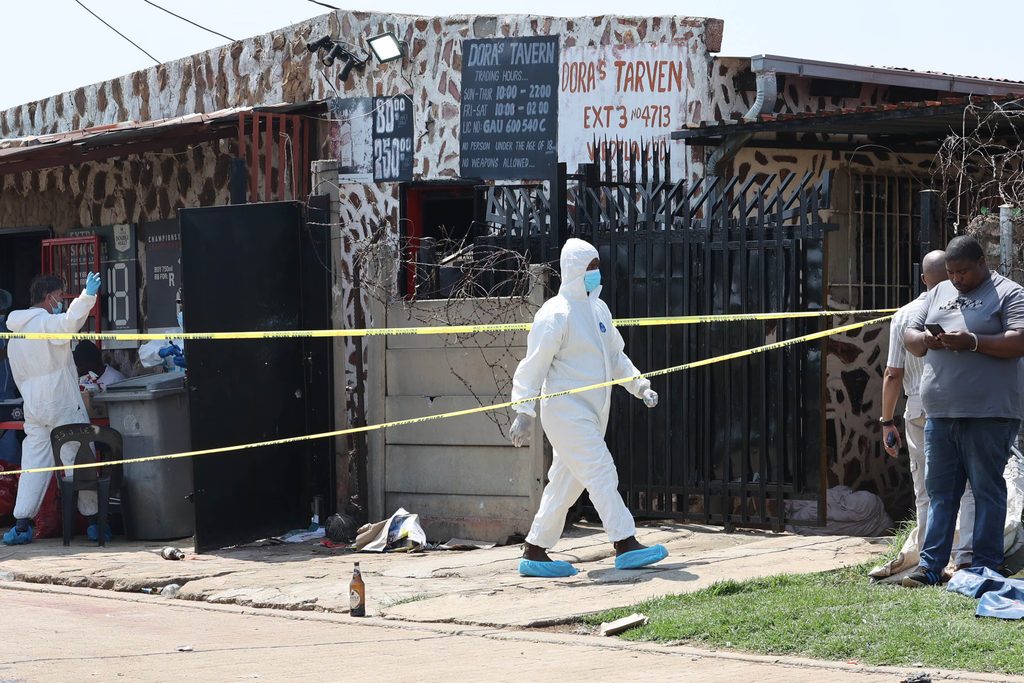
The speech was not written in a vacuum. It reached back to Women’s Day in August to name a victim, and it travelled to Kraaifontein, Delft, Komani, Bredasdorp and Richmond for others. Delivered two days after Wedela and Lwandle, it found no sentence for the shootings that had just killed 39 people. The drafters found room for the dead of August. They found none for the dead of the previous six days.
The detail should have embarrassed someone. In Wedela, eight men armed with pistols and AK-47 rifles stormed a township tavern. A rifle designed for war was used to empty a bar. That is not a failure of attitudes. It is a failure of supply, of registries, of police stores and of evidence control, all of which sit inside the executive he leads. Yet an address that promised to inspect broken streetlights offered no audit of firearms and no word on how military-grade weapons arrive at a Saturday night in a township.
The past week is not an aberration. Close to 200 people have been killed in mass shootings in South Africa since January. That is nearly two hundred dead in nine months, under a President who has just told every sphere of government that the safety of women is its responsibility, and who left the mass shootings out of his address altogether.
The speech was selective about the venue, too. It promised a crackdown on unlicensed liquor outlets and trading hours, yet KwaMakhutha was a house party and Lwandle an entertainment venue. In Wedela, police are examining whether the attack was retaliation for an August shooting at the same tavern, and authorities are looking at possible links to illegal gold-mining rivalries. Those are matters of organised crime, illegal weapons and a policing failure that predates the shooting. A tighter licensing hour does nothing to disarm eight men with rifles. He proposed to regulate the drink and left the weapon alone.
The argument belongs to his own subject, as well. He named the home as the primary hotspot for the murder of women. A state that cannot control the flow of weapons into criminal hands, and cannot say how many legally held pistols sit in homes with a protection order on file, has not addressed the means of the killing. Silence on firearms is a policy decision to keep the country armed.
The Post-Dated Cheque
Then the flourish. “Seven years from now, no President should have to stand before this nation and say these same words again.”
Seven years from now it will be 2033. Mr Ramaphosa’s term ends in 2029. The promise has been drafted with admirable care so that it matures after he has left, beyond the reach of any question, any election, any reckoning. It is a post-dated cheque drawn on an account he will not hold, signed by a man who knows it will never be presented. He offered us a future in which someone else is embarrassed.
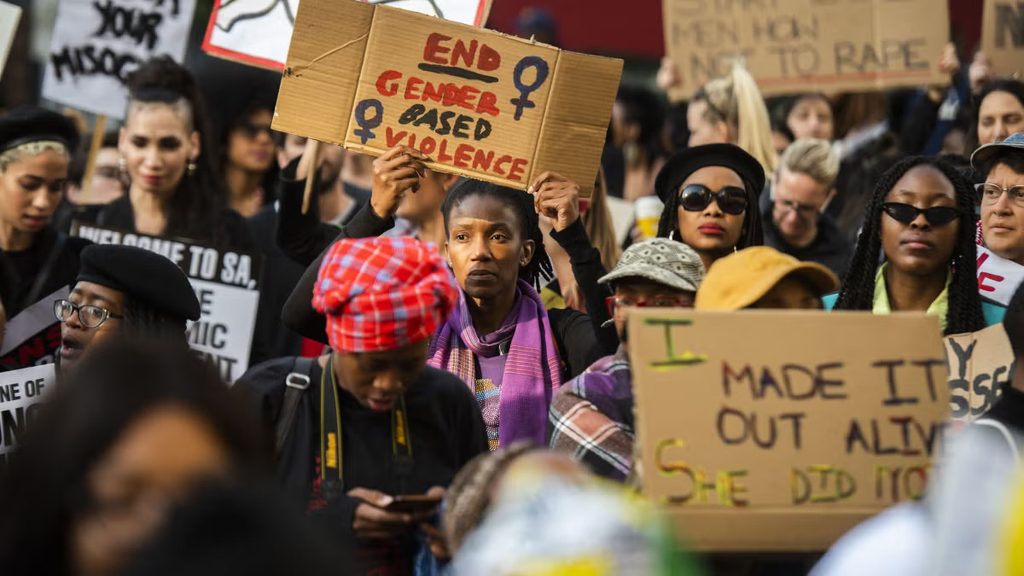
The names of the dead were read aloud: Octavia Swarts, who was ten; Amogelang Motshwaedi, who was fifteen; a seventy-three-year-old grandmother from Bredasdorp. They are owed a plan that should have been active years ago, with a number, a budget and an official who loses his job when it fails. What they received was a roll of honour, a sermon and a reporting schedule. The first report, we are told, will arrive punctually.