

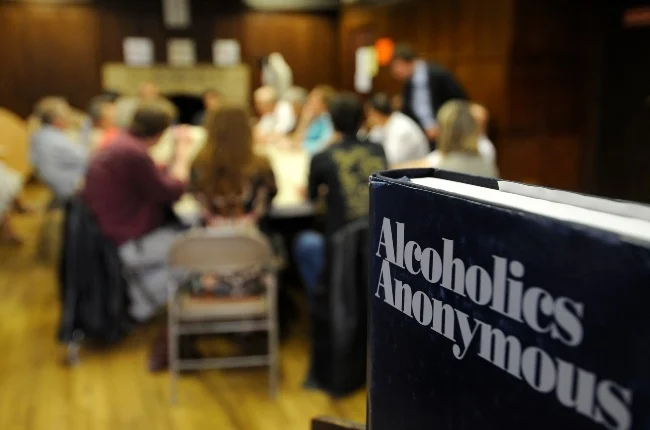
In 1946, a struggling alcoholic in Alexandra found a Reader’s Digest in a dustbin and discovered Alcoholics Anonymous. Eight decades later, the fellowship celebrates its South African journey, while confronting an uncomfortable reality: its message has still not reached enough townships.
By Jabu Kumalo
The award-winning global fellowship that has pulled millions of drunkards out of the messy bog, Alcoholics Anonymous (AA), one can soberly say, landed in our country via a dustbin.
The first known South African alcoholic on record to have made contact with AA is from the township of Alexandra, north-east of Joburg.
A hopeless inebriate, Solomon S., was trudging the streets of Alexandra, going through many dustbins in the township, busy with nothing to do, when he pulled out a copy of the Reader’s Digest from a stinking bin. It was 1946.
The story that caught his attention was headlined: My Return From The Half-World of Alcoholism (Reader’s Digest, January 1946).
He contacted the Headquarters of Alcoholics Anonymous in New York by writing them a letter. They responded positively to his enquiries. He was given hope and managed to stay sober from then on. Unfortunately, he never started an AA group.
Fast forward eight decades later, AA will be celebrating 80 years of saving the lives of South African drunks on 18 October 2026.
In a heart-to-heart interview with the current chairperson of the General Service Office (GSO) of AA, Basil P. (We cannot use his full name in line with AA’s principle of anonymity) said he was forever grateful to be part of this fellowship and to be in a leadership position.
He calls the GSO “the engine room of Alcoholics Anonymous in the country”.
Basil told SA Telegraph: “I have the pleasure, the privilege and the honour of heading it (GSO) for the next three years. We prefer to be called a fellowship rather than an organisation. We have very minimal structures. Just enough not to create anarchy.”
He cannot hide his gratitude as he elaborates on what AA means to him: “What it means to me … ehh … personally … I am so grateful that such a fellowship has been established because had it not been, where would I be? Had it not been, I would not be having this interview with you. I am just grateful for the formation of this fellowship that has given me my life back, and I am also proud to be a member, and that’s why I do the service to pass this message to other people.”
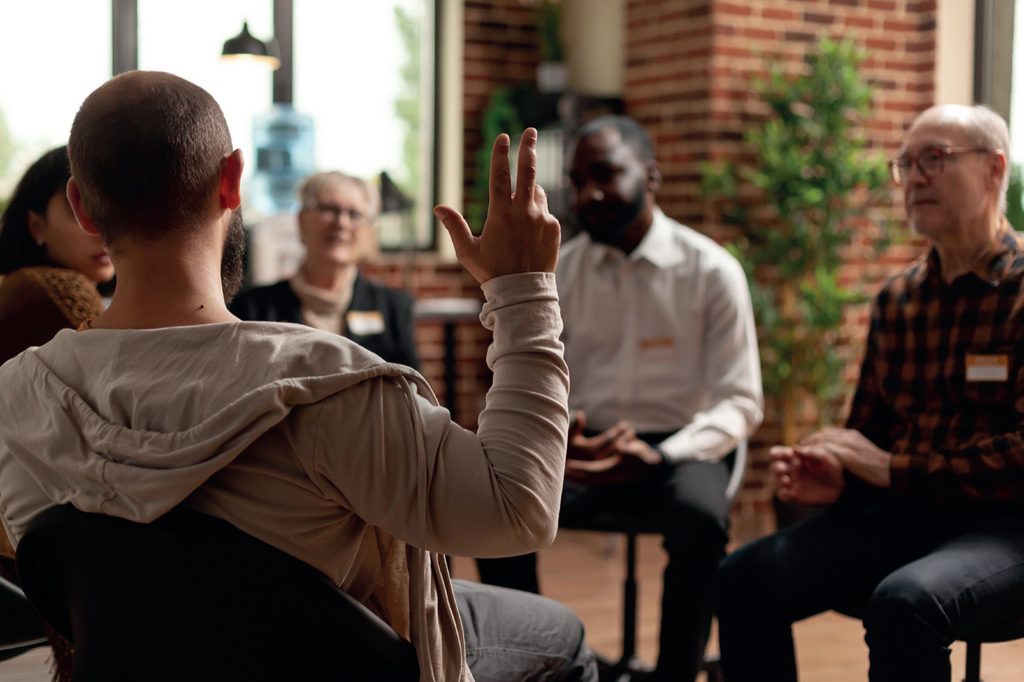
He said there was so much “vibe, buzz and hype in the fellowship, it’s almost a spiritual feeling” to be associated with, particularly leading up to the anniversary.
“Wherever you go in the world, it’s the same feeling. The emotion is the same, that sense of gratitude that you have been saved. You are my fellow brother. I have been to India, Thailand and Egypt; I have shared in these meetings. Language is not a barrier. That’s why AA is the model for this. I hope politicians take note,” he said.
Basil said there is currently an 80-day countdown which will culminate on 18 October, the day of the fellowship’s birthday. As part of the celebration, he said they have invited the head of AA in New York, Bob W., who will be the guest keynote speaker.
There will also be old-timers who have over 40 years of sobriety under their belts who will be sharing their experiences on the day, along with many other entertainment activities.
AA has an Annual National Convention every Easter weekend that moves around different provinces. In 2027, it will be Joburg’s turn to host other provinces and other visitors from around the world.
By some coincidence, the second person known to have contacted AA in New York from South Africa was Arthur S., a stockbroker from Johannesburg, just like the co-founder of AA in America, Bill W.
Arthur is on record as being the first person to kick-start AA meetings in South Africa. He gathered a few friends around and told them about this “wonderful fellowship” that is pulling drunks of the world out of the miserable gutter. This also happened in 1946. The New York AA put him in contact with Solomon from Alexandra.

Basil acknowledged that indeed there was stigma associated with AA: “Certainly. There has been a stigma over the years. It has diminished a lot since then. I know in the early days it was too much and people were even embarrassed to mention their names. People didn’t even want to mention that they were members of Alcoholics Anonymous. Today, people are proud to be members of Alcoholics Anonymous. They would announce it from the rooftops. Also, Alcoholics Anonymous has gained a lot of traction in society over the years due to media and Hollywood stars who have joined AA.
“So, by and large, the stigma has been removed. We have big functions and billboards up and inserts in papers. People know about us. We are not in the shadows anymore. We are out there in the open. Alcoholics Anonymous is not anonymous as a fellowship, but its members can be anonymous if they so choose. We guarantee our members anonymity. Today you will find a large number of females. Sometimes there are more females than males. With regard to the anonymity of newcomers, whatever happens in our meetings ends there. We don’t take it outside.”
He assured society and people who have a drinking problem that “they will be amazed at the kind of people we have in Alcoholics Anonymous. From the highest-ranking politicians to the youth and across the board”.

He continued: “We have doctors … We are productive in society, you know. There’s nothing sinister about being a member of AA.”
He said in AA, no matter what standing in society the person has, they feel safe as they will never be mobbed because they are superstars, famous or so-called celebrities.
He also said the fellowship was receiving a lot of youngsters lately, as young as 12, 15 or just under 18 years of age. He said they were working towards finding a haven for younger members who have a drinking problem.
Basil gave this message to high-profile individuals who want to join AA: “First thing is humility. Humble yourself that you are an average alcoholic like the rest of us, and we are all trying to find our way out. So, immediately it puts us all on the same level. I don’t look at you as a celebrity or less than a celebrity. I look at you as a fellow alcoholic also trying to sober up. I help you, you help me. And that’s why famous people or so-called celebrities find it easy. There are many of them in AA, given the nature of their trade, their business. They find it very comfortable to be in Alcoholics Anonymous because we don’t mob them. We don’t give them special attention. They can sit quietly and not say a word and then can leave without saying anything.”
Sadly, while the message of AA has overflowed to the white suburbs over the years, it has travelled wobbly and has hardly filtered into the townships.
Many in the townships have either never heard about this fellowship or know very little about it.
Basil acknowledged the scarcity of AA in the townships: “It is problematic, but not because of lack of trying. There are a variety of factors. You’ll find that there are very few black groups. Look at Soweto, for example, there’s probably one or two.”
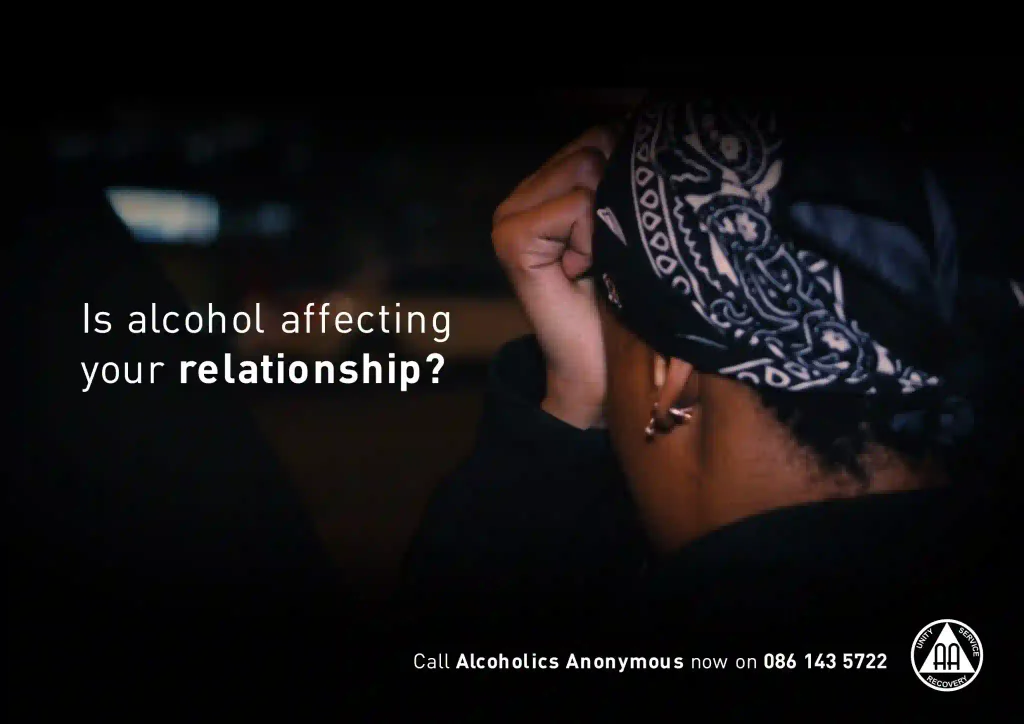
“We don’t know for sure what is the single factor that may prevent the enthusiasm and the growth of AA in our black areas compared to the other areas, because in other areas it seems like a natural progression. The groups just spring up all over the place.”
He concluded by saying it was also equally difficult to penetrate the rural areas.
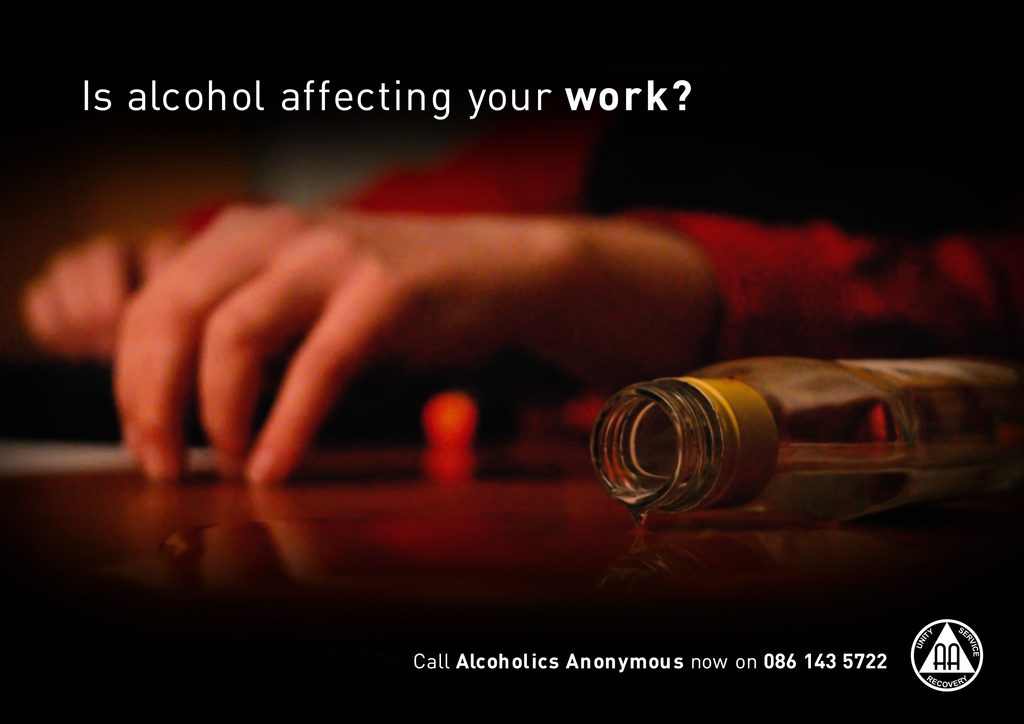
Alcoholics Anonymous can be reached on a 24-hour confidential national helpline: 086 1435 722.