


The spotlight shines, but the tables are empty. Our storytellers are starving as bureaucracy strangles creativity.
By Themba Khumalo
There is a painful reality in witnessing a nation’s storytellers struggle while the institutions established to protect them remain detached — maintaining their routines, unmoved by the hardship around them.
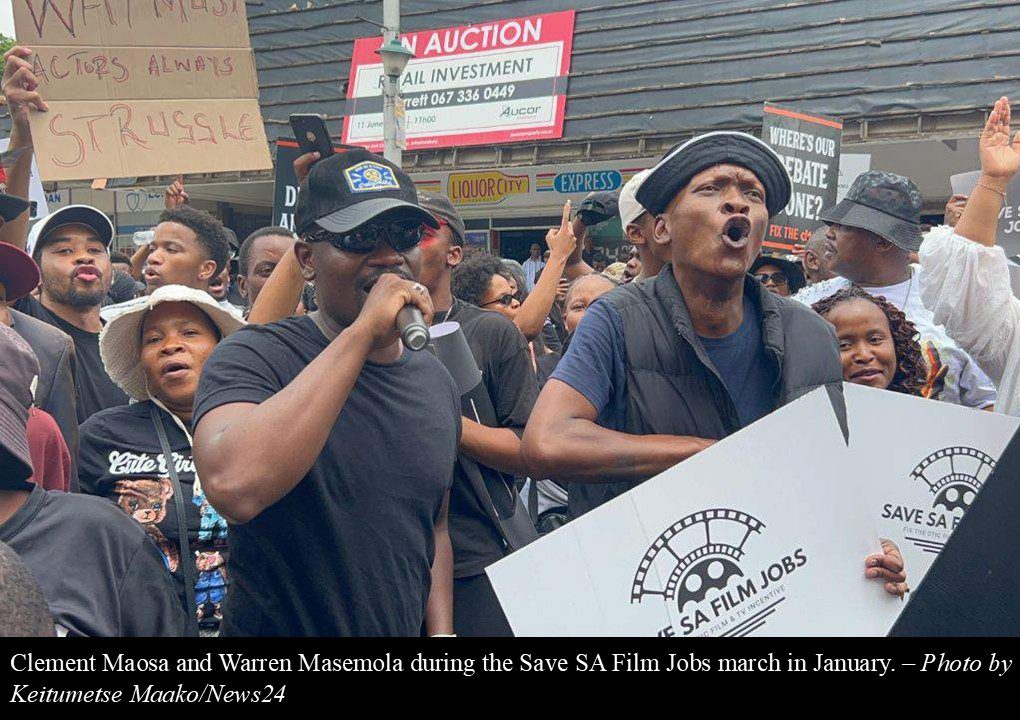
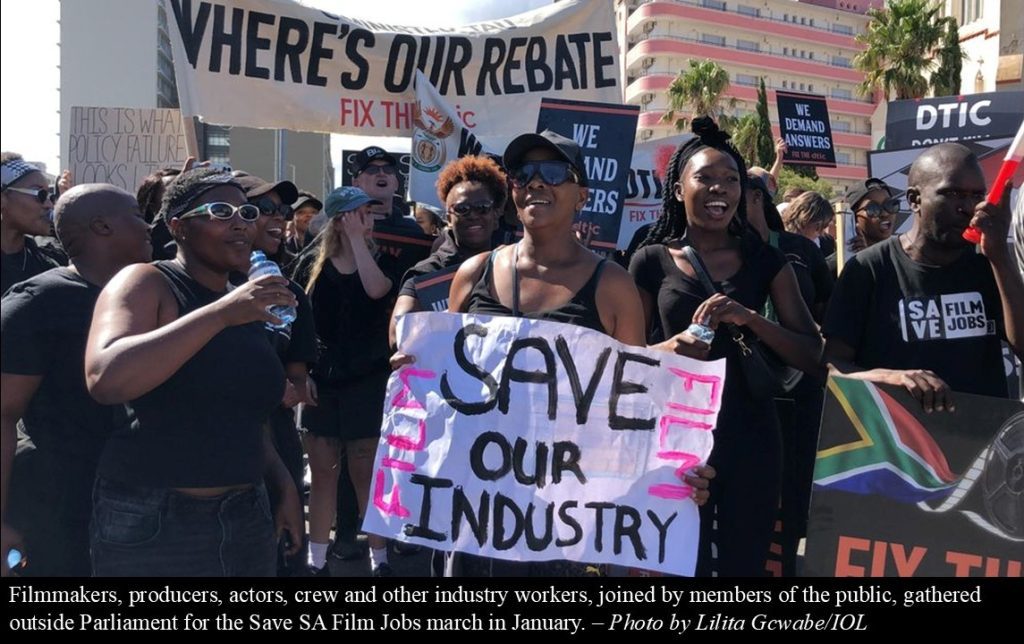
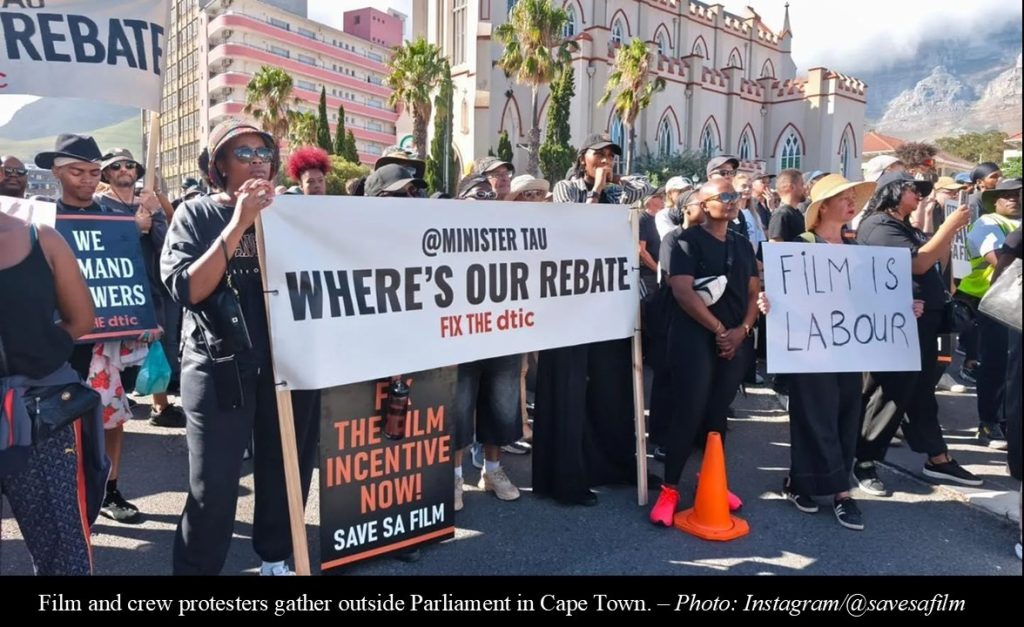
On 28 January 2026, South Africa’s film and television workers gathered outside Parliament, holding placards reading Save SA Film Jobs. This was not a stunt. Not cosplay activism. It was an industry on its knees, begging the state to unclamp the oxygen tube before the patient flatlined.
By the next day—29 January—they were outside the offices of the Department of Trade, Industry and Competition (DTIC) in Pretoria, and the mask slipped. What stood exposed was not indifference alone, but the government’s chilling comfort in watching a creative economy suffocate, eyes deliberately averted.
At the centre of the crisis is the DTIC’s Film and Television Production Incentive, a tax rebate scheme designed to make South Africa a more competitive filming destination. For years, this rebate helped offset production costs and attract foreign projects, creating jobs for thousands of South Africans across acting, crew, post-production, hospitality, and transport sectors.
But since late 2023, the incentive system has effectively stopped working. Adjudication panels have not met. Applications have stalled. Millions of rand owed to production companies remain unpaid. Without certainty about rebates, producers have stopped bringing projects to South Africa—or have taken them elsewhere.
For an industry built on trust, timing, and cash flow, the collapse of the incentive system has been devastating.
The Cost of Uncertainty
South Africa’s film industry has always survived on contradiction. On screen, it is glamorous. Behind it, it is contract-based, precarious, ruthless in its rhythms.
Actors are paid per project. Crew are hired per shoot. Editors live between deadlines. Writers chase commissions that may never materialise.
There is no monthly salary safety net for most of them. There is no pension scheme cushioning a collapse.
What keeps the machinery turning is the Film and Television Production Incentive — a reimbursement system administered by the DTIC.
It is not a decorative policy. It is oxygen. Productions are financed on the expectation that qualifying expenditure will be reimbursed. Banks advance against approval letters. Investors require confirmation. International partners assess the level of certainty before wiring funds.
Remove certainty, and financing fractures. Delay approvals, and the shoot freezes. Withhold reimbursements, and companies choke.
Industry representatives told Parliament that adjudications stalled. That backlogs grew. That claims sat unmoving while projects unravelled. Reports about the sector describe it as “on its knees”.
But knees do not buckle in one dramatic moment. They crumble.
Starved Behind the Spotlight
Behind every stalled application and frozen fund is a face — and a family. Jo-Anne Reyneke, the star of Bad Influencer, stood in the harsh Pretoria sun and admitted—with a quiver in her voice, raw with frustration and exhaustion—that she cannot feed her children. And she is not alone.
Let that sit with every official who still sleeps comfortably at night.
This is not otherworldly misfortune. This is not a hiccup. This is governance at its most obscene: arrogant, negligent, and dripping with contempt.
The DTIC’s actions have significantly harmed South Africa’s creative sector, placing it under immense strain and ultimately threatening its survival. The impact is clear to industry participants—many now feel overwhelmed and powerless amid mounting bureaucratic challenges.
Reyneke’s confession is not a sob story; it is an indictment. To the world, she is successful, visible, “working.” In reality, she is rationing survival.
“It has been hard. The last time I worked properly was November 2024. Bad Influencers came out a year later. There’ve been small jobs here and there, but nothing substantial enough to feed my family. To everyone, I look like a good actor; it looks like I’m at the top of my game, but I’m struggling to feed my family,” she said.
Her Netflix success, a year on, reads like a cruel punchline.
Fame without food. Visibility without viability. Applause without rent. The glittering façade collapses the moment you ask one simple, brutal question: Can you eat recognition? The answer, as the DTIC should damn well know, is no.
Siv Ngesi, actor and producer, emphasised the collapse of consistent earning opportunities: “We used to move from job to job. People were living good lives, and now that’s been destroyed. People don’t realise that art is labour. It is work.” (IOL)
Meanwhile, these officials continue their administrative tasks, processing documents and following procedures, while the industry faces severe challenges. Two years of delayed adjudication for the Film and TV Incentive have caused substantial hardship for South Africa’s creative industry.
Actors and freelancers experience not only economic strain but also emotional and psychological pressure. System failures are eroding years of training, sacrifice, and artistic labour. Young actors face stalled careers before they have even begun, forced to seek work in unrelated fields to survive.
Veteran actors like Wandile Molebatsi have also spoken publicly about colleagues struggling to afford food, rent, and medical care: “Actors are losing homes, careers, dignity. I know of performers who have done everything to build a career and now are watching their families suffer because of the collapse of the incentive system.” (Sowetan)
Filmmakers and producers have weighed in on the crisis. Athi Ntabeni, a filmmaker and production accountant, said: “Not paying the incentives is derailing the industry. If international companies can’t benefit from coming here to shoot, there won’t be jobs available.” (IOL)
Warren Grey, an Emmy Award-winning production designer, observed: “What we are facing is a destroyed sector. It will also take South Africa off the map as a shooting destination. They need to reinstate the rebate and give us a clear date on when this will happen.” (Daily Voice)
Lungisani Gwadiso, filmmaker, reflected on reputational damage: “We as filmmakers are just demanding what has been promised to us… it’s really affecting our credibility in the industry.” (EWN)
Veteran actor Jerry Mofokeng spoke on systemic failures: “In simple terms, the legislative framework is flawed. You have two pots of funding, the DTIC and the National Film and Video Foundation, that don’t talk to each other. On top of that, there’s no political will to crack the whip and instruct boards and management to fix this mess within a specified timeframe. Planning is completely disorganised. Co-productions are lost. Equipment can’t be postponed, so you postpone the artists, and the artists are then not paid.” (Sunday Times)
Mofokeng’s full observation reveals how deeply embedded the challenges are — not just at the level of payments but in the underlying architecture of film planning and execution in South Africa.
The Economics They Refuse to See
Hundreds of millions of rands in foreign investment lie frozen in administrative limbo — not lost, not spent, not working — just locked behind closed doors. International productions, mercifully pragmatic, are fleeing to countries that can walk and chew gum at the same time.
Meanwhile, our storytellers are left to drown in the wreckage, clawing at the debris while the DTIC debates process.
Veteran actor Nambitha Mpumlwana nailed the absurdity with surgical precision: these are earners in households, custodians of culture, architects of identity—and they are starving. Marchers under the banner Save SA Film Jobs stood outside the DTIC in Sunnyside, performing the grim theatre of protest against a department deafened by its own indifference.
“The industry is falling apart. The people that you see here are earners in their households. They’re paying mortgages, buying bread, feeding children, and they’re starving right now. We are cultural workers. We are custodians and storytellers.
“When you invest in storytelling, you invest in the future of South Africa. It’s called an incentive because it encourages and nurtures the industry’s growth. But they’re sitting on it. For what reason, we don’t know,” Mpumlwana told News24.
Yet the DTIC, a custodian only of dysfunction, stares blankly at the implosion of an entire ecosystem as though it were a mild inconvenience, a scheduling conflict, a diary error — anything but the humanitarian and economic catastrophe it so plainly is.
The industry is not just imploding, it is being strangled, one frozen fund at a time. Actor Siyabonga Shibe, 25 years in the trenches, describes a descent into the void. Applications for incentives pile up like unanswered prayers. Jobs vanish like morning mist. Families fall apart. Since 1999, he says, nothing has meaningfully improved. Funding has shrunk. Bureaucracy has metastasised.
The government listens only to itself — a closed loop of incompetence, while the rest of the country waits.
A Survival Document in a Bureaucratic Graveyard
This is no longer mismanagement. This is wilful destruction disguised as administration — contempt embedded in every policy, every memo, every meeting that leads nowhere. It is a betrayal of every South African who dares to dream in moving images.
The DTIC has failed spectacularly, in the most expensive and destructive way possible: by freezing funds already allocated, by ignoring repeated demands, and by treating human beings as nothing more than rows in a spreadsheet.
The memorandum handed to Justice Ngwenya—one of the few officials willing to meet the marchers—reads like a survival manual: restart adjudications, reform the incentive structure, increase transparency, reduce red tape, and investigate mismanagement.
Reasonable. Obvious. Urgent. And yet, given the DTIC’s track record, these demands will likely be swallowed by the same bureaucratic swamp that has already devoured millions of rands and countless livelihoods.
Words, after all, are cheap. Hunger is not.
A Moral Cataclysm
Reyneke, Mpumlwana, Shibe, Makwela, Rous—the list of the brave and desperate is long. They have marched. They have spoken. They have pleaded. And the DTIC? It has stalled. It has evaded. It has obfuscated. South Africa’s creative soul is being auctioned off in increments, sold piece by piece under the comforting lies of “process,” “oversight,” and “policy alignment.”
Meanwhile, the people who give this country its stories, its mirrors, its conscience, are left to scramble through the rubble of what once was.
This is not a policy failure. This is a moral cataclysm. A civic disgrace. An ethical abyss so vast it should haunt every office corridor and ministerial lounge. The DTIC has not merely failed an industry — it has violated a trust, betrayed a people, and turned governance into an instrument of harm.
And for what? For the comfort of inaction? For the illusion of control? For the sterile satisfaction of ticking boxes while families unravel and dreams suffocate? The film industry is screaming. And the DTIC hears only the sound of its own indifference.
No More Delays
It is time for Parliament to stop hiding behind rhetoric, committee reports, and endless “policy reviews.” The DTIC cannot be allowed to continue stalling an entire industry while claiming diligence.
MPs, ministers, and civil servants: look at the faces of Neo M Matsunyane, Jo-Anne Reyneke, Siyabonga Shibe, Nambitha Mpumlwana, Simon Makwela, Luke Rous and the thousands of others.
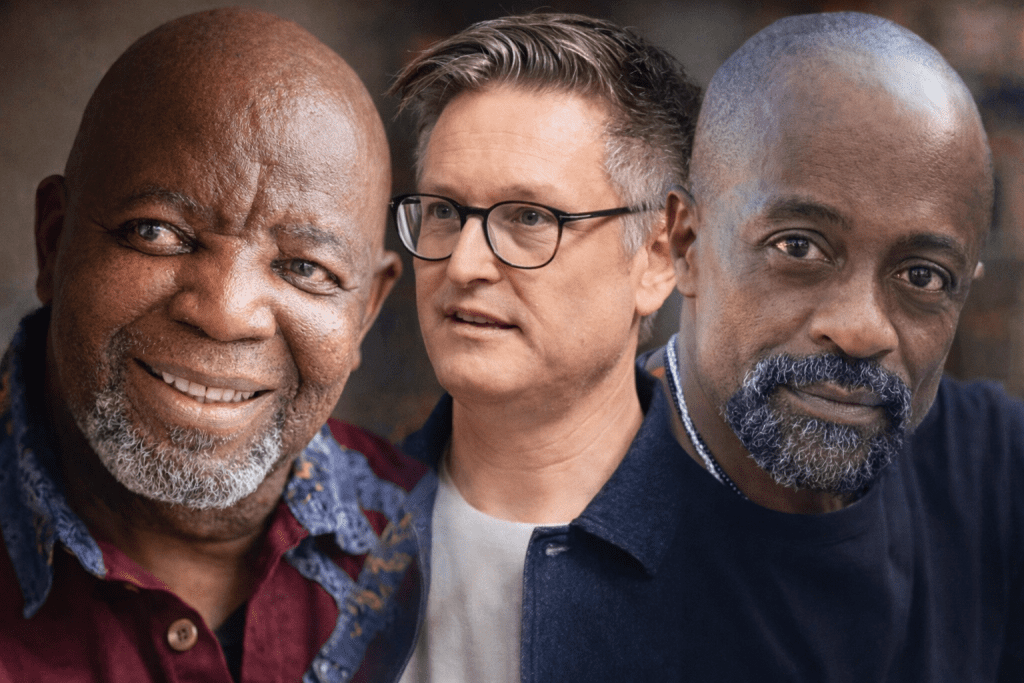
These are not statistics. These are human beings — citizens whose lives, families, and futures you are gambling with for the sake of comfort, bureaucracy, and inertia.
South Africa demands answers. South Africa demands accountability. The industry has marched, spoken, and pleaded — waiting patiently for nearly two years as the lifeblood of culture is siphoned into a bureaucratic black hole. Every day you delay, every day you ignore, is another day of hunger, another family crushed, another story lost forever.
History Will Not Be Kind
History will not be kind to the officials who watched South Africa’s storytellers struggle while sitting in comfort and doing nothing. The shame that should weigh on every responsible bureaucrat is immense — and it should be lasting. Let every cynic who shrugs at this disaster understand one simple truth: this is not entertainment.
This is life, livelihood, identity, and dignity. Treat it with the respect it deserves — or be remembered as the architects of its destruction.