

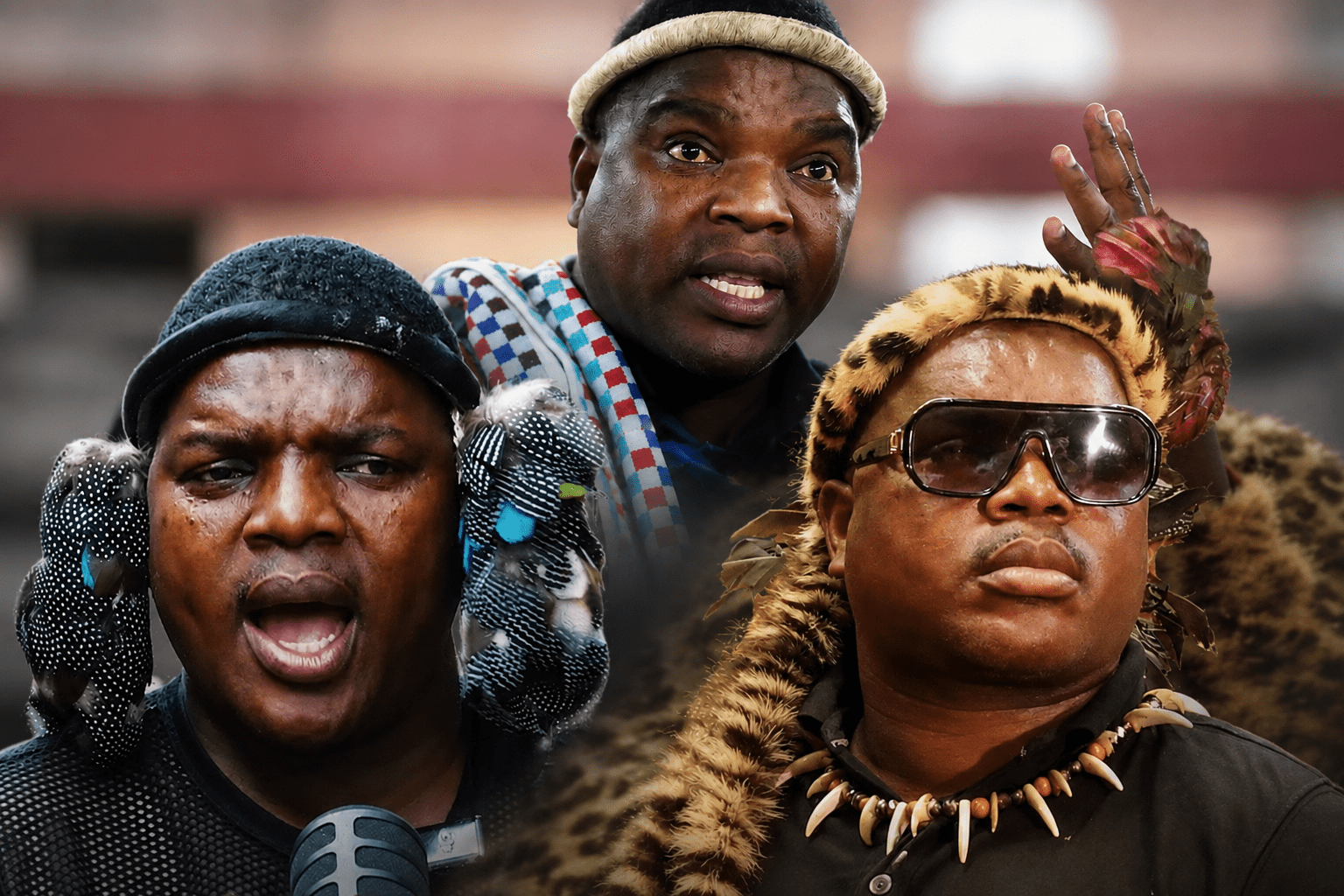
Ngizwe Mchunu’s social media rants may have scored him plenty of notoriety, but the Equality Court was not applauding. Instead, his greatest hits landed him in judicial hot water, with a ruling that proves that hate speech gets you headlines—just not the flattering kind.
By Themba Khumalo
There are some people who, upon encountering the twenty-first century, decided to embrace it with open arms.
Ngizwe Mchunu, however, recoiled in horror, clung to his prejudices like a toddler with a filthy comfort blanket, and embarked on a one-man crusade for the preservation of ignorance, arrogance, and the world’s oldest martyr complex.
If backward thinking had a slot in the Olympics, Ngizwe would have not only taken gold, but spat on the silver and bronze before parading round the stadium as if the crowd had come solely to marvel at his intellectual bankruptcy.
He would be clutching the torch of bigotry, waving it over his head, and demanding that the rest of us stop corrupting the sanctity of his own personal echo chamber, as though it were a UNESCO World Heritage Site.
His triumph? A dazzling showcase of homophobia that would make your average internet troll blush with embarrassment. Twelve videos and a flyer—because why settle for a single bout of digital diarrhoea when you can inflict an entire miniseries?
One almost has to admire the stamina. While most people retire after a single drunken Facebook rant, Ngizwe turned his hateful drivel into a binge-worthy Netflix series, single-handedly casting himself as star, director, executive producer, and chief victim in the never-ending saga, Ngizwe vs. Basic Human Decency.
Each new episode delivered a fresh serving of self-pity, tinfoil-hat conspiracy, and the unwavering conviction that audiences everywhere are breathlessly awaiting his next slur. If self-importance were a production budget, his show would outspend Hollywood.
His targets? The LGBTQIA+ community, naturally, because nothing says “upholder of tradition” like calling people dogs and wishing them dead, all while clutching ‘Zulu culture’ like a talisman against modernity.
One imagines King Shaka himself staring down, shaking his head in despair, and muttering, “Yehheni bo! Honestly, I led armies for this?”
The court, mercifully, was as unimpressed as a cat at a dog show. If judicial exasperation could be bottled, the Equality Court would have made a fortune exporting it. Judge Gregory Wright—who surely deserves not just danger pay but a bow for enduring hours of Ngizwe’s digital sewage—waded through a spectacle of bigotry that would have most South Africans shaking their heads in second-hand embarrassment.
One can almost picture the judge’s look: that uniquely South African blend of disbelief and world-weary disappointment, usually reserved for watching Bafana Bafana squander a three-goal lead or sitting through another endless state of the nation address.
When the time came to deliver judgement, Wright did not so much hand down a verdict as launch a judicial missile. His ruling was so thunderous it could strip paint, flatten egos, and send even the most shameless attention-seeker burrowing for cover.
Ngizwe’s defences, such as they were, were reduced to ashes—his arrogance left dangling, exposed and entirely unmissable, like a bad wig in a gust of wind.
Now he is banned from polluting the internet with further bigotry, forbidden from leading more hate parades, and required to pin an apology to his Facebook page for three months. That post will haunt his timeline like the ghost of common sense—unwelcome, impossible to ignore, and a daily reminder that the world has called his bluff.
For a man whose ego is propped up by Facebook likes, this is the digital equivalent of being put in the stocks and pelted with week-old tomatoes by the entire village. One imagines his notifications will never recover; his ego, once so bloated, now left to whimper in the corner, wondering where all the applause has gone.
But the real showstopper: twenty hours of human rights training. Imagine the poor facilitator, whiteboard marker trembling, tasked with introducing “basic decency” to someone who treats empathy like a contagious disease and sees kindness as a threat to public order.
If you have ever tried to teach a brick to do calculus or persuade a cactus to give hugs, you will know the feeling.
Quite frankly, good luck to the facilitator—because if anyone manages to get through to Ngizwe, they deserve a medal and possibly a stiff drink.
And, as a final flourish, he must part with R250,000—presumably to help fund the very causes he loathes. Irony is alive and well, pouring itself a double gin and tonic and dancing a jig around his wounded pride.
Now, all eyes are on Ngizwe to see whether he will finally attempt something unfamiliar: compliance. Will he apologise with the same gusto he reserves for his bigoted broadcasts, or will this become another episode in the never-ending saga, Ngizwe vs. Basic Human Decency?
Or perhaps he will surprise us all and launch a new series called Ngizwe Finally Complies—though one suspects nobody is holding their breath.
What is certain is that, for once, the law has spoken with clarity—a concept that, for Ngizwe, has always been as elusive as humility at a political rally.
So here he stands, Ngizwe Mchunu: a foul-mouthed influencer, serial spreader of bile, and now the unwitting poster boy for why hate speech laws exist.
If ever there were an award for public self-destruction by idiocy, he would already be down at the rehearsals with his acceptance speech—blaming everyone but himself.