

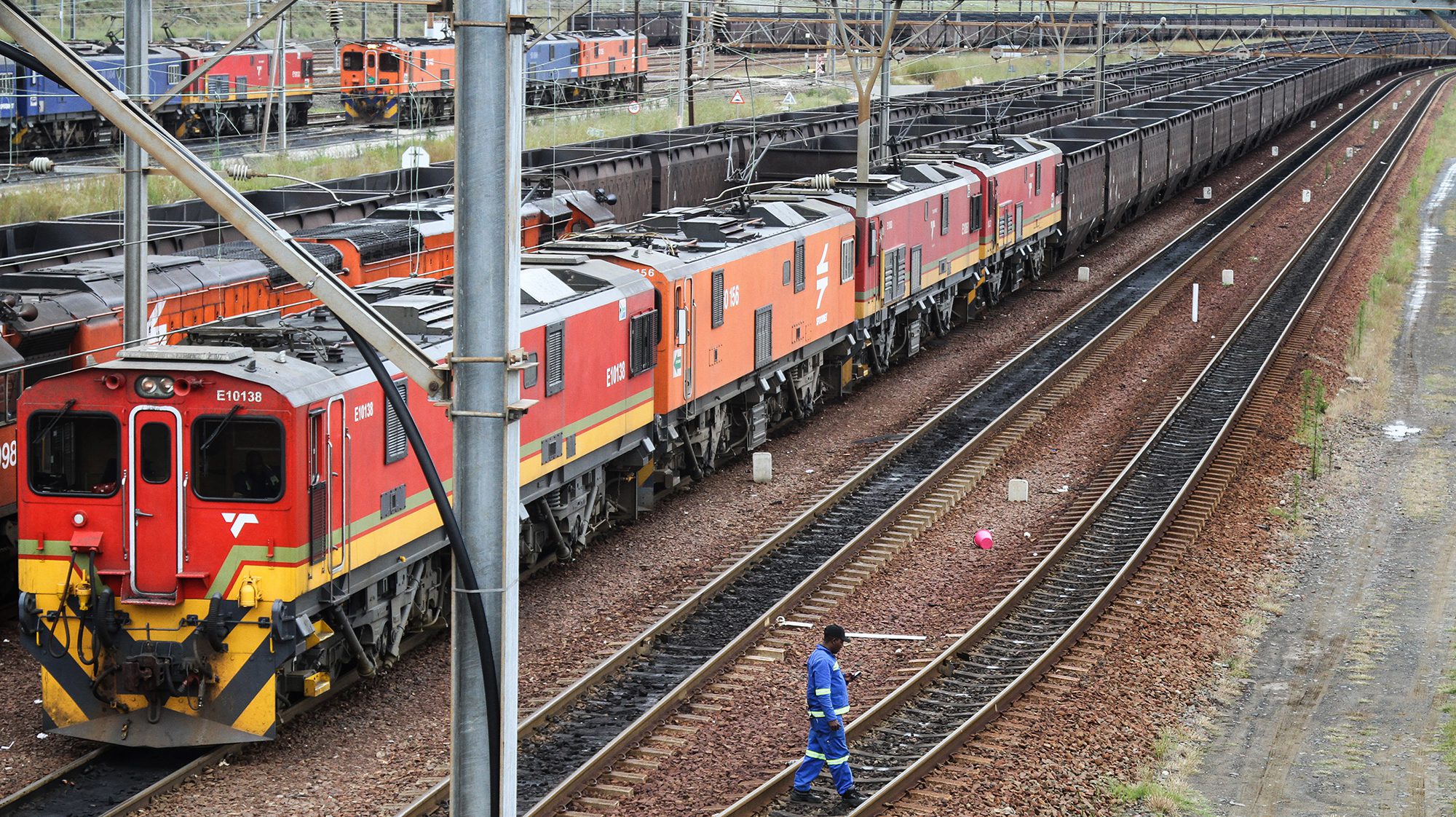
The freight rail crisis has exposed Transnet’s profound failures, but it has also exposed something else: an eagerness to treat privatisation as the ultimate solution. Selling control of strategic rail corridors may enrich private investors, but it risks leaving the public to carry the long-term cost.
By Themba Khumalo
Every country has a few quiet, invisible arteries that keep its entire heart beating. In South Africa, that artery is a sprawling 20,000-kilometre web of steel tracks.
When you buy a loaf of bread, when a mine exports iron ore, or when a factory sends goods to the coast, those tracks carry the weight of the nation’s economic life.
For decades, those tracks have belonged to Transnet, the state-owned freight and ports giant.
It is no secret that Transnet is in deep trouble. Years of looted procurement budgets, gross mismanagement, criminal cable theft and neglected maintenance have brought giant stretches of our rail network to a grinding halt.
Millions of tonnes of cargo that should be gliding along steel rails have been forced onto our roads, clogging highways and tearing up tarmac.
Naturally, this breakdown has sparked a fierce debate about how to fix it. Enter Chris Hunsinger, transport spokesperson for the Democratic Alliance (DA).
Responding to recent government proposals that would allow private companies limited access to run trains on state-owned tracks, Hunsinger argued that these reforms do not go far enough.
His solution is drastic: South Africa must move away from Transnet running the freight rail network altogether. Instead, key corridors should be handed over to private companies under long-term concessions, making corporate entities responsible for running, maintaining, and investing in the tracks.
On the surface, to a frustrated public, this sounds like common sense. Why keep supporting a failing state entity when private capital is standing by with a chequebook?
Look closer, however, and Hunsinger’s argument begins to fall apart. Beneath the sensible-sounding language lies a deeply flawed idea that conflates the failure of bad management with the failure of public ownership.
The DA has developed a dangerous habit of confusing institutional failure with institutional purpose.Every time Transnet buckles under corruption, criminality or incompetence, the refrain is the same: privatise it. Yet no one suggests privatising Parliament because MPs have looted the public purse or privatising municipalities because councils have failed their residents.
We demand better governance from our democratic institutions, not their disposal. Why, then, should South Africa’s strategic rail network be treated any differently?
Far from a practical logistics fix, his proposal is a classic piece of corporate lobbying that risks selling off the country’s economic backbone for private profit.
A Railroad Is a Public Good, Not a Cash Cow
The fundamental mistake in Hunsinger’s logic is treating a national rail network like a collection of private commercial assets waiting to be monetised. It is not. Rail infrastructure is a foundational public asset, designed to serve the whole nation, not just its richest industries.
Transnet’s mandate is explicitly developmental. Its job is to ensure that the entire economy functions. That means using the high profits earned from heavy-duty export routes — like the coal line to Richards Bay or the iron ore line to Saldanha — to help pay for less profitable secondary lines.
Those quieter rural lines are vital for connecting small farming communities and regional manufacturers to bigger markets.
What happens when you hand control of key lines over to private corporations?
Private businesses do not exist to fulfil a national development plan; they exist to make money for their shareholders. They will inevitably “cherry-pick” the most lucrative, high-volume export lines and ignore the rest. The profitable routes will print money for private investors, while the quiet feeder lines that keep rural economies alive will be left to rot — or will have to be rescued using taxpayers’ money.
By demanding that Transnet step aside entirely, Hunsinger is proposing a deal in which private companies keep the profits while the public bears the losses and structural damage.
The Myth That the State Cannot Run Infrastructure
Hunsinger’s argument rests on a favourite political narrative: the idea that governments are naturally useless at running big infrastructure, and that private companies are always the answer. Global history tells a completely different story.
Look at China. China’s state-owned enterprises built and currently manage the largest, most efficient high-speed and freight rail system in the world. China did not become an industrial giant by handing its railway tracks over to private companies. It achieved this by using state-directed planning to build reliable infrastructure that keeps transport costs low for every business in the country.
Even in Europe, core railway tracks in countries like Germany and France remain under strict state ownership and control.
Why? Because sovereign nations understand a simple truth: whoever controls the railway tracks controls the country’s industrial policy.
Transnet’s current crisis is real, but it is the result of criminal syndicates, corrupt tender rigging and flawed leadership — not proof that public ownership itself is broken.
Attempting to solve operational mismanagement by selling off the underlying infrastructure is like selling your house because the roof has a leak.
Who Actually Benefits From This Plan?
If transferring control of our railways to private companies hurts the wider economy, why push for it so hard? The answer comes down to who sits at the front of the queue.
The real winners would be large mining houses and private logistics corporations.
Big exporters want direct control over main shipping lines so they can move their own goods faster and at cheaper rates, regardless of how that impacts local businesses or smaller players. Meanwhile, private investment firms get to take over long-term, low-risk infrastructure that was originally paid for and built by generations of South African taxpayers.
When a politician calls for the state to step aside and hand primary economic corridors over to private operators, they are not standing up for small businesses or everyday citizens. They are opening the door for big corporate interests to take control of a public monopoly.
Fixing Transnet Without Giving It Away
Pointing out the flaws in Hunsinger’s proposal does not mean ignoring Transnet’s disastrous performance. The delays at our ports, the shortage of locomotives and the endless cable theft are causing severe harm to our economy. Reform is urgently needed.
However, true reform does not mean surrendering national assets. The sensible middle ground is already on the table: controlled open access under state ownership.
Keep the Tracks in Public Hands: Keeping the physical rail network under state management guarantees that the tracks remain open to everyone on fair terms, preventing a public monopoly from simply turning into a private one.
Allow Private Trains on State Tracks: Allowing private rail companies to pay a fee to run their own trains alongside Transnet’s trains creates healthy competition without giving away the infrastructure itself.
Fix the Management and Stop the Crime: The real solution is to secure the lines against theft, fund proper maintenance, and hire competent, professional leadership free from political interference.
South Africa needs a working freight network that serves everyone — from small-scale farmers in rural provinces to major industrial exporters. Gutting Transnet to satisfy corporate demands will only leave the country with a piecemeal, profit-driven network that serves big capital while leaving the rest of the economy stranded.
Hunsinger’s proposal is not a practical solution; it is a structural handover disguised as reform.