

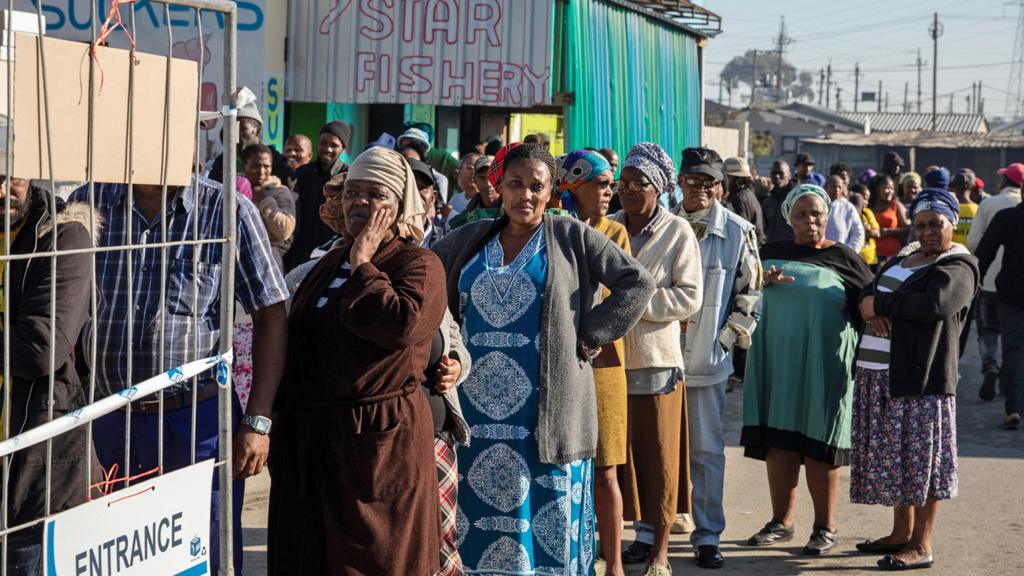
Sandile Memela argues that women are not powerless spectators in South African politics. They are the majority of voters, and their choices help determine who governs. When corrupt politicians are rewarded despite years of failure, voters cannot condemn the consequences while pretending they had no hand in creating them.

By Sandile Memela
IEC statistics say 16 million women are going to vote on 4 November this year.
That is 3 million more than men.
Well, women wield political power. They have a choice.
Let us stop this nonsense of calling South Africans, especially black people and women, victims.
A corrupt government is still a legitimate government because it expresses the will of the people. It may represent and protect foreign interests, but it was not parachuted in from Washington or London. It was voted in, street by street, ward by ward, by people, the majority of whom are women, who knew exactly who they were voting for.
Those who vote for thugs and thieves are not victims but accomplices. They put these people into power and then fail to hold them accountable. Now they must live with the consequences.
We have spent 30 years making excuses for the voter: betrayal, poverty, illiteracy, the legacy of apartheid, the information gap.
It is time to say this plainly: the people, especially women, of South Africa are neither naive nor ignorant. They think before they act and make decisions based on self-interest. They are rational. And their rational choice has been to elect gangsters.
Legitimacy Is Not Morality, It is Math
In a democracy, legitimacy does not mean clean. It means elected. Jacob Zuma’s government was legitimate. The current Government of National Unity is legitimate. They have the numbers. Those numbers came from people who stood in queues for hours.
You cannot say, “The government is corrupt, therefore it is illegitimate,” and then say, “The people are innocent.” If the government is illegitimate, then the people who elected it are illegitimate. If the people are legitimate, then their corrupt government is legitimate too.
This is the hard truth moaners and complainers avoid: corruption is not a coup. It is a contract. The people signed it.
When FNB Stadium was built, and we were told it cost R3.3 billion, people knew money was being eaten. When SASSA grants were used to buy votes, people knew. When the same councillor who steals water-tanker money comes to dance and sing in overalls or Gucci, people know. They know the thugs and politicians. They live in the same streets. They see the designer labels that no teacher’s salary can buy. And they ululate.
That ululation is not fear. It is endorsement. It is investment. The thug becomes the big man because the street protects him. He is not imposed on them. He is produced by them.
The Accomplice Economy
We must understand how complicity works in South Africa.
A corrupt leader does not steal alone. He steals through a network that includes voters.
In the taxi industry, the terrible minibus taxis that kill our children every week are not a mystery. Everyone knows they are unroadworthy, overloaded and driven by boys without licences. Who protects the taxi boss? The rank, the community, the mother who says, “My child needs transport to go to school; please don’t report.”
The community benefits from cheap transport, even if it is death transport. They choose not to link their daily struggle with the corruption that causes it.
In the schools, there are appalling state schools with no toilets, where children drown in pits. Parents know the principal stole the funds. They know the SGB chairperson is the ward councillor’s wife. But they don’t march. They say, “At least there is a feeding scheme.” They trade a future for a meal. That is self-interest, yes, but it is accomplice self-interest.
In the hospitals, there are facilities with no equipment, where women give birth on floors. Everyone knows the tender for linen went to the MEC’s boyfriend. Do they link it? No. They say, “At least the nurses tried.” They don’t link unemployment, water outages, power cuts and the high cost of living to corruption because making that connection would require action. And action is risky.
It is easier to say, “The ANC will bring us freedom,” or, “The EFF will bring us land,” based not on honesty, competence and care, but on other considerations: leaders’ struggle credentials, singing, dancing, violent rhetoric, wearing overalls and military-style fatigues. Those are not policies. They are theatre. And the people pay for theatre with their vote.
They know the thug. They praise him. Look at any township funeral where a tenderpreneur arrives in a Lamborghini. The old women praise him: “Our girl has made it.” They know her wealth is ill-gotten. They praise it anyway because proximity to wealth feels like protection from poverty. They are not naive. They are complicit.
Failure To Demand Accountability Is a Choice
The second part of complicity is the failure to hold the elected accountable.
We love to say, “Leaders failed us.” Or, “The ANC has sold out or betrayed us.” Leaders did not fail. Leaders succeeded at what they set out to do: control resources for themselves. It is the people who failed to do their job: hold them accountable.
Accountability is not a tweet. It is not an SAfm call. It is not a column. Accountability is:
- Attending ward meetings and demanding budgets.
- Refusing to protect the thug in your street.
- Voting differently when the water has been out for six months.
- Refusing to vote for a man because he sings well or is a kwaito star.
South Africans don’t do that. They don’t link unemployment to corruption. If they live in gangster areas where their lives are hell, they don’t link it to corruption. They don’t link the lack of power, the water outages and the high cost of living to corruption.
And if they do see the link, they don’t translate it into their voting choices because they continue to vote for corrupt leaders.
In 2024, we saw the result. Sixty per cent stayed home. That is not protest. That is abdication. The 40 per cent who voted gave 40 per cent to the ANC, 10 per cent to MK, which is Zuma, and 9 per cent to the EFF, which is theatre in overalls. That is a people choosing thugs and thieves and then complaining that they are being robbed.
You cannot be robbed by someone you hired as a robber.
Live With It
This is why the obsession with statistics is a distraction. SAfm was forced to apologise for Jacinta Zuma’s thumbsuck statistics because we wanted to argue about whether BEE helped 20 per cent or 80 per cent. The substance is that BEE helped the accomplices. The taxi boss who votes ANC, the principal who votes ANC, the nurse who steals linen and votes ANC — they are BEE beneficiaries.
The statistics are correct: BEE benefited black people. Which black people? The accomplices.
A corrupt government is legitimate because it is a mirror. It shows us who we are. We are a people who prefer a singing thief to a boring, honest manager. We prefer a dancing thug in military fatigues who says, “We will take the land,” to a quiet man who says, “We will fix the pipes.”
That is our will. That is our choice. And we must live with the consequences.
The consequences are:
- Terrible taxis will keep killing your children because you protect the taxi boss.
- Appalling schools will keep producing children who cannot read because you protect the SADTU principal who is always absent.
- Hospitals with no facilities will keep making your sisters give birth on floors because you protect the tenderpreneur.
- High crime will continue because you live with the thug and praise his designer labels.
- No power, no water and a high cost of living will continue because you vote for struggle credentials, not competence.
No one else will fix it. Not the Constitution, not Jacob Zuma, not the Thabo Mbeki Foundation imbizo in a high-class home, and not a columnist like me. Only the people who put them there can remove them. And until they do, they must live with what they chose.
You cannot vote for a hyena and then cry when it eats your goats.
The goat was yours. The hyena was your choice. Live with it.
Sandile Memela is a writer, cultural critic and social commentator.