

Haunted by the guilt of a history they refuse to process, they frantically spin tales of ‘persecution’ to flee to America. There is no tiger at the door, only people cowering before their own reflections. It is a nauseating display of manufactured dread, a premium-rate vanity project where the only thing truly under siege is the truth.
By Themba Khumalo
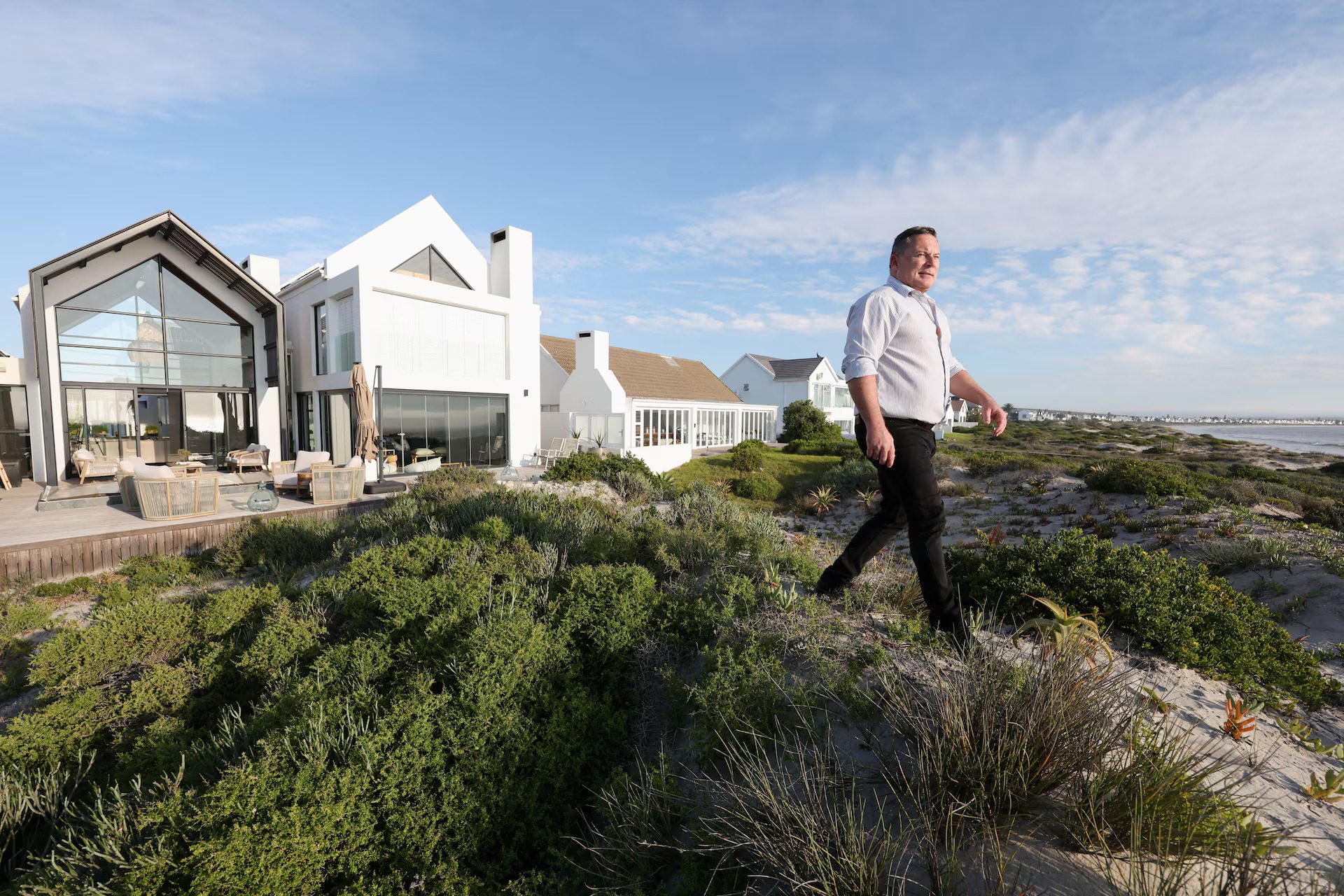
Imagine, if you will, a man standing on the edge of a perfectly calm, sun-drenched cliff in St Helena Bay, in the Western Cape.
The sea is a brilliant, forgiving blue, the air is crisp, and his neighbours are tending to their gardens in peace. Yet, this man stands there, sweating profusely, eyes wide with the terror of a phantom tiger he is convinced is prowling behind him.
He screams to the world that he is being hunted, that he is a refugee from an imaginary slaughter, all while clutching a ticket to the United States provided by a man across the ocean who knows as much about South African reality as a goldfish knows about astrophysics.
This is the theatre of the absurd performed by SJ Du Venage, a man whose primary qualification for refugee status seems to be a vivid, industrial-strength imagination. To be clear, the tragedy here is not one of survival, but of a profound, self-indulgent detachment from reality.
When we frame this “flight” against the backdrop of a place like St Helena Bay—a town defined by its quiet fishing culture and the gentle, rhythmic pace of the West Coast—the absurdity of his narrative becomes even more stark.
It is difficult to maintain the air of a man under siege when you are looking out over the Atlantic from the porch of a seaside villa.
Du Venage is a provincial party official of the Freedom Front Plus, a party that clearly has a talent for cultivating a particular brand of existential dread. He told reuters.com that he has lived his entire life in the shadow of fear—fear of what might happen if white South Africans lost their grip on the steering wheel of the country. He has lived through the transition from apartheid, through decades of democracy, and yet, he admits, he has not actually experienced any tangible mistreatment.
Read that again. He is a man running from a ghost. He is the political equivalent of someone who burns down their own house after hearing a rumour that a spider might crawl through the window.
It is truly a marvel of modern delusions. Du Venage points to a single threatening message from a stranger as evidence that he is a marked man. In a country where millions of people live in the crushing reality of genuine poverty, violence, and genuine insecurity, Du Venage treats his life as if it were a high-stakes espionage thriller.
He cites the tragic murder of a white farmer as his motivation, wilfully ignoring the statistical reality that the overwhelming majority of South Africa’s homicide victims are Black. But why let cold, hard data get in the way of a perfectly good narrative of white victimhood?
There is something deeply pathetic about an adult man, a “life coach” no less, who is so desperate to be a victim that he is willing to discard his home for a bureaucratic gamble based on a falsehood. It is a fairy tale for the perpetually aggrieved, a myth peddled by lobbyists who find the prospect of an equal, multiracial society far more terrifying than any actual threat they face.
Look at the facts, if you can stomach them. This is not a refugee crisis; it is a premium-rate vanity project for those who find the mirror of a modern, multiracial democracy too unforgiving to look into. There is no systemic persecution of white South Africans. There is no evidence of a government-sponsored “white genocide.”
The data is not just thin—it is non-existent.
While the overwhelming majority of South Africans—Black, white, and everyone in between—navigate the genuine, grinding challenges of high crime rates and economic instability, a small, vocal minority is busy laundering their personal anxieties into political capital. They have successfully convinced an administration thousands of miles away that their discomfort with a changing society is equivalent to an existential threat.
It is a wretched, snivelling pantomime. By claiming the status of a refugee, these individuals are not just lying about their own lives; they are actively insulting the millions of people across the globe who are truly fleeing war, famine, and state-sanctioned extermination. They have turned the sacred concept of asylum into a concierge service for the pampered.
When you strip away the histrionics, what remains is the classic “Master-turned-Martyr” trope. It is the refusal to accept a reality where one is merely a citizen, and the subsequent pivot to victimhood as a way to maintain the delusion of importance. They want the safety of a first-world democracy without having to do the hard work of building a fair, non-racial society in their own backyard.
The reality, as Fanie Du Toit from the Institute for Justice and Reconciliation rightly points out, is that three-quarters of white South Africans feel safe in their neighbourhoods. They are not living in bunkers; they are living their lives. Yet, for Du Venage, that is not enough. He does not want to live in a reality where he is merely a citizen among equals; he wants to be the protagonist in a tragedy of his own invention.
So, let us stop indulging the theatre. Let us stop treating the fabricated terrors of the comfortable as if they were news. If Du Venage and his cohorts truly feel that the sky is falling, one suspects they will find that the sky is remarkably similar in the United States, too—only there, they will find their self-important whining is treated with the derision it so richly deserves.
It is time to pull the curtain on this act. The tiger at the door is a stuffed toy, the “persecution” is a psychological projection, and the only thing truly in danger is the integrity of the truth.