

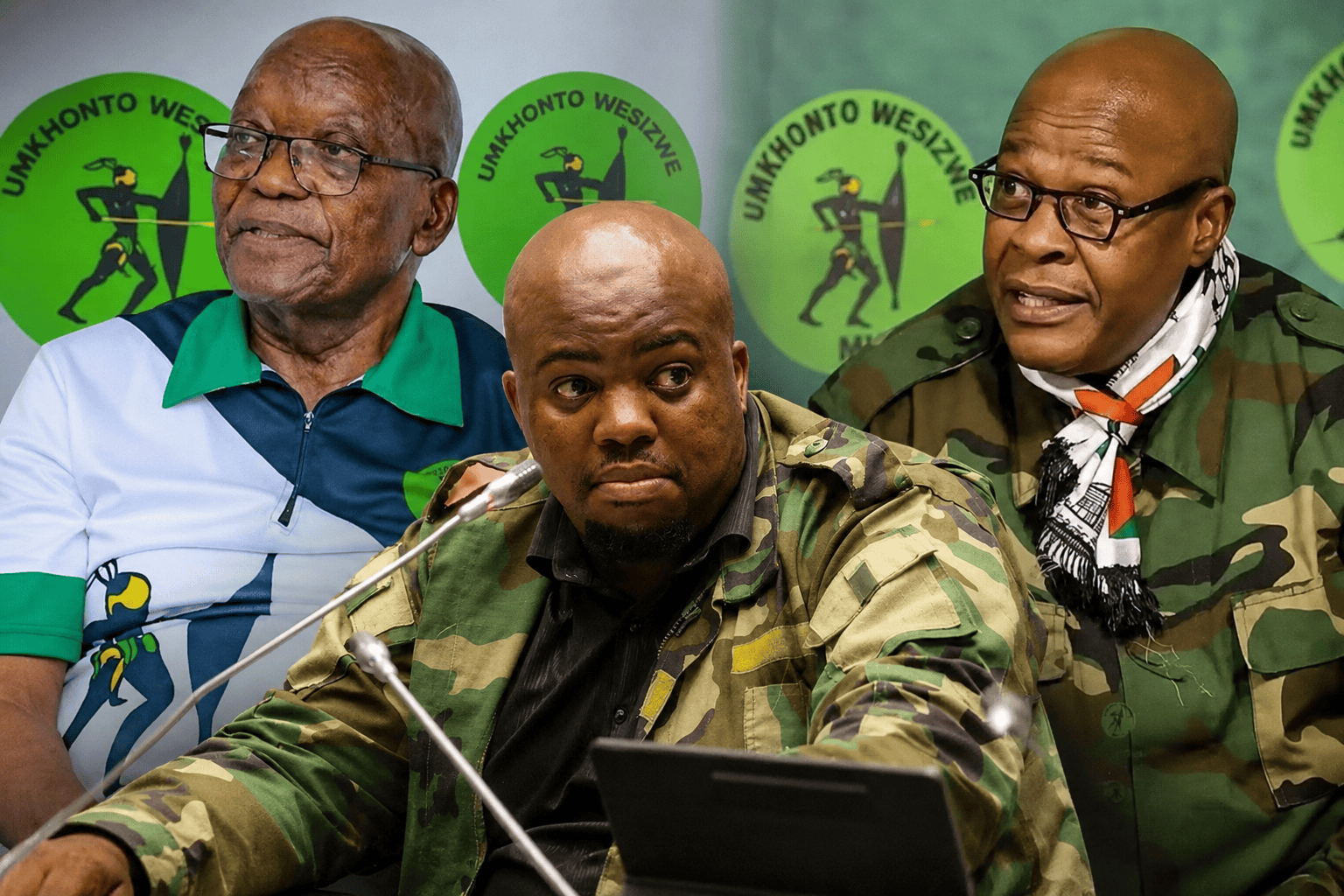
Every political formation eventually meets its greatest adversary. Sometimes it is not the state, the media, or political rivals. Sometimes it is a landlord carrying a fresh padlock and a copy of the lease agreement. Even the fiercest press conference struggles to outrun outstanding rental payments.
By Themba Khumalo
The finest single malts possess an inconvenient honesty. You can admire the label, boast about the age statement, swirl the amber liquid in crystal, inhale notes of smoke and dried fruit, and speak with theatrical authority about oak casks and Highland air.
None of it matters if, after the first sip, the whisky has no body. The palate always exposes what the label tries to hide.
Politics, much like whisky, eventually reaches that unforgiving moment when branding gives way to substance.
South African politics, unfortunately, has developed a taste for labels over substance.
There is a particular brand of political comedy that only South Africa can produce with effortless, unblushing dishonour.
It occurs at that precise intersection where high-minded revolutionary theatricality collides head-first with the mundane, uncompromising realities of commercial property law.
When the Secretary-General of the uMkhonto weSizwe Party, Sibonelo Nomvalo, stepped up to the microphones at a recent media conference, he clearly intended to deliver a fiery dressing-down to the press, laced with righteous political indignation.
His target was Bongani Mdakane, a senior journalist at Sunday World who had committed the unforgivable sin of reporting that the party was so thoroughly broke that it could no longer pay what was due to its landlords.
Nomvalo did not merely dispute the reporting; he spat fire. He branded Mdakane a “propagandist,” accused him of orchestrating a malicious smear campaign, and insisted that the entire narrative was a desperate fabrication designed to undermine his party.
Nomvalo was unsparing in his attack: “The MK Party rejects the latest article published by Sunday World and attributed to Bongani Mdakane. Mdakane is not a journalist; he is a propagandist who is running an anti-MKP campaign using the Sunday World. The Party rejects the contents of his continued articles as false and without factual foundation. The MK Party will continue to defend its reputation and integrity through all lawful avenues available. The Party has now acted legally against Mdakane and the Sunday World.”
It was a spirited performance, delivered with the chest-thumping conviction of a man declaring his absolute innocence.
There was, however, a slight structural flaw in his sermon: while Nomvalo was bellowing at the press gallery about journalistic ethics, the heavy iron chains and steel padlocks were already hanging off the front entrance of the party’s own provincial headquarters at the Victoria Marine Building on Margaret Mncadi Avenue.
Caretakers had politely instructed staff to collect their personal belongings and clear out.
There is a sublime, almost poetic hilarity in watching a political organisation declare itself ready to liberate the masses and restructure the national economy, even as a landlord in Durban revokes its access to the building for failing to keep the lights on past the seventh of the month.
Nor was this an isolated accounting glitch confined to coastal KwaZulu-Natal. Up north in Limpopo, at the Albatross Centre on Market Street in Polokwane, a remarkably similar drama was unfolding.
There, the landlord, J&M Woonstel, having endured three solid months of deafening silence from the MKP finance team, finally lost patience.
On 25 June 2026, formal legal letters from De Klerks Attorneys arrived at the party’s offices, demanding immediate settlement of the defaulted June and July rent.
When those demands were met with the usual combination of revolutionary swagger and administrative inertia, the landlord simply cancelled the lease, padlocked the doors, and impounded the party’s office furniture, filing cabinets, and laser printers inside.
The MKP was given a strict deadline: clear the debt and vacate by 31 July 2026 or face formal court eviction proceedings.
One can only picture the legal team at De Klerks Attorneys listening to Nomvalo’s press conference with a mixture of professional amusement and weary disbelief.
In the unfeeling world of contract law, a formal notice to remedy default does not miraculously dissolve because a party boss calls the journalist a counter-revolutionary.
Commercial lease agreements are notoriously immune to ideological bluster; landlords, being stubborn creatures of habit, tend to prefer actual bank transfers to press releases.
Faced with a rising wall of unpaid bills, the party hierarchy turned to Treasurer-General Brian Molefe, who promptly announced a sweeping financial freeze. Travel allowances were chopped, venue hire was cancelled, and overnight accommodation was banned.
Oddly enough, however, fiscal discipline in the MKP bunker remains a matter of highly selective taste.
Leaks from within the party reveal that while landlords are left holding unpaid invoices, the treasury somehow scrapes together an eye-watering R336,000 every single month to finance Nomvalo’s private security detail.
The operational logic is dizzying: spend a fortune guarding the Secretary-General from hypothetical threats, even though he has no actual office, in Durban and Polokwane, to sit in once his motorcade arrives at work.
Screaming “propagandist” at a journalist who simply reads public court papers and legal correspondence is the final, pathetic refuge of the administratively bankrupt.
Bongani Mdakane did not forge the demand letters from De Klerks Attorneys; he merely quoted them. He did not physically chain the gates at Victoria Marine; an aggrieved landlord did.
Standing before the cameras to rail against media conspiracies while your party’s stationery is held hostage behind a deadbolt in Polokwane is not grand political warfare; it is pure, unadulterated delusion.
If this is the standard of operational competence the uMkhonto weSizwe Party brings to managing four walls and a lease agreement, heaven help the public accounts of any municipality they ever hope to govern.
Nomvalo and his comrades would do well to redirect their fury away from the press gallery and toward their own bank balance.
Attack the media all you like—comrades, ladies and gentlemen, or whatever you call yourselves—but standard legal advice suggests that no amount of anti-press rhetoric has ever successfully cleared a debt owed to a landlord.
For now, let me return to my dram because a fine single malt spends years maturing into something worth savouring. Political delusion, by contrast, never matures into wisdom. It merely leaves someone else picking up the tab.