

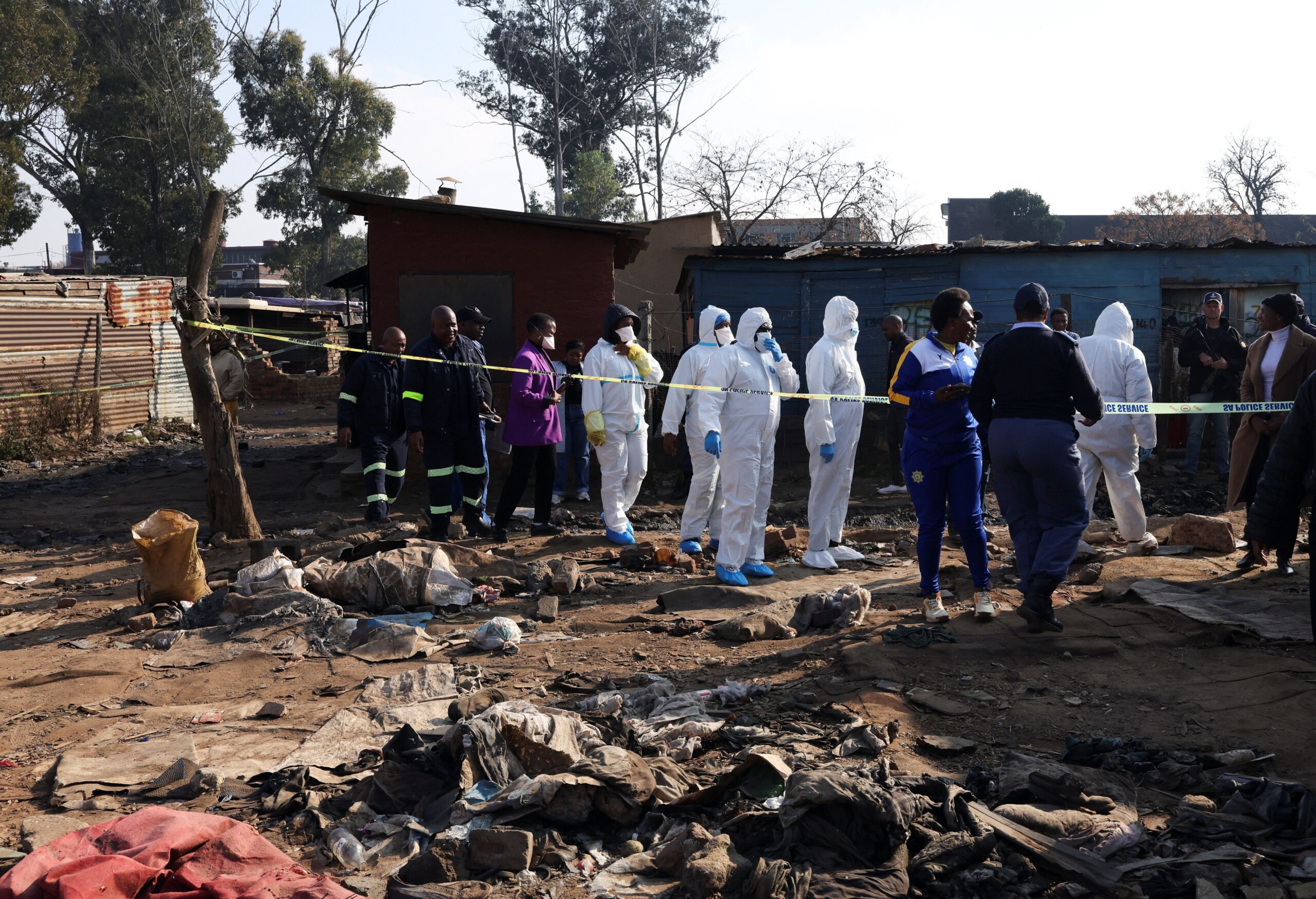
The latest shootings in Wedela, Lwandle and KwaMakhutha have added to a grim national toll that has been building since January. Across the country, police are investigating different possible motives as communities confront yet more deaths from gun violence.
By Staff Writer
At least 196 people have been killed in 41 mass shootings in South Africa since January, according to the Global Initiative Against Transnational Organised Crime (GI-TOC).
GI-TOC senior adviser Julian Rademeyer gave the figures in an interview with Daily Maverick on 27 September. Rademeyer said they were probably an undercount because some shootings go unreported.
“We have had 41 mass shootings in South Africa since January this year; that’s plus or minus 196 people killed. We do believe it is an undercount because some incidents go underreported, but this is our attempt to try to get a grip on the scale of this,” Rademeyer said.
The count was recorded before another victim of the Wedela shooting died in hospital, which took that incident’s toll from 17 to 18.
In the cases below, police are investigating possible retaliation, robbery, business rivalry, extortion, gang conflict and links to illegal mining. In several, the motive remains unknown.
The Past Week
Wedela: 18 killed
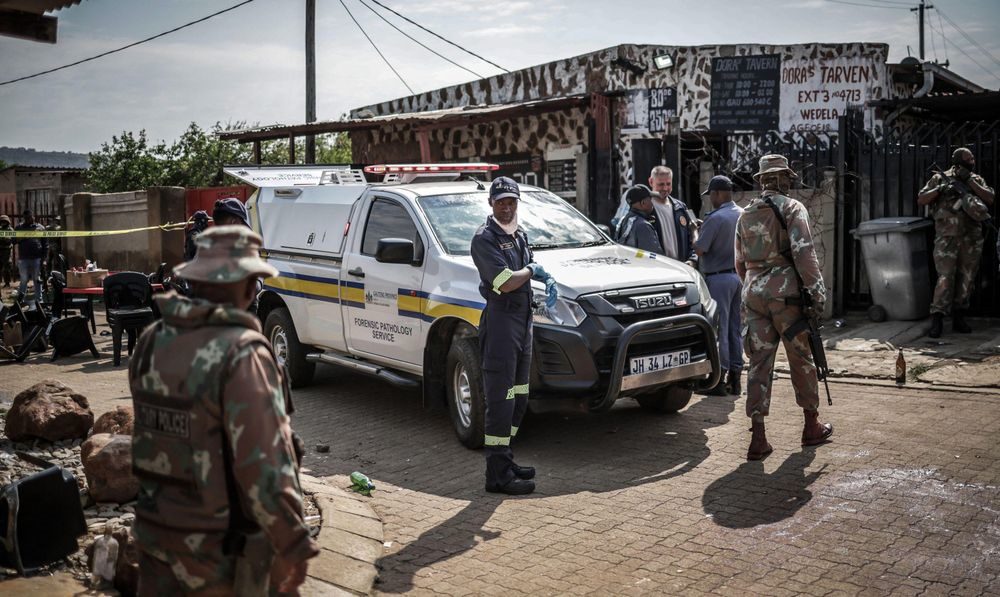
The deadliest of the recent attacks happened at Dora’s Tavern in Wedela, near Carletonville on the West Rand, at about 9.30 pm on Saturday, 26 September.
Eight armed men reportedly entered the tavern and opened fire on patrons inside and outside. Police said the attackers were armed with AK-47 rifles and pistols.
Seventeen people were killed and 15 wounded. Some patrons were also robbed of their belongings, and two vehicles were set alight. A further victim died in hospital on 28 September, taking the death toll to 18.
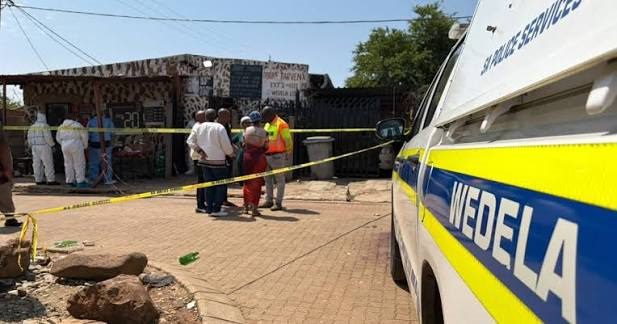
Gauteng deputy provincial police commissioner Major General Fred Kekana said police were investigating whether the shooting was linked to an earlier attack at the same tavern.
“It is linked from our view, and seems to be retaliation by another group because one of the deceased is now one of the people we were looking for, and now he is one of the victims,” Kekana said at the scene, as reported by SABC News on 27 September.
Police have not confirmed the motive. Rademeyer told Daily Maverick that illegal mining and extortion were among the possibilities being considered.
Lwandle: 10 killed, 11 wounded
About four hours later, gunmen opened fire at a shisanyama in Lwandle, near Cape Town, at about 1.46 am on Sunday, 27 September.
Ten people were killed and 11 wounded. Five died at the scene, and another five died while being taken to medical facilities. No arrests had been made.
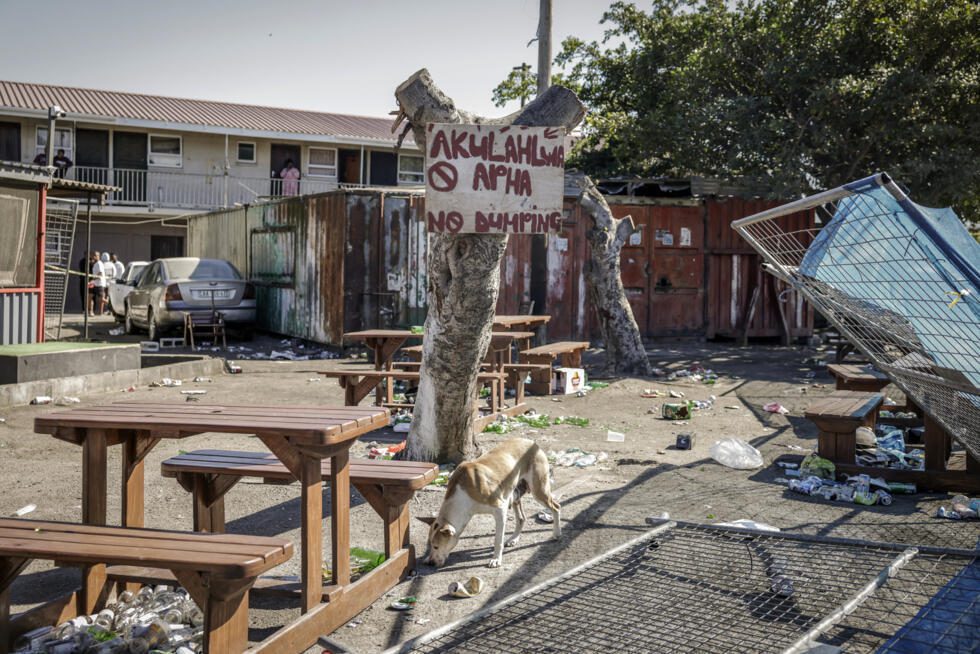
Western Cape police commissioner Lieutenant General Sizakhele Dyantyi said a business rivalry could be one possible motive. He said the attackers appeared to have fired randomly at patrons.
“It seems that they were braaing meat. What is concerning is that people were coming here with their own alcohol while waiting for the meat to be braaied for them. They would also continue consuming alcohol. When you look at the number of bottles, it shows the number of people who were at this place when the perpetrators arrived and randomly shot at them,” Dyantyi told SABC News on 27 September.
Police increased deployments in the area while serious violent crime detectives investigated the shooting.
KwaMakhutha: 12 killed
Days earlier, on the night of Tuesday, 22 September, three men allegedly entered a house in the Ziko area of KwaMakhutha, south of Durban, where 14 people were gathered.
Ten people were killed at the scene, and four were taken to hospital. Two of the wounded later died, taking the death toll to 12. A woman believed to have been pregnant was among those killed.
Police have not confirmed the motive.
“Although the motive of the shooting cannot be confirmed yet, a feud between rival groupings cannot be ruled out,” SAPS said in its statement on 23 September.
A 72-hour tracking operation was launched to find the suspects.
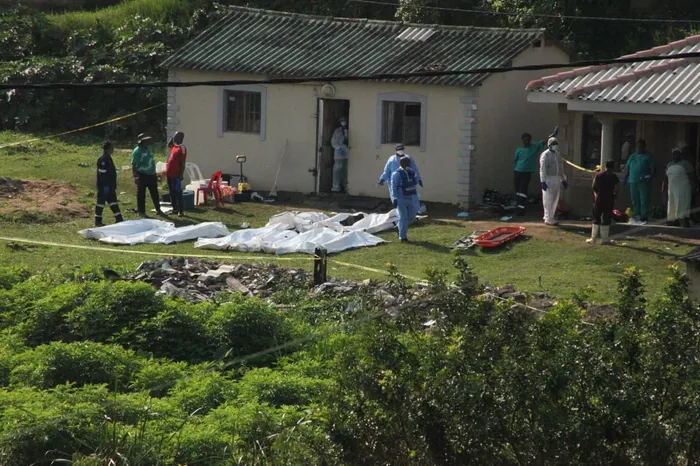
KwaMakhutha Community Policing Forum chairperson David Mamba said the community was also battling problems involving drugs and illegal firearms.
“I think the major problem that we are having in our area, especially KwaMakhutha and the surrounding areas, is the illegal drugs, illegal firearms, as well as illegal drug shops,” Mamba said in comments reported by SABC News.
The national government also condemned the shooting and appealed for cooperation between communities and law enforcement.
“Law enforcement agencies are pursuing every available lead to ensure that those responsible for this senseless act of violence are brought to justice,” the government said in a statement on 23 September.
It called for calm and urged people not to take the law into their own hands, saying sustained cooperation between communities and law enforcement was vital to preventing further violence.
Earlier This Year
Western Cape: August and July
The Western Cape recorded three separate shootings overnight between 8 and 9 August, in which 11 people were killed. Three men aged 25, 31 and 35 were killed in Khayelitsha on Saturday night. Five people were killed in Langa later that night.
In Gugulethu, two men and a woman were killed in the early hours of Sunday, while two other people were wounded. Police said the shootings were separate cases and that the motives were under investigation.
On 27 July, five people were killed and another wounded in NY50, Gugulethu. Police said two armed men forced their way into a house and opened fire. Four men and one woman, aged between 19 and 23, were killed.
Cleveland, Johannesburg: 13 killed
On 9 June, gunmen opened fire at several locations in the Jumpers informal settlement in Cleveland.
Twelve people were initially killed. The death toll later rose to 13 after another victim died in hospital. The motive was not known.
Police said more than 10 suspects had been dropped near a petrol station in a white Toyota Quantum before entering the settlement through two entrances. They later fled in the same vehicle.
Motherwell, Gqeberha: five teenagers killed
Five teenagers were killed in Motherwell on 27 May. The teenagers, aged between 17 and 18, were shot at a house on Mnenga Street, NU10. Four died at the scene, and the fifth later died in hospital.
A 28-year-old man was arrested on 5 June and charged with five counts of murder. Police have not publicly established a motive.
Philippi East, Cape Town: nine killed
Nine people were killed in a shooting at a shebeen in Marikana informal settlement, Philippi East, shortly after midnight on 17 January.
Police linked the shooting to extortion. A 19-year-old man, Bheki Manxiwa, was arrested and charged with nine counts of murder and one count of attempted murder.
Western Cape police commissioner Lieutenant General Tembinkosi Patekile said communities had an important role in helping police identify those behind extortion.
“We depend mostly on communities to report these extortionists,” Patekile said.
The People Behind The Guns
Rademeyer said the shootings should not be viewed only as a series of isolated attacks, with many incidents involving criminal groups competing over territory, money and control of illicit markets.
He said illegal mining, extortion, gang conflict, protection rackets and taxi violence could all form part of the wider criminal economy.
“The real tragedy of that is these are often sort of reprisal attacks or some form of vengeance, or in some cases they may be targeting a specific individual, and then bystanders get caught up in the crossfire,” Rademeyer told Daily Maverick.
He also pointed to what he described as a recurring failure to reach the people at the top of criminal networks.
“Multiagency operations often resulted in the mass arrests of low-level workers—the ‘cannon fodder’ of criminal enterprises—while leaving the ringleaders, financiers and illicit supply chains entirely untouched.”
He said the problem went beyond the tactics used in individual operations.
“So I think that’s the unique South African challenge that we face. And a state which seems to be, you know, somewhat hamstrung in how it responds to this because of the levels of corruption, the lack of resources, the disarray in police crime intelligence.”
The challenge for police and government is to ensure that investigations do not stop with those who pull the trigger, but reach the people who organise, finance and supply the criminal networks behind the shootings.
Government Response
The latest shootings have added to pressure on police and government to tackle organised crime, illegal firearms and the networks behind violent attacks.
In his State of the Nation Address in February, President Cyril Ramaphosa called organised crime an immediate threat to the country. He announced plans to recruit 5 500 additional police officers and to strengthen enforcement of firearm laws.
The government has also backed closer cooperation between police, communities and other agencies in affected areas.
The challenge for police and government is to ensure that investigations do not stop with those who pull the trigger, but reach the people who organise, finance and supply the criminal networks behind the shootings.