


South Africa’s black majority is increasingly looking towards white-led political organisations for order, competence and leadership. Sandile Memela argues that this is not a rejection of blackness, but the consequence of decades of disappointment, corruption, failed leadership and a growing psychology of defeat.

By Sandile Memela
There is an image that should haunt every person who claims to be politically conscious and awake in South Africa today.
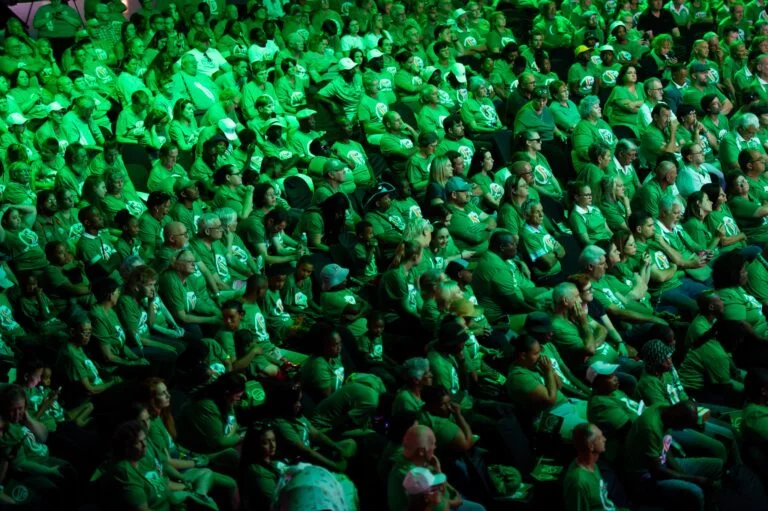
A crowd of black people in a township, battered by poverty, joblessness and crime, cheering a white leader from the suburbs who promises order.
A black grandmother who voted ANC in 1994 nodding when Helen Zille says, “we will fix this.”
A young black adult who has joined the Freedom Front, putting up a poster of Afrikaner men in Soweto.
It is uncomfortable. It is contradictory. But it is happening.
How does a country with an 80% black majority end up looking to a minority white leadership like the Democratic Alliance for salvation? Is it betrayal, or is it exhaustion?
The answer is not that black people love whiteness. The answer is that black people have lost faith and hope in black leadership after 33 years of political battering, corruption and arrogance. The result is a psychological defeat that is more dangerous than any election loss.
The Liberation Movement Battered Itself
The ANC did not need the DA to destroy it. It destroyed itself from inside. Maybe there were just too many Askaris.
In 1994 it was a symbol of sacrifice. In 2026, it is widely seen as a symbol of corruption. That shift did not happen by accident. It happened tender by tender, lie by lie, cadre by cadre.
The liberation movement told people to be patient. Then it built mansions for leaders while the people who voted for it still lived in shacks. It told people about clean governance while mayors and ministers were caught with their hands in the till. It spoke about renewal while it recycled the same faces with new scandals.
When you batter people for long enough, they stop believing that salvation will come from the same house that hurt them. They look elsewhere, even if elsewhere is the old oppressor’s house, because at least there the roof does not leak with lies.
Black leadership has not made it easier for itself. The bad behaviour is public. Fights over positions, not over policy. Insults, not ideas. Conferences that are about who eats, not about who starves. Luxury cars in villages with no water.
How do you ask a person to believe in Black excellence when Black leadership performs incompetence on live TV?
The Psychology Of Defeat
Considering that we gave birth to Steve Biko and his Black Consciousness, this is the hardest part to acknowledge.
It would seem that a section of black society is psychologically defeated and has lost confidence in itself.
This is not because black people are inferior. It is because oppression is a long school. Apartheid taught for 300 years that white is efficient and black is chaotic. The Bantustans taught that black people cannot govern. The media taught that black success is suspicious and white success is normal.
Then democracy came, and for a brief moment that myth cracked. But when the new black government failed to deliver services, to keep the lights on, to stop crime, that old myth returned with a vengeance.
People began to whisper things they would never have said in 1990: “Maybe whites do it better.” “Maybe we need a white person to fix it.” “At least the DA cleans the streets.”
That is not rational analysis. That is trauma speaking. That is the internalised voice of the master saying you cannot do it without me.
When a person has been let down too many times by people who look like them, they begin to think the problem is that they look like them. That is how psychological defeat works. It makes the oppressed police themselves.
The Uncomfortable Collaboration Between Oppressed And Oppressor
This is where it gets truly uncomfortable.
Even active citizenry organisations, organisations formed to fight for black liberation and dignity, like March and March, have looked to far-right organisations like AfriForum for exemplary leadership. This is neither desperation nor selling out.
Think about that. Organisations born out of black pain looking at an organisation that defends white privilege and saying, “They are organised, they are effective, we should learn from them.”
On the surface, it is strategic. AfriForum is efficient. It has lawyers. It has money. It wins cases. If you are losing, you look at who is winning.
But underneath, it is a collaboration between the oppressed and the oppressor that would have been unthinkable in 1985. Then, the question was how to defeat Afrikaner power. Now, the question is how to imitate it. To learn from how they do things, if anything.
Why? Because AfriForum offers what black leadership has stopped offering: clarity, purpose, discipline, and a sense that someone is in charge. It is not that black people or Jacinta Ngobese-Zuma agree with AfriForum’s ideology. It is that they admire its machinery while their own machinery is broken. She has said so herself.
When your own leaders are looting your future, the efficiency of your historical enemy begins to look attractive. That is how deep the crisis goes.
Black Society Is Imploding Through Things Not Done Well
No one is doing this to black society from outside anymore. The implosion is internal, through things not done well.
We did not protect the school, and now it has rats.
We did not maintain the municipality, and now the taps are dry.
We did not hold the councillor accountable, and now he is a millionaire.
We did not protect the child, and now the child is in a gang.
This is not to blame the victim of apartheid. Apartheid created the wound. But after 30 years, the failure to clean the wound, to stitch it, to build a clinic where the wound can heal; that failure belongs to us.
The black community has outsourced its power. Wait for the ANC to deliver. Wait for a tender. Wait for government. That waiting culture, created by a party that wanted dependents, not citizens, has killed initiative. And when initiative dies, people look for a saviour. And the DA, with its white image of order and competence, presents itself as that saviour.
Frankly, it is easier to outsource hope to Zille than to do the hard work of building a block committee that meets every week.
The End Of The Black Liberation Struggle?
So we must ask the final question: Is this the end of the black liberation struggle and the shattering of black aspirations?
The answer is yes and no.
Yes, if liberation is defined as loyalty to a party that has betrayed its people. That liberation is dead. The idea that blackness alone qualifies someone to lead is dead. The idea that voting for the same party out of guilt will bring houses is dead. And it should be dead.
No, if liberation is defined as black people reclaiming the power to govern themselves with integrity. Because what we are seeing now is not the end of aspiration; it is the painful birth of a new aspiration. An aspiration that says: We do not want black leaders who act like white colonisers. We want leaders, black or white, who serve.
When a black voter looks at Helen Zille, they are not necessarily saying they want white rule back. They are saying, “I want the grass cut. I want the lights on. I want my child safe. And my black councillor did not do that. So I will try you.”
That is not a vote for whiteness. That is a punishment vote against black betrayal. It is a desperate vote, not a hopeful vote.
But it is a dangerous gamble. Because the DA’s competence is not neutral. It comes with its own ideology: property over people, market over state, order over justice. It will clean the street, but it will not question why the street was dirty in the first place. It will manage poverty, but it will not end the structure that creates it.
To look to Zille to save black aspirations is to forget why black aspirations existed in the first place.
The Black People In The Mirror
The fact that a black majority can look to a white minority for leadership is not a sign that black people are stupid. It is a sign that black leadership has failed to be exemplary.
The people are not confused. They are clear. They tried. They waited. They forgave. And they were robbed.
Now they are saying, with their votes, with their applause, with their collaborations: If you will not lead us with dignity, we will find someone who will at least lead us with efficiency, even if that someone is the child of our oppressor.
That is not liberation. That is exhaustion.
The real liberation struggle now is not against the DA. It is against the psychology of defeat inside ourselves. It is against the idea that we cannot do it. It is against the black leader who thinks the people owe him, instead of him owing the people.
Until a new black leadership emerges that is humble, clean, present, and disciplined, the people will continue to look elsewhere. Not because they have stopped believing in blackness. But because they have stopped believing that current black leaders believe in them.
And that is the most painful betrayal of all.