

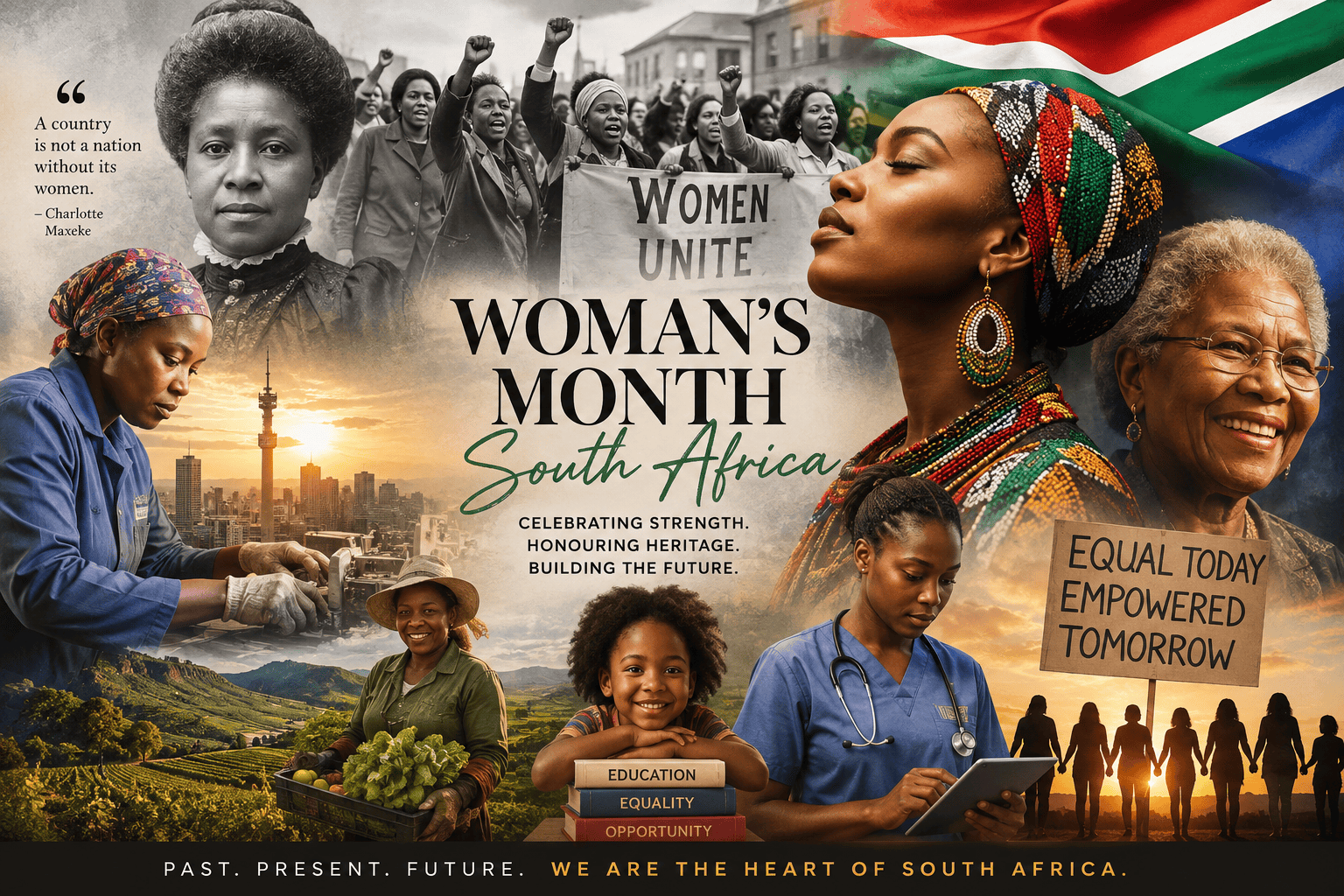
Women’s Month is a time of celebration, but should it also be a time for introspection? Jabu Kumalo argues that true equality requires honest self-examination, urging women to confront uncomfortable questions about accountability, family, justice and the impact of their own actions on men, children and fellow women.

By Jabu Kumalo
The month of August is welcomed with open, tender hearts by our womenfolk. On the other hand, sad to say, it is dreaded by the majority of men.
The menfolk fear this month because of the colourful but heart-tearing insults that will be thrown their way, particularly on social media. They will be called all sorts of unprintable names.
As the sisters celebrate this month, I wish they could take a fearless and searching moral inventory. They should do a thorough stocktaking of themselves to see where they are wrong and where they are doing right.
This is the best opportunity for the womenfolk to turn the spotlight on themselves and forget about looking at the faults of men for a while. This may help them correct and have a good understanding of how they are short-changing themselves while, on the other hand, they are trampling on the toes of men and other sisters, for that matter.
Imagine if the sisters could have a deep conversation about the cruelty of sending men to long prison sentences by falsely accusing them of crimes they did not commit.
Many innocent brothers are spending years in jail when they could have been productive members of society. Nobody wants to believe them when they say they are being framed.
These things even trickle down to young schoolgirls. Remember the schoolboy who committed suicide in the Eastern Cape because a girl had “playfully” accused him of rape. It was too late for the dead boy and his family when the girl later confessed that she was just joking.
“Angaze azibulale! Kanti yena akadlaliswa?” (Can he really kill himself for a joke?)
Imagine a beautiful scenario in which baby mamas are sitting in a workshop and discussing the heartlessness of depriving fathers of the right to see their children.
The cherry on top is when the outcome can be positive for everybody, not only for dads. It will also benefit the kids handsomely.
In this dreaded long month for men, things could be made easier if the women could strongly call out those among themselves who are making men bring up children that are not theirs for many years, sometimes for the rest of their lives.
Our women and girls have an unfair advantage of being afforded the opportunity of having organisations inside their mother organisations and churches. They have women’s manyanos in churches. They also have the privilege of belonging to women-only structures or components within political organisations.
Imagine if they could use that opportunity to teach and learn about the trauma they inflict on men through emotional abuse.
Imagine if they could use the time they spend there to teach each other about uplifting their own kind. In political settings, women would rather vote for men in top positions than be led by others of their own kind. Then they would turn around and cry foul about gender equality.
In churches and other entities, they vehemently oppose the election or appointment of women to positions of authority. Then later they cry foul again.
Imagine if women could use all these opportunities to have conversations about living in harmony with their menfolk. It would be, I suppose, as fairy-tale as it sounds, a wonderful world.
Rather than women spending their whole energy competing to behave and do men’s stuff, it would be great if they could stick to and excel in their own lane. If it will bring peace, that is.
If women could take a lead in discussing the inhuman matter of women who conspire to murder their husbands, they would not be crying foul about the justice system that “seemingly” sentences women to life imprisonment for killing their husbands.
Mothers want to decide who their daughter-in-law must be. If they do not get their way, there will never be peace for the makoti (wife) and the son who has to choose between his wife and his mum.
The same goes for sisters-in-law who despise makotis. They make sure life is hell for her. The one person who gets hurt the most here is their brother. In the meantime, they claim to love and protect him from the “monster” wife.
What are women doing about addressing their own gender about drinking, smoking in public and using drugs more than men these days?
The phenomenon of drinking as a fashionable career has turned women into cheap commodities. Sisters should be tackling this matter head-on rather than throwing their hands in the air and condemning them as having questionable morals.
Unfortunately, humans are awkward, as one popular advert says. Their biggest desire is that others must fix themselves so that there will be harmony. They want peace without the effort of working for it.