By Sports Reporter
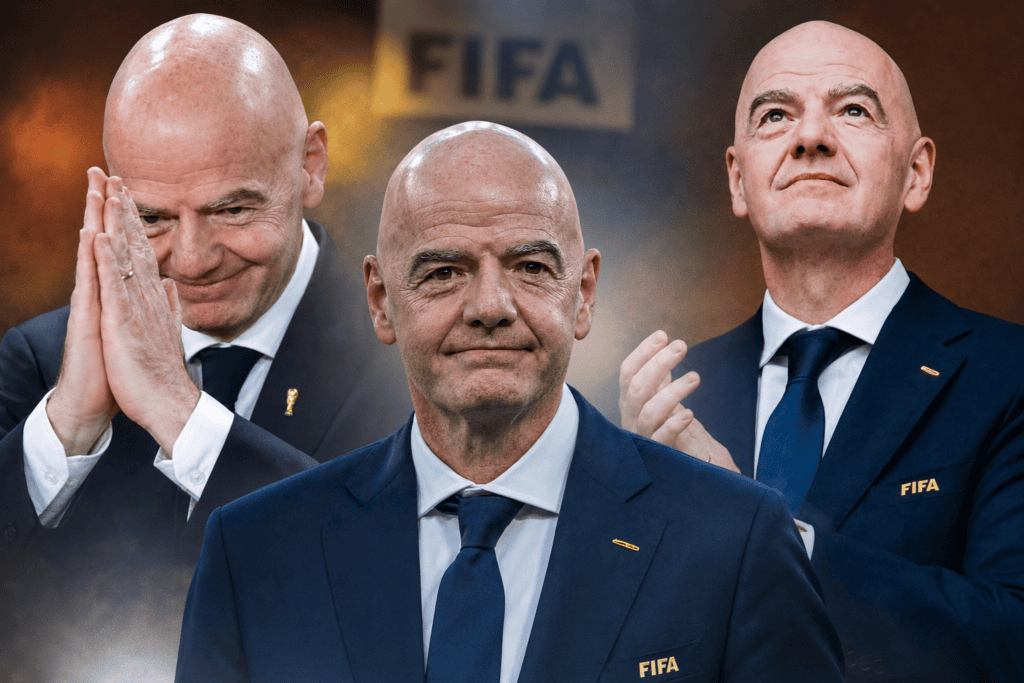
For nearly a decade, Gianni Infantino has ruled world football with an unshakeable, imperious confidence.
Navigating the gilded corridors of FIFA headquarters in Zurich, the 56-year-old Swiss administrator appeared immune to the administrative tempests that had historically consumed his predecessors. Today, however, Infantino faces an unprecedented crisis threatening his decade-long grip on the world governing body.
What began as a covert commercial manoeuvre to restructure the global game has erupted into an open civil war. A secret proposal to create a private corporate subsidiary—dubbed FIFA Forward Enterprise—has triggered senior executive walkouts, formal legal notices, and a coordinated movement to unseat him at the upcoming FIFA presidential election in March 2027.
At the centre of the rebellion lies a collapsed attempt to sell off a 20 per cent stake in the commercial rights of both the men’s and women’s World Cups to private equity investors for approximately $4.2 billion (R69.3 billion).
The entity, valued at $20 billion (R330 billion), was designed to take control of global broadcasting, international sponsorships, and tournament ticketing. It was anchored by Thrive Eternal, a venture arm of Thrive Capital—an investment firm founded and controlled by Joshua Kushner, the brother of Jared Kushner, son-in-law to United States President Donald Trump.
To secure swift approval, FIFA offered member federations an immediate $20 million (R330 million) windfall payout if the proposal was accepted by mid-September. However, the move triggered immediate hostility across the sport when major continental confederations—most notably UEFA, CONCACAF, and the Asian Football Confederation—discovered they had been systematically excluded from consultations.
‘Governance by Intimidation’: The European Legal Battle
The backlash from Nyon was swift, scathing, and institutionally aggressive. In a damning joint statement, UEFA accused FIFA leadership of abandoning its basic duties as custodians of the sport.
“It is both irresponsible and indefensible that a proposal of such significance for football was conceived in secret and brought to the brink of approval without any meaningful consultation,” UEFA declared.
“This is not merely a profound failure of leadership, but an abdication of FIFA’s duty as the custodian of world football. This is governance by intimidation—an act of coercion unworthy of an institution entrusted with the stewardship of the global game.”
Beyond rhetoric, UEFA has formally launched legal proceedings. Through the New York law firm Dechert, UEFA served FIFA with formal legal notices warning that litigation, arbitration, and regulatory complaints were “reasonably anticipated” due to structures “fundamentally incompatible with the proper governance of football.”
The legal notice specifically named 18 senior FIFA officials—including Infantino, Chief Financial Officer Thomas Peyer, and Chief of Global Football Development Arsène Wenger—instructing them to preserve all electronic communications and internal documentation.
“UEFA puts you on formal notice that any destruction, deletion, alteration, concealment, or loss of relevant materials… may constitute spoliation of evidence,” wrote UEFA’s legal counsel Andrew J. Levander.
All 55 European member nations subsequently united to reject the proposal, warning FIFA leadership that they were prepared to pull their national teams out of all FIFA competitions.
Confronted by global mutiny, Infantino was forced into a humiliating retreat, publicly abandoning the plan.
“Having listened carefully to all the views, it has become clear that the project has created divisions of a nature that, regardless of the level of support, are no longer in the interest of the objective set out in the first place,” Infantino conceded in his official withdrawal announcement. “Our purpose has always been—and will always be—to unite and improve. As a result, this proposal will not proceed.”
The FIFA President Strikes Back
Prior to abandoning the project, Infantino launched an ambitious public defence of FIFA Forward Enterprise, pitching it to member associations as a revolutionary financial breakthrough rather than a corporate sell-off.
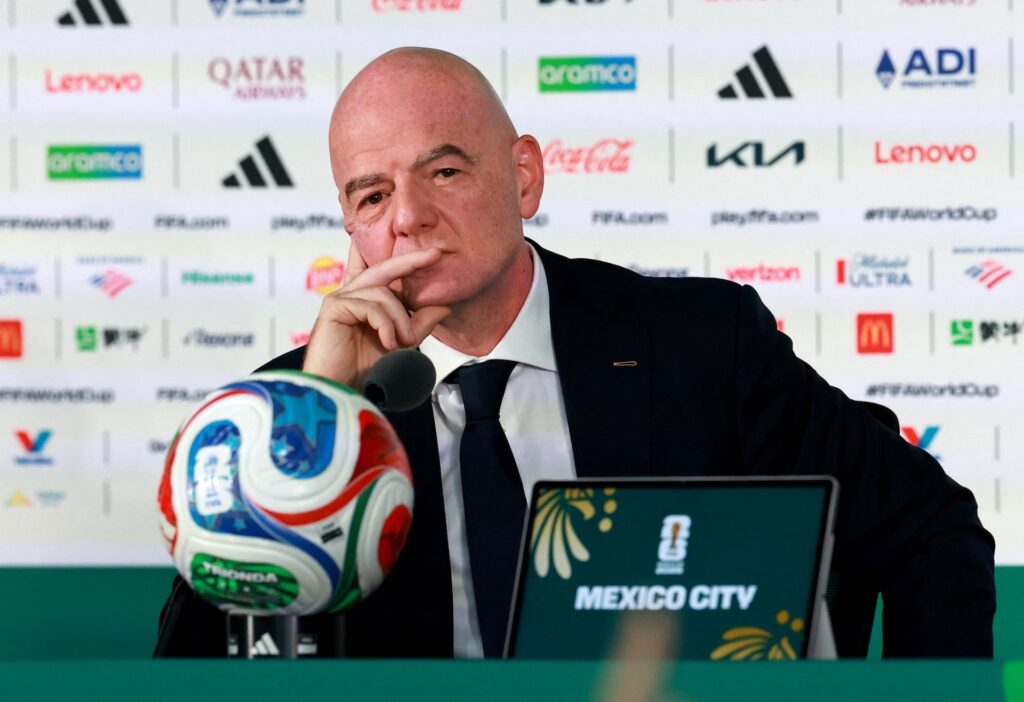
“FIFA Forward Enterprise would simply commercialise and organise all FIFA-owned competitions along with sponsorship, broadcast, licensing and new ventures for the benefit of FIFA’s 211 Member Associations, unlocking previously uncaptured commercial value,” Infantino insisted during a tense presentation to delegates. “More revenue returned to the Member Associations means more investment in better pitches, stronger national teams, and more pathways for young girls and young boys everywhere in the world.”
Framing the move as an overdue structural evolution, Infantino argued that the world body was falling behind commercial realities. “It is a golden opportunity to turbocharge the development of the game globally,” he stated. “Capturing that value requires additional expertise, additional insight, distinct from governing and developing the sport… None of the domestic football leagues in Europe that took similar steps have looked back.”
When critics accused him of riding roughshod over football’s democratic principles, Infantino forcefully pushed back. “It is part of a democratic process—a consultation process—and, above all, it is an opportunity but not an obligation,” he maintained. “If, and only if, it is approved by the majority of our 211 Member Associations and the FIFA Council, it would be a FIFA-owned and controlled subsidiary.”
When wider political controversies erupted—including scrutiny over FIFA’s Disciplinary Committee suspending an automatic red-card ban for United States international striker Folarin Balogun following public comments from Donald Trump—Infantino mounted a fierce, 15-part rebuttal on his official Instagram channel.
Addressing the Balogun decision directly, Infantino dismissed claims of political favouritism. “Potentially mistaken red or yellow cards or subsequent decisions not to ban players in certain situations are routine and widely accepted in some of the biggest leagues worldwide,” Infantino wrote. “It is curious that the same countries employing these practices are the ones criticising.”
Turning his sights on journalists and institutional detractors, Infantino added: “To those behind their pens and papers, behind their screens spreading hate and false rumours, I want to say that while you are sitting behind, we at FIFA are on the front lines organising, working hard, and delivering the best show in the world… I am sorry that you were so consumed by hate and criticism that you missed it all.”
Whistleblowers and Executive Walkouts
Despite Infantino’s fiery rhetoric, the internal resistance inside FIFA’s Zurich headquarters only deepened. Senior officials openly turned on the president in a manner unprecedented in modern sports governance.
Kevin Lamour, FIFA Chief Operating Officer, delivered a damning whistleblowing critique of his superior’s management style, accusing the leadership of deceiving its own staff.
“Employees were deceived,” Lamour stated publicly during his sharp rebuke. “This was not a collective institutional strategy. It is the project of one person. The ball is now in the court of those who have the power to change things.”
The internal revolt gained further momentum when senior FIFA adviser Carlos Cordeiro handed in his resignation, calling the scheme a “bad deal for football.” Shortly after, the Football Association of Wales formally announced it was withdrawing all support for Infantino’s re-election, with England’s Football Association taking similar steps.
“The lack of governance, consultation, and basic transparency was simply the final straw,” stated one senior European football executive speaking on condition of anonymity. “You cannot sell off twenty per cent of the crown jewels of world football behind locked doors and expect member associations to fall into line for a cash hand-out. The trust is completely broken.”
Statutory Loop-Holes and The Washington Connection
The crisis has also drawn intense scrutiny to Infantino’s personal ambitions regarding his statutory term limits. Under FIFA governance rules, a president is limited to three four-year terms. Although Infantino was first elected in 2016, a controversial FIFA Council ruling in 2022 declared that his initial 39 months filling Sepp Blatter’s unexpired mandate did not count towards his statutory limit, clearing a path for him to seek re-election in March 2027 and remain in power until 2031.
However, internal corporate plans revealed that under the proposed FIFA Forward Enterprise structure, Infantino was slated to transition into a highly lucrative position as Commissioner of the commercial subsidiary. The post would have effectively allowed him to retain executive authority and financial control over the World Cup long after his formal presidential term concluded in 2031.
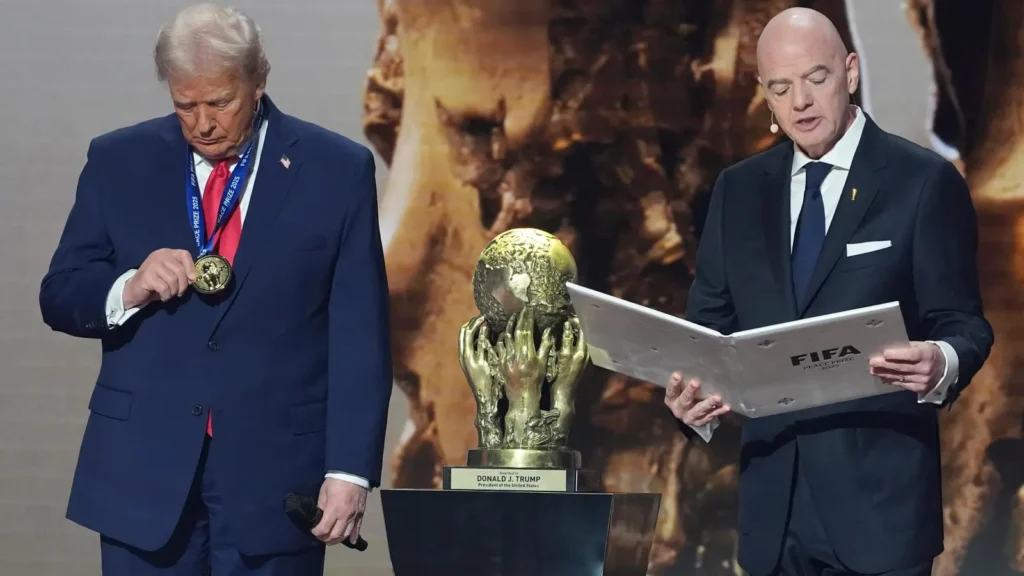
Crucially, Infantino had spent years cultivating a close, transactional relationship with Donald Trump—hosting the politician at major matches, staging ceremonial events, and renting operational office space within Trump Tower in New York.
When international resistance to the private equity venture grew, Infantino relied on his high-profile American ties to provide political cover. Critics allege the selection of a Kushner-adjacent firm was a calculated tactic to bind the commercial future of the tournament directly to Trump’s family circle.
Instead, the political strategy fell apart. As confederations revolted, an isolated Infantino made repeated attempts to contact Trump by telephone to secure a public endorsement.
According to diplomatic reports, those calls went unanswered. Recognising that the deal had become toxic across European and American football boards, Washington distanced itself from the fallout. Representatives for Thrive Capital subsequently issued formal statements insisting that Trump maintained no personal involvement or commercial interest in their bid.
Left without access to his primary political ally, Infantino was forced to request urgent damage-control meetings with United States Secretary of State Marco Rubio, though the State Department swiftly clarified that no official calls were placed.
Human rights organisation FairSquare filed formal complaints with the International Olympic Committee Ethics Commission, alleging that the FIFA president had repeatedly violated political neutrality covenants mandated under the Olympic Charter.
“FIFA’s governance under Gianni Infantino has repeatedly demonstrated a disregard for the basic principles of political neutrality and institutional integrity,” a spokesperson for FairSquare stated. “Decisions of sportive discipline cannot be altered at the request of political figures.”
Despite Infantino’s aggressive public defence, the political ground beneath him continues to shift. Long-time ally Victor Montagliani, President of CONCACAF, is now actively preparing a formal leadership challenge against him for the March 2027 FIFA election in Morocco. UEFA, alongside key European and North American stakeholders, is coordinating to rally behind a unified candidate to bring an end to the Infantino presidency.
While Infantino retains a voting base among smaller member associations that depend heavily on FIFA financial development grants, the unified coalition of UEFA, CONCACAF, key whistleblowing executives, and major national associations represents a structural threat to his reign.
Having alienated his senior executive team and with Washington stepping back, Gianni Infantino faces the most precarious moment of his administrative career—left fighting to save his presidency from a commercial venture that was meant to secure his control forever.
Get the morning briefing
Our editors’ choice of the day’s stories, in your inbox at six.
Comments
No comments yet.