

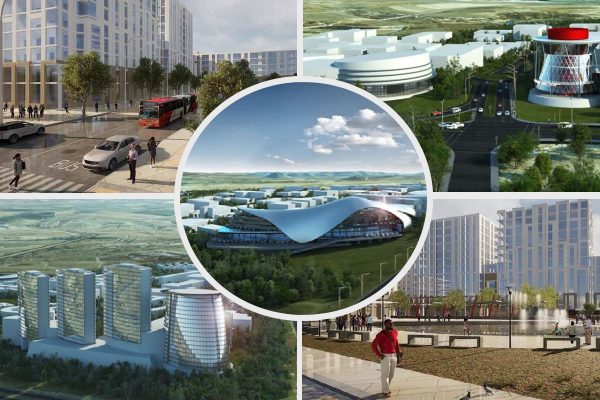
The future is a marvellous place. It has autonomous transport, digital ecosystems and seamless connectivity. The present, unfortunately, has unfinished fencing, bureaucratic poetry and cattle grazing where tomorrow was supposed to begin. The cows, at least, have already moved in.
By Themba Khumalo
There is a ritual to drinking good whisky. You do not simply throw it back like a student celebrating the end of examinations. You admire the colour. You swirl the glass. You breathe in the aroma. You take a slow sip and allow the flavours to unfold.
Only then do you discover whether the label has told the truth or whether you have just paid handsomely for an attractive bottle filled with disappointment.
It occurred to me this week that South African governments have amazingly become master distillers.
Not of whisky, unfortunately, but of illusion.
Their latest vintage arrives in an elegant bottle labelled Lanseria Smart City. The nose is magnificent. Notes of innovation, with hints of transformation and a generous bouquet of world-class infrastructure.
It is presented in glossy brochures, poured generously at launch ceremonies and enthusiastically recommended by politicians who assure us this is the future in a glass.
Then comes the first sip.
Instead of rich complexity, your palate is greeted by unmistakable notes of PowerPoint presentations, committee minutes and computer-generated artist’s impressions. The finish is remarkably long, with delicate undertones of feasibility studies and strategic frameworks, before fading into the familiar aftertaste of absolutely nothing.
Which brings us to Lanseria.
If there is one thing South Africa’s municipal planners do with astonishing consistency, it is confuse urban planning with creative writing.
Given enough consultants, enough coloured diagrams and enough public money, they can produce documents so fantastically detached from reality that they ought to be shelved under fantasy rather than local government.
The latest instalment comes courtesy of Mogale City’s draft precinct plan for President Cyril Ramaphosa’s flagship ‘Smart City’.
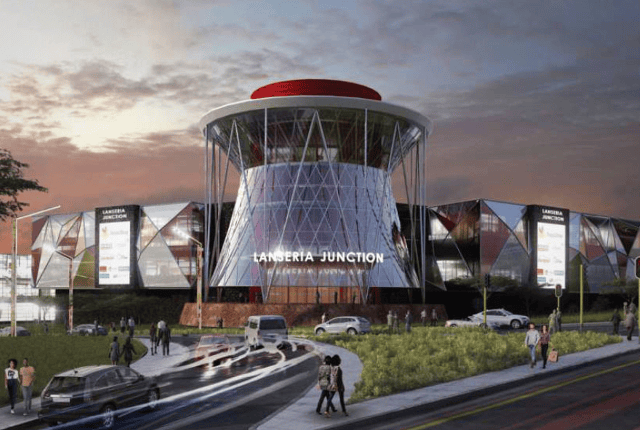
Calling it ambitious scarcely does it justice. To call this a development proposal would be to understate its significance. It is a love letter to the future, written by people who appear determined never to visit the present.
Reading it is an almost spiritual experience.
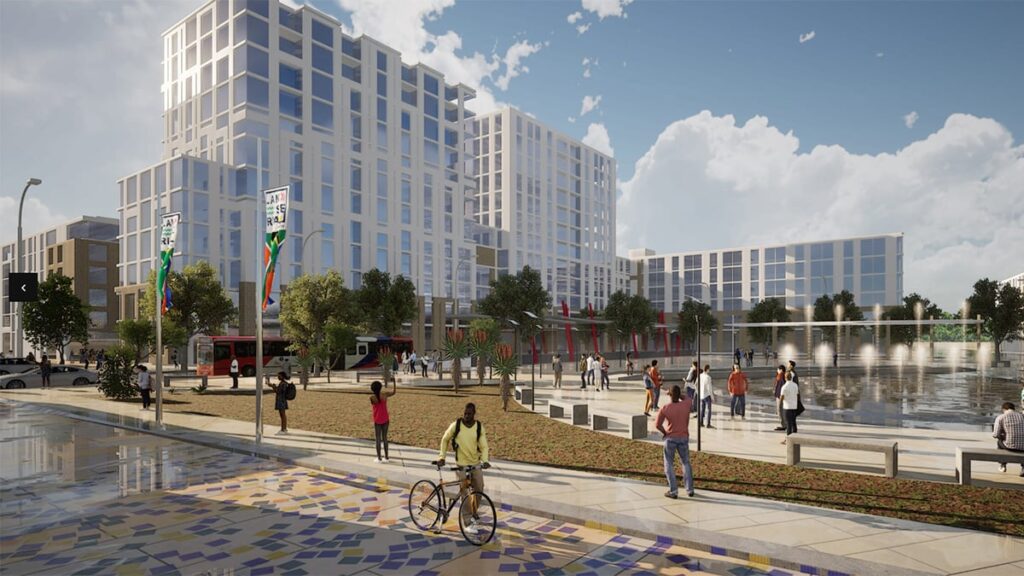
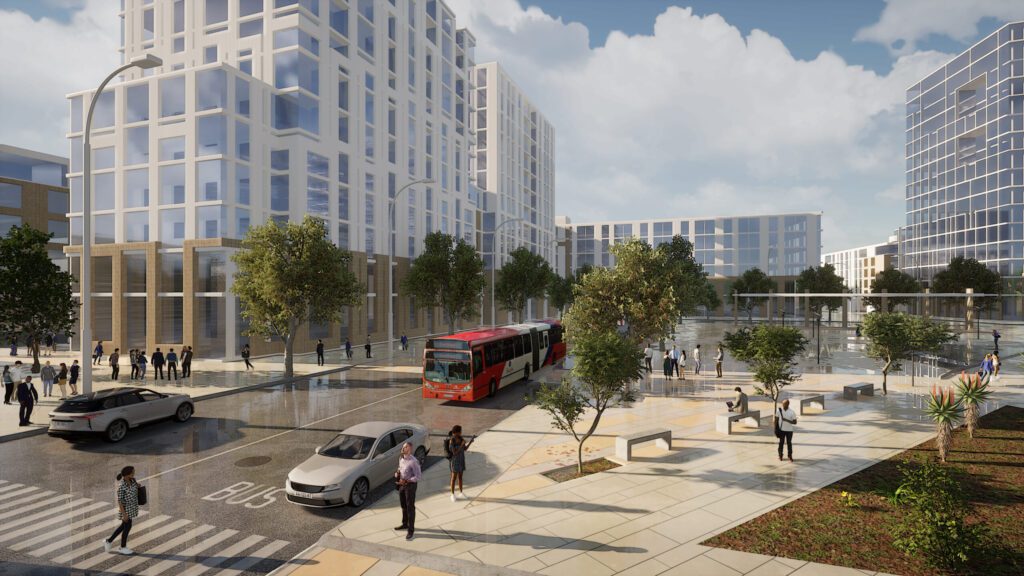
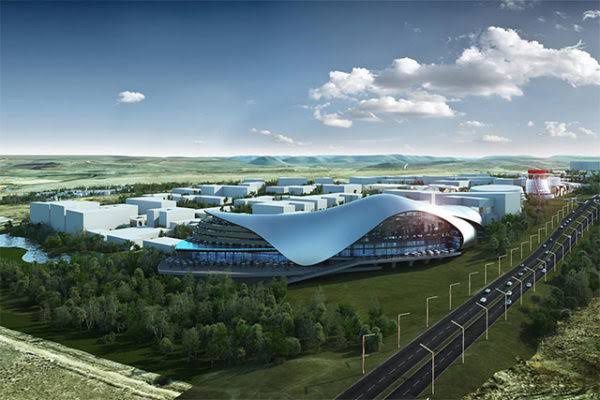
Autonomous electric shuttles glide effortlessly through immaculate streets. Precinct-wide digital connectivity blankets the landscape. Intelligent infrastructure quietly manages the city’s heartbeat while sustainable neighbourhoods flourish beneath an invisible web of technological wizardry.
One half expects the document to announce that unicorns have agreed in principle to provide first-mile transport to the Gautrain station.
Then you lower the document, look through the windscreen and discover an awkward interruption to this futuristic masterpiece.
A cow.
Not a hologram. Not an artificial intelligence-powered robotic grazing solution designed to optimise methane emissions.
Just a thoroughly committed cow, standing in a dry field, chewing with the serene confidence of an animal blissfully unaware that it is supposedly grazing in Africa’s answer to Silicon Valley.
Indeed, the cow may currently be the single busiest contributor to economic activity in the entire precinct.
One cannot blame the animal. It arrived before the Smart City did.
Back in 2020, when President Ramaphosa announced the project with all the ceremony reserved for moon landings and election manifestos, South Africans were invited to imagine something extraordinary.
Here, they were told, would rise a truly post-apartheid city. Green. Digital. Inclusive. Intelligent. A futuristic metropolis for some 400,000 residents by 2030, complete with its own Gautrain station, cutting-edge municipal systems and enough technological sophistication to persuade the rest of the continent that the future had landed just outside Lanseria Airport.
Six years have passed.
One might reasonably expect that a city destined to redefine urban Africa would by now have acquired roads. Or buildings. Or foundations. Or perhaps the modest luxury of underground sewer pipes.
Instead, it has acquired a fence.
Not an imposing fence. Not the sort of fence that announces the arrival of a world-class development. This is a fence with remarkably little self-belief.
It begins alongside Ashenti Road with admirable enthusiasm, as though determined to protect the gateway to Africa’s most technologically advanced metropolis. A few hundred metres later, however, it appears to suffer a complete collapse in morale. Without explanation, ceremony or apparent embarrassment, it simply stops.
It is the first infrastructure project in living memory to resign before completion.
Beyond the point where the fence quietly abandons its responsibilities lies an informal settlement, sitting with supreme indifference in the middle of this carefully imagined cyber-utopia.
The contrast is almost poetic. On one side of the road, computer-generated images promise drone deliveries, integrated mobility corridors and digitally connected neighbourhoods. On the other, reality is busy hanging washing on a line.
No amount of artist’s impressions can compete with an actual clothesline.
Naturally, this raises an awkward question. How, precisely, does one build a gleaming Smart City around an established informal settlement?
Fortunately, South African officialdom has spent three decades preparing for moments exactly like this.
Officials did not panic. They did not hesitate. They reached into the battered briefcase of bureaucratic survival and produced the one instrument guaranteed to confuse journalists, reassure politicians and leave taxpayers none the wiser.
The matter, they explained with practised confidence, was being addressed through “structured intergovernmental processes”underpinned by “social sustainability.”
It is difficult not to admire the craftsmanship.
Only government could assemble so many words with such meticulous care while saying absolutely nothing.
One suspects there are officials who could describe a building on fire as “an emerging thermal event requiring collaborative multi-stakeholder engagement.”
Translated into ordinary English, however, the statement reads rather differently.
“We have not solved the problem, but we have scheduled several meetings to discuss the possibility of discussing it further.”
Somewhere in a municipal office, there is almost certainly a task team preparing a discussion document for a steering committee that will eventually recommend the establishment of a technical subcommittee to consider whether another workshop might be beneficial.
If bureaucracy generated electricity, South Africa would have uninterrupted power until the end of the century.
Meanwhile, out in Lanseria, the cows remain gloriously unimpressed. They continue grazing without the slightest concern for integrated digital ecosystems or precinct-wide connectivity.
They have yet to attend a stakeholder consultation, although one suspects they would contribute more practical ideas than half the consultants drafting the Smart City blueprint.
To be scrupulously fair, there is one unmistakable sign of modern civilisation.
A row of gleaming solar-powered streetlights.
At first glance, the heart almost skips a beat. At last, one thinks, proof that the Smart City has escaped the confines of PowerPoint and ventured into the physical world.
Alas, hope proves as short-lived as a ministerial promise after an election.
The streetlights were not part of the Smart City at all. They were installed by City Power as part of an entirely unrelated programme. The futuristic metropolis cannot even claim credit for its own lighting.
Then the story takes a turn that no satirist could possibly improve upon.
Local business owners reportedly had to employ twenty-four-hour private security to protect the solar panels from being stolen before they had scarcely settled onto their poles.
Pause for a moment and savour that image.
Here stands the flagship of South Africa’s technological future: state-of-the-art renewable energy infrastructure, standing proudly beneath the African sky, guarded day and night by a weary security guard armed with a torch, a flask of coffee and an unshakeable suspicion that somebody is already eyeing the bolts.
One could spend millions designing a smarter streetlight.
It is considerably harder to design one that survives the weekend.
Yet none of this appears capable of disturbing the blissful optimism flowing through the planning documents.
Reality, after all, is such an untidy thing. It insists on introducing awkward complications like water, sewerage, electricity, roads, housing and people. The paperwork, by contrast, inhabits a cleaner universe where every problem can be solved by inventing another phrase that sounds as though it was generated by an overworked management consultant trapped inside a photocopier.
The draft speaks lovingly of ICT frameworks, common ducting, integrated digital infrastructure and embedded technological ecosystems. One half expects it to recommend installing cloud computing before installing stormwater drains.
There is something uniquely South African about this sequence of priorities.
We have developed an extraordinary gift for discussing the roof while the foundations remain imaginary.
We dream of artificial intelligence while natural intelligence is still trying to locate the water pipes.
We announce digital ecosystems before biological ecosystems have recovered from the bulldozers.
And, naturally, no modern government fantasy would be complete without the obligatory proposal for a special purpose vehicle to oversee the digital ecosystem.
Of course.
Because if there is one thing a largely empty tract of veld urgently requires, it is another publicly funded entity complete with a board, a chairperson, deputy chairpersons, advisory panels, governance frameworks, strategic planning sessions, quarterly reports, media briefings and enough catered workshops to keep the country’s muffin industry comfortably profitable.
South Africa has become astonishingly good at creating institutions to supervise things that do not yet exist.
We establish authorities before infrastructure.
We appoint executives before engineers.
We recruit communications specialists before construction workers.
By the time the first brick is eventually laid, the organisational chart is already too large to fit inside the boardroom.
And that, ultimately, is the real genius of the Lanseria Smart City.
To call it a proposed city would be to miss the point entirely. It is a perfect monument to the peculiar South African belief that announcing something is more or less the same as building it.
Some countries construct roads and then cut ribbons.
We cut ribbons in anticipation of one day discussing the possibility of constructing roads.
There is scarcely a corner of government untouched by this curious philosophy. Grand visions are unveiled with cinematic fanfare. Logos are commissioned. Slogans are polished. Websites appear. Steering committees are assembled. Consultants descend like migratory birds. Artist’s impressions bloom in glorious high definition.
Only afterwards does somebody clear their throat and ask an awkward question.
“Has anyone actually built anything?”
Silence.
Then another feasibility study is commissioned.
None of this is to suggest that dreaming big is a mistake. Every great city began as an idea before it became concrete, steel and glass. Vision matters. Ambition matters.
But vision without execution is hallucination.
A Smart City is not made smart because somebody inserted the words innovation, digital ecosystem and Fourth Industrial Revolution into a planning document often enough to exhaust the spellcheck.
It becomes smart when families move into homes that exist, when businesses open on streets that have been built, when trains arrive at stations that passengers can actually use, and when municipal services function so reliably that nobody feels compelled to applaud because a streetlight has survived an entire month.
Until then, Lanseria remains less Silicon Valley than Silicon Fable.
Which brings me back to the whisky.
After taking my time with this latest government vintage, I feel qualified to offer some tasting notes.
The appearance is exceptional. Beautiful packaging. Elegant presentation. A label that practically glows with confidence.
The nose is equally impressive. Rich aromas of innovation, transformation and world-class infrastructure leap enthusiastically from the glass.
Then comes the palate.
Distinct flavours of PowerPoint presentations, committees, feasibility studies and artist’s impressions, layered delicately over notes of unfinished fencing and open veld.
The finish is extraordinarily long.
Hints of digital ecosystems linger pleasantly before giving way to subtle undertones of structured intergovernmental processes, common ducting and special-purpose vehicles.
Then, just when you think the experience is over, there it is.
A faint but unmistakable note of cow. It is, after all, the only resident that appears to have moved into South Africa’s smartest city.