

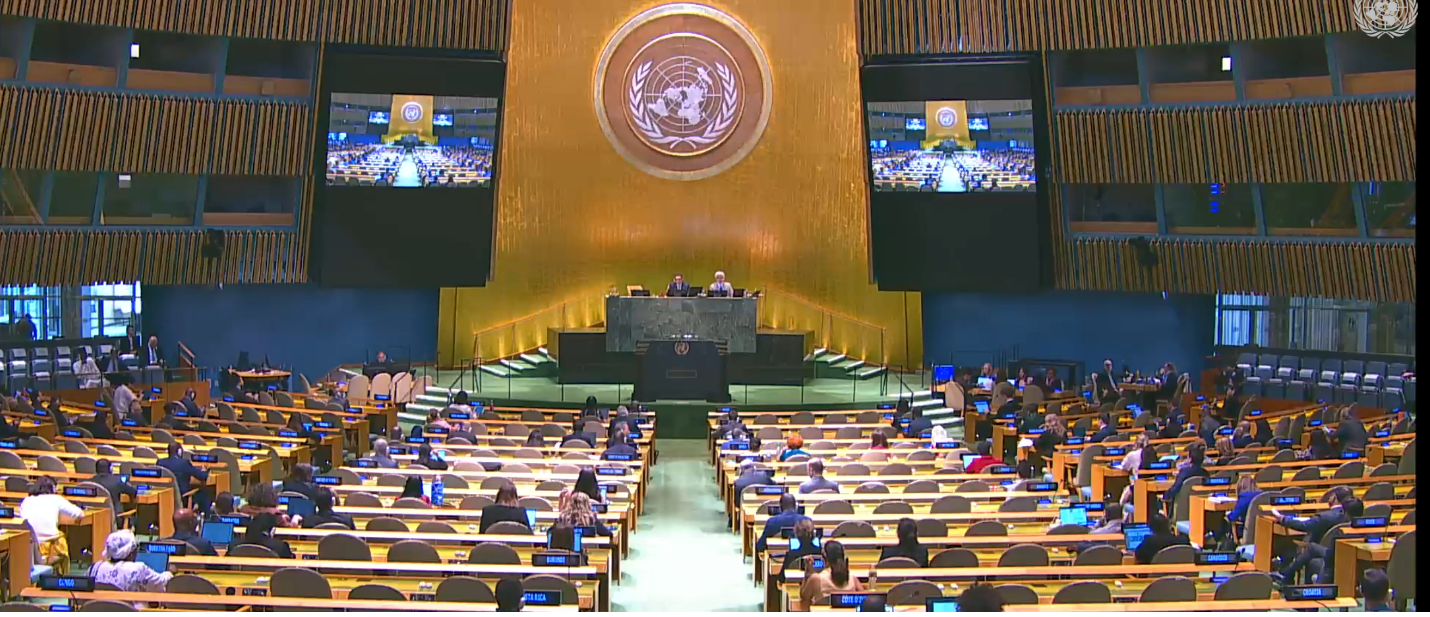
South Africa is stepping up its campaign for a permanent African seat on the UN Security Council, using intergovernmental negotiations on UN reform to advance the Ezulwini Consensus. The push comes as member states remain divided over expansion, veto rights and representation.
By Staff Reporter
South Africa is stepping up its campaign for permanent African representation on the United Nations Security Council, using the latest round of negotiations on UN reform to push the African Union’s long-standing demand for a greater voice in decisions on international peace and security.
The issue is among Pretoria’s priorities as world leaders gather in New York for the high-level General Debate of the 81st session of the UN General Assembly, which began on Tuesday and runs through 28 September.
South Africa’s Permanent Representative to the UN in New York, Ambassador Mxolisi Sizo Nkosi, said Pretoria would use the session to build support for the African position contained in the Ezulwini Consensus.
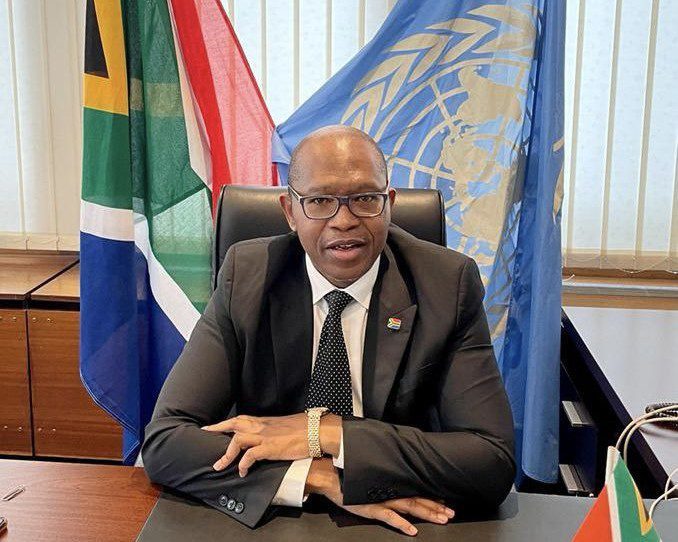
“Currently, we have a debate. The item is on the agenda. There is what we call intergovernmental negotiations (IGN) that are taking place in the UN, and these are focused on the reform of the UN, with a specific focus on the expansion of the Security Council,” Nkosi said.
He said South Africa wanted the negotiations accelerated, arguing that the Council’s composition no longer reflected the political and demographic realities of the world.
“We firmly believe, as a country, that in line with the Ezulwini Consensus, which is the African Union position, the Security Council has to be expanded,” Nkosi said.
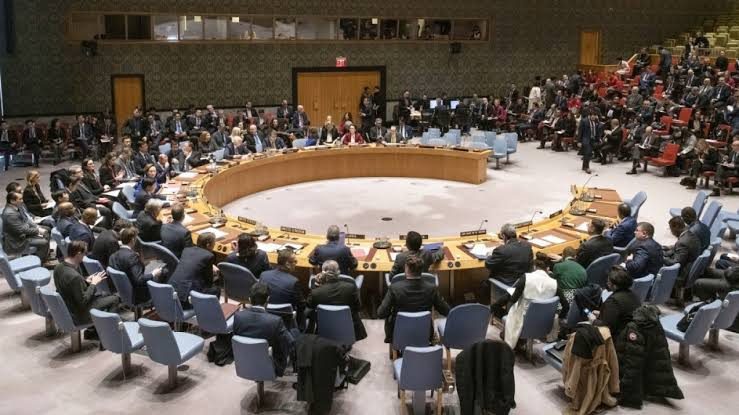
The Security Council has 15 members: five permanent members — China, France, Russia, the United Kingdom and the United States — and 10 members elected by the General Assembly for two-year terms. The five permanent members have veto power over substantive decisions.
Africa is represented among the elected members but has no permanent seat and therefore no permanent veto.
Nkosi said this was increasingly difficult to justify given Africa’s size, economic importance and central role in the UN’s peace and security agenda.
“Africa is one of the regions that are not represented in the Security Council in the permanent category. It’s important that Africa should be represented in the UN,” he said.
“We have a significant economy with a significant role to play in international politics. If you look at it from a security point of view, the majority of conflicts that are taking place in the world today, both intrastate and interstate … are in Africa … hence, we believe that we have to be represented.”
What Africa Is Asking For
The African position goes beyond adding an African country to the existing Council.
The Ezulwini Consensus, adopted by the AU in 2005 and subsequently reinforced by the Sirte Declaration, calls for Africa to receive at least two permanent seats and five non-permanent seats in an expanded Security Council.
The African position also calls for the permanent seats to carry the same prerogatives and privileges as those held by the existing permanent members, including the veto for as long as the veto itself remains part of the Council’s system. The AU has maintained that it is opposed in principle to the veto but that it cannot accept a reform that creates second-class permanent members.
The African Union’s position was reaffirmed as recently as May, when AU Commission Chairperson Mahmoud Ali Youssouf said the continent was seeking at least two permanent seats with full prerogatives, including the veto while it exists, together with five non-permanent seats.
The AU’s Committee of Ten, known as the C-10, has been tasked with advancing the common African position internationally.
The African Model for Security Council reform, circulated during the current intergovernmental negotiations, similarly proposes that Africa be treated as a special case and a priority in any expansion, with no fewer than two permanent seats and five non-permanent seats.
The question of who would occupy the permanent African seats is deliberately separate from the principle of expansion. The African position envisages the AU having a role in selecting the countries that would represent the continent.
Nkosi said South Africa would continue to push the Ezulwini position through the negotiations, with questions about the eventual form of African representation to be dealt with once there was agreement on expanding the Council.
A Reform Debate That Has Been Running For Years
The negotiations are not new.
The General Assembly began the current intergovernmental negotiations process in 2008 after deciding that reform should address equitable representation, an increase in Security Council membership and other related issues. The talks have continued across successive General Assembly sessions without producing agreement on a final model.
The difficulty is that there is no single proposal for what a larger Council should look like.
The Group of Four — Brazil, Germany, India and Japan — supports expansion in both the permanent and non-permanent categories and has campaigned for permanent seats for its four members, alongside African representation.
The Uniting for Consensus group, which includes countries such as Italy, Pakistan, Mexico and Argentina, opposes creating new permanent seats. Its members have instead advocated expanding non-permanent membership and creating longer or renewable terms to give more countries greater access to the Council.
That disagreement goes to the heart of the reform process: whether the answer to the Council’s representation problem is to create a larger group of permanent powers or to give more countries opportunities to serve through elected seats.
The veto is another major fault line.
Africa’s position is that any new permanent members must receive the same veto rights as the existing permanent members if the veto survives. Other proposals seek either to restrict the use of the veto or to create new permanent seats without extending veto power.
The United States, for example, has supported the creation of two permanent African seats but has not supported extending veto power to new permanent members. France has backed two permanent African seats with the same prerogatives, including veto rights.
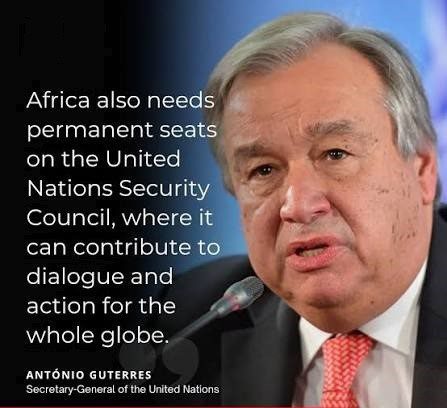
UN Secretary-General António Guterres said in May that all five existing permanent members had, to that point, expressed support for African representation through two permanent seats, while acknowledging that questions surrounding the veto remained part of the unresolved negotiations.
Russia has also backed expanding permanent membership while maintaining the existing veto system, according to a statement from the Kremlin on Tuesday.
Why The Council Matters
The Security Council is the UN body with primary responsibility for maintaining international peace and security. Its decisions can have consequences ranging from sanctions and peacekeeping mandates to authorising the use of force.
Under Article 27 of the UN Charter, substantive decisions require at least nine votes and cannot pass when a permanent member casts a veto.
That gives the five permanent members a degree of influence unmatched by the other 188 UN member states.
For African governments, the problem is not only that the continent lacks a permanent seat. It is that many of the conflicts and security crises considered by the Council occur in Africa, while African countries remain dependent on elected terms for direct voting representation.
The AU has therefore framed the issue as a question of historical and institutional imbalance.
The argument has gained broader recognition in recent UN reform discussions. A June 2026 co-chairs’ paper on the negotiations recorded wider support for the aspiration of African countries to play a greater role in global affairs through increased Security Council representation and specifically acknowledged the need to address the historical under-representation of Africa.
But recognition of the principle has not translated into agreement on the structure of a reformed Council.
That is the central obstacle facing South Africa and the wider African campaign.
South Africa’s broader UN agenda
Pretoria’s Security Council campaign forms part of a wider push for reform of the multilateral system.
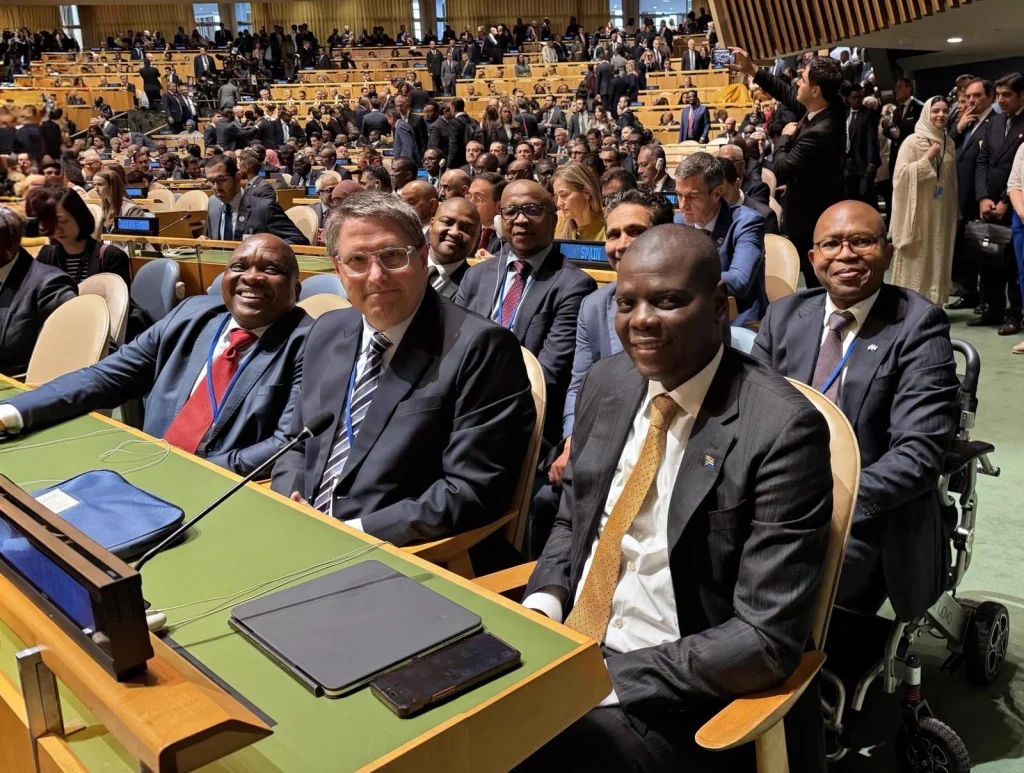
International Relations and Cooperation Minister Ronald Lamola is leading the South African delegation at UNGA81 and is expected to outline the country’s positions on international peace and security, the global economy, climate change, artificial intelligence governance and reform of the UN.
Nkosi said the Security Council reform campaign would continue alongside those priorities.
For South Africa, the immediate objective is therefore not an instant change to the UN Charter but to build political support for an expansion of the Council and ensure that Africa’s position remains central to the intergovernmental negotiations.
Any substantive change will ultimately require agreement among UN member states and an amendment to the UN Charter.
For now, the debate remains unresolved: whether the Council should gain new permanent members, how many seats should be created, which regions should receive them, whether new permanent members should have vetoes and how the competing claims of Africa, Latin America, Asia and other under-represented regions should be accommodated.
South Africa is arguing that whatever model eventually emerges cannot leave Africa outside the permanent category.
The continent has spent more than two decades making that case. The negotiations at UNGA81 will determine whether the latest push can move the argument any closer to institutional change.