

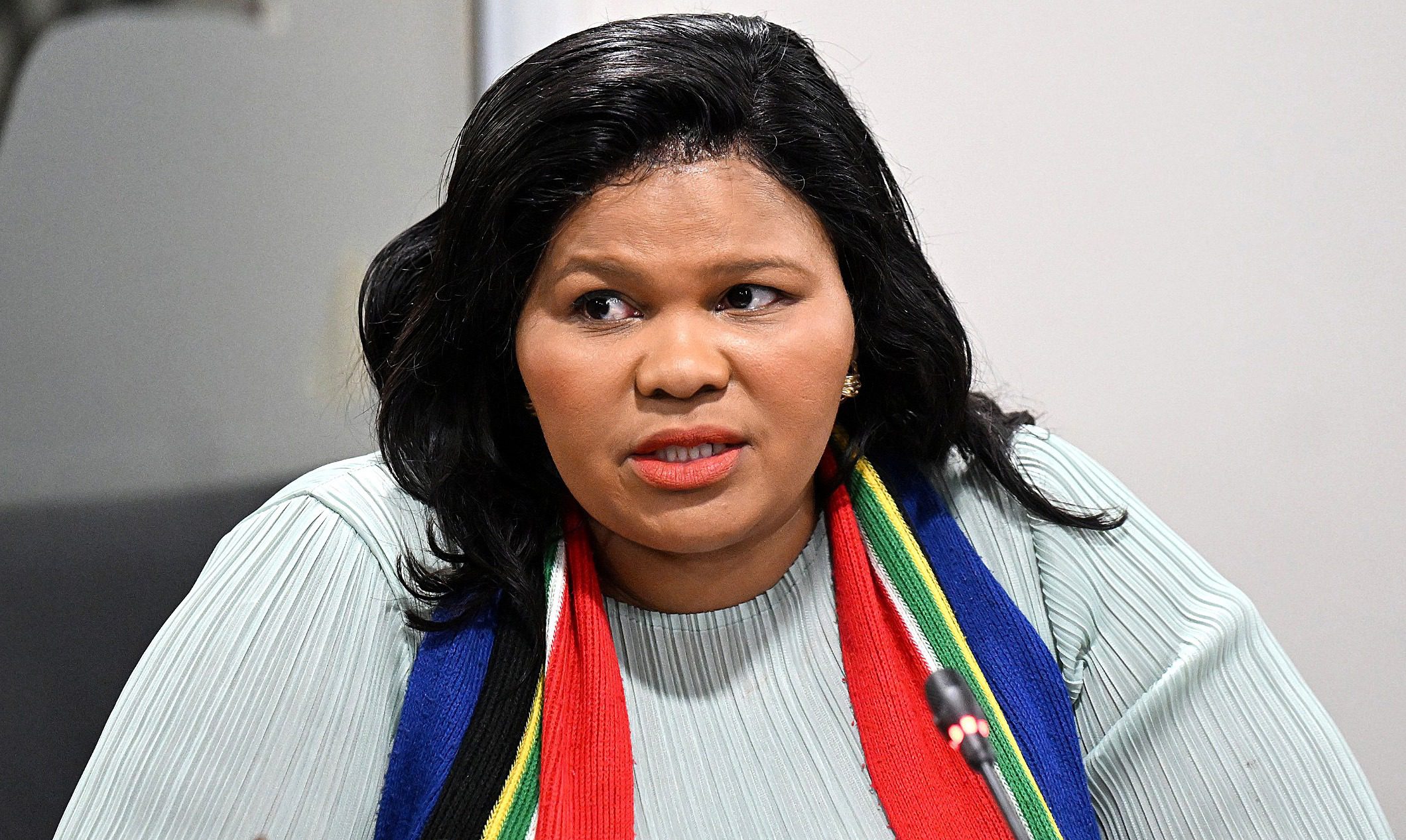
Framing the intervention as a “corrective reset,” Nelson Mandela Bay leadership has launched immediate damage-control measures following Treasury’s severe funding freeze. A multidisciplinary team is now scrambling to meet strict national governance benchmarks to protect the metro from impending operational insolvency.
By Staff Reporter
Nelson Mandela Bay Metro has been thrust into an acute fiscal crisis after National Treasury took the extraordinary step of withholding its critical local government equitable share allocation.
The move, executed on Tuesday, 7 July 2026, leaves the metro grappling with an immediate cash crunch after being blacklisted alongside 68 other non-compliant municipalities across South Africa.
Among those penalised in this unprecedented national crackdown on municipal dysfunction are major centres such as the City of Johannesburg, Mangaung, and Buffalo City.
National Treasury invoked Section 216(2) of the Constitution and Section 38 of the Municipal Finance Management Act (MFMA) to halt the funding.
The intervention follows years of unheeded audit warnings, ignored formal communications, and failed capacity-building exercises by national government.
The Breakdown in Governance
According to Treasury findings, the decision to halt funding to Nelson Mandela Bay is rooted in persistent and serious financial non-compliance. Central to the crisis is the failure of both the Municipal Council and the Municipal Public Accounts Committee (MPAC) to investigate and resolve massive backlogs of Unauthorised, Irregular, Fruitless and Wasteful Expenditure (UIFWE).
Under Section 32 of the MFMA, councils are legally required to investigate such expenditure to either recover the funds or formalise consequence management against liable officials. Treasury officials noted a stark absence of internal disciplinary procedures, civil recovery processes, or criminal charges targeting those responsible for the financial bleeding.
Furthermore, the metro has continually failed to honour statutory financial commitments, resulting in severe delinquency regarding payment timelines for bulk suppliers and third-party creditors.
Strict Conditions for Financial Relief
The suspension of the July equitable share transfer is not permanent, but national government has bound Nelson Mandela Bay to a strict conditional matrix that must be satisfied during the first quarter of the 2026/27 financial year.
To unlock the funds between now and September, the metro must meet three non-negotiable benchmarks:
UIFWE Reduction: The metro must prove a minimum 25 per cent reduction in its total UIFWE balance as of 30 June 2026. This will be verified against the unaudited draft financial statements submitted to the Auditor-General.
Consequence Management: Council must provide formal proof that municipal disciplinary boards are legally constituted, active, and actively processing financial misconduct through formal case referrals and civil or criminal recovery.
Creditor Realignment: The administration must submit signed, legally binding payment agreements with Eskom, relevant water boards, the South African Revenue Service (SARS), and the Auditor-General to resolve outstanding debts.

Treasury has instituted a strict safety mechanism for the release of these funds. Cash will only be disbursed in amounts equivalent to the specific invoices guided by the signed creditor agreements.
The remainder of the allocation will remain locked until the metro can prove that previous disbursements were utilised strictly for their intended operational purposes.
The Metro Strikes a Defensive Stance
In the wake of the announcement, Nelson Mandela Bay Executive Mayor Babalwa Lobishe and the metro’s administrative leadership moved swiftly into damage-control mode to reassure anxious residents, the local business chamber, and investors.
Rather than adopting a confrontational approach, the municipality issued a formal statement seeking to de-escalate tensions while acknowledging the authority of the state’s financial watchdog.
“The municipality respects the constitutional and legislative oversight role of National Treasury and remains fully committed to working collaboratively with both National Treasury and the Provincial Treasury to satisfy all conditions required for the release of the temporarily withheld allocation,” the statement read.
To counter widespread public anxiety regarding potential service blackouts or imminent administrative insolvency, the local authority detailed its immediate internal intervention plan.
“The municipality has activated the necessary internal governance processes to address the matters raised by National Treasury,” the metro stated. “A dedicated multidisciplinary team is engaging directly with National Treasury to ensure that all outstanding requirements are addressed as expeditiously as possible.”
Reassurance on Essential Services
Crucially for the local economy and ratepaying residents, the metro insisted that day-to-day operations would not face immediate disruption.
The leadership maintained that frontline infrastructure and public safety would be protected while administrators scrambled to unlock the national funds.
“Every effort is being made to minimise any potential impact on municipal operations and service delivery. Essential services, including water, sanitation, electricity, waste management, emergency services and other frontline municipal services, remain the municipality’s highest priority,” the statement continued.
“Residents should be assured that the temporary withholding of the equitable share will not disrupt the delivery of essential municipal services.”
Instead of treating the fiscal clampdown as a terminal blow to the metro’s stability, the local government chose to frame the stringent Treasury intervention as an operational reset designed to clean up its books.
“The municipality views this intervention as an opportunity to further strengthen its financial management systems and reinforce public confidence in the institution,” the local authority concluded. “It reaffirms its commitment to transparency, accountability, good governance, and responsible financial management in the interests of all residents.”