

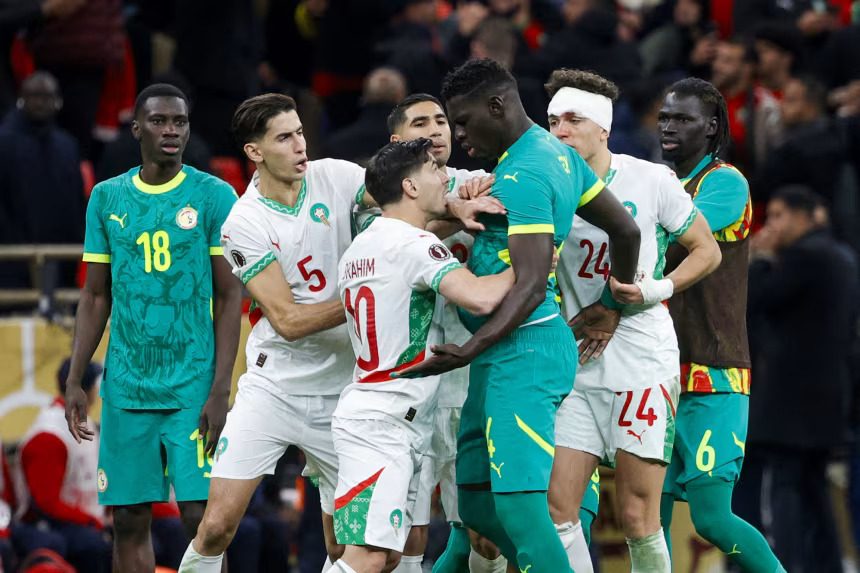
After lifting the AFCON trophy on the pitch, Senegal found itself stripped of the title months later. Now, the country’s football federation is asking the Court of Arbitration for Sport to decide who the rightful champions of Africa really are.
By Sports Reporter
One of African football’s most consequential legal disputes in years is heading towards a showdown in Switzerland.
The Court of Arbitration for Sport (CAS) has confirmed that it will hear Senegal’s appeal against being stripped of its 2025 Africa Cup of Nations (AFCON) title on 8 October 2026.
The closed-door hearing at CAS headquarters in Lausanne will bring the Senegalese Football Federation (FSF), the Royal Moroccan Football Federation (FRMF) and the Confederation of African Football (CAF) together in a case that could redefine how football’s laws interact with tournament regulations.
At the heart of the dispute lies a deceptively simple question with enormous consequences. Senegal maintains that it won the final on the pitch after the referee completed the match.
Morocco and CAF argue that Senegal forfeited that right the moment its players abandoned the field in protest, regardless of what happened afterwards.
The answer will determine not only who is recognised as the rightful African champions, but also how similar disputes may be judged in future.
How the Chaos Unfolded on the Pitch
The controversy stems from extraordinary scenes during the AFCON final in Rabat on 18 January 2026.
Deep into stoppage time, with the match still locked at 0-0, Congolese referee Jean-Jacques Ndala awarded hosts Morocco a penalty following a VAR review for a foul on Brahim Díaz.
The decision sparked fury among the Senegalese players and technical staff.
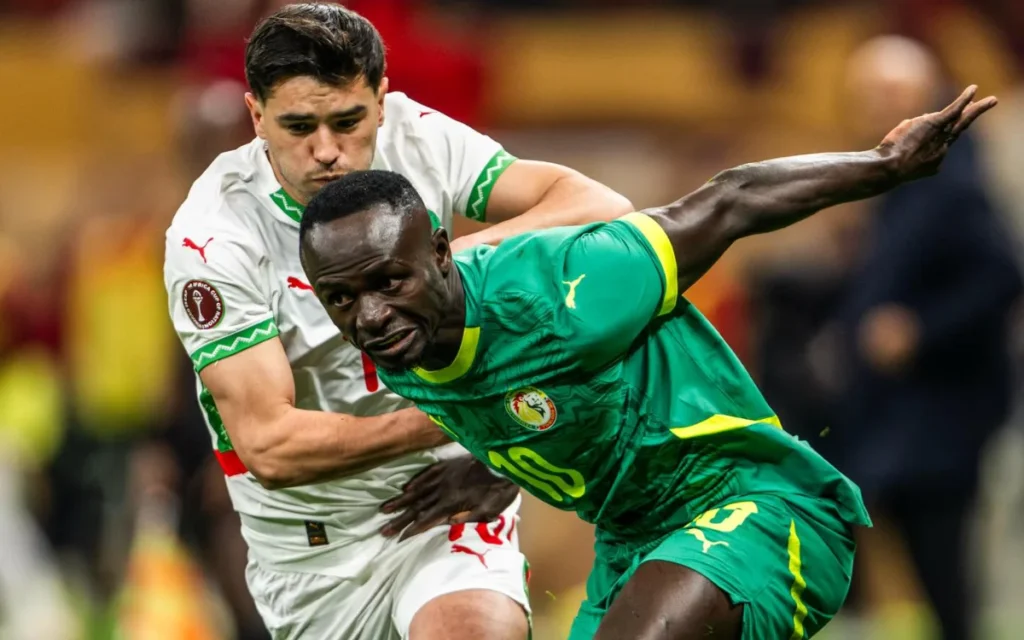
In a dramatic act of protest, head coach Pape Thiaw instructed his players to leave the pitch, bringing the final to a standstill for approximately 15 minutes as officials, security personnel and tournament organisers scrambled to restore order.
What threatened to become one of the darkest moments in AFCON history was eventually defused by Senegal captain Sadio Mané, who refused to let the match descend into permanent chaos.
He persuaded his teammates to leave the dressing room and return to complete the final.
Reflecting afterwards on his decision, Mané explained why he believed finishing the match mattered more than the disputed penalty.
“When they decided to go out and not play, I stayed and asked some people, ‘What do you think about this? Is it a good idea or not?’ Then I decided to go and bring everyone back to the pitch,” Mané explained. “People around the world are watching. It could be a penalty or not, but that is not the most important thing. What matters is respecting the game. It is not fair to stop a match like this.”
Coach Pape Thiaw later acknowledged that ordering the walkout had been a mistake made in the heat of the moment: “I didn’t appreciate at all that I told my players to leave the field. I apologise for football,” Thiaw said. “After reflection, I had them come back. Sometimes, you can react in the heat of the moment. But we accept the referee’s mistakes.”
After the lengthy interruption, the match resumed amid immense tension. Díaz attempted an audacious Panenka penalty, only for Senegal goalkeeper Édouard Mendy to produce a decisive save.
The contest then moved into extra time, where Pape Gueye struck the only goal of the match to secure a 1-0 victory and ignite jubilant Senegalese celebrations on Moroccan soil.
The Legal Twist: From Victory to Forfeit
Although Senegal celebrated with the trophy in January, the legal battle was only beginning.
Following a formal complaint by the Moroccan federation, CAF’s Appeal Board revisited the events of the final and reached a conclusion that transformed a football controversy into a legal one.
Rather than focusing solely on the outcome achieved during play, the board examined whether Senegal’s temporary walkout amounted to a breach serious enough to invalidate the result.
On 17 March 2026, CAF’s Appeal Board ruled that:
- Senegal had forfeited the match because of the temporary walkout.
- Senegal’s 1-0 victory was annulled and replaced with an official 3-0 victory for Morocco.
- The decision relied on Articles 82 and 84 of CAF’s tournament regulations, which state that any team refusing to play or leaving the field before the final whistle without the referee’s permission forfeits the match.
The decision sent shockwaves through African football and provoked outrage across Senegal.
The Senegalese government called for an inquiry, while FSF President Abdoulaye Fall made it clear that the federation would challenge the ruling through every available legal avenue.
“Senegal will remain standing and will legitimately defend this victory on the field, which we acquired on the field with the talent of our players,” Fall said during a news conference. “We have given our lawyers a mandate to pursue this procedure at the level of the Court of Arbitration for Sport. We will use all possible legal, institutional and jurisdictional means to assert our rights and restore sporting fairness.”
Critics of CAF’s ruling argue that because referee Jean-Jacques Ndala chose to restart the match, allowed extra time to be played and ultimately blew the final whistle, the sporting result should remain valid under the internationally recognised Laws of the Game, particularly IFAB Law 5, which grants the referee authority over the match.
What the Governing Bodies Say
CAF President Patrice Motsepe has defended the independence of the organisation’s judicial structures while making it clear that CAF will accept the final outcome of the CAS proceedings.
“There may be decisions that are taken by the CAF judicial bodies which I personally may not be excited about, and in fact, which I may not agree with at all as a football spectator,” Motsepe said. “But as the president of CAF, I have a duty to make sure that the independence and the integrity and the credibility of our judicial bodies are respected. Whatever decision is taken by CAS, we will respect that.”
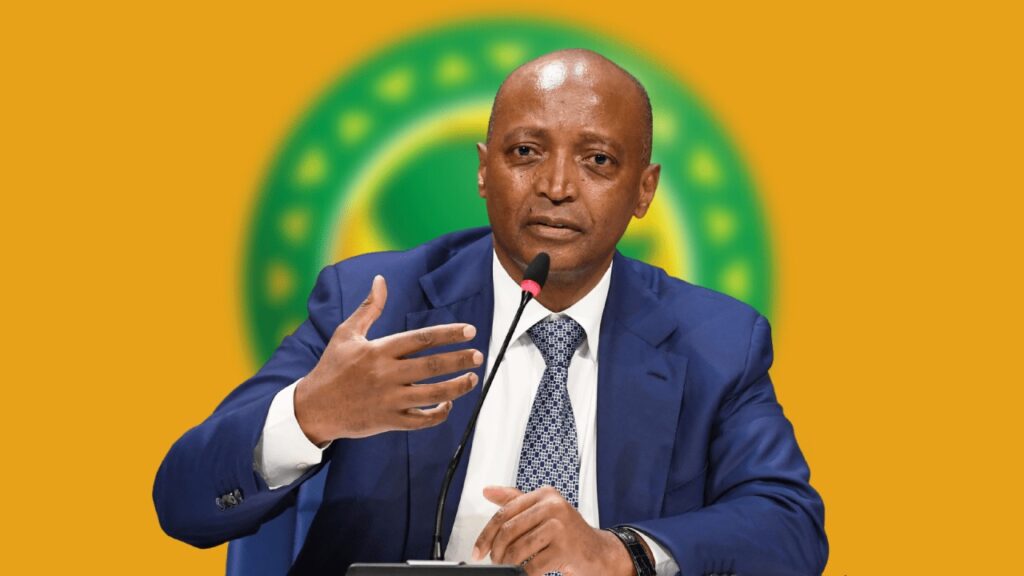
Motsepe also rejected suggestions that geography or politics had influenced the case.
“A critical factor is that not a single country in Africa will be treated in a manner that is more preferential, or more advantageous, or more favourable than any other country on the African continent,” he added.
Meanwhile, CAS confirmed the scope of the appeal in an official statement.
“Registered by CAS on 25 March 2026, the FSF appeal seeks to set aside a CAF decision declaring that the Senegal national team forfeited the AFCON 2025 final and recording the Moroccan national team as the winners of the match by 3-0,” the statement said. “The appeal requests that CAS declare the FSF winners of AFCON 2025. At this stage, CAS cannot state when a final decision will be rendered, but it will not be on the day of the hearing.”
The Legal Divide
The case now rests on two sharply contrasting interpretations of football governance.
Senegal’s position is that the referee exercised his authority by allowing play to resume, completing the full match and confirming the result on the field. Consequently, the federation argues that the 1-0 victory represents the definitive sporting outcome.
Morocco and CAF’s position is that Senegal’s decision to leave the pitch constituted a breach of CAF’s tournament regulations. In their view, the temporary abandonment automatically triggered forfeiture provisions, irrespective of the referee’s subsequent decision to continue the match.
The dispute therefore reaches beyond a single controversial final. It raises a broader legal question about whether a completed football match can later be overturned because of misconduct that occurred during it.
With the hearing scheduled for 8 October 2026 in Lausanne, the final chapter has yet to be written.
For Senegal, the case is about preserving a championship won through 120 minutes of football. For Morocco and CAF, it is about upholding the authority of tournament regulations designed to protect the integrity of the competition.
When the CAS panel finally delivers its judgment, it will decide far more than the destination of a trophy. It will determine whether the outcome achieved on the pitch prevails over conduct deemed to have violated the rules of the competition, potentially establishing one of the most significant legal precedents in African football history.