

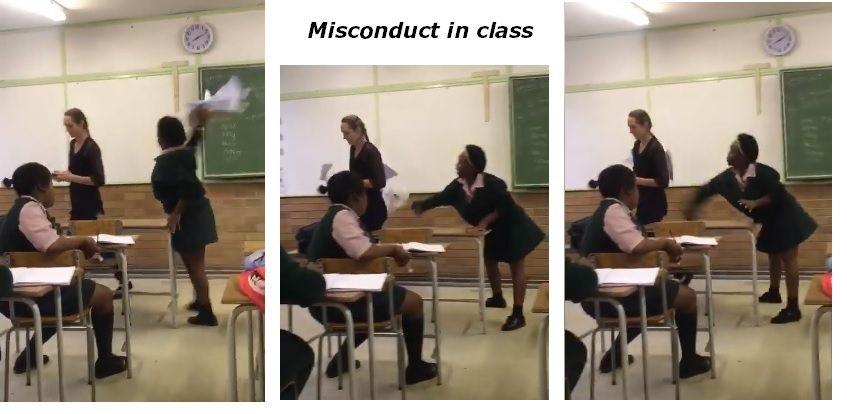
South African teachers are facing a growing crisis of intimidation, abuse and violence in classrooms, while schools struggle to maintain discipline and safety. Behind isolated incidents lies a deeper problem involving parental accountability, inadequate support systems and the erosion of authority.
By Staff Reporter
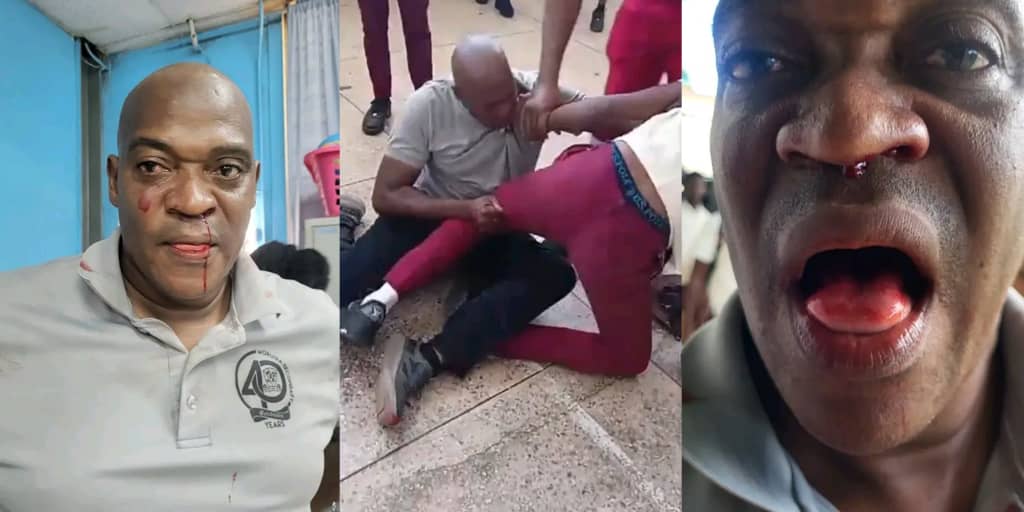
A video showing a pupil verbally abusing a North West teacher has ignited a familiar wave of public outrage, but the incident has also drawn attention to a problem that extends well beyond the classroom captured on camera.
As the footage spread across social media, bringing condemnation from the education authorities and calls for disciplinary action, it also highlighted the difficult conditions under which many South African teachers are expected to maintain discipline and authority while dealing with increasingly complex forms of pupil misconduct.
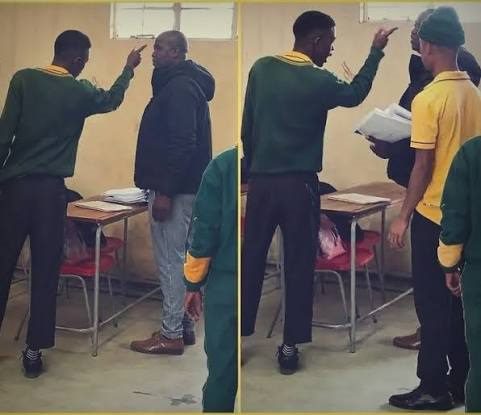
The incident is now before the district office for formal disciplinary proceedings under the South African Schools Act, according to North West Department of Education spokesperson Dr Elias Malindi.
But the attention generated by the video has placed a broader question back in the spotlight: how safe are South Africa’s teachers, and how effectively are schools equipped to deal with violence, intimidation and serious misconduct by pupils?
The question is not confined to the North West. Research and official education data indicate that pupil-on-teacher hostility is part of a wider challenge facing the basic education system, with teachers reporting experiences ranging from verbal abuse and intimidation to physical violence.
A Systemic Problem Behind the Screen
While social media footage can bring an individual incident into sharp public focus, research suggests that pupil-on-teacher hostility is not an isolated phenomenon.
Research from academic bodies and teacher unions indicates that roughly 20% of South African teachers—one in five—experience direct violence, intimidation, or severe aggression from pupils.
The Department of Basic Education’s School Monitoring Survey further indicates that only 62% of secondary school teachers feel safe in their working environment.
The figures vary across provinces, with high school teachers in the Eastern Cape (56%) and KwaZulu-Natal (57%) reporting the lowest levels of workplace security.
The figures provide a broader context for incidents such as the one in North West, although they do not suggest that all schools experience the same level or type of pupil misconduct. Conditions vary considerably between schools and communities, as do the factors contributing to unsafe environments.
Pupil misconduct can take several forms, ranging from persistent verbal abuse and intimidation to physical confrontation and damage to property.
The growing use of mobile phones and social media has also created another avenue through which incidents can be recorded and circulated beyond the school environment.
Scholars and educational analysts categorise pupil misconduct into three primary tiers:
Verbal and psychological abuse: Daily swearing, targeted insults, racial slurs, defiance and intimidation.
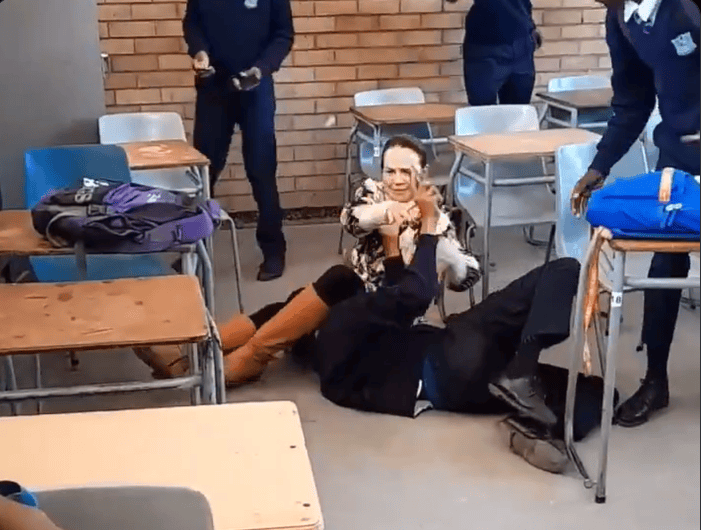
Physical aggression: Direct assault, weapon brandishing, throwing furniture and physical brawls.
Property damage and cyber-bullying: Vandalism of teachers’ personal property and unauthorised recording intended to humiliate teachers on social media platforms.
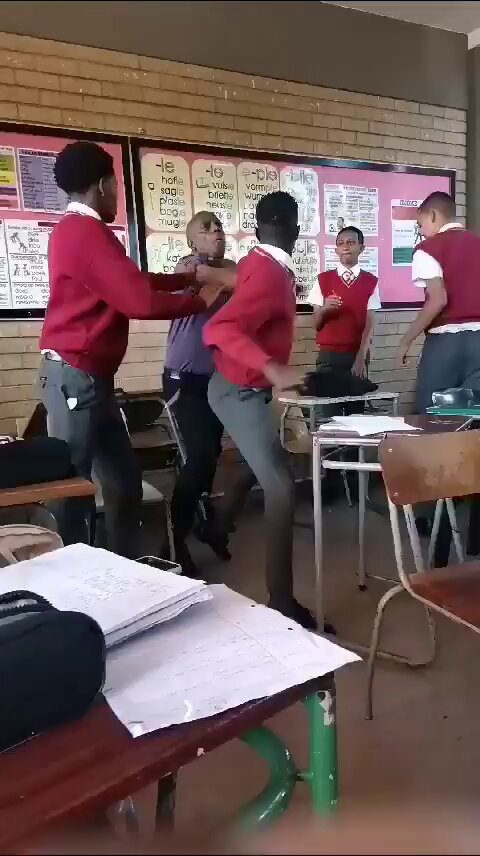
The categories overlap in practice. An incident that begins with verbal confrontation can escalate into physical aggression, while the recording and subsequent circulation of such encounters can extend the impact beyond those directly involved.
Teacher Unions Demand Structural Solutions
Teacher unions argue that the response to pupil violence cannot end with disciplinary action after an incident has occurred. They have increasingly called for measures that address teacher safety, school discipline and the support available to both teachers and pupils.
The South African Democratic Teachers Union (SADTU) has repeatedly warned that normalising classroom hostility undermines teacher morale and has consequences for the quality of schooling: “An educator cannot be expected to perform their professional responsibilities effectively while being subjected to threats, insults, intimidation or violence. Violence against educators must never be normalised or treated as merely a disciplinary matter.”
The union has also stressed that protecting pupils and protecting teachers should not be treated as competing objectives: “The protection of learners cannot be interpreted in a manner that leaves educators exposed to abuse, intimidation or violence. Teaching cannot be an attractive and respected profession when educators are expected to work in unsafe environments.
“An attack on an educator is not only an attack on an individual—it is an attack on the teaching profession and the right of every learner to quality education.”
SADTU has called for a broader response to the problem: “The time has come to move beyond statements of concern towards concrete interventions that restore discipline, protect educators and reclaim schools as safe spaces for teaching and learning.”
The position reflects a wider concern among teacher organisations that disciplinary procedures, while necessary, do not by themselves address the circumstances that allow serious misconduct to develop or recur.
Violence Does Not Stop at the School Gate
The National Professional Teachers’ Organisation of South Africa (NAPTOSA) has similarly pointed to the influence of wider social problems on schools, including gangsterism, substance abuse and a shortage of psychosocial support.
NAPTOSA Executive Director Basil Manuel highlighted the systemic gaps leaving teachers vulnerable: “Wherever gangsterism prevails, you will see that it spills over into school. Let’s not for one minute fool ourselves to think that it only occurs there [in disadvantaged communities].
“The sophistication differs, where you will find children getting up to all manner of things, drug abuse, etc., in every type of school.”
Manuel has also highlighted the shortage of professional support within schools to identify and address problems before they escalate: “The fact that we don’t have teacher counsellors at school that can see when a problem is happening, when things start going wrong with an individual child, and you can intervene and call parents… Yes, we know it costs, but the fact is that not having it costs more because we’re losing lives.”
His comments place the question of pupil behaviour within a broader discussion about the capacity of schools to identify problems early and provide appropriate support. Where schools lack sufficient psychosocial resources, teachers can find themselves dealing with behavioural problems that extend beyond their traditional teaching responsibilities.
The Call for Parental Accountability
The North West Department of Education has also emphasised the role of parents in addressing pupil behaviour.
Addressing the incident, Malindi reiterated that while the department would enforce disciplinary measures and provide psychosocial support where necessary, schools could not carry the responsibility for instilling values and discipline on their own.
“We cannot leave the responsibility of instilling values solely to educators,” Malindi said. “Parents must reinforce the importance of respect, accountability, and obedience at home, so that these values are reflected in the classroom.”
The department’s position places parental involvement alongside disciplinary measures and support services as part of the response to pupil misconduct.
For schools, however, the challenge is not confined to what happens after a serious incident. Teachers must maintain order while continuing to teach, while school management has to balance disciplinary procedures with the rights and welfare of pupils and teachers.
The department has urged members of the public to stop re-sharing the video online to prevent further psychological harm as the formal investigation proceeds.
The North West incident will now be dealt with through the prescribed disciplinary process. The wider questions it has raised, however, extend beyond the pupil captured in the footage: how schools maintain discipline, how teachers are protected, what support is available when pupil behaviour becomes difficult to manage, and how responsibility for discipline is shared between schools, parents and the wider community.
Those questions are unlikely to disappear when the video does.