
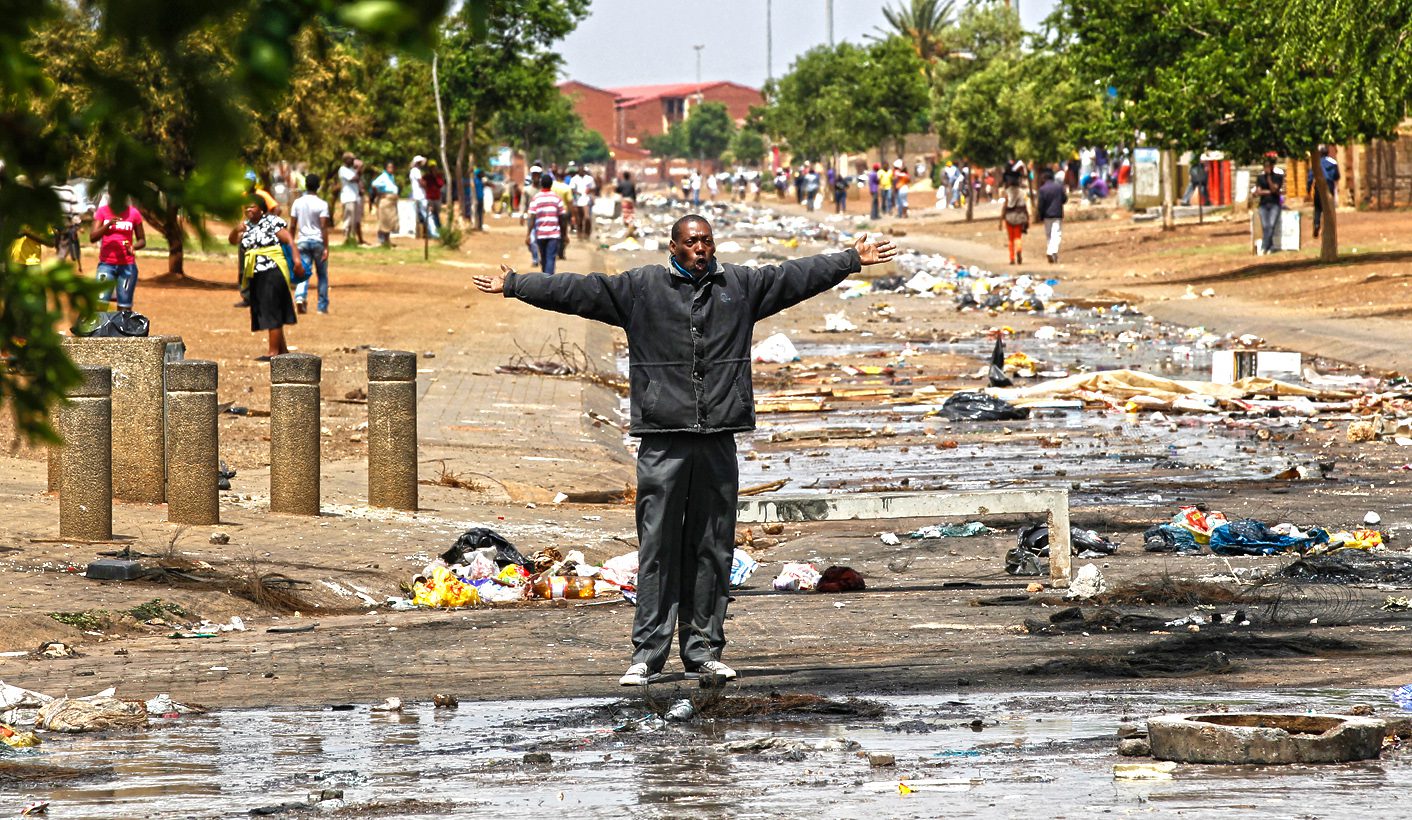
Across South Africa, the failure of local government is not just a headline—it is the backdrop to everyday life. For millions, broken promises and failing services have become routine, forcing families to adapt to uncertainty, frustration, and neglect as municipalities struggle to deliver even the most basic essentials.
By Staff Reporters
In countless South African neighbourhoods, the rhythm of daily life is dictated by municipal failure.
A pensioner hauls buckets to a water tanker because the pipes to her house have run dry again. Children play around potholes that have become permanent landmarks rather than temporary inconveniences.
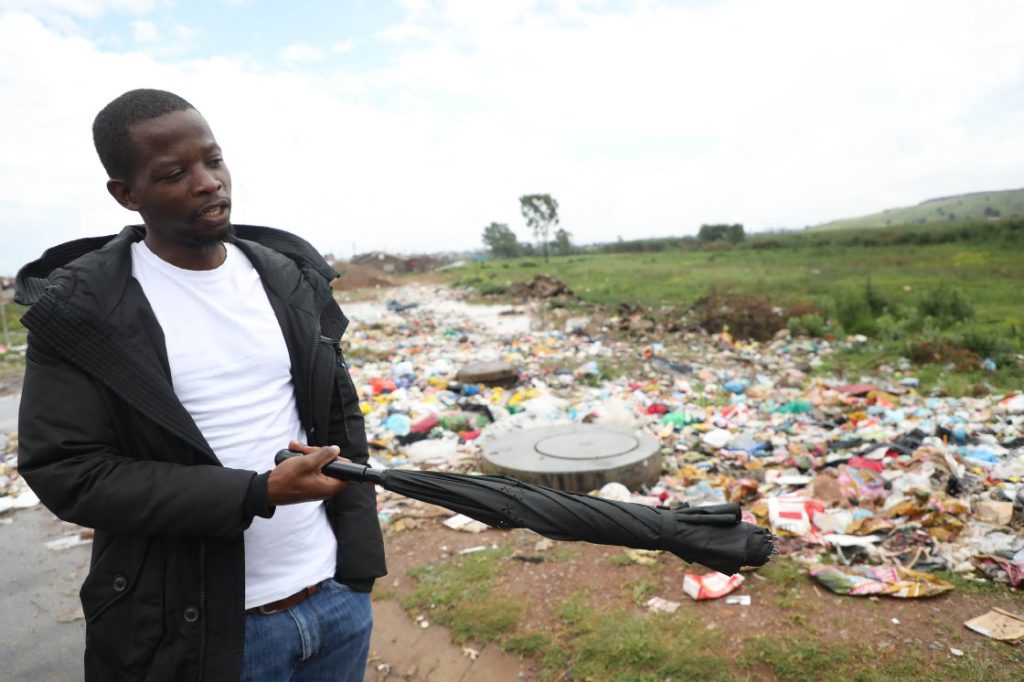
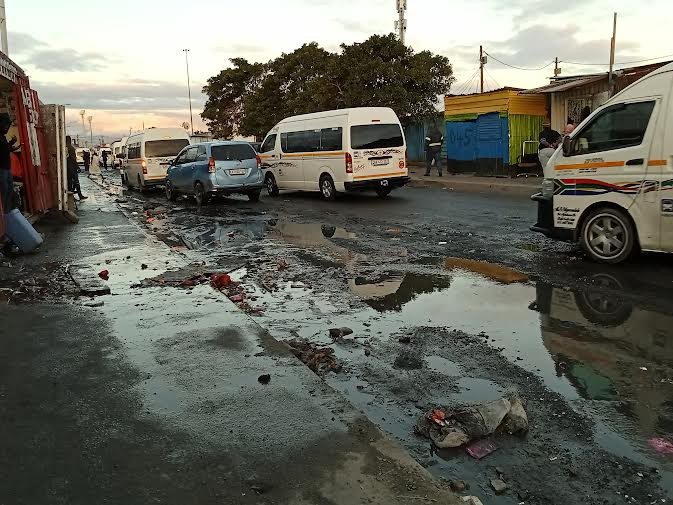
A clinic nurse braces for another day of power and water outages. Rubbish piles up on pavements. Sewage spills into rivers. Streetlights stand dark long after sunrise, not because daylight has rendered them unnecessary, but because they have not worked for months.
For millions of South Africans, this is no longer an occasional disruption. It is the rhythm of daily life.
Behind every dry tap, every overflowing manhole and every crumbling road lies a story that begins not with broken infrastructure, but with broken governance.
While residents experience the consequences on their streets, a growing body of official evidence reveals that the country’s local government system is buckling under the combined weight of financial mismanagement, weak administration, mounting debt and a chronic failure to maintain essential infrastructure.
The warning signs have been flashing for years. Now, they are impossible to ignore.
The July 2026 Treasury Intervention
The scale of the crisis became unmistakable in July 2026 when the National Treasury took the extraordinary step of withholding Local Government Equitable Share transfers from 69 municipalities.
The decision was unprecedented in its breadth, affecting more than a quarter of South Africa’s municipalities and signalling that patience with persistent financial failures had reached its limit.
Treasury’s intervention laid bare the extent of the financial distress gripping local government. Collectively, the affected municipalities owe R27.4 billion to Eskom, water boards and the South African Revenue Service.
More alarming still is how heavily concentrated the problem has become. Just ten municipalities account for R21.6 billion of that debt, representing almost 79 per cent of the total outstanding amount.
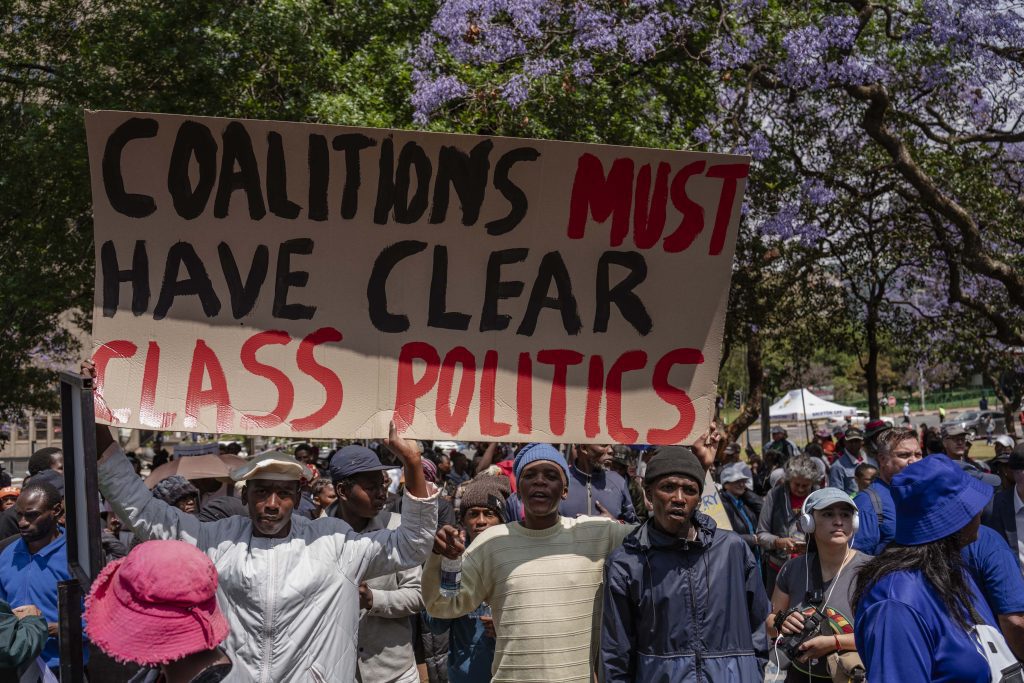
These are not merely accounting figures buried in government reports. They represent electricity that cannot be paid for, bulk water purchases that municipalities struggle to finance and tax obligations that have gone unmet while communities continue to depend on local government for life’s most basic services.
National Treasury senior official Ogalaletseng Gaarekwe emphasised that the intervention is a necessary corrective measure to enforce basic fiscal discipline.
“We are correcting the behaviour in municipalities. We need to get into the habit of paying our creditors,” Gaarekwe stated.
“There are instances where pension fund contributions are deducted from salaries, but they are not paid over. Imagine where pension fund contributions are deducted from employees but not paid over—that means families cannot claim if something happens.
“We are saying that this is the money of the people; it must be protected and used for the intended purpose. We cannot allow a situation where municipal leadership ignores their basic fiduciary duty while the poor suffer the consequences of these choices.”
Treasury’s ultimatum was equally stark. Municipalities that seek to restore normal funding flows have been instructed to reduce their unauthorised, irregular, fruitless and wasteful expenditure balances by at least 25 per cent before September 2026.
The message was unmistakable: continued financial indiscipline would no longer be underwritten indefinitely by the national fiscus.
The Dilemma of Intervention
The intervention immediately exposed a painful dilemma at the heart of South Africa’s local government crisis.
Trade unions, most notably COSATU, criticised the funding freeze, arguing that withholding already scarce resources from financially distressed municipalities risks accelerating service delivery failures rather than correcting them.
“Withholding funds from distressed municipalities is like cutting oxygen to a dying patient,” a COSATU spokesperson argued. “The officials and politicians who mismanaged the funds will continue to receive their salaries, but it is the ordinary resident and the municipal worker on the ground who will bear the absolute brunt of a total service delivery collapse. You cannot punish the community for the sins of the council.
“By freezing these accounts, the national government is effectively bringing all service delivery to a screeching halt, leaving workers unpaid and infrastructure completely abandoned. It is a blunt instrument that misses the true culprits and leaves the most vulnerable citizens to pay the price for administrative incompetence.”
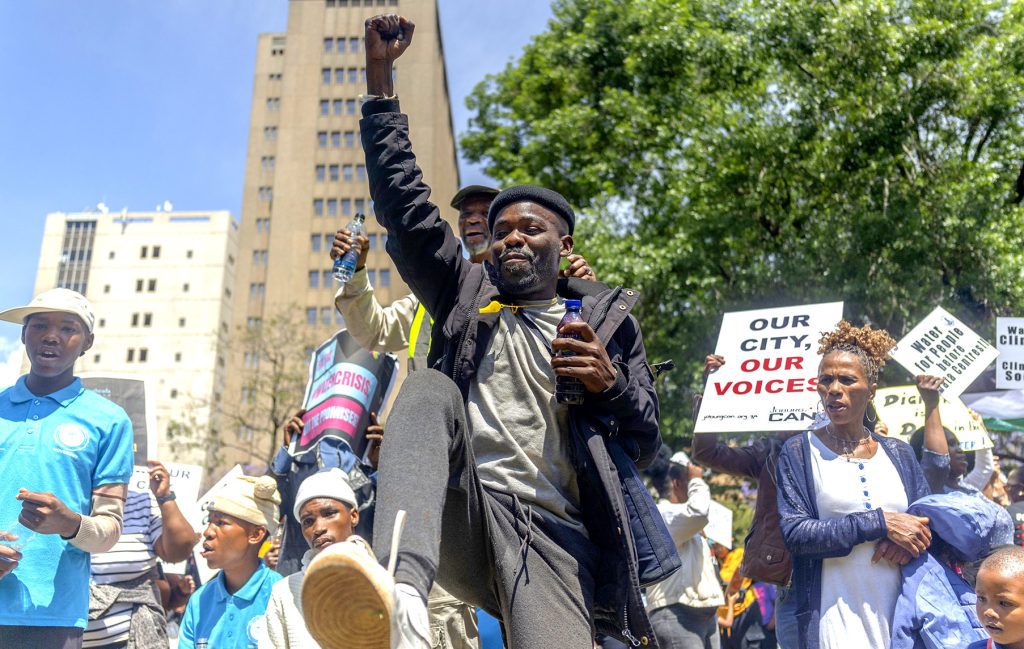
The South African Local Government Association (SALGA) has urged a more balanced approach, noting the systemic failures beyond municipal control.
“While non-compliance cannot be condoned, many municipalities face severe fiscal and economic pressures that weaken financial sustainability,” said SALGA CEO Sithole Mbanga.
“The economy is not growing. Consequently, municipal customers, including households and businesses, are struggling to afford the services of the municipality. And ultimately, that leads to the unsustainability of the municipalities.
“We are also grappling with an unsustainable debt book where other government departments are among the biggest defaulters. You cannot expect a municipality to be financially healthy when the very organs of state that should support it are failing to settle their own utility accounts.
“We need an integrated intergovernmental approach, not just punitive measures that ignore the reality of a shrinking tax base and rising operational costs.”
SALGA CEO Sithole Mbanga
It is a dilemma with no easy answers. Continue funding municipalities despite persistent failures, and the cycle of poor governance continues largely unchecked. Suspend funding, and communities already living with failing services face the prospect of even greater hardship.
The Accountability Vacuum
The Treasury intervention is only one chapter in a much larger story.
The Auditor-General of South Africa’s audit outcomes for the 2024/25 financial year present an equally sobering assessment of municipal governance. Of the country’s municipalities, only 39 achieved clean audits, amounting to just 15 per cent of local authorities.
“Over the past four years, mayors and councils of the 6th administration have made limited progress to strengthen governance and improve service delivery,” Auditor-General Tsakani Maluleke noted.
“Residents and businesses continue to experience unreliable service delivery, environmental hazards, and deteriorating infrastructure. We are seeing a culture of ‘business as usual’ where the basic requirements for accountability—such as maintaining daily bank reconciliations and keeping updated fixed asset registers—are simply ignored.
“When you remove consequence management from the equation, you are essentially telling officials that there is no price to pay for failure. The rot starts at the top, and until leadership takes ownership of the financial health of their institutions, we will continue to see these dismal audit outcomes year after year.”
Perhaps more concerning is the deterioration among South Africa’s metropolitan municipalities. These eight metros are not ordinary local authorities. They are home to millions of people, generate much of the country’s economic activity and serve as engines of national growth.
However, the Auditor-General found that their audit outcomes continue to decline, raising difficult questions about the governance capacity of institutions expected to drive economic development while delivering essential services.
The financial haemorrhage continues almost unabated.
Since the 2021/22 financial year, municipalities have accumulated R145.2 billion in irregular expenditure. During the 2024/25 financial year alone, R40.1 billion was added to that already staggering total.
Irregular expenditure does not automatically imply corruption. It often reflects procurement processes that failed to comply with legal requirements. Nevertheless, such persistent failures point to profound weaknesses in governance, internal controls and financial oversight.
Whether caused by incompetence, negligence or deliberate misconduct, the outcome is the same: public confidence steadily erodes while scarce resources are diverted away from improving people’s lives.
The Consultant Paradox
One of the more revealing findings contained in the audit outcomes exposes what could be described as the consultant paradox.
Faced with shortages of skilled financial personnel, many municipalities increasingly rely on private consultants to prepare annual financial statements and assist with reporting obligations.
On paper, the approach appears logical. External expertise should improve financial reporting and strengthen governance. The evidence tells a different story.
An analysis of 47 municipalities found that approximately R220 million was spent on financial reporting consultants. Despite that considerable expenditure, nearly half of those municipalities still submitted financial statements containing material misstatements requiring correction.
The reason was neither mysterious nor particularly complicated.
Consultants cannot reconstruct financial records that were never properly maintained. They cannot compensate for years of weak internal controls, incomplete documentation or dysfunctional administrative systems.
Financial expertise can improve reporting, but it cannot manufacture good governance where none exists.
Infrastructure Decay
The consequences of these governance failures extend well beyond municipal offices and audit reports.
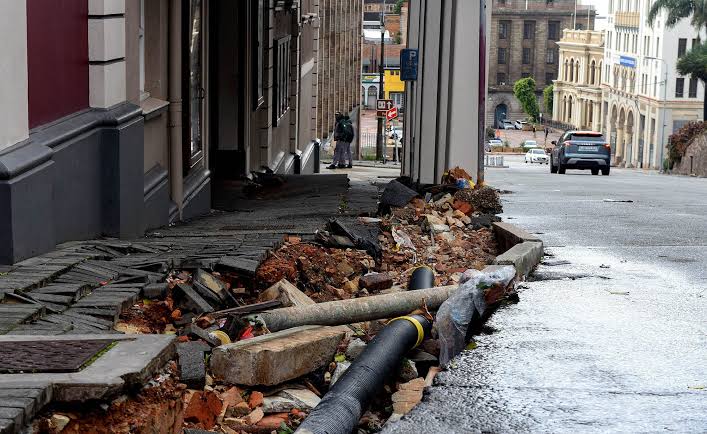
They emerge in burst water pipes left unattended for weeks, roads that steadily disintegrate without maintenance, electricity networks operating beyond their intended lifespan and wastewater treatment plants struggling to function safely.
Nowhere is this deterioration more visible than in South Africa’s water infrastructure.
Government officials have increasingly acknowledged that many service delivery failures are rooted not in the absence of infrastructure, but in the failure to maintain infrastructure that already exists.
At an Africa Public Service Day in 2026, the Department of Water and Sanitation emphasised that building new infrastructure while neglecting existing assets undermines public confidence and places ever greater financial pressure on municipalities.
It is a lesson repeated across the country.
Pipes installed decades ago continue to deteriorate with insufficient maintenance. Reservoirs require refurbishment. Pump stations break down. Ageing treatment facilities operate below acceptable standards while repair backlogs continue to grow faster than maintenance budgets.
The result is an expensive cycle of decline.
Among the most significant yet least visible financial burdens confronting municipalities is the problem of non-revenue water.
Every day, municipalities pump, purify and distribute enormous volumes of drinking water that never generate income. Water disappears through leaking pipes, inaccurate metering systems and illegal connections long before municipalities are able to bill consumers.
The financial implications are severe.
Municipalities bear the full cost of treating and transporting water, yet receive no corresponding revenue. The losses weaken already fragile municipal finances, leaving even fewer resources available to repair ageing infrastructure or invest in preventive maintenance.
As infrastructure deteriorates further, water losses increase, revenues decline, and maintenance becomes even more difficult to fund.
It is a vicious cycle from which many municipalities have struggled to escape.
Water treatment facilities illustrate the same pattern.
Across numerous municipalities, treatment works continue operating below acceptable standards because maintenance expenditure has failed to keep pace with infrastructure investment.
In too many instances, facilities built at considerable public expense have gradually deteriorated because ongoing maintenance budgets were either inadequate, diverted elsewhere or poorly managed.
The consequences ripple far beyond engineering failures.
Communities endure unreliable water supplies. Rivers become vulnerable to pollution from failing wastewater systems. Businesses face interruptions that undermine productivity. Healthcare facilities, schools and households adapt to recurring service failures that increasingly resemble permanent conditions rather than temporary setbacks.
For residents, these failures are deeply personal.
Municipal governance is rarely discussed around kitchen tables in terms of audit outcomes, irregular expenditure or equitable share allocations. Families speak instead about taps that no longer run, electricity outages that damage appliances, refuse that remains uncollected and roads that damage vehicles they can scarcely afford to repair.
These are the tangible consequences of administrative decisions made far from the communities that ultimately bear their cost.
The Social Contract
Wayne Duvenage, the Chief Executive Officer of the Organisation Undoing Tax Abuse (OUTA), argues that these financial numbers reflect a deeper betrayal of the public trust.
“What we are witnessing is the collapse of the social contract between the municipality and the resident,” Duvenage explained.
“When a local council diverts routine maintenance budgets to fund inflated tenders or unnecessary consultants, the water treatment works inevitably fail. Municipalities have money, but mismanagement and the employment of incompetent comrades prevent the entities from performing well.
“They treat the public purse as a private slush fund, and until there is real, personal liability for these officials, we will continue to see this decay. It is not just a lack of skill; it is a lack of conscience.
“You have mayors and managers who treat their positions as a gateway to wealth, while the very people who elected them are left with sewage in their streets and dry taps in their homes. It is a total moral failure.”
South Africa’s local government crisis did not emerge overnight, nor will it be resolved through a single Treasury intervention or another cycle of annual audit findings.
The evidence has become overwhelming.
Official reports, financial statements, audit outcomes and departmental assessments increasingly point towards the same conclusion: the country’s service delivery crisis is fundamentally a governance crisis.
Without stronger financial discipline, meaningful accountability, competent administration and sustained investment in maintaining existing infrastructure, the decline is unlikely to reverse.
For millions of South Africans, the question is no longer whether local government is failing. It is how much longer they can continue living with the consequences.