

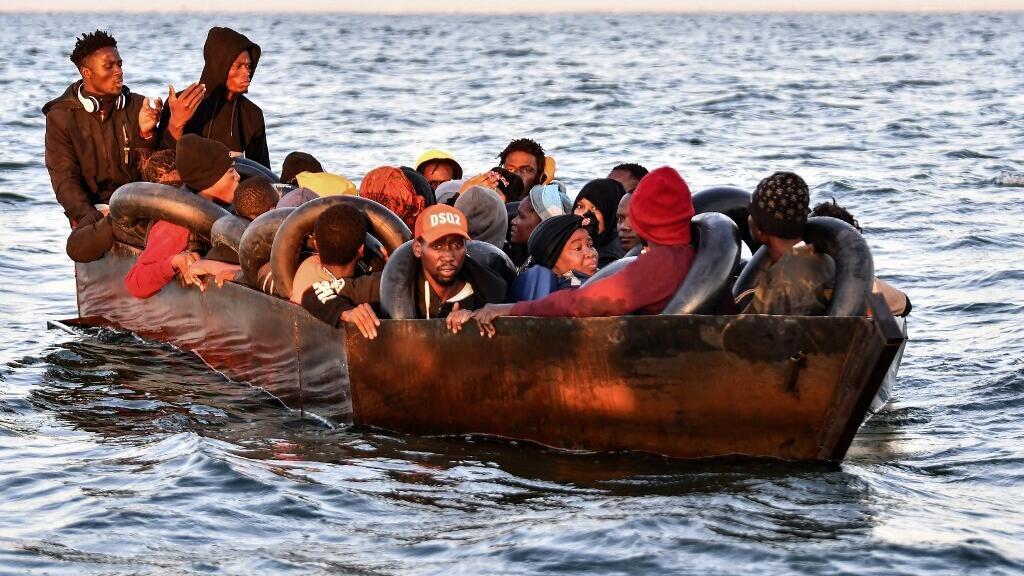
The journey across North Africa has become a deadly trap. Trapped between armed militias in Libya’s interior and unforgiving open waters in the Mediterranean, African families endure unimaginable violence, ransom demands, and dangerous boat crossings—a stark reality shaped by institutional collapse and international policy failures.
By SA Telegraph Reporters
For millions of African citizens fleeing armed conflict, political persecution, or severe economic distress, the path toward survival narrows down to a brutal, two-tier journey across the continent.
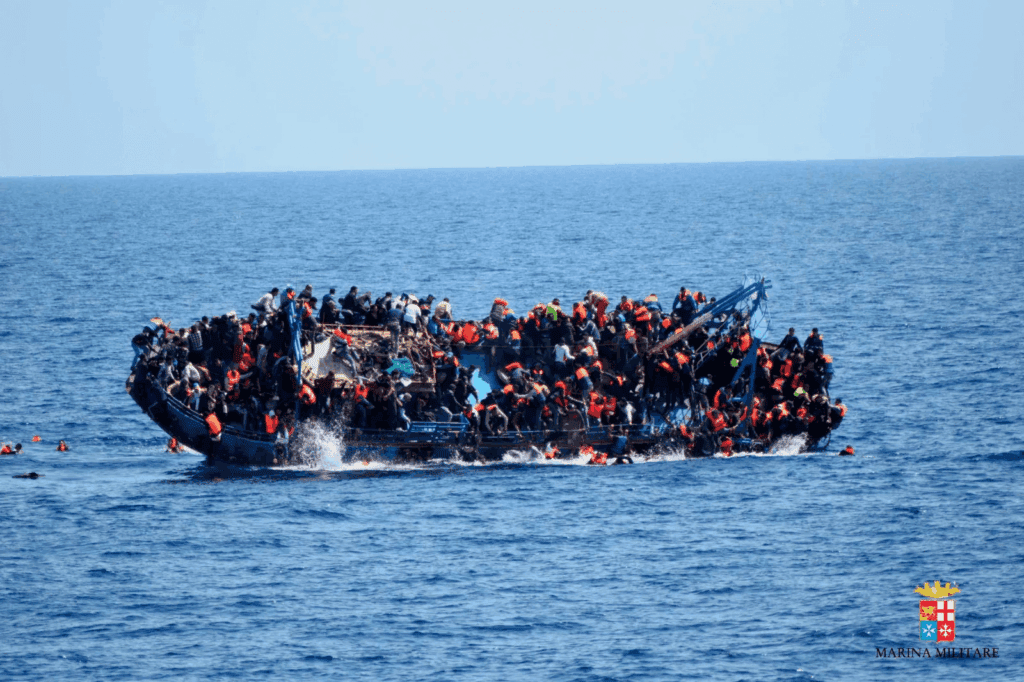
First is the perilous journey across the Saharan expanse and unpoliced interior of Libya, followed by a risky sea crossing across the Central Mediterranean—recognised by the United Nations as the deadliest migration route on Earth.
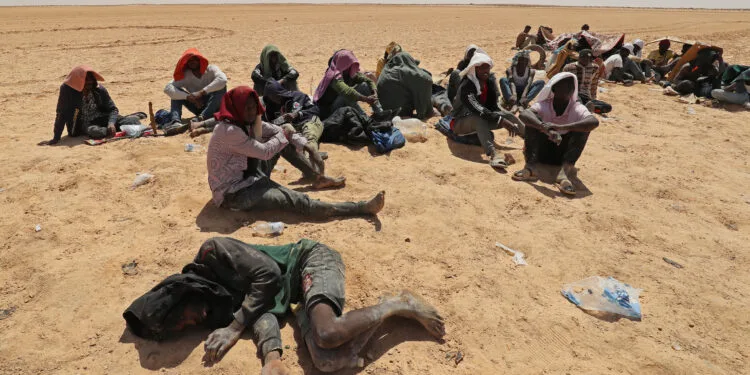
While deaths at sea frequently capture global headlines when boats capsize off the North African coast, human rights organisations and international monitors warn that the loss of African lives inside Libya’s unpoliced interior and detention networks rivals the casualties in the open water.
The Abyss at Sea — Over 26,000 African Lives Lost
Since formal tracking began in 2014, the International Organisation for Migration’s Missing Migrants Project has recorded over 30,500 total deaths and disappearances across the Mediterranean.
More than 26,700 of these casualties occurred specifically on the sea route connecting North Africa to Southern Europe.
The statistics outline a harsh reality:
Total Route Fatalities: Exceeds 26,700 recorded deaths since 2014.
Unrecovered Remains: Approximately 60 per cent of cases are classified as missing and presumed drowned at sea.
Demographics: Where demographic data could be verified, roughly 70 per cent were adult men, 23 percent were women, and 7 percent were children.
Mortality Risk: The average mortality rate stands at roughly 1 death for every 120 individuals who attempt the sea crossing.
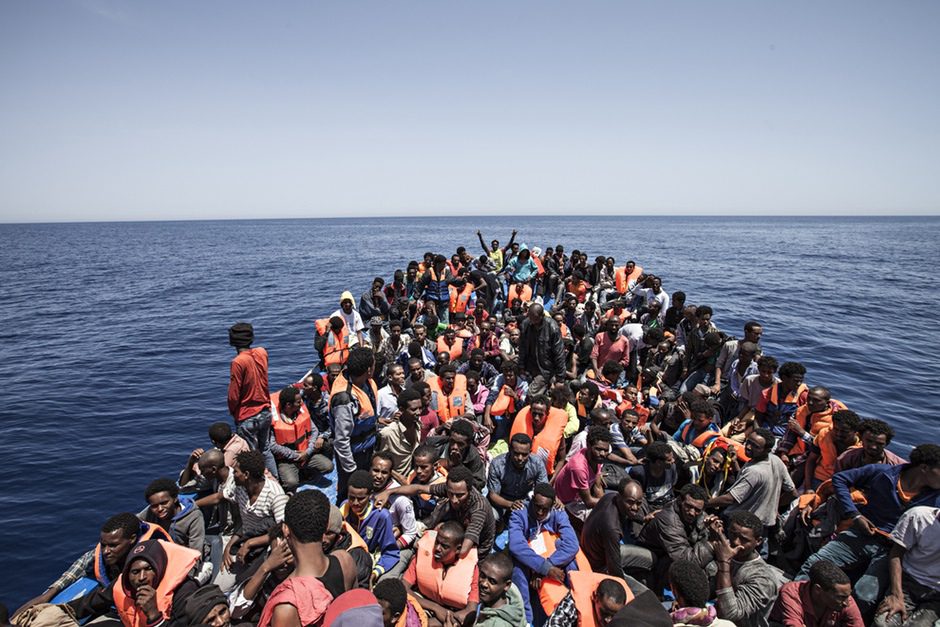
Civilian rescue organisations operating off the Libyan coastline point to structural policy choices as a major driver of these deaths.
“No human being should be left to drown, to sink beneath the waves,” said Oliver Behn, Director of Operations for Médecins Sans Frontières. “In drafting the Libyan Coast Guard to control the borders of Europe and denying rescue to those coming from Africa, European states are sending a forceful message that these lives do not matter.”
Philipp Hahn, Head of Mission for civil rescue organisation Sea-Watch, framed the ongoing drownings at sea as a direct structural outcome: “People are being left to die on the water, or are pushed back to the very place from which they are trying to escape, while EU border patrol aircraft watch from above, complicit in sealing their fate. As long as EU states are letting people drown as a deterrent, we will carry on.”
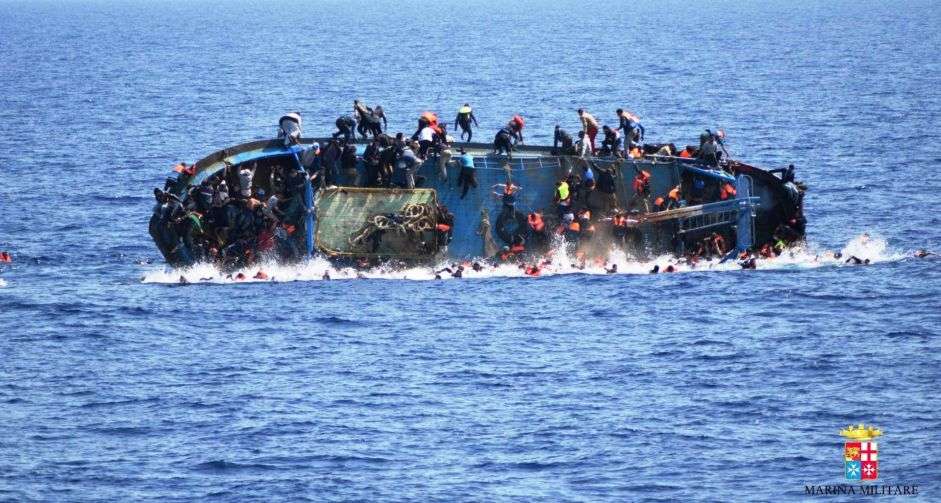
Human rights group Amnesty International has similarly highlighted how policy shifts directly impact survival rates in open waters.
“European governments are colluding with Libyan authorities to contain refugees and migrants in Libya, despite the horrific abuses they face at the hands of the Libyan Coast Guard and in detention centres,” noted Matteo de Bellis, Asylum and Migration Researcher at Amnesty International.
“European policies have empowered the Libyan Coast Guard to intercept people at sea, deprioritised rescues, and hindered the vital work of rescue NGOs. The recent increase in deaths at sea is not just a tragedy—it is a disgrace.”
The Unknown Toll — Mass Graves and Saharan Extortion
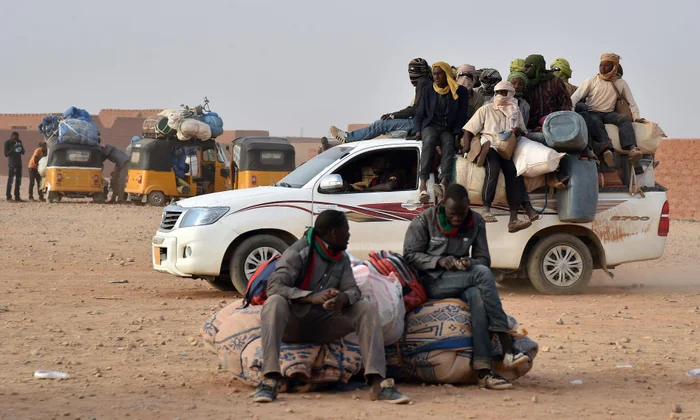
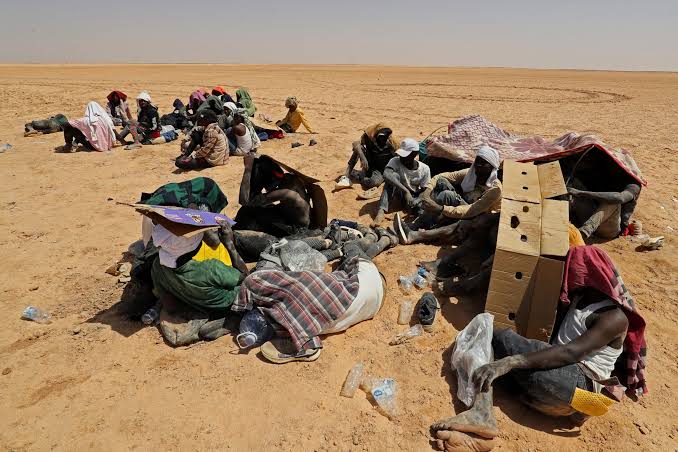
The human toll inside Libya is marked by a complete lack of formal civil infrastructure, leaving remote desert sectors unmonitored. African migrants entering southern sectors near Agadez in Niger or Kufra in Sudan routinely face extreme temperatures exceeding 45 degrees Celsius, where vehicle failures or abandonment by smuggling syndicates result in complete group mortality within days.
For those who survive the desert transit, illicit safehouses in transit hubs like Bani Walid operate as private extortion centres. Smugglers hold migrants in captivity while demanding ransoms ranging from 1,000 to 5,000 US dollars from families back home in Sub-Saharan Africa.
Recently documented mass grave discoveries inside Libya include:
Al-Jahriya Valley: 65 migrant bodies were recovered in March 2024.
Ajkhara and Alkufra: 10 and 93 bodies were discovered at farm sites during security raids.
Tripoli Security Hubs: Multiple mass grave sites were confirmed by international monitors.
United Nations High Commissioner for Human Rights Volker Türk confirmed the discovery of dozens of bodies across official and unofficial facilities in Tripoli, alongside instruments of torture.
“Our worst-held fears are being confirmed: dozens of bodies have been discovered at these sites, along with the discovery of suspected instruments of torture and abuse, and potential evidence of extrajudicial killings,” Türk stated in a formal briefing. “Those responsible for these atrocious acts must be brought to justice without delay, in accordance with international standards.”
Institutional Paralysis, Disinformation, and Continental Fallout
Beyond the desert border posts and clandestine safehouses lies a systemic crisis rooted in a nation unable to govern its own borders. At the core of the human trafficking networks operating across North Africa is Libya’s decade-long political fragmentation—an institutional void that directly impacts security across the broader Sahel and West African regions.
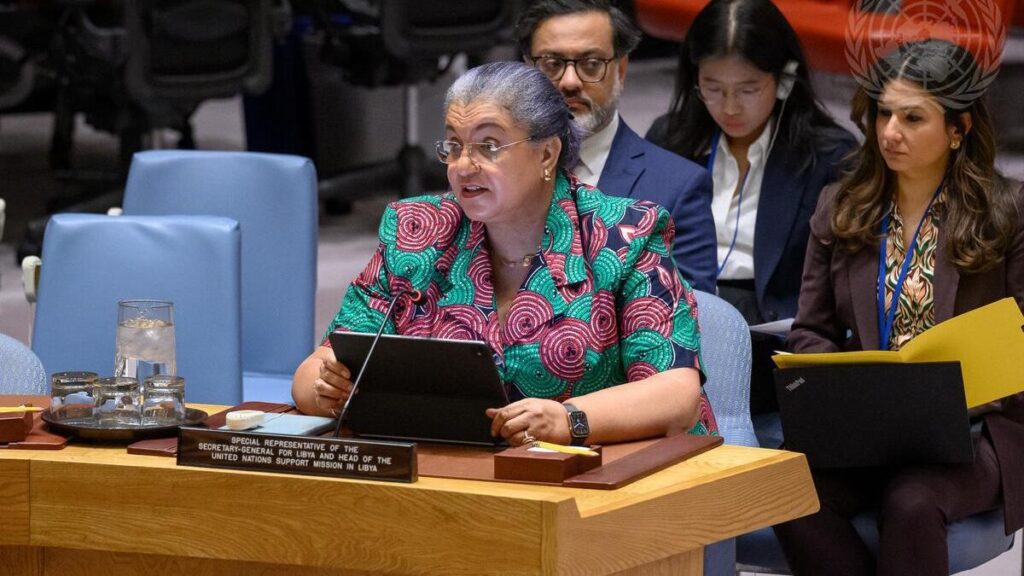
Hanna Tetteh, Special Representative of the Secretary-General and Head of the United Nations Support Mission in Libya (UNSMIL), has spoken extensively on how this political deadlock, coupled with dangerous xenophobic narratives, continually compounds the plight of stranded migrants.
Tetteh warned that false claims targeting international bodies actively put humanitarian personnel and vulnerable African migrants at physical risk: “Migration is a legitimate public concern but must be addressed on the basis of facts, not fear, and through responsible public discourse rather than inflammatory, false and provocative narratives,” Tetteh stated.
“Let me use this opportunity to state clearly that the UN in Libya is not in the business of resettling migrants in the country.”
Hanna Tetteh
She expanded on the immediate dangers stemming from these conspiracy theories: “False and misleading claims – particularly allegations of UN plans to settle migrants or refugees in Libya – have contributed to a climate of hostility, threats, and violence against humanitarian workers and UN personnel, and have already provoked violence against UN premises, underscoring the real dangers posed by misinformation.”
Rather than scapegoating vulnerable populations, Tetteh emphasised that the focus must remain on rebuilding sovereign state capacity and restoring political stability: “Addressing Libya’s numerous challenges requires a concerted effort to put the best interests of the country first, unify its institutions and tackle its economic and security problems,” she stressed.
“The country’s challenges cannot be addressed through fabrications and scapegoating. They require responsible leadership, unified functioning and effective institutions to restore public trust. The Libyan people’s right to choose their representatives and institutions to enjoy democratic legitimacy should not remain indefinitely blocked by institutional paralysis.”
Furthermore, Tetteh pointed out that irregular migration through Libya cannot be isolated from broader African security dynamics, noting how Libya’s crisis spills over into neighbouring regions: “I knew that the developments in Libya over the last 15 years had influenced the politics and the peace and security dynamics in the Sahel and, by extension, moving towards coastal African states as well,” Tetteh explained.
“And I come from a coastal West African state. And I know that we have been impacted in different ways, some more subtle than others. And I felt that if I had the opportunity to work in UNSMIL, and if there was the chance to try to move forward a political process that stabilises Libya, the impact for the rest of the Sahel region and West Africa would be tremendous.”
Key structural hazards of the corridor include:
Institutional Void: The absence of a unified national military or integrated legal framework across Libya allows smuggling syndicates to operate with impunity.
Interception Pullback Loop: Intercepted migrants are routinely returned to non-state detention centres where abuses occur.
Unidentified Victims: Over 90 per cent of casualties across Saharan routes and sea crossings are buried without identification, leaving families across the African continent without closure.
The Legal Horizon
The United Nations Independent Fact-Finding Mission on Libya concluded that abuses committed against African migrants—including murder, forced disappearance, torture, and enslavement—constitute potential crimes against humanity.
The International Criminal Court prosecutor’s office maintains an active mandate under UN Security Council Resolution 1970 to investigate state actors, armed groups, and international smuggling networks operating across Libya’s borders.
Until unified governance and human-rights-centred border enforcement replace informal containment policies, the transit corridor connecting Sub-Saharan Africa to the Mediterranean coastline will remain a lethal trap for thousands every year.