

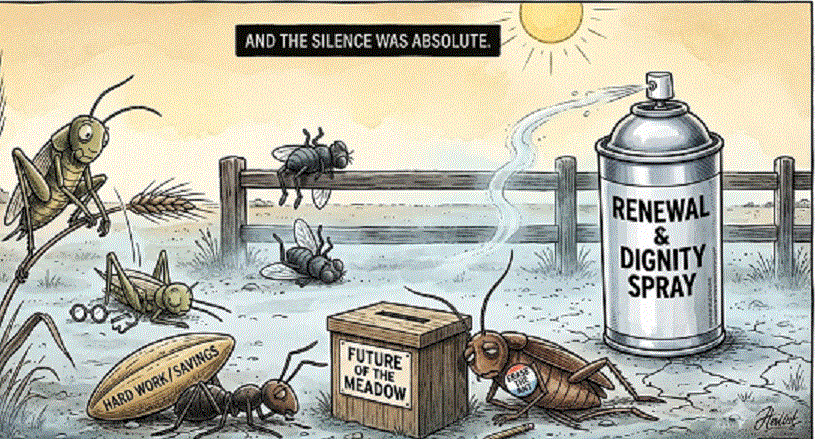
The cockroach wanted the ant erased. The cricket wanted moral purity. The fly wanted nothing to do with the mess. Each believed it had found the safest path through a troubled meadow. Each discovered, as the silver mist descended, that consequences recognise neither innocence, indifference nor good intentions.
By Themba Khumalo
Beneath a pitiless African sun, where the earth had cracked into thirsty scars, and the grass whispered with dust instead of dew, a quiet tragedy unfolded that would shame nations.
A cockroach lived among the dry stalks, forever scuttling from one patch of filth to another. Each morning it watched the ant march past, carrying yet another grain towards its carefully constructed storehouse.
Every journey the ant made felt like a personal insult. Every burden it bore was another reminder that discipline could produce abundance while idleness harvested only resentment.
The ant never mocked the cockroach. Truthfully, it scarcely noticed it. Work consumed every waking hour. Seasons had taught it that prosperity belonged to those who planned, laboured and persevered. It believed the meadow was too sensible to destroy itself.
While resentment gathered like storm clouds beyond the horizon, the ant kept carrying grain, mistaking silence for peace, and productivity for security. It never imagined that a democracy, like a harvest, must also be defended.
Before long, the cockroach no longer hated the ant for anything it had done. It hated the ant simply for what it represented.
Every grain the ant carried reminded the cockroach of the life it had failed to build. Envy slowly dressed itself as justice. Soon the cockroach no longer wished to become the ant. It simply wanted a meadow in which no ant could exist.
As election season swept through the meadow, strange campaigners arrived wheeling a gleaming silver canister from clearing to clearing. They spoke not of poison, but of renewal. They promised dignity restored, pests eliminated, and a meadow returned to its rightful inhabitants.
Their speeches were polished, their slogans intoxicating, and their smiles reassuring. Only the small print on the label betrayed the truth.
The cockroach never bothered to read it. Why would it? It had already convinced itself that anything capable of destroying the ant could never possibly destroy it. After all, poisons are for pests, and the only pest the cockroach could see was the ant.
With trembling legs it marched proudly to the ballot box, gripped the tiny pencil and cast its vote for the spray. What became of the meadow mattered little, provided the ant finally suffered. Revenge had become more precious than survival.
Then came the hiss.
At first it sounded almost comforting, like rain approaching after months of relentless drought. Across the meadow, insects lifted their heads in cautious hope.
Hope quickly surrendered to panic.
A pale silver mist rolled silently across the cracked earth, flowing between blades of grass with the cold patience of inevitability. The ant staggered beneath the weight of its final harvest, desperately trying to drag one last grain to safety.
Even then, the ant’s first instinct was not to flee but to save the harvest. Surely reason would prevail. Surely no meadow would willingly poison itself. By the time it understood that hatred had outpaced common sense, the silver fog was already in its lungs.
The cockroach coughed violently, still searching through watering eyes for some sign that loyal supporters would somehow be spared.
The fog offered no reassurance.
It possessed neither anger nor mercy. It knew nothing of loyalty, patriotism or revenge. It simply obeyed chemistry.
The canister had no manifesto of its own. It borrowed whichever one persuaded enough creatures to pull the pin.
Within moments the ant collapsed.
A heartbeat later the cockroach folded into the dust beside it.
The poison had finally united enemies that politics never could.
Yet they did not die alone.
High above the choking mist, perched elegantly upon a stalk of wild wheat, sat the cricket, the meadow’s self-appointed moral philosopher. It considered itself far too enlightened to stain its conscience with ordinary politics.
All choices, it declared, were equally corrupt. It spoke endlessly of principles while carefully avoiding consequences. With theatrical dignity it deposited a blank ballot into the box and congratulated itself for refusing to be complicit. In its own mind, the cricket remained above all this.
Not far away, a fly basked lazily upon a weathered fence post.
“They are all the same,” it buzzed dismissively. “Nothing ever changes.”
Why waste the effort?
The fly had once queued and once hoped. Once believed speeches mattered. After enough disappointments, cynicism became easier than courage. Now it remained comfortably in the sun while others queued to vote, mistaking cynicism for wisdom and apathy for sophistication.
Then the hiss reached them too.
The silver fog climbed the wild wheat without effort and drifted over the weathered fence post with complete indifference. It did not pause to admire the cricket’s spotless conscience, nor did it reward the fly’s cynical refusal to participate. It recognised neither innocence nor guilt, neither wisdom nor folly. It simply entered every waiting lung.
The cricket gasped, its lofty sermons dissolving into desperate silence.
The fly tumbled from its perch, its smugness extinguished before it struck the ground.
Across the meadow, the poison completed its work with methodical precision. The industrious ant. The vengeful cockroach. The self-righteous cricket. The indifferent fly. Every creature that had imagined itself exceptional discovered, in its final moments, that chemistry has no interest in ideology.
When the fog finally lifted, the meadow was perfectly still.
The ant lay beside its abandoned granary.
The cockroach rested beside the enemy it had devoted its life to destroying.
The cricket’s immaculate conscience offered no pulse.
The fly’s favourite fence post overlooked only silence.
No speeches remained. No slogans survived. No victory songs were sung.
Only the poison had won.
The meadow’s tragedy was never really about insects. It was about the strange ways in which human beings persuade themselves to embrace their own ruin. Hatred rarely announces itself as hatred; it arrives disguised as hope, justice or patriotism.
The greatest triumph of hatred is not that it destroys its enemies, but that it recruits arrogance and indifference into its service, persuading ordinary people to volunteer for their own destruction.
It whispers that ruin is a fair price to pay if someone else suffers first. It flatters the self-righteous into believing that moral purity is a substitute for civic responsibility, and reassures the indifferent that disasters belong only to those who participate.
Under its spell, citizens cease choosing leaders capable of building a nation and instead embrace peddlers of vengeance, mistaking fury for strength, aloofness for virtue, and apathy for wisdom.
History’s verdict has always been merciless: the fires lit to consume one neighbour seldom stop at the boundary fence. They become infernos that eventually demand the house of the arsonist as well.
Democracies rarely die because someone powerful destroys them. More often, they are quietly surrendered by ordinary citizens who fail in different ways.
The hateful mistake vengeance for justice. The arrogant mistake detachment for wisdom. The indifferent mistake resignation for realism. The diligent mistake stability for permanence.
Each believes someone else will protect the meadow. Together, they leave it defenceless.
Before you next step into the polling booth, listen carefully to the promises being made.
If they ask you to hate before they ask you to think, if they promise prosperity through another person’s suffering or dignity through another’s humiliation, pause long enough to ask who truly benefits from the hatred being offered to you.
Somewhere beneath the applause and the slogans, beneath the intoxicating promise of easy answers, you may hear the faint hiss of a gleaming silver canister being opened.