

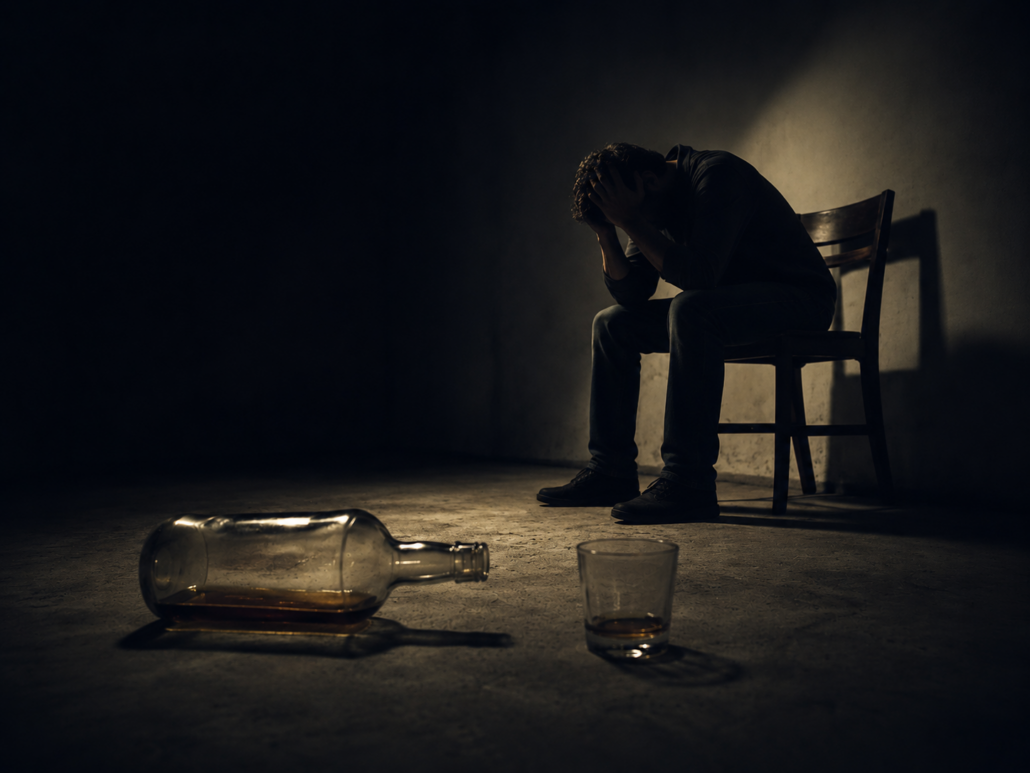
Alcohol did not just turn Mbatha into a reckless drunk; it changed how he saw people, friendship and himself. He trusted the wrong people, ignored warning signs and gave away money, possessions and trust, all while convincing himself he was being generous.

By Gogo Bathini Mbatha
During my drinking years, I attracted opportunists the way a bright light attracts moths, but I was far too drunk on alcohol, attention and my own perceived importance to understand what was happening right in front of me.
Alcohol had done something more insidious than simply making me careless: it had distorted the way I saw people, myself and the relationships around me. People were taking from me, sometimes shamelessly, and I kept telling myself a different story.
The story I preferred to believe was that I was a genuine people person, somebody who was deeply loved, needed and trusted by those around me.
My ego was running dangerously high, and I wanted to be the most relevant person in my circles. Being the person everyone called, visited, drank with and asked for favours had become ironclad evidence, in my mind, that I truly mattered.
I wanted to be the person who could always come through. If somebody needed money, a vehicle, a favour, a place to stay or somebody willing to listen for hours, I wanted to be that person.
There was something undeniably intoxicating about being needed, and I did not understand then that my generosity was often less about pure kindness than a desperate, aching need to belong. I was giving away far more than I realised because being useful made me feel wanted.
Joining a motorcycle circle was one of the biggest mistakes I made. I found myself lending bikers my motorcycles, and one biker used one of them for almost two years before bringing it back broken, with the tyres finished. When I complained, he told me I was bringing the “Soweto township mindset” to KZN and that he would show me.
Even then, I did not learn. My need to be accepted was stronger than my willingness to protect myself. I was so heavily invested in being liked that the warning signs could have been painted in bright red across my front door, and I probably would have admired them as decorations.
I then lent the same biker my 1975 Volkswagen Beetle, and it came back broken too. Looking back, I ask myself what I was trying to prove. Perhaps I believed friendship had to be demonstrated by what I was willing to surrender. Perhaps I feared that saying no would make people leave.
Whatever the reason, I kept handing pieces of my life to people and then felt surprised when they failed to treat those things with the same care and respect I would have given them.
The frightening part is that I could keep repeating the behaviour because I had lost the ability to recognise when generosity had crossed into allowing people to take advantage of me.
The problem was not only that people were asking too much; I was no longer protecting myself from what they were prepared to take.
Money was no different. People would borrow from me and assume I would eventually forget about it. What shocks them now is that I remember and ask for it back.
The approach would always come as a loan, but somehow the loan ended up being treated as a sponsorship for being in a friendship with me. I had become accustomed to that arrangement without asking what it said about the relationships I was maintaining.
At the time, my life appeared full. I was always surrounded by people, drinking and eating non-stop, daily. My call log was full because I could spend hours talking to people. Some gave me their time because, in my mind, they had earned my trust, while I was also paying for some of that trust with my availability, generosity and constant willingness to come through for them.
I hosted different people at different events because I wanted to fit in and be liked. I entertained, paid, gave, opened doors and made myself useful. I wanted to be part of everything and, more importantly, I wanted to feel that people needed me.
What I did not realise then was that being surrounded by people is not at all the same thing as being surrounded by friends. I had mistaken constant company for genuine connection, while my need to remain relevant stopped me from asking what many of those relationships were actually built upon.
I used to think my biggest problem was that I was drinking with the wrong crowd. Recovery forced me to confront something much more uncomfortable. Not everyone around me was an alcoholic. Some of the people I considered my safest friends were completely sober.
That created another form of blindness. I treated sobriety as a badge of trust. I assumed that because somebody did not drink, that person could not possibly take advantage of me. I trusted them because they were sober, rather than judging them by their character and by what they actually did. I gave them trust they had not necessarily earned because I needed to believe the relationships were genuine.
In doing so, I lied to myself.
Some people recognised my vulnerability and dealt with me accordingly. They knew I trusted them. They knew I was drinking heavily. They knew I was eager to please and afraid of becoming irrelevant. They knew I could be persuaded by flattery, the promise of belonging and the illusion of friendship.
Alcohol did not invent every dishonest person who crossed my path, but it left me with the ignorance, poor judgement and weakened boundaries that made me vulnerable to them. It made me remarkably easy to exploit.
That is difficult to write because I cannot put every failed relationship at somebody else’s door. I was an adult making choices, even when I was drinking. I gave people access. I ignored things I should have confronted. I kept returning to people and situations that should have made me uncomfortable because my need to be liked had become stronger than my ability to recognise what was happening.
I confused attention with affection, usefulness with friendship and generosity with love. I expected people to understand the value of what I gave them while failing to understand the value of what they were taking from me.
I was also a bad friend.
That is another part of alcoholism that is difficult to face. It is easy to tell the story as though the alcoholic is simply surrounded by people who take advantage of him. I could make a long list of people who borrowed and never repaid, took and never returned, accepted favours and disappeared when I needed something myself. Some of those memories still sting. But if I am going to be honest about recovery, I have to examine the other side of those relationships too.
I was not always present because I genuinely cared. Sometimes I was present because I needed to be liked. I did favours partly because I wanted the gratitude that followed. I entertained people because I wanted their company, but also because I needed validation. I could talk endlessly on the telephone while neglecting people and responsibilities that were actually close to my heart.
I was so busy trying to be important to everybody else that I could fail to notice how absent I was becoming from the people who actually mattered.
When I look through my old messages and call logs now, I see something I could not see then. I am left with OQPs — Only Quality People — and there are very few of them. Strangely, I am grateful for that.
Recovery has taught me that a full contacts list can conceal an empty life. A telephone that never stops ringing can still leave a person lonely, and a crowded table can still be a place of isolation when nobody really knows the person underneath the performance.
I understand the old saying, “Show me your friends, and I will tell you who you are”, differently now. For years, I thought it was a judgement about the people around me. Today, I hear a question directed at me: why did I choose those people, what did I tolerate, what did I give them, what did I expect in return, and what kind of friend was I to them?
When I look back at that period of my life honestly, I see people who took advantage of me, but I also see the man I had become: somebody who could no longer recognise his own vulnerability. I made myself available to be taken advantage of because I was desperately trying to be loved, and I was too intoxicated — not only by alcohol, but by my own need to matter — to understand what I was doing to myself.
I was drinking myself into oblivion while calling it friendship, and recovery is teaching me that true friendship does not have to be purchased, performed or continuously proved through possessions, money, endless availability or the obligation to solve somebody else’s problems.
Real friendship can survive a boundary, a refusal and the words, “I cannot do that for you.”
I no longer need a crowded telephone log to prove that I have people in my life. I would rather have a handful of people who can sit with the sober version of me, tell me when I am wrong, respect what belongs to me and remain when I have nothing to give them.
Those are my OQPs, and perhaps for the very first time in my life, I am actively trying to become worthy of them.
Gogo Bathini Mbatha: Founder of Sober Beings/ Traditional Healer/ Researcher/Spiritual Educator