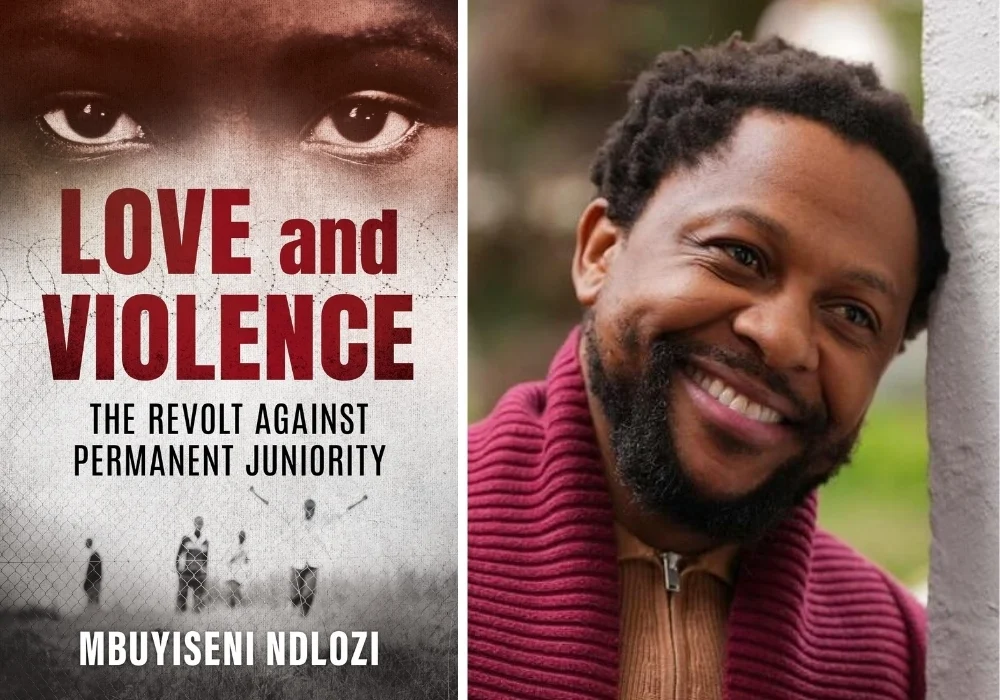
Love and Violence is, in Sandile Memela’s assessment, an ambitious attempt by Dr Mbuyiseni Ndlozi to confront Black intellectual dependency, political stagnation and permanent juniority. He says the ideas are bold and the ambition unmistakable, but asks whether philosophy born in privileged spaces can mobilise those left behind.
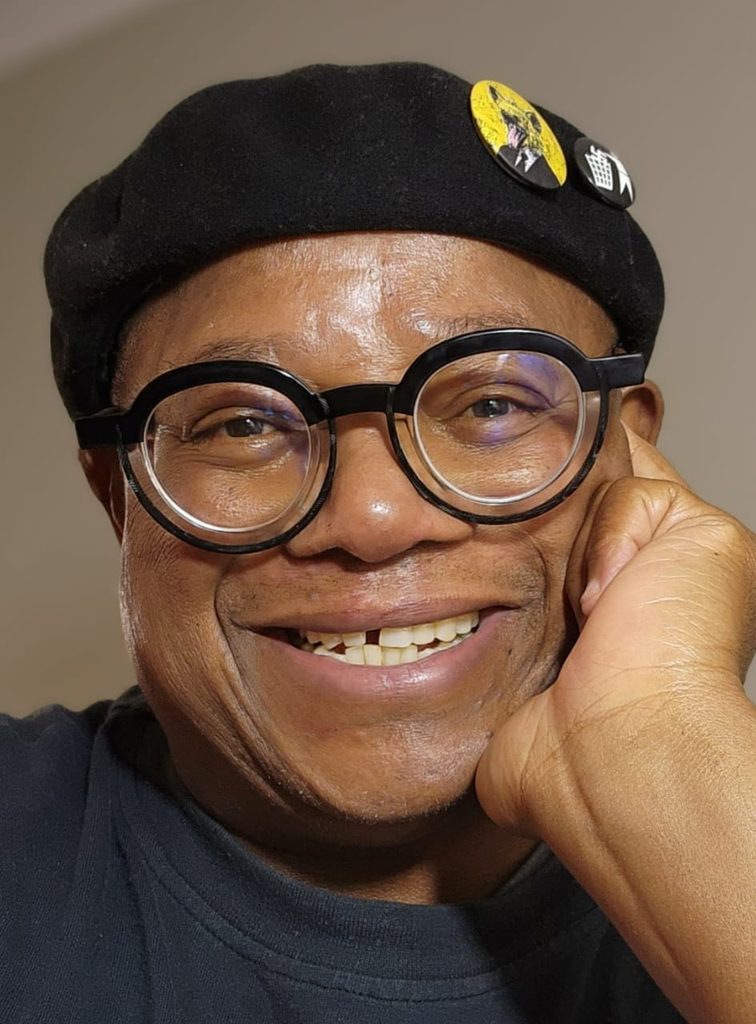
By Sandile Memela
I did not attend the launch. I watched it on TV. But this book matters. Not because it is perfect, but because it is necessary.
Dr Mbuyiseni Ndlozi’s Love and Violence: A Revolt Against Permanent Juniority arrives at a moment when his generation – the born-free, the tenderpreneurs, the unemployed graduates, the greedy beneficiaries of democracy – is directionless and lacks a figure to rally around.
The 1994 project has stalled. The ANC has no plan, as Ndlozi himself admits. The youth are more divided by class than at any time since 1912. In that vacuum, Ndlozi makes an overt, almost brazen attempt to position himself as the Steve Biko or Franz Fanon of his generation. Maybe to succeed Andile Mngxitama. Or Julius Malema.
It is a significant step in the right direction.
Working closely with the Thabo Mbeki Foundation, he and his circle have correctly identified the gap and want to plug it. Ndlozi – who is close to Mbeki – asserts that Thabo Mbeki made it possible for Blacks to be thinkers. The book is his attempt to take that permission seriously. He has been given an opportunity and platform.
But does he succeed? Only partially. And the reasons for that partial failure are sociological, not intellectual.
What The Book is About
Ndlozi says he was motivated to write because of his love for ideas. African academics, he argues, are condemned and considered ‘fieldworkers who cannot theorise and produce abstract thought’. The West theorises; we collect data. Mbeki challenged that. Ndlozi wants to finish that challenge.
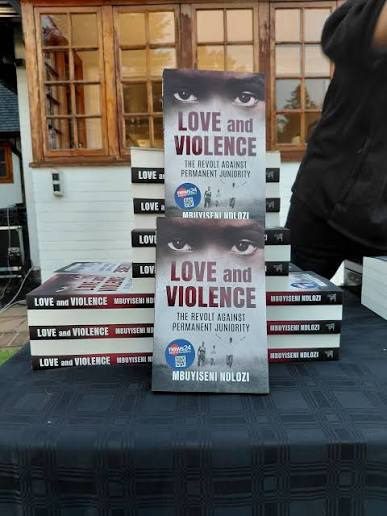
The title itself is Fanonian. Violence is not street violence. It is a name for colonisation. It is Fanon’s The Wretched of the Earth violence – systemic, epistemic, structural. Love means freedom – the struggle to deliver liberation for the whole of humanity, not just Black people.
The book uses big words deliberately: Negre (sic) politics, permanent juniority. Permanent juniority is his central thesis: the systemic juniorisation of Black people, where even when we rule, we are treated as juniors in the world system, as fieldworkers of thought, as consumers of theory, not producers.
It is a poetic book and deeply philosophical. Achille Mbembe, the Cameroonian-born philosopher who was a respondent at the launch at a high-class home venue in Johannesburg, described it as such.
No doubt it is grappling with ideas and hopes to unleash and galvanise the young to think.
Ndlozi opens the book with an encounter with his absent father. He grew up with his single mother and an absent father. It is part of his PhD research on violence. His absent father’s relative was violently killed, exhumed from the grave and set alight.
Thus, to embark on theories of decolonisation, he must wrestle with the dead. That personal wound becomes a national metaphor: Can you be proud to be African today? This is the haunting question.
He embraces the question of freedom and Black existence in death. However, he speaks of the capacity to recover and rise. He expresses belief that African people have and will continue to resist death and refuse to be exterminated. It is love of freedom for all of humanity that will make Africans rise from death. It is love of freedom that gives life meaning and purpose.
The concept of death points to the absurdity of Black life. Do people know what we survived here? He lists the massive drought and the shortage of yellow mealie meal in the 1980s. He adds the movement to burn witches in Limpopo, which led to the deaths of more than 300 people, especially elderly women. And finally, he focuses on Constand Viljoen, who mobilised Afrikaner resistance and threatened civil war in 1994.
That we survived at all, that the 30-year-old Constitution is a symbolic achievement and victory over death, is because leaders of the early 1990s like Mandela avoided a collapse. Significantly, South Africa is the only Black population that rules over whites.
Mbembe’s intervention is crucial: He says the book is a journey into obscurity, a journey through death but coming out alive and with dignity. South Africa epitomises that journey. The South African struggle has universal meaning – about human freedom and emancipation for all humanity beyond race, tribes and class.
The youth, who are the future, must take the SA experiment seriously and think deeply about it – translate the experience to the rest of the world.
But what does autonomy mean in the country in the global context? Ndlozi does not fully answer, but he asks the right Fanon question.
The Biko-Mbeki Problem: Self-Reliance From Above
But our critique must be frank, in the spirit of Frank Talk.
Ndlozi – like his mentor Thabo Mbeki – has put a new label on the Black Consciousness philosophy of ‘self-reliance’. Perhaps this is a revival of Thabo Mbeki’s Vuk’Uzenzele philosophy and programmes that failed to cotton on with the people.
Why did Vuk’Uzenzele fail? Because it was formulated and launched at high-class homes and venues that are removed from the people. The same danger stalks Love and Violence.
At the launch, his guests were obviously high-flying youth and young corporate and public service professionals who enjoy the fat off the land as members of the much-vaunted Patriotic Bourgeoisie. They are mostly beneficiaries as a result of the middle-class backgrounds of their families and parents, who have done very well for themselves.
This is not Ndlozi’s fault personally. He himself comes from a difficult background – single mother, absent father. But his current social location is Mbeki Foundation boardrooms, not Limpopo villages where witches were burnt. The initiative points to a plan to host a National Imbizo under the TM Foundation to galvanise the youth to take their future into their own hands. Much as this is important and relevant, the youth are divided by class.
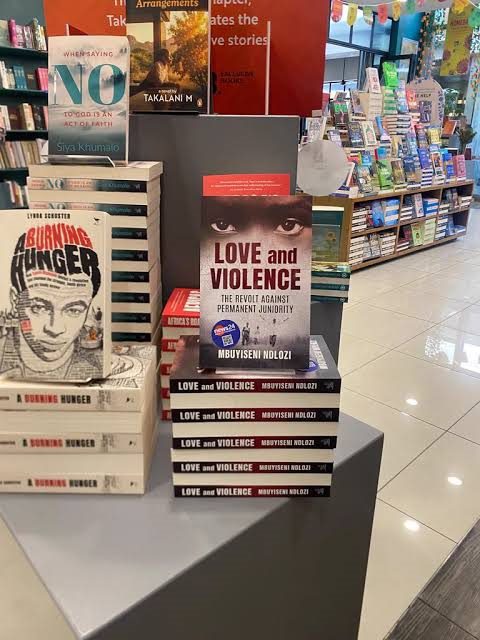
How do you galvanise youth where one half is in Sandton sipping Chardonnay, talking about “decolonial love”, and the other half is in mud schools in the Eastern Cape? Ndlozi himself gives a positive spin to mud schools as an expression of the self-sufficiency and strength of our people to survive. Mmmm, that is how he sees places of abandonment and rejection. But can you reclaim institutions of the people from a boutique hotel in Hyde Park?
Biko understood this. That is why his research method was interactive, and he had his pulse on the pulse of the community. He lived in Ginsberg, not Houghton. He could write Black Campuses and Current Feelings because he was sleeping on the campus. Ndlozi writes We Blacks for 2026, but from where? The launch venue matters. The audience matters.
The Strength: Unashamed Thinking
And yet, to dismiss the book because of its class location would be cheap. The book’s strength is its unashamed call to think.
Mbembe says, “South Africa is safe ground for us to be true to ourselves. Do not be afraid to think.” That is the book’s manifesto. But is it so?
Ndlozi struggles with despair when he says it is hard to be positive in Mzansi unless we look at 1994, the year that gave us hope. We have seen the worst. And we have to pay fidelity to the people who saved us from the abyss. That fidelity is love.
His analysis of the present is razor-sharp:
• Africans are more divided than they were in 1912. Multiple parties are tribes where everyone thinks they can be chiefs or kings or dictators.
• African politics is punctuated by an Age of Egocentrism, with no proposition but to serve selfish agendas.
• Will it be responsible for the disadvantaged to keep on voting? Data says only 33% will vote.
• On Black-on-Black violence: Africa is not taken seriously because it is divided against itself. Africans are their worst enemies. It is normal to rule people without their consent.
He points out that the country and continent have the youngest population on earth.
Thus he sends a clarion call: Reclaim institutions of the people. Do it for ourselves without over-relying on political leaders. But do not give up on holding people in power accountable.
In fact, Ndlozi has launched more than a think tank, but a movement to encourage critical thinking and self-reliance. For him, it is about encouraging people to reclaim power and do things for themselves.
That is Biko. That is Fanon. That is Vuk’Uzenzele at its best.
Verdict: Necessary but Incomplete
Love and Violence is not yet I Write What I Like nor The Wretched of the Earth. Biko and Fanon wrote from the trenches, from death itself. Ndlozi writes about death philosophically, beautifully, but from comfort and safety.
But it is a beginning. His generation needs a thinker who dares to use big words like ‘permanent juniority’ and define them. Who dares to say to Mbeki that he is not the father of Black thought but Tiyo Soga is.
If Ndlozi wants to be Biko, he must do what Biko did after writing: Go back to the community. Host the National Imbizo or National Dialogue. But not at the Mbeki Foundation. He must find a way to the mud schools. Invite not just the Patriotic Bourgeoisie, but the lost student from Daveyton, the gogo from Limpopo, the unemployed graduate from Tembisa.
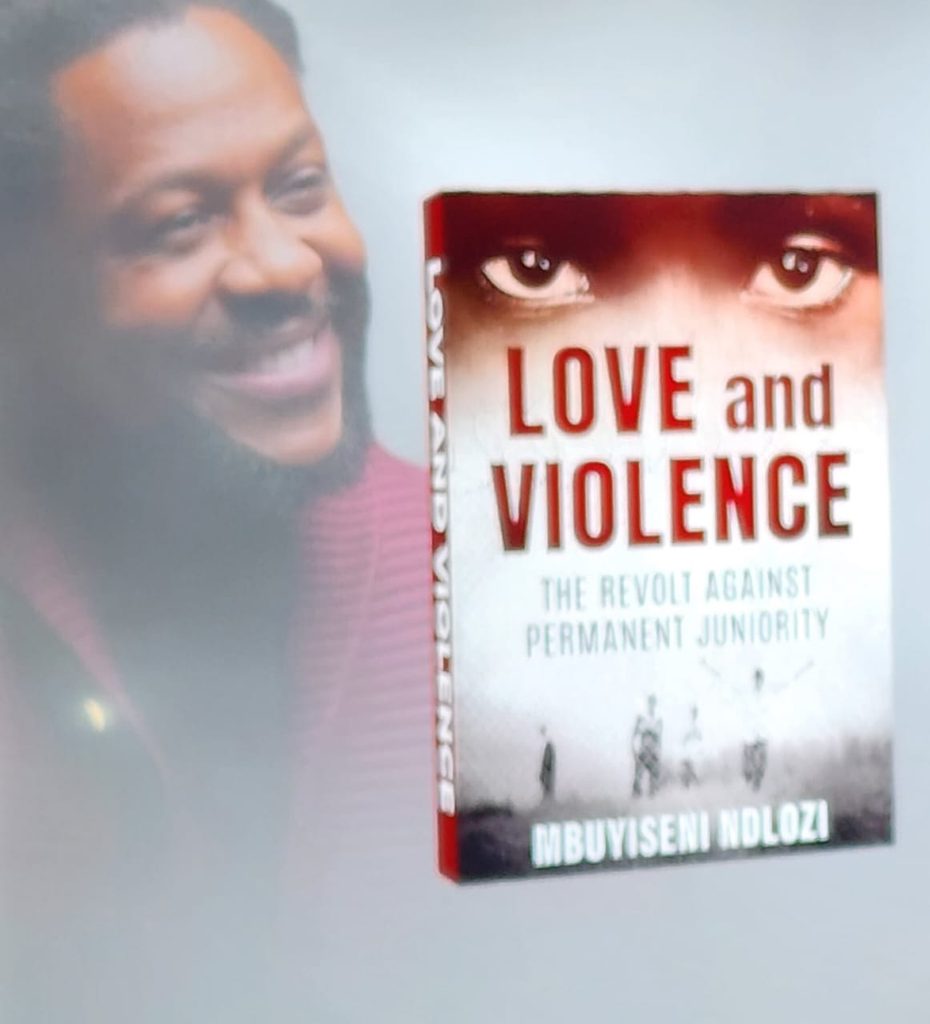
The book asks: Is it responsible to keep voting? The youth answered: We will not vote. The task now is to translate this poetic, deeply philosophical love for humanity into a language that the 67% who will not vote can hear.
If he does that, this revolt against permanent juniority will not be just a book launch. It will be a movement.
For now, it is an important book that should be read – especially by those who think African academics cannot theorise. Ndlozi proves they can. Whether they can mobilise is the next question his national dialogue must answer.
Get the morning briefing
Our editors’ choice of the day’s stories, in your inbox at six.
Comments
No comments yet.