

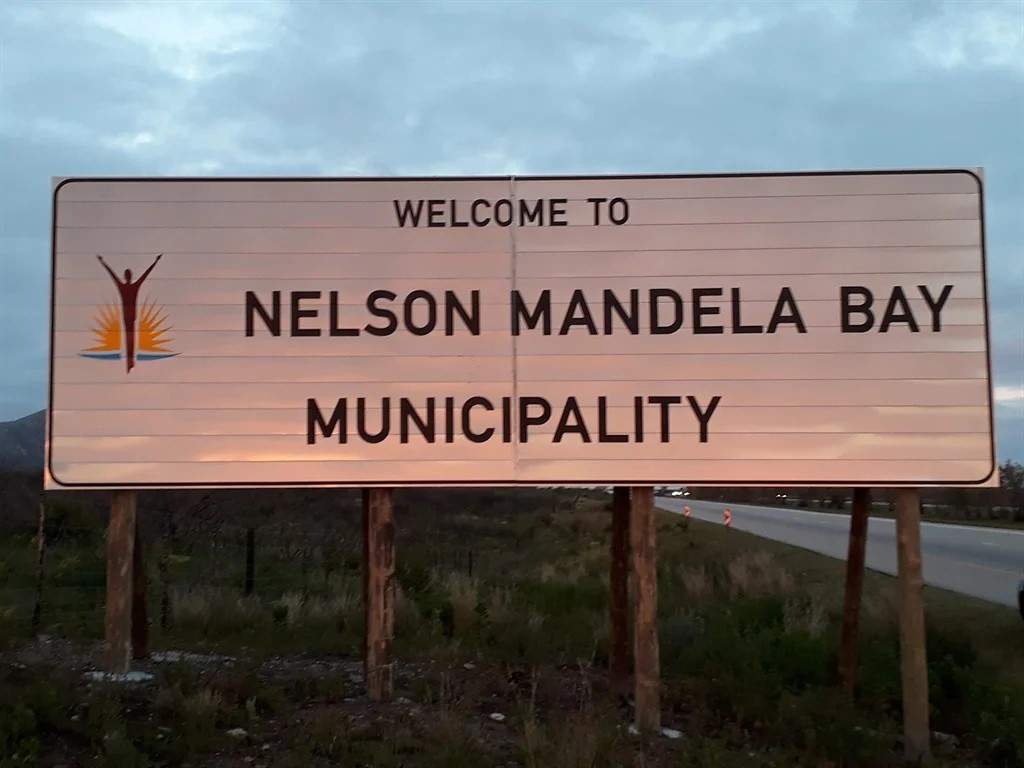
Nelson Mandela Bay was once an industrial powerhouse. Today, factional battles, unstable coalitions, financial mismanagement, and collapsing infrastructure have reduced it to a municipality desperately in need of rescue.
By Themba Khumalo
The collapse of the Nelson Mandela Bay Metropolitan Municipality (NMBM) is not a story of administrative bad luck or routine municipal strain.
It is a textbook case of structural destruction brought on by two decades of intra-party factional warfare, systematic administrative capture, and opportunistic coalition arithmetic.
The metro—once a manufacturing hub and the economic heart of the Eastern Cape—has spent fifteen years staggering through political paralysis.
With over 12 mayors and 18 acting city managers in a decade (including 16 since 2020 alone) rotating through City Hall since 2009, the fundamental question facing the electorate is no longer how the ANC failed, but who—if anyone—has the political gravity, institutional capability, and electoral mandate to rebuild the broken city.
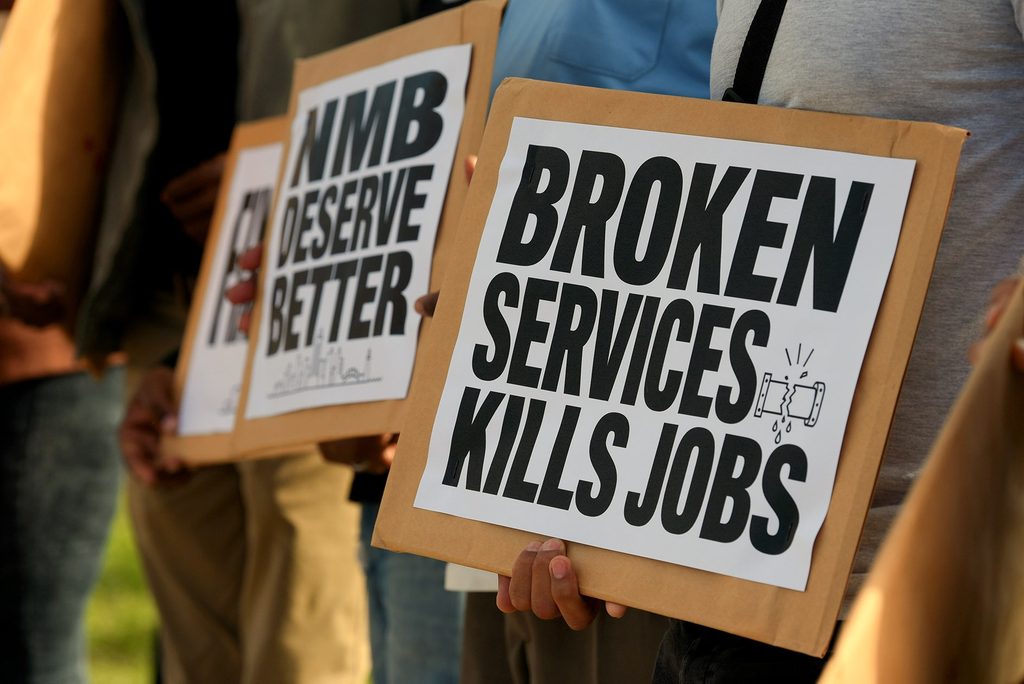
The Cause of Death: Factionalism and Coalitions of Chaos
To understand why the metro is in ruins, one must look at how the ruling party treated the municipal purse: not as a resource for service delivery, but as the primary battlefield for internal supremacy.
The Faku “Cabal” and Institutionalised Patronage: The metro’s decay can be traced back to the post-Polokwane era under former Regional Chairperson Nceba Faku. The 2011 independent Kabuso Forensic Report laid bare a culture of unchecked tender manipulation, illegal land disbursements, and political extraction.
When subsequent leadership attempted to clean house, an internal cold war erupted between municipal executives and regional party bosses—a war that never truly ended.
The “RET” vs. Provincial Factional Battles: Factional warfare shifted seamlessly into national rivalries. The metro became a proxy battleground between the Radical Economic Transformation (RET) network—formerly championed locally by figures like Andile Lungisa—and the provincial executive aligned with Premier Oscar Mabuyane.
The cost? Chronic gatekeeping, parallel regional conferences, court interdicts, and a civil service split down the middle along party lines.
The “R24m Toilet Tender” and Civil Service Capture: When political factionalism invaded the civil service, municipal management ceased to function. The April 2020 scandal—in which a R24.6-million emergency sanitation tender was unlawfully awarded and allegedly funnelled through corporate proxies to reward political allies—illustrated how supply chain management was weaponised.
The subsequent legal and administrative blockades over suspended City Manager Noxolo Nqwazi triggered severe Treasury warnings, leaving the city on the brink of losing hundreds of millions in national grants.
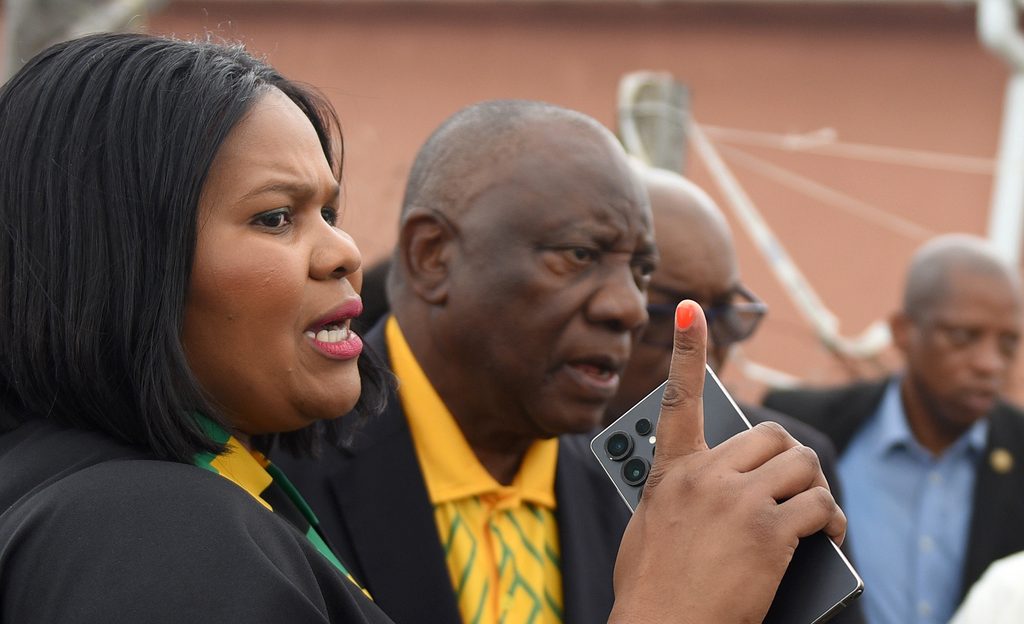
The “Government of Local Unity” Farce: Losing its absolute majority in 2016 (dropping to 40.9% on the PR ballot and 40.3% overall) and declining further to 39.4% in 2021 forced the ANC into survival mode. Rather than reforming, it adopted a strategy of ruling via proxy—installing micro-party “kingmakers” as mayors (such as Gary van Niekerk of the National Alliance) while keeping firm control over high-budget portfolios like Infrastructure, Electricity, and Human Settlements.
The Lobishe Era: Even the formal return of the ANC to the mayoral seat under Regional Chairperson Babalwa Lobishe in late 2024 has failed to turn the tide.
Despite launching ambitious “100-day” turnaround pledges, her tenure has been dogged by National Treasury grant withholdings owing to MFMA non-compliance, capital expenditure drop-offs, and grid-level infrastructure failures—requiring Section 154 national government intervention just to keep basic administrative machinery moving.
The Audit Sheet of Failure
The paper trail generated by forensic audits, the Auditor-General, and National Treasury directives provides a precise, multi-layered accounting of how the metro’s administrative machinery disintegrated across four distinct pillars.
The Financial Black Hole and the “Blanket Write-Off” Dispute
Financially, the municipality has been consumed by an extraordinary accumulation of unauthorised, irregular, fruitless, and wasteful expenditure (UIFWE), pushing total accumulated irregular spending towards R30 billion.
The statutory crisis reached a boiling point when the council coalition attempted to push a single blanket resolution through the Municipal Public Accounts Committee (MPAC) to write off R23.08 billion accumulated between 2009 and 2021. Opposing councillors revealed that committee members were given barely 30 minutes to review the proposal, while a supporting affidavit exceeding 500 pages was withheld.
National Treasury formally intervened, warning that an aggregated write-off without mandatory, item-by-item Section 32 investigations under the Municipal Finance Management Act (MFMA) is legally defective and unlawful.
The municipality’s attempt to argue that historic debts had prescribed under Section 12(3) of the Prescription Act set off a direct legal conflict with national oversight bodies, illustrating an ongoing attempt to bypass statutory consequence management for historical procurement failures.
Statutory Penalties and the Freezing of National Grants
This chronic failure of internal controls has repeatedly placed Nelson Mandela Bay in the direct crosshairs of National Treasury. The city’s financial instability reached a crisis point when Treasury invoked Section 216(2) of the Constitution, withholding hundreds of millions of rands in equitable share allocations and conditional capital grants due to persistent MFMA non-compliance, unfunded budget tabling, and failure to settle long-overdue debts with bulk utility providers.
Rather than functioning as an autonomous local government, the metro’s failure to spend its capital grants on basic sanitation and infrastructure upgrades meant that national transfers were systematically halted, freezing capital development across the city.
Infrastructure Collapse and “Self-Inflicted” Scarcity
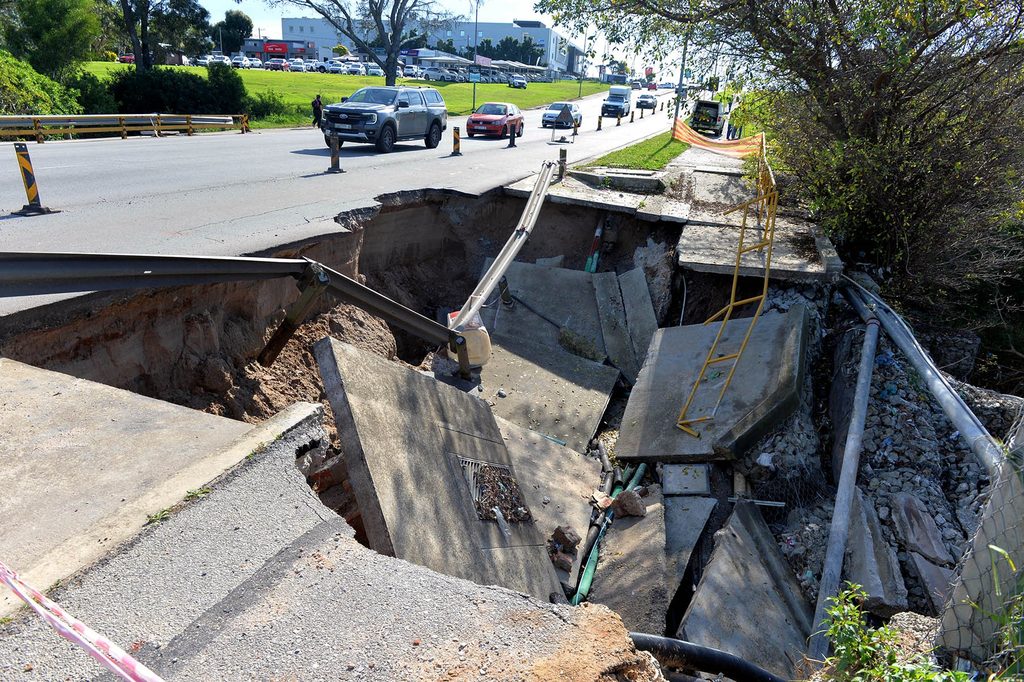
On the ground, this fiscal dysfunction manifests itself as a catastrophic physical failure of core municipal assets. The metro’s water network represents one of the most severe cases of infrastructure neglect in the country, with Non-Revenue Water (NRW) losses climbing to between 55% and 60%.
The city loses more than half of its bulk treated water before it ever reaches a paying tap—not due to natural drought alone, but because of unaddressed pipe bursts, leaking reservoirs, and a complete failure to invest punitive water tariff revenues back into network maintenance.
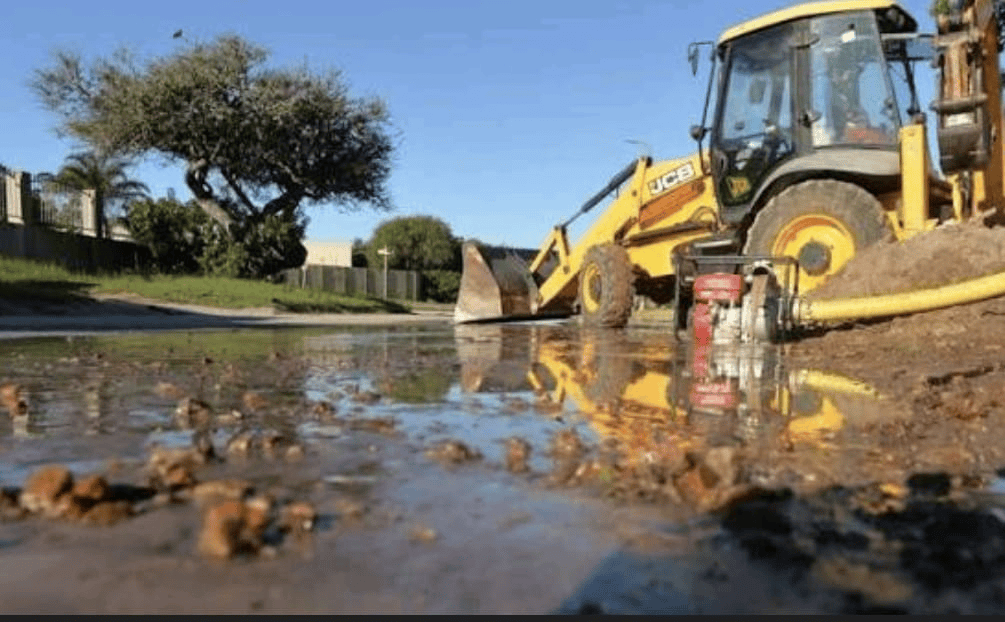
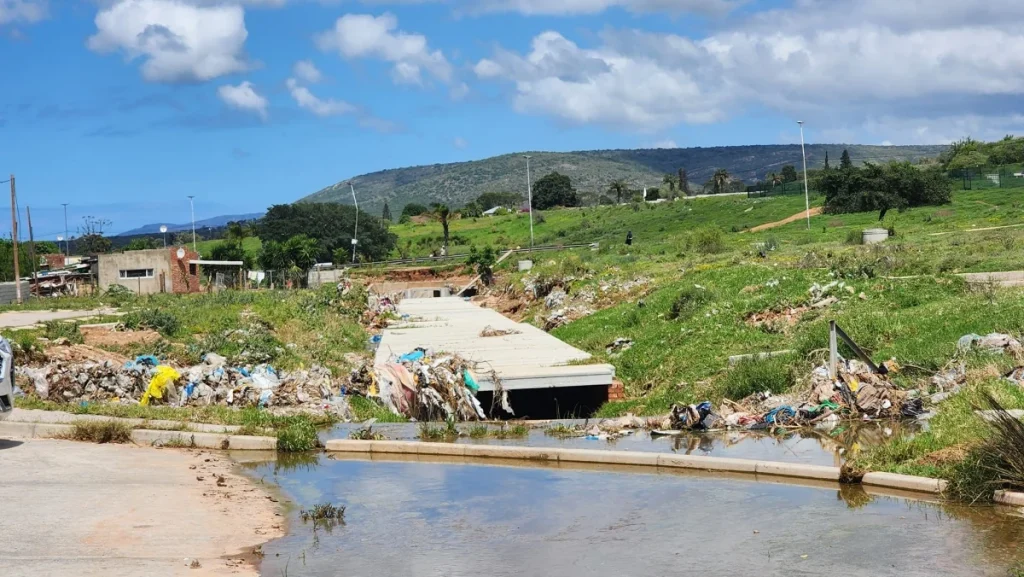
Concurrently, unbilled and stolen electricity drains over R1 billion from municipal coffers annually, while storm drainage systems and road networks remain unmaintained due to lapsed material procurement contracts.
Institutional Paralysis and Executive Vacancies
Underpinning both the financial and physical breakdown is a total collapse of executive leadership. Crucial municipal directorships—including Human Settlements, Infrastructure, and Electricity—have routinely sat vacant for years at a time or been filled by temporary acting personnel operating without proper statutory authority or technical competencies.
Senior administrative posts have been treated as political bargaining chips, resulting in endless court battles, fully paid suspensions of accounting officers, and a complete erosion of institutional memory.
Without a stable, qualified executive cohort, the city remains structurally incapable of executing long-term capital projects or enforcing basic administrative discipline.
The Central Question: Who Can Be Trusted to Fix It?
The ANC’s track record in Nelson Mandela Bay is a closed book of administrative incompetence and factional sabotage.
However, identifying who can actually fix the metro requires a cold, pragmatic evaluation of the realistic political alternatives.
The Democratic Alliance (DA): Electoral Reality and Governance Limits
The DA remains the primary opposition in the metro, but its actual track record in council shows why it has been unable to provide a permanent solution.
The Structural Limits: When the DA led coalitions under Athol Trollip and Retief Odendaal, its rigid approach to council management alienated smaller coalition partners, leading to immediate collapse.
Furthermore, the DA demonstrated its own internal vulnerabilities when three of its own councillors defected or defied party mandates during crucial votes of no confidence.
The Electoral Block: Without a 50%+1 absolute majority—which it has never achieved in the metro—the DA is forced into fragile multi-party deals where it remains just as vulnerable to small-party extortion as the ANC.
The Multi-Party Coalition / Grand Coalition Model
With voting trends indicating that smaller parties hold over 14% of the metro’s electorate, the future of NMB may inevitably rest on structured multi-party arrangements.
The “GNU” Local Template: A stabilised, formalised coalition agreement—mirroring national frameworks between major parties—could theoretically isolate fringe political opportunists who trade votes for executive positions.
The Risk: If a multi-party government becomes yet another exercise in portfolio-sharing rather than programmatic agreement, it will replicate the same “coalition of chaos” that destroyed the city between 2018 and 2024.
Independent / Civil Society / Ratepayer Coalitions
Emerging civic movements and organised ratepayer associations argue that party politics itself is the pathogen in Nelson Mandela Bay.
The Promise: Professionalising the administration by decoupling municipal appointments from political party caucuses.
The Reality: Localised civic movements often struggle with scale, lack nationwide policy infrastructure, and routinely get swallowed up or co-opted once inside the council chamber.
The Verdict
Trust cannot be built on party slogans or historical struggle credentials; it must be anchored in institutional insulation.
Fixing Nelson Mandela Bay does not just require a change of mayor—it requires an administration willing to take three non-negotiable actions:
Purge the Executive of Political Appointees: Depoliticise the civil service by placing the City Manager and Chief Financial Officer positions under strict, independent technical oversight.
End the Extortion of Micro-Parties: Establish a transparent, legally binding coalition framework that prevents minor-party councillors from swapping executive Mayoral Committee portfolios for council votes.
Restore Financial Compliance: Implement rigorous internal controls to stop the flow of irregular expenditure and unlock withheld National Treasury grants.
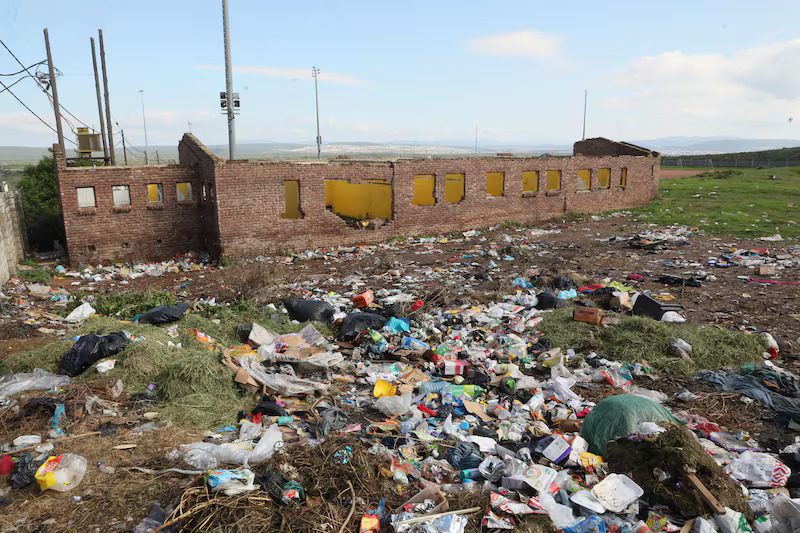
The ANC has demonstrated across two decades that its internal architecture is fundamentally incapable of delivering this reform. Whoever takes the reins next must arrive not with promises of political unity, but with a forensic broom, a technical management team, and the political courage to dismantle the patronage networks that turned Nelson Mandela Bay Metro into a cautionary municipal tale.