By Staff Reporter
Cape Town presents a particularly useful test of the Democratic Alliance’s claim to be South Africa’s most competent governing party.
The city has comparatively strong municipal institutions, substantial infrastructure investment, sophisticated financial systems and a political administration that has spent years presenting Cape Town as proof that the DA knows how to make government work.
Yet that celebrated version of Cape Town looks considerably different when viewed from its townships, informal settlements and poorer communities, where millions of residents continue to confront inadequate housing, overcrowding, poverty, insecure tenure, poor spatial access to economic opportunity and living conditions that remain far removed from the prosperity associated with the city’s affluent suburbs.
The contradiction is difficult to ignore. Cape Town has the financial resources, administrative machinery and institutional capacity to deliver substantially better outcomes, and the municipality can point to billions of rand invested in housing, infrastructure, water, sanitation and transport.
It has a human-settlements programme worth more than R8.4 billion over three years, is releasing land for affordable housing and has developed a pipeline of thousands of additional affordable housing opportunities. These are substantial interventions and should be recognised as such.
But the existence of large programmes does not, on its own, establish that they are adequately resolving the problems they are intended to address.
The City’s own housing information acknowledges that hundreds of thousands of people remain on the Housing Needs Register and that applicants can wait many years for an opportunity. The municipality has projected that Cape Town will require more than one million additional housing units by 2050, with roughly 70% of future demand expected to fall within the affordable housing market.
Those figures fundamentally alter the question. The issue is no longer whether Cape Town is spending money or whether the administration has programmes on paper. The issue is whether the scale and pace of that response are sufficient for a city in which the demand for affordable housing is so enormous and in which large numbers of residents remain trapped in conditions that should be unacceptable after years of administration by a party presenting the city as a model of successful governance.
A City Divided by More than Geography
Cape Town remains one of South Africa’s most striking examples of the distance between urban prosperity and urban deprivation. The affluent parts of the city have become synonymous with investment, tourism, property development, well-maintained public spaces, sophisticated infrastructure and a quality of life that attracts residents and visitors from across the country and beyond.
That is one Cape Town.
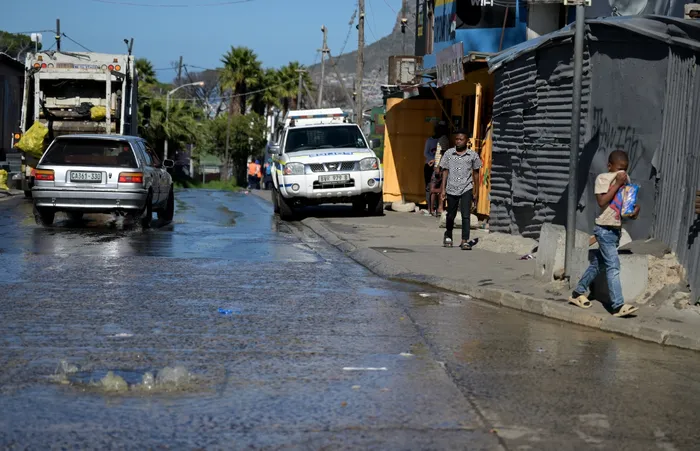
The other is found in places such as Khayelitsha, Delft, Mitchells Plain and the many informal settlements scattered across the metropolitan area, where households confront a very different set of daily realities.
The issue is not that these communities receive no municipal services. They do. The issue is whether the services, infrastructure and housing opportunities being provided are sufficient to address the scale of the deprivation and whether the City’s interventions are changing the trajectory of those communities quickly enough.
That distinction matters because a municipality cannot be judged only by the quality of the neighbourhoods in which its systems already work well. The more demanding test is what happens where the need is greatest.
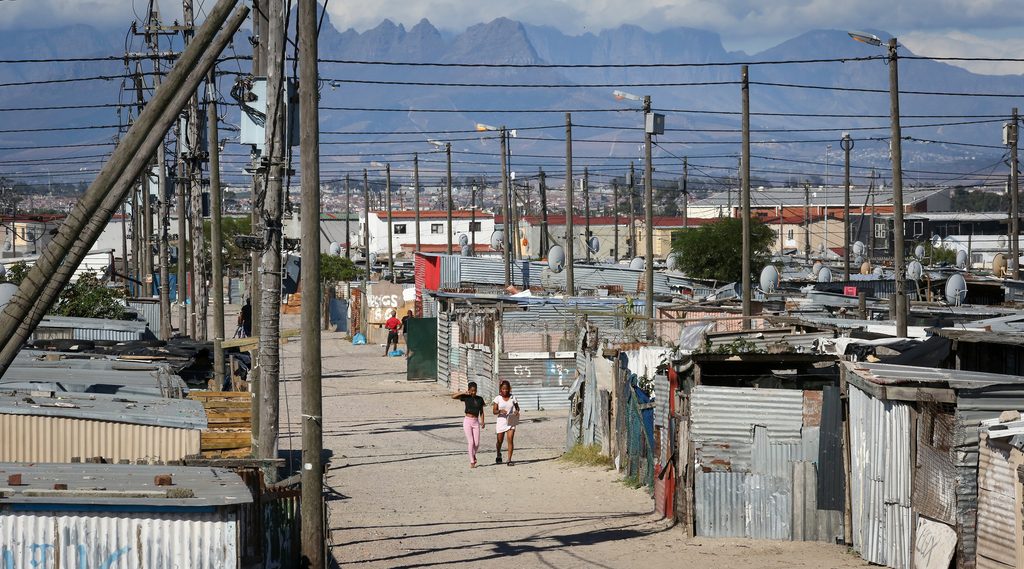
Cape Town’s success story is therefore incomplete. Its financial and administrative performance may be stronger than that of many other South African municipalities, but those achievements do not erase the conditions experienced by residents living in inadequate housing or informal settlements. They make the question of what more can be done even more difficult to avoid.
Housing Remains The Great Contradiction
Housing provides perhaps the clearest measure of the gap between municipal capacity and lived experience.
The City has committed billions to human settlements and says its current programme includes informal-settlement upgrading, serviced plots, public housing, subsidised housing, social housing and affordable housing. It has also released substantial parcels of land and is pursuing a pipeline of more than 14,000 affordable housing units, with thousands more opportunities potentially available on land already awarded for development.
Those interventions are significant, but they have to be considered against the scale of the problem.
A housing programme can be large by municipal standards and still be too small for the population it is supposed to serve. Fourteen thousand affordable housing opportunities sound impressive until they are placed alongside a housing demand projected to exceed one million additional units over the coming decades.
The same applies to individual housing projects. A successful development may transform the lives of the families who receive homes while doing little to alter the overall housing crisis if demand continues to grow faster than delivery.
The City’s own admission that hundreds of thousands of people remain registered for housing, with many waiting for years, is therefore more revealing than any political claim of success or failure.
The question should be whether the backlog is being reduced at a rate that matches demand. It should also be whether new housing is being developed in locations that allow residents to participate meaningfully in the city’s economy, rather than merely moving the problem further towards its outer edges.
A house that places a working household many kilometres from employment, schools, healthcare and public transport may solve one problem while reinforcing another.
Informal Settlements are Where the Argument Becomes Unavoidable
The persistence of informal settlements presents an equally difficult challenge.
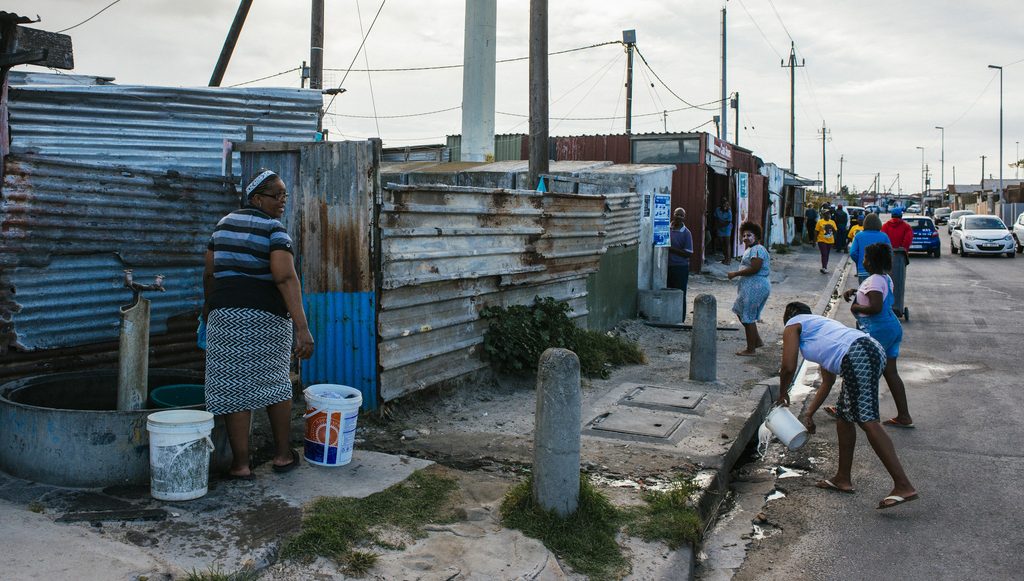
Cape Town has invested heavily in services for informal settlements, including communal sanitation, water infrastructure and settlement upgrading. The municipality says it maintains more than 50,000 toilets and more than 10,000 communal taps in informal settlements, while continuing to install additional facilities and upgrade infrastructure.
Those interventions matter. Access to a toilet, water and basic infrastructure can make an enormous difference to the daily lives of households that previously had none of those services.
But basic-service provision should not be confused with the resolution of the housing crisis.
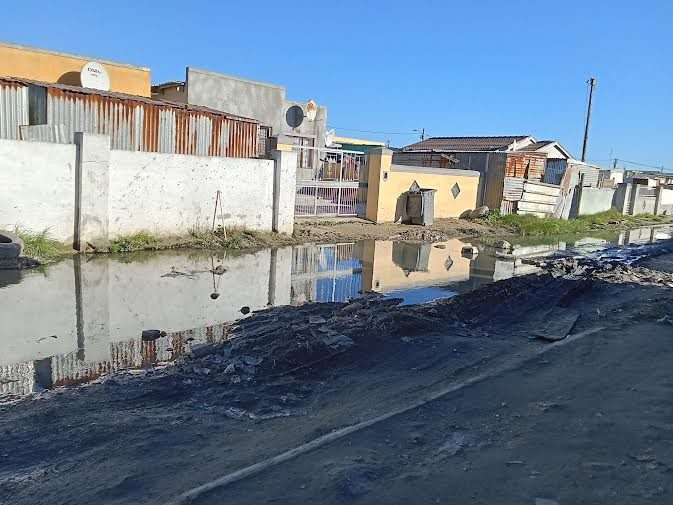
A municipality can improve sanitation in an informal settlement while residents remain without secure tenure. It can install taps while overcrowding continues. It can improve roads and drainage while the settlement expands around the upgraded infrastructure. It can make conditions less intolerable without making them acceptable.
That is why informal settlements remain such an important measure of municipal performance. They reveal the distance between the city’s formal development programmes and the housing circumstances of people who cannot access the formal property market.
The City has identified serious constraints, including land availability, flood-prone areas, environmental risks and the difficulty of providing permanent infrastructure in densely settled areas. Those challenges are real, but they do not remove the responsibility to confront the scale of the problem. If anything, they underline the need for a much more aggressive and integrated housing, land-release and spatial-planning strategy.
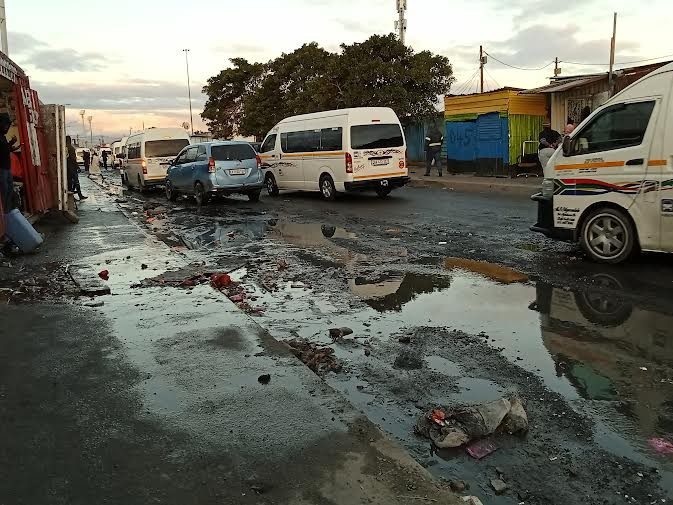
Services are not Enough if the Living Environment Remains Inadequate
The same principle applies to water, sanitation, electricity, roads and waste management.
The question should never be reduced to whether the municipality can point to a project that has been completed. The relevant question is whether the accumulation of those projects is producing a substantial improvement in the living environment of the people who need them most.
Cape Town has established service standards for informal settlements, including benchmarks for communal water and sanitation facilities. Those standards provide an important basis for assessing performance because they allow residents’ circumstances to be measured against something more meaningful than political promises.
If a community receives services at the City’s stated standard, that is evidence of delivery. If residents continue to live in overcrowded and degrading conditions despite receiving those services, it demonstrates the limits of a service delivery approach that is not accompanied by adequate housing and spatial transformation.
The danger is that a municipality becomes very good at administering poverty without reducing its scale.
That is the uncomfortable possibility Cape Town has to confront.
The price of living on the edge of the city
Transport exposes another part of the problem because the geography of Cape Town determines who can realistically access its economic opportunities.
The City’s own household survey shows the extent to which residents depend on private vehicles, minibus taxis and public buses to reach work.
Public-transport users generally face longer journeys than those travelling by private vehicle, and for many working households the daily cost of reaching employment becomes a significant part of the household budget.
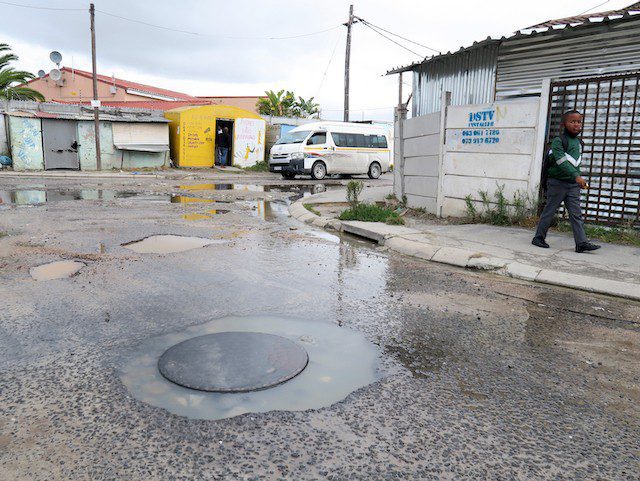
This is not a minor inconvenience. In a city where employment and economic opportunity are concentrated in particular areas, distance becomes an economic burden.
The City has recognised the problem through its plans to expand the MyCiTi network into the Cape Flats, with a proposed investment of about R7.1 billion that it says could benefit more than 1.4 million residents across 30 neighbourhoods.
That is potentially transformative infrastructure, but it also exposes the extent of the historical problem. If millions of residents need major transport investment to connect them to the economic heart of the city, then housing policy, transport planning and economic development cannot continue to be treated as separate municipal functions.
The real objective should be a city in which affordable housing, reliable public transport, employment and essential services are planned together.
Prosperity at the Top Cannot Conceal Deprivation Below
Cape Town’s economic achievements are real. The city attracts investment, tourism and property development, and its economic reputation is one of the reasons the municipality is able to present itself as a national success story.
But economic growth does not automatically translate into economic inclusion.
A city can attract wealthy residents and investors while low-income households struggle to find affordable accommodation. It can experience strong property growth while workers remain unable to live close to their workplaces. It can build attractive commercial and residential developments while informal settlements continue to grow elsewhere.
That is not an argument against investment or economic growth. It is an argument against treating economic growth as sufficient evidence that the city is working for everyone.
The test of governance is ultimately broader than the performance of the property market or the attractiveness of the city to investors. It includes whether the people who clean its hotels, work in its restaurants, build its houses, care for its children and maintain its businesses can afford to live decent lives within the city in which they work.
Good Administration Creates a Higher Obligation
This is where the DA’s argument about competence becomes particularly important.
Cape Town’s relatively strong financial and administrative position should not be dismissed. Good financial management matters. Institutional stability matters. Proper planning matters. Infrastructure investment matters. These are essential foundations for functioning local government.
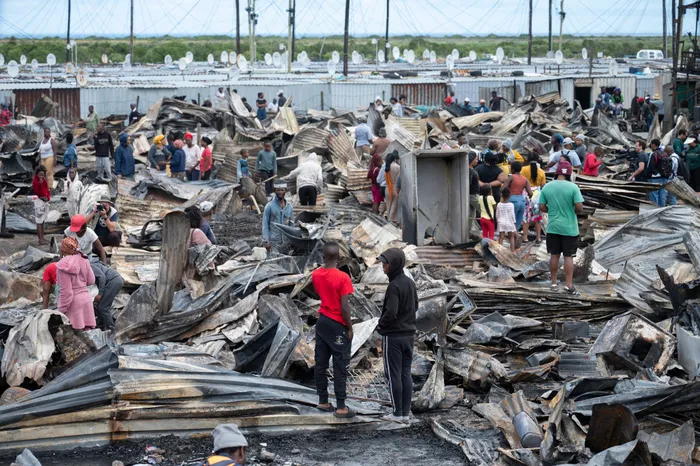
But they are foundations, not the final measure of success.
If a municipality has the institutional capacity to manage large budgets, undertake major infrastructure projects, release land and develop long-term plans, residents are entitled to ask whether that capacity is being deployed at a scale capable of changing the lives of the majority who live furthest from the city’s prosperity.
The more loudly Cape Town is presented as proof of what competent government can achieve, the more reasonable it becomes to examine the outcomes beyond the parts of the city that already function well.
A clean audit does not house a family. A balanced municipal budget does not reduce overcrowding. A sophisticated planning system does not, by itself, bring a job closer to a household living on the urban periphery. Infrastructure investment matters enormously, but its ultimate value is measured by what it changes in people’s lives.
That is the standard Cape Town should face.
The Majority Cannot Remain An Afterthought
The political temptation will always be to compare Cape Town with municipalities that perform worse. That comparison may produce favourable results for the DA, but it is not the only comparison that matters.
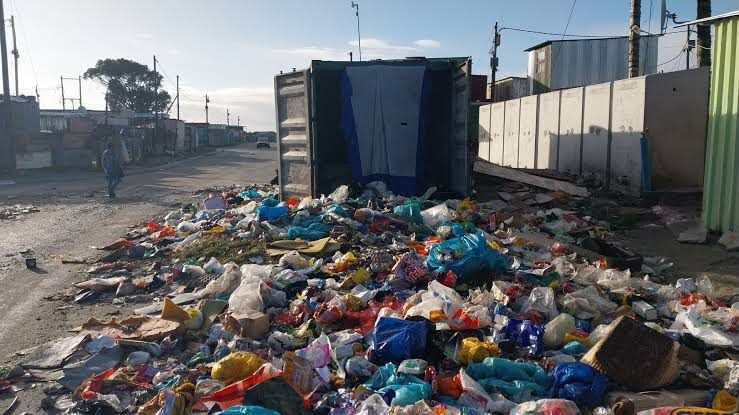
A government should also be judged against the needs of the people it governs and the promises it makes about what competent administration can achieve.
Cape Town’s affluent suburbs should not be treated as evidence of what the entire city has become. They are evidence of what is possible when infrastructure, investment, property markets, security and municipal services operate at a high level.
The harder question is why that standard remains so distant from the experience of so many residents elsewhere in the city.
For the domestic worker travelling from Khayelitsha, the construction worker living in Delft, the retail employee in Mitchells Plain or the hospitality worker commuting from the Cape Flats, the city is experienced through housing costs, transport fares, travelling time, overcrowding, access to services and the quality of the surrounding environment.
Those are not abstract political questions. They are the conditions under which people organise their lives.
Cape Town therefore cannot reasonably claim the full benefits of being labelled a model of good governance while treating the conditions of its poorer majority as an unfortunate but permanent feature of metropolitan life.
The City’s programmes deserve scrutiny and recognition where they work. Its infrastructure spending should be examined honestly. Its housing pipeline should be measured against actual demand. Its service standards should be tested against conditions on the ground. Its transport investments should be assessed according to whether they improve access to economic opportunity.
But the central measure remains much simpler: Is the majority of Cape Town’s population experiencing a materially better city because of the quality of government being celebrated?
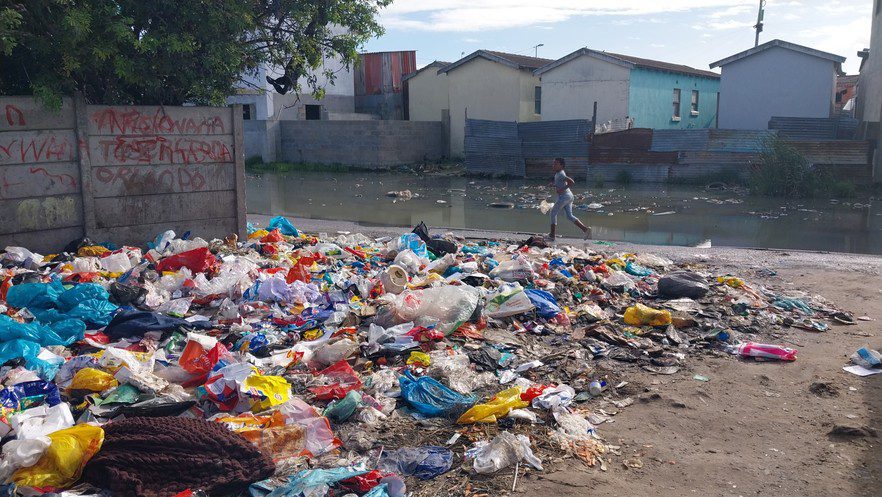
If the answer remains uncertain after years of administration, billions of rand in investment and repeated claims of exceptional competence, then Cape Town’s success story requires considerably more scrutiny than the polished image presented from its wealthier suburbs.
4 November Will Provide The Political Verdict
The Local Government Elections on 4 November 2026 will inevitably turn these questions into political arguments, but the election itself should not determine the evidence.
The voters of Cape Town will decide whether they believe the municipality’s record warrants another mandate. That decision will be shaped not only by financial figures or political slogans, but by the lived experience of residents who know the city from its townships, informal settlements and working-class neighbourhoods.
The real challenge for the DA is therefore not to prove that Cape Town is better governed than a dysfunctional municipality elsewhere. It is to demonstrate that its model of government is producing a city in which the majority of residents can live with dignity, access opportunity and benefit from the same basic standard of municipal performance that has helped make the affluent parts of Cape Town a national showcase.
Cape Town’s problem is not a shortage of evidence that the municipality can govern. There is considerable evidence that it can.
The unresolved question is whether it is governing well enough, at sufficient scale and with sufficient urgency to change the conditions of the majority who remain furthest from the city’s prosperity.
That is the measure that ultimately matters. A city cannot call itself a model of good governance merely because its wealthiest neighbourhoods are thriving while a majority of its people remain trapped in poverty, inadequate housing, and conditions that fall far short of the city that its government claims to have built.
Get the morning briefing
Our editors’ choice of the day’s stories, in your inbox at six.



Comments
No comments yet.