

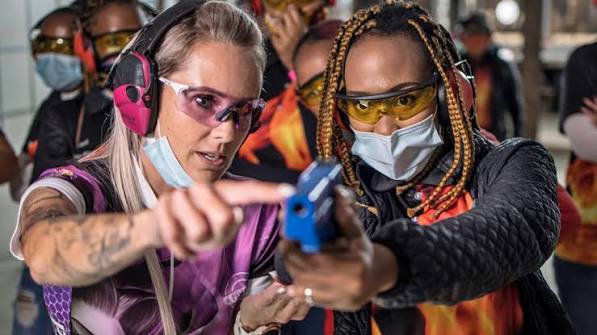
South Africa’s gun debate has become a shouting match in which statistics are wielded as weapons by both sides. But beneath the arguments over ownership and restriction lies a more uncomfortable question: how much of the country’s epidemic of violence can actually be attributed to firearms, and how much is enabled by failures in policing, enforcement and the state’s own management of weapons? This investigation follows the evidence wherever it leads — including into territory where neither side will be comfortable.
SA Telegraph Editor
A police docket does not record a life. It records an instrument, a charge code, a case number.
Somewhere behind every one of the roughly 27,000 murders South Africa now records each year is a story that the statistics were never built to hold — the graduate who did not live to receive the degree he had earned, the mother who did the school run that morning, the security guard on the last shift of a long month.
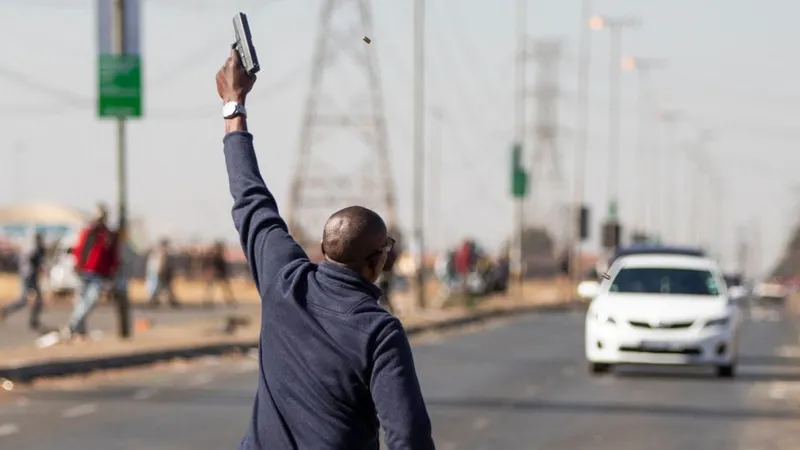
South African researchers who spent a decade combing through police crime records for a government commission once called this “the cruelty of statistics” — the way rigorous data, however necessary, quietly erases the humanity of everyone it counts.
This series starts from the opposite instinct: the numbers matter enormously, but only because of what — and who — they represent.
That is the only side this series is on. Not the gun lobby’s. Not the gun-control lobby’s. Public safety’s — measured honestly and pursued wherever the evidence actually points, even when that is inconvenient for everyone with a fixed position going in.
South Africa’s murder rate has sat for years at roughly five times the global average. A government-commissioned committee put the figure at 33 per 100,000 against a world average of 6.2. Firearms are implicated in a substantial share of that toll, though — as this series’ first instalment will show — considerably less of it than the loudest statistics claim.
Parliament currently has a Draft Firearms Control Amendment Bill before it, with provisions that would reshape who may own a firearm, how and under what psychological, medical and administrative conditions.
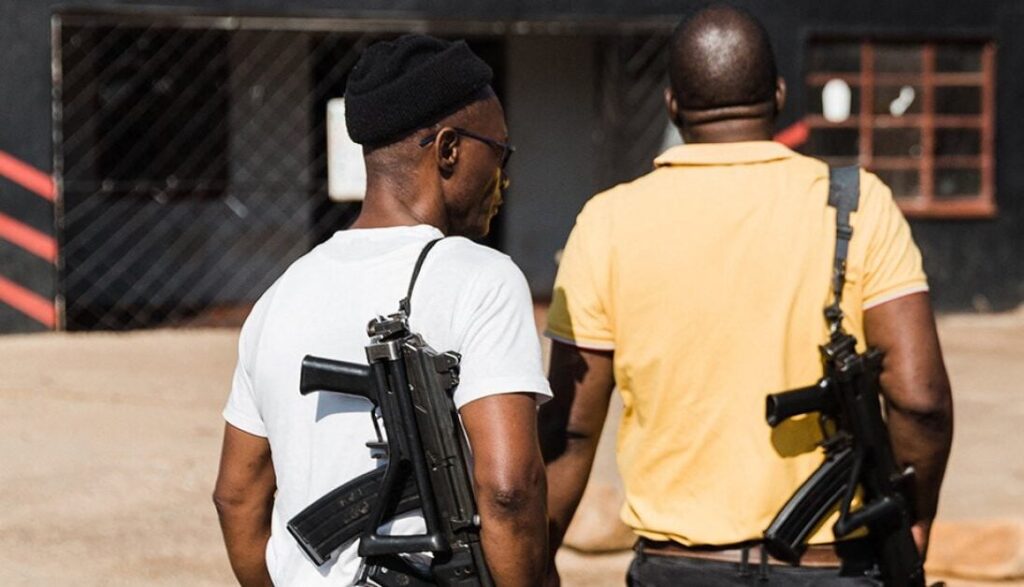
Deputy ministers have defended new private-security firearm regulations as the answer to public risk; those same regulations have been rejected point by point by the industry as security theatre that leaves the tens of millions of South Africans protected by that industry more exposed, not less.
A public-health editorial calls firearm violence a neglected national emergency and wants notifiable firearm injuries and tighter laws.
A firearms lobby group calls the same law an evidence-free assault on a constitutional right to self-defence in a country where the police, by their own admission, take more than ninety minutes to respond in the highest-risk areas. Both camps cite statistics. Both camps are, in places, right. That is precisely the problem this series is built to untangle.
The Frame: not “guns” — violence, capability and the state’s own record
Every existing government inquiry into this question — and there have been several, spanning three decades — arrives at some version of the same uncomfortable finding: the law governing firearms and the actual level of violence in South Africa move together far less tightly than either side of the public argument assumes.
A 2016 review commissioned by the Ministry of Police found that firearms are used in the overwhelming majority of the country’s most serious violent crime, but also that the state’s own licensing and compliance machinery — the Central Firearms Registry chief among it — has for years been under-capacitated, poorly organised and a source of leakage into the criminal market it exists to prevent.
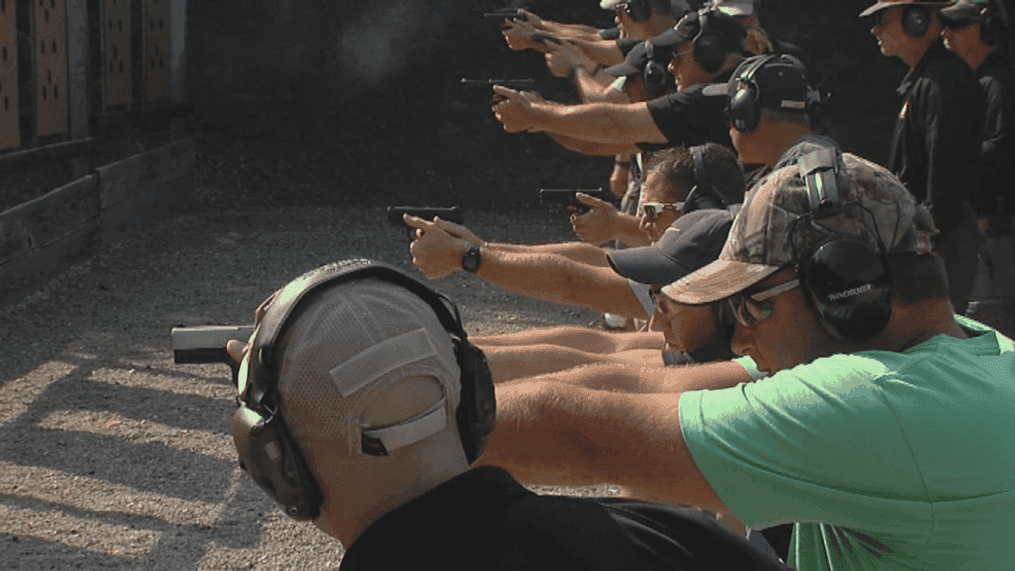
A separate, independent academic analysis of fifteen years of raw SAPS crime data, conducted for the Civilian Secretariat for Police, reached an even sharper conclusion: sustained, competent policing — not the mere existence of the Firearms Control Act — was the actual variable that moved crime rates during the one period in which they fell substantially.
The Act, that research found, is directly relevant to under 5% of all crime reported to SAPS nationally, and firearm use in murder specifically fluctuates far more with the intensity of policing than with the strictness of the law on the books.
That single, official, non-partisan finding is this series’ organising question. If firearm law alone does not reliably explain why violence rises or falls, and enforcement capacity does, then a debate that treats “gun control” as the whole conversation is measuring the wrong thing, for both sides.
The lawful-ownership lobby cannot credibly claim guns are irrelevant to South Africa’s violence. The public-health and gun-control lobby cannot credibly claim that restricting the roughly one-in-three-to-one-in-two owners who are licensed and compliant would, on its own, move the murder rate — when the state’s own commissioned research says otherwise, and when the same state’s weapons-management and vetting failures are matters of parliamentary and Auditor-General record, not activist claims.
How The Investigation is Built
Stage One — The premise, tested
Where do the headline statistics on both sides actually come from, and do they measure what they claim to measure? This includes a close, sourced look at internationally imported statistics that have shaped South African commentary without independent scrutiny, as well as the definitional choices — what counts as “gun violence”, who counts as a “child” — that can inflate or deflate a number by a factor of ten, depending on how the question is asked.
Stage Two — Access, substitution and vetting
Two recent, real and carefully fact-checked case studies — one South African, one international — examine what happens when access to one weapon is restricted but the underlying intent to commit violence is not addressed: does the danger disappear, or does it find another route?
This stage was built the hard way — an earlier version of this material contained a factual error about one of the cases (a claim of illicit weapons access that, on verification, turned out to be a licensing and intelligence-vetting failure instead) — and the correction is now part of the published record, not buried.
Stage Three — The state’s own weapons record
Using Auditor-General findings, parliamentary testimony, SAPS’s own quarterly loss figures — several thousand police firearms lost or stolen in recent years, with a stubbornly low recovery rate — and the Central Firearms Registry’s documented backlogs, this stage asks the question neither lobby likes: before the state tightens control over what citizens may own, what is the state’s own demonstrated competence at controlling what it already owns?
Stage Four — The human record
Statistics without testimony are half an investigation. This stage will carry on-record accounts from people the debate is usually conducted over the heads of: survivors of armed crime, women navigating a protection-order system that current law connects only weakly to firearm removal, licensed owners who have been through the compliance system as it currently functions, and serving or retired members of SAPS speaking to what enforcement capacity on the ground actually looks like.
Stage Five — The proportionate alternative
Rather than ending on diagnosis, the series closes by testing a specific, narrower policy proposal — a South African Extreme Risk Protection Order framework, modelled on “red flag” laws elsewhere but built with South African due-process safeguards — against both the public-health case for broader restriction and the ownership lobby’s case for the status quo.
Who is Being Put on the Record
This series is built around named, on-record voices from every side of the argument, each given a genuine right of reply rather than a token quote.
The lawful-ownership community will be given an opportunity to present the pro-ownership, evidence-based reform position; public-health researchers and organisations will be asked to make the case for tighter restrictions; officials at SAPS and the Central Firearms Registry will be asked to account for the state’s operational record; and independent researchers, including those working on firearm-crime mapping and evaluations of the Firearms Control Act, will be asked to explain findings that answer to neither lobby.
The investigation will also seek the perspectives of people whose experiences are often reduced to statistics: survivors of armed crime, licensed firearm owners, women navigating the protection-order system, and serving or retired police officers able to speak to the realities of enforcement capacity on the ground.
What withstands scrutiny — and what does not
Every claim in this series that can be checked against a primary source will be. Every named individual quoted in criticism of another named individual or organisation will be offered the right of reply before publication, and a declined or unanswered request will be stated plainly rather than omitted.
Every case study will be independently verified before it runs, rather than sourced second-hand from either side’s existing materials — a discipline this series’ preparatory work has already tested against itself and corrected in public rather than pretend it did not happen.
No claim about a real, named individual — living or dead — will be presented as settled fact unless it survives that verification.
That is the only way a series like this earns the only audience worth having: the person deciding whether to apply for a firearm licence or hand one in; the MP who has to vote on the Bill before Parliament; the SAPS member whose service pistol may be the one unaccounted for in next year’s Auditor-General report; the podcaster and commentator who will amplify whatever conclusion this series reaches to audiences far larger than any single publication — and, increasingly, the international observers now watching how South Africa handles a debate most democracies eventually have to have.
It will not tell any of them what they already believe. It will tell them, as far as the evidence allows, what is actually true.