
By Lonwabo Mirha
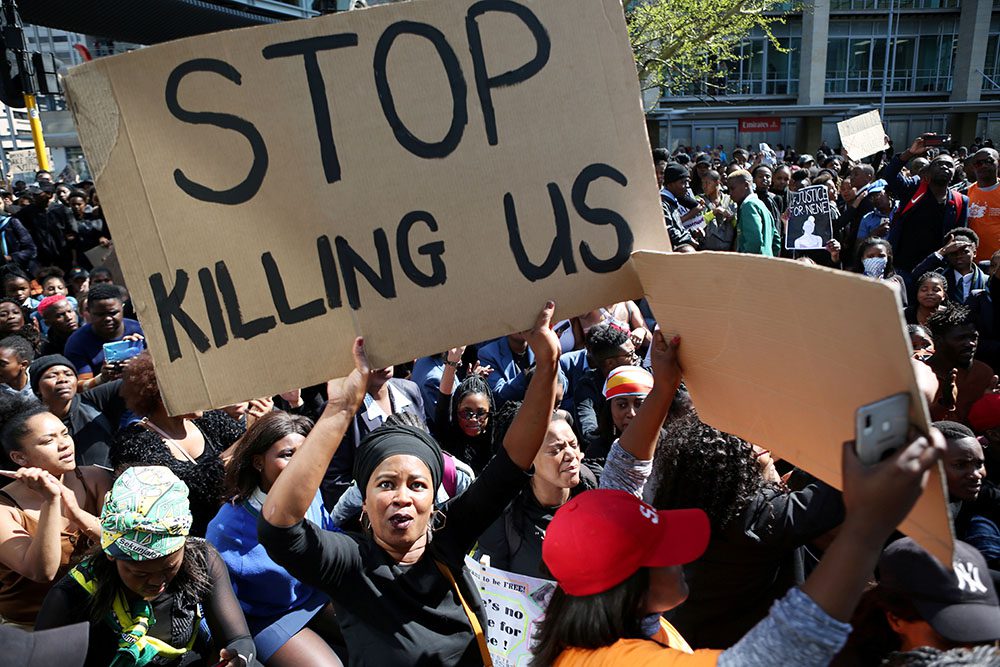
On 9 August, South Africa paused to honour National Women’s Day and recognise the women who fought for the freedoms enjoyed today. Yet across the country, millions of women continue to live under the constant shadow of violent crime.
For many victims, the greatest barrier to protection is not a lack of laws, but a justice system that collapses long before a case reaches a judge.
Data from police and court-tracking reports paints a stark picture of accountability in South Africa. Over a 24-month period, 10,315 cases involving illegal firearms were enrolled for prosecution in national courts. Of those cases, prosecutors withdrew 6,569 before trial. Only 1,671 cases ended in a conviction.
While public criticism often focuses on judicial sentencing, court records show that the vast majority of dropped cases never reach a full hearing. Prosecutors regularly withdraw charges because the physical police dockets they receive are incomplete or legally weak.
Common investigative flaws include missing physical evidence, uncollected witness statements and broken chain-of-custody procedures for seized weapons.
These repeated failures point to severe resource shortages, high caseloads and inadequate forensic training within the South African Police Service (SAPS).
A Justice System Failing at the Roots
Legal analysts and community safety advocates argue that before Parliament considers passing additional firearm restrictions, the state must repair its basic enforcement machinery.
Data submitted to Parliament reveals that the SAPS faces a critical nationwide deficit of more than 2,300 detectives. In key provinces such as the Western Cape and KwaZulu-Natal alone, hundreds of detective posts remain vacant.
The overall pool of docket-carrying investigators has dropped by more than 1,300 officers in recent years, leaving individual detectives managing dozens of complex case files simultaneously.
Added to the shortage of detectives is a crippling bottleneck at the national Forensic Science Laboratory (FSL). Official figures provided to the Parliamentary Portfolio Committee on Police show that the state’s DNA case backlog exceeds 140,000 cases.
Key causes include expired service contracts for testing machinery, unmaintained laboratory equipment and a lack of trained personnel to process evidence. Without forensic results, prosecutors are repeatedly forced to strike violent crime dockets off the court roll.
City officials and criminal justice experts describe the current failure rate as a systemic crisis. Cape Town Mayor Geordin Hill-Lewis highlighted the structural gap between policing efforts and court outcomes: “Metro policing operations are succeeding in taking more and more illegal guns off the streets, but a broken criminal justice system has so far secured convictions in just 5% of the cases handed to police.”
Human rights groups and legal scholars warn that low conviction rates damage public trust and encourage repeat offending. A researcher specialising in gender-based violence noted: “The justice system in South Africa is broken. When police officers fail to collect basic evidence at a crime scene, the case dies before it even enters a courtroom. The result is that dangerous offenders walk free to harm more victims.”
The Reality of Violence Against Women
The breakdown in evidence collection and prosecution is not an abstract administrative issue. It directly affects the physical safety of women across South Africa.
Research published by the South African Medical Research Council (SAMRC) in its national femicide study outlines the scale of intimate partner violence:
Daily Fatalities: An average of three women are killed by an intimate partner in South Africa every day.
Known Attackers: Six out of ten femicide victims (60%) are murdered by someone they know, such as a current or former partner.
Low Conviction Rates: Fewer than one in five intimate partner femicide cases end in a formal conviction.
Unidentified Killers: In 44% of all femicide cases, police investigations fail to identify a perpetrator.
Lack of Evidence: In female homicide trials that result in acquittals, judges cite insufficient evidence in nearly 70% of rulings.
These findings show that the same investigative gaps found in illegal firearm cases are present in the prosecution of severe violence against women.
Practical Safety and Awareness on the Ground
With institutional responses lagging, community trainers focus on practical methods to help individuals identify and avoid dangerous situations. Mark Human, Training Director at MultiDimensional Warriors, provides instruction in personal safety and Close Quarters Combat to SAPS members, provincial traffic departments, municipal law-enforcement officers and anti-poaching units.
Mark Human emphasises that effective personal safety relies on early observation rather than physical force: “The primary goal of personal safety is not fighting; it is early detection. Before you ever find yourself in danger, you must ask four essential awareness questions: Where am I? What is happening around me? Who is near me? What is my exit path? When you make these questions a daily habit, you remove the element of surprise from an attacker.”

He also notes that understanding physiological reactions to sudden stress helps individuals maintain control during a threat: “When a human being experiences a sudden threat, the brain undergoes severe shock. People freeze because their brain cannot process the sudden change fast enough.
“The specific kind of awareness we teach interrupts that freeze response. By actively scanning your environment, your mind stays ahead of the threat, giving you the critical seconds needed to run or react before it is too late.”
To evaluate risk without panicking, Mark Human uses an operational framework to assess daily environments: “You must understand the difference between Threat, Risk, and Impact. A Threat is the presence of potential harm, such as a suspicious person standing near your gate. Risk is the likelihood that the threat will actually harm you based on your actions, like walking past them while distracted by your mobile phone.
“Impact is the damage that will occur if the event happens. When you separate these three elements, you can read a situation clearly with logic instead of reacting to fear alone.”
Rebuilding Institutional Accountability
While individual awareness offers practical tools for personal security, legal experts maintain that private vigilance cannot replace the duties of the state.
Until the police service receives the resources, forensic tools and detective training required to build solid court dockets, conviction rates will remain low.
Restoring public safety requires every branch of the justice system to perform reliably, from the initial crime-scene response through to the final court verdict.
Get the morning briefing
Our editors’ choice of the day’s stories, in your inbox at six.



Comments
No comments yet.