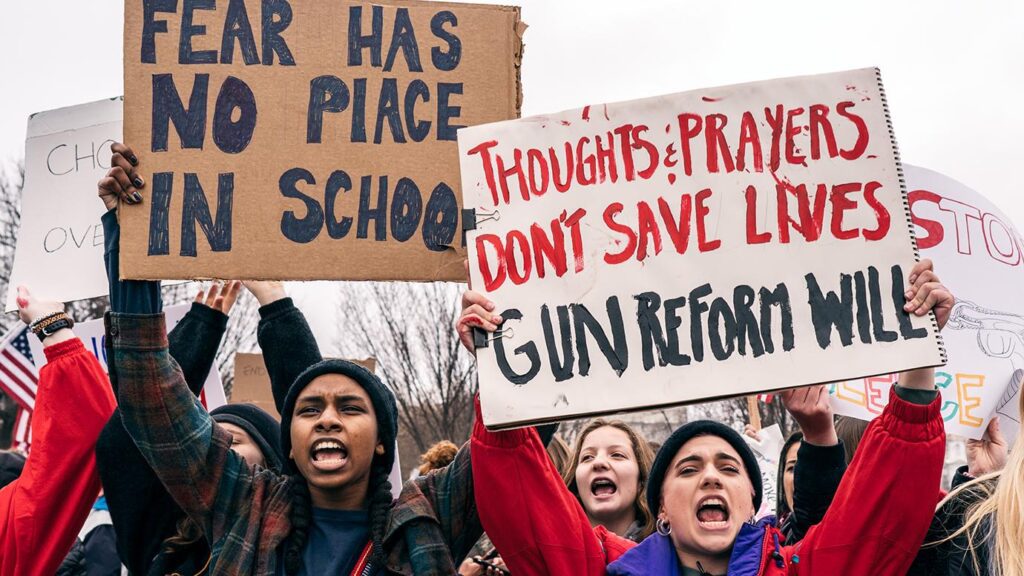
Firearm violence is too serious a subject to be reduced to frightening numbers, political slogans or convenient statistics. In this two-part analysis, we examine how the figures are constructed, what they reveal — and what they can conceal. From the United States to South Africa, the evidence raises uncomfortable questions about how we define the problem, who is actually dying, and whether public policy is targeting the real source of the bloodshed. Part One examines the numbers, the language and the South African evidence. Part Two turns to the warning signs, prevention, civil liberties and the difficult question of what can be done before another life is lost.
Part One: When the Numbers Become the Weapon
Numbers have a way of acquiring an authority they do not always deserve. Behind the statistics are definitions, assumptions and omissions that can profoundly shape public opinion and policy. The closer we examine the numbers, the more uncomfortable the firearm debate becomes.
By Staff Reporter
There is something dangerous about a statistic that is technically correct but leaves the reader with the wrong impression. Numbers carry authority, particularly when they appear in an official report or are presented by a respected institution, and most readers reasonably assume that the hard questions about how those figures were assembled have already been answered.
Sometimes they have not.
That is the uncomfortable territory entered by a critical review of the United States Surgeon General’s 2024 advisory on firearm violence, produced by South Africa’s Safe Citizen Campaign. The review does not deny the scale or seriousness of firearm-related death, injury, suicide and crime in the United States. It argues that some of the statistics used to describe the problem bring together very different kinds of incidents, potentially making it harder for the public to understand what is actually driving the deaths and injuries being counted.
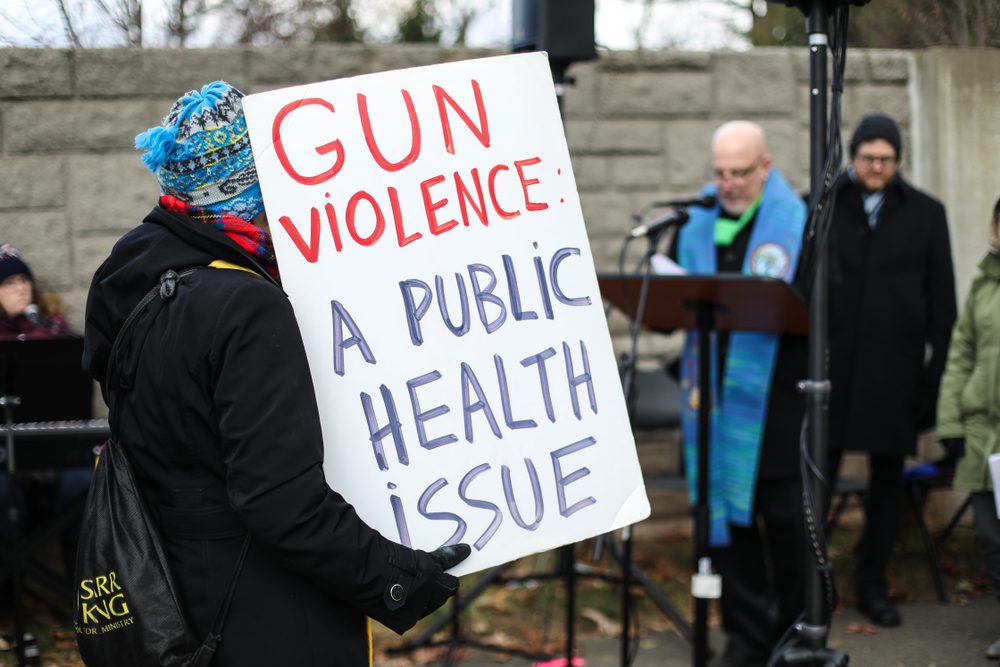
The review is itself an advocacy document, written from the perspective of people who support lawful firearm ownership and sport shooting. Some of its conclusions are therefore contestable and should be read as arguments rather than accepted as independent findings. But dismissing the document because of its perspective would be as unhelpful as accepting its conclusions without scrutiny. The questions it raises about definitions, categories, time periods and the use of statistics are legitimate questions for any serious public debate.
At the heart of the argument is a deceptively simple issue: if we do not accurately identify the problem, how can we be confident that the policy designed to solve it is aimed at the right target?
That question is particularly relevant to South Africa, where official parliamentary figures cited in a previous analysis point towards an overwhelmingly different problem from the one often assumed in broad debates about gun control: the use of illegal, unlicensed firearms in murder.
The danger of putting different deaths in the same basket
A murder committed with a firearm, a suicide involving a firearm, an accidental shooting, a lawful police shooting and a lawful act of self-defence may involve the same instrument. However, they are not the same human event.
The review challenges the use of broad firearm-related mortality figures that can encompass suicide, unintentional shootings, legal intervention and lawful self-defence alongside criminal homicide.
That distinction is not an attempt to make any of those deaths less tragic. It is an attempt to understand what happened and, more importantly, what can be done to prevent it happening again.
If a person takes his own life, the causes and possible interventions are different from those surrounding a gang-related murder. A child who accidentally finds an unsecured firearm in a home presents another set of circumstances. A police officer shooting an armed suspect is different again. A person using a firearm lawfully to defend himself or another person belongs to yet another category.
A broad statistic can tell us how many deaths occurred in circumstances involving firearms. It cannot, on its own, tell us why those deaths occurred.
That distinction becomes especially important when statistics are then used to support legislation. The policy response to suicide may involve mental-health services and crisis intervention; the response to criminal murder may require policing, intelligence, prosecution and disruption of organised criminal networks; and preventing accidental shootings may depend heavily on safe storage and responsible firearm ownership. Putting all these incidents under one broad label may make a frightening headline, but it does not necessarily make a useful policy diagnosis.
Then there is that troublesome little word: “ever”
One of the review’s more interesting criticisms concerns a KFF survey cited by the Surgeon General. The survey found that 54% of US adults said they or a family member had ever experienced one of a range of firearm-related incidents. The experiences included being threatened, witnessing someone being shot, being injured and having a family member killed by a gun, including suicide.
The significance of the word “ever” is easy to overlook.
It can mean yesterday, but it can also mean several decades ago. A 65-year-old respondent could be describing something that happened when he or she was 20. A family member may have died many years earlier. Someone may have witnessed a shooting once in an otherwise uneventful lifetime.
None of that makes the experience insignificant. Trauma does not disappear because the calendar moves on.
But a lifetime experience is not the same statistical proposition as current exposure or annual incidence. Saying that 54% of adults have experienced one of these events at some point in their lives is different from saying that 54% of adults are currently exposed to firearm violence.
The review argues that the advisory does not sufficiently explain this distinction or the time period covered by the survey’s “ever experienced” responses.
That is a reasonable issue to raise because statistics do not exist in isolation from the questions used to produce them. A number can be entirely accurate, while the way it is presented may encourage the reader to draw a conclusion that the underlying data does not actually establish.
The experiences behind the statistics are still serious
None of this means that the KFF findings should be dismissed.
Twenty-one per cent of US adults said they had personally been threatened with a gun, while 31% said a family member had been threatened. Nineteen per cent said a family member had been killed by a gun, including suicide; 17% had personally witnessed someone being shot; 28% said a family member had witnessed someone being shot; and 4% said they had personally fired a gun in self-defence.
Those figures describe a society in which large numbers of people have encountered firearms in frightening or traumatic circumstances.
The question is what conclusions can properly be drawn from them.
The review argues that combining different experiences, particularly where the questions cover a respondent’s lifetime and may include incidents involving family members, can create an impression of current or recurring exposure that the survey does not necessarily establish.
The public does not need to become experts in survey methodology to understand the distinction. It simply needs to know whether a number describes what happened during the past year, what has happened over somebody’s lifetime, or what happened to a relative at some point in the past.
Those are different measures, and public policy should not treat them as interchangeable.
Fear of guns and fear of violent crime are not necessarily the same thing
The review also examines questions in the KFF survey about people avoiding large crowds, religious or cultural events, public transport, schools or neighbourhoods because of concerns about gun violence. It argues that some of these responses may reflect fear of violent crime generally rather than fear of firearms specifically.
That distinction deserves attention.

A person may avoid a neighbourhood because of robbery, assault or gang activity. Another may avoid public transport because of repeated attacks. Someone else may change a child’s school because of concerns about violence. A firearm may feature in some of those crimes, but the person’s underlying fear may be of violent criminality rather than of firearms as an object.
This matters because the way a problem is defined influences the way policymakers approach it. If the problem is defined principally as firearms, policy naturally gravitates towards firearm restrictions. If the problem is defined as violent crime in which firearms are frequently used, the conversation necessarily becomes broader, encompassing criminal networks, policing, illegal weapons, social conditions, family circumstances and the behaviour of offenders.
The second conversation is harder because it refuses to reduce a complicated social problem to one object.
It may also be closer to reality.
South Africa has a number that should change the conversation
This is where the American debate meets a particularly uncomfortable South African reality.
There is a number every South African citizen, lawmaker and policy analyst ought to know: 99 per cent.
According to official parliamentary data cited in a previous analysis, released by Acting Minister of Police Professor Firoz Cachalia in response to written questions from Freedom Front Plus MP Wouter Wessels, 41,297 people were murdered with illegal firearms between 2022/23 and 2025/26.
During the same four financial years, legally licensed firearms were linked to 393 deaths.
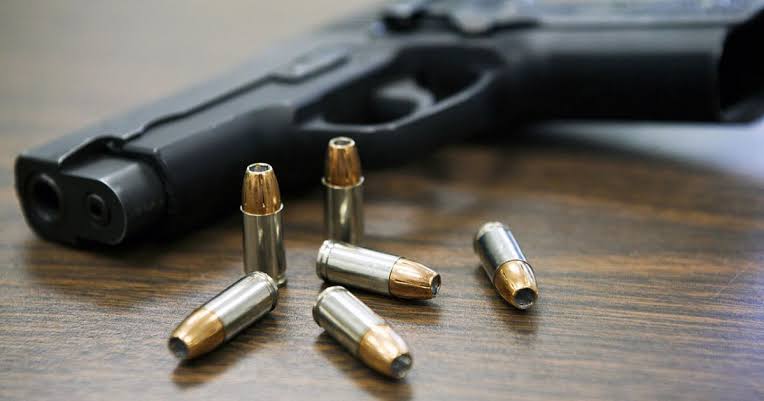
Put plainly, the figures amount to roughly 105 murders involving illegal firearms for every one involving a legally licensed firearm, based on the supplied figures.
The pattern was not confined to one particularly bad year.
According to the parliamentary figures, 10,613 people were murdered with illegal firearms in 2022/23, compared with 120 whose deaths involved licensed firearms. The following year, the figures were 10,911 and 90 respectively. In 2024/25, there were 10,450 murders involving illegal firearms against 108 involving licensed firearms, while the 2025/26 figures were 9,323 and 75. Across the four financial years, that amounted to 41,297 murders involving illegal firearms compared with 393 involving licensed firearms.
These figures do not prove that licensed firearms never contribute to crime, nor do they establish that regulation of lawful firearms is unnecessary. They do, however, raise an unavoidable policy question: if illegal, unlicensed firearms account for such an overwhelming share of the firearm-related murders represented in these figures, is South Africa putting sufficient attention and resources into dismantling the illegal firearms market and tracing how those weapons reach criminals?
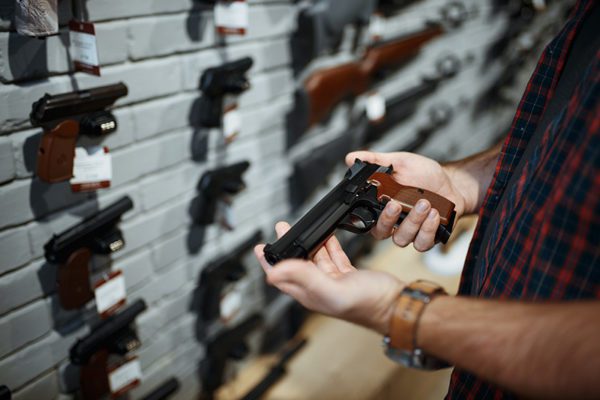
That question takes us away from the familiar political argument about whether ordinary citizens should be allowed to own firearms and towards the less comfortable business of understanding the illicit weapons trade.
Where are the weapons coming from? Are they being stolen from lawful owners, trafficked across borders, sold illegally, diverted from security companies or other official stocks, or supplied by organised criminal networks? How effectively are firearms recovered from murder scenes traced back to their source, and how often does that tracing lead investigators to the people who supplied the weapons rather than only to the person found carrying them?
Those are not peripheral questions when the country’s murder crisis is under discussion.
A lawful firearm owner and an armed criminal are not the same policy problem
Public arguments about firearms can become so ideological that the distinction between lawful ownership and criminal possession disappears.
That is a mistake.
A responsible firearm owner who complies with the law and stores a weapon properly presents a different policy problem from a criminal carrying an unlicensed firearm to commit murder. At the same time, lawful ownership cannot become a shield against scrutiny because a legally acquired firearm can be stolen, negligently stored, illegally sold or used by an owner who subsequently becomes a criminal.
Serious firearm policy therefore requires distinctions rather than slogans.
If the South African figures cited above accurately represent the pattern they describe, the country needs to demonstrate that it is attacking the illegal supply chain with the same seriousness with which it regulates lawful ownership. Otherwise, there is a risk that political attention becomes concentrated on people who are already complying with the law while the networks supplying illegal weapons to criminals continue operating beyond the reach of effective enforcement.
The issue is not whether lawful firearm ownership should be exempt from scrutiny. It is whether policy is sufficiently concentrated on the part of the problem associated with the greatest loss of life.
Get the morning briefing
Our editors’ choice of the day’s stories, in your inbox at six.




Comments
No comments yet.