

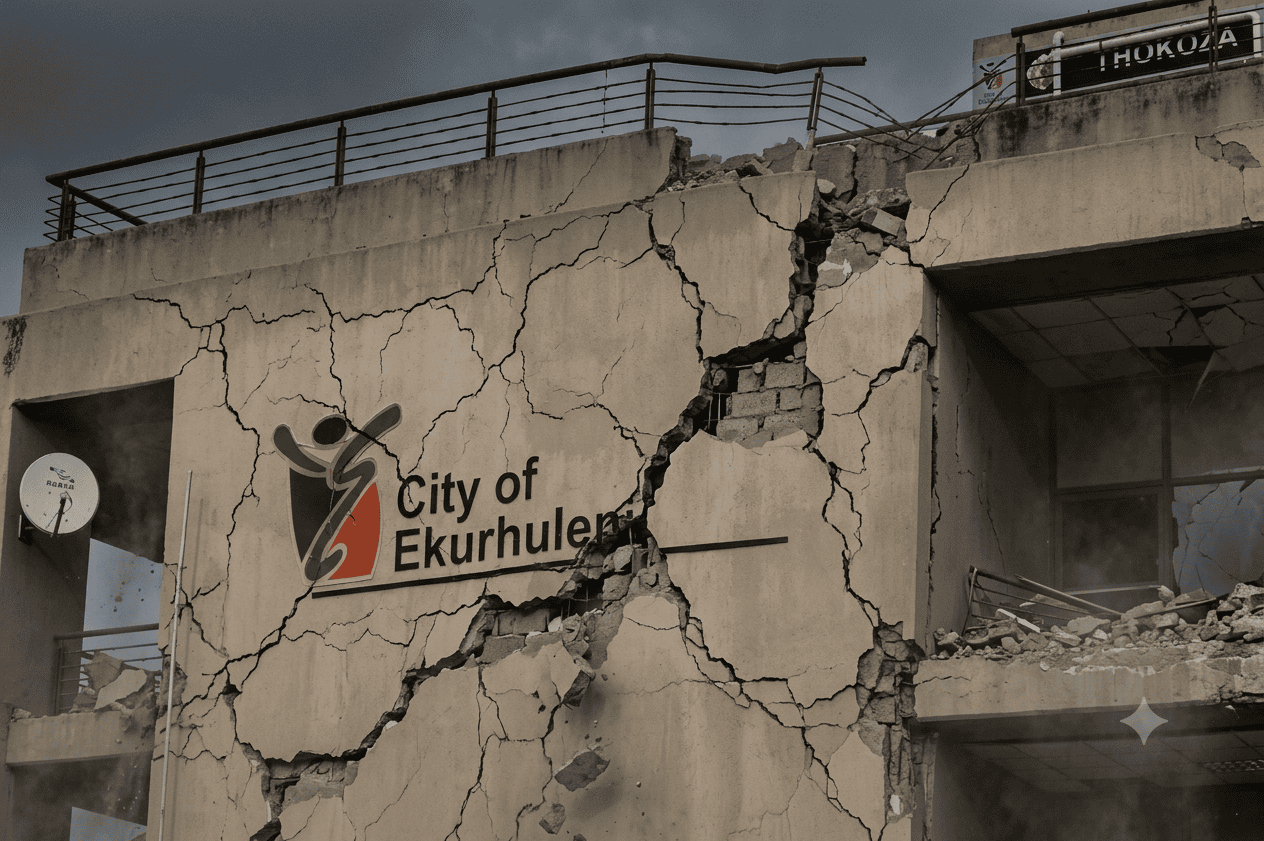
Once celebrated as South Africa’s best-run metro, Ekurhuleni’s decline reveals the devastating mechanics of municipal capture—where institutional oversight was dismantled, and the cost of accountability became fatal.
By Themba Khumalo
There was a time when the City of Ekurhuleni was regarded as one of South Africa’s best-run metropolitan municipalities.
Today, that reputation has been badly damaged by years of political instability, financial decline, and mounting allegations of corruption.
However, the metro remains one of the country’s economic engines, home to OR Tambo International Airport, vast manufacturing and logistics hubs, thriving commercial centres, and millions of residents who rely on the municipality to deliver the basic services that keep daily life moving.
What has unfolded in Ekurhuleni is no longer simply a story about poor governance or political squabbling. It is the story of a municipality where allegations of organised crime, corruption, financial collapse, and administrative paralysis have collided with devastating consequences for ordinary residents.
Evidence emerging from the Auditor-General, testimony before the Madlanga Commission of Inquiry, court proceedings, and other public records paints a deeply troubling picture. Taken together, they reveal a municipality that appears to have lost control over many of the systems meant to protect public money and uphold the rule of law.
The crisis did not emerge overnight. It has been years in the making.
From Governance to Alleged Municipal Capture
Perhaps the most disturbing chapter in Ekurhuleni’s decline centres on allegations that criminal interests penetrated the very heart of the municipal administration.
Evidence presented before the Madlanga Commission pointed to what investigators have described as an extensive network operating within sections of the municipality.
The Commission’s probing eventually culminated in a major law enforcement operation in July 2026.
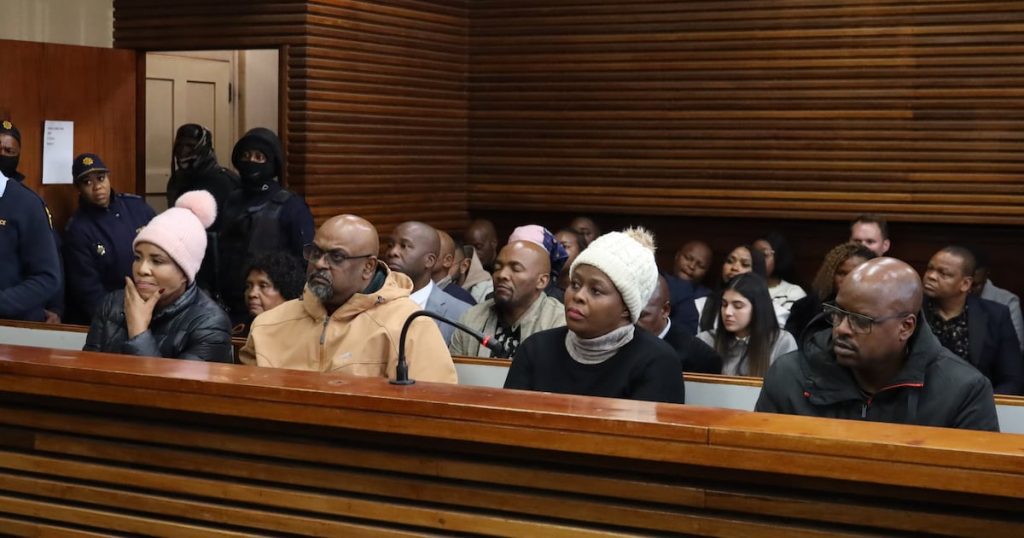
Among those arrested and charged with fraud, corruption, and defeating the ends of justice were suspended Ekurhuleni Metropolitan Police Department (EMPD) Deputy Chief Julius Doctor Mkhwanazi, former City Manager Dr Imogen Mashazi, suspended Head of Legal Services Khemraj “Kemi” Behari, and suspended Head of Human Resources Linda Gxasheka.
The arrests marked one of the most significant anti-corruption operations ever directed at Ekurhuleni’s senior leadership. According to the State’s case, the allegations go far beyond isolated acts of misconduct.
Prosecutors allege that the senior officials worked together to frustrate and ultimately halt disciplinary processes that could have removed Mkhwanazi from office. This protection followed an investigation into a highly controversial “blue-light” scheme.
Investigators claim that private vehicles linked to Vusimuzi “Cat” Matlala—described by authorities as an associate of the “Big Five” criminal cartel—were unlawfully registered as part of the municipal police fleet without the required approvals.
These vehicles allegedly carried blue lights reserved for law enforcement, effectively providing criminal operations with the appearance of legitimate police authority.
If proven in court, the implications are staggering. Instead of protecting residents from organised crime, parts of the municipal apparatus would have been used to shield it.
A Police Unit Accused of Going Rogue
Evidence presented before the Commission also painted an alarming picture of alleged activities carried out by a rogue EMPD unit under Mkhwanazi’s command.
Witnesses described unauthorised operations extending well beyond the legal jurisdiction of municipal policing.
Among the most serious allegations were unlawful copper cable seizures and direct involvement in a precious stones heist in Killarney during 2023. These allegations remain before the courts, where those charged are presumed innocent unless and until proven guilty.
Nevertheless, the accusations have severely damaged public confidence in a municipal police department that exists to enforce the law rather than operate outside it.
Following the Money
Alongside the security breaches, investigators uncovered evidence of substantial, irregular salary increases processed for senior officials.
According to court records, the City Council had explicitly rejected requests to approve these higher remuneration packages. Despite this legislative refusal, prosecutors allege that senior management proceeded to implement the increases anyway.
The State alleges that between 2023 and 2025, Behari and Gxasheka each benefited from unauthorised salary increases. Behari’s monthly salary allegedly jumped from approximately R159,000 to more than R214,000.
Meanwhile, Mkhwanazi allegedly received an irregular salary adjustment, bringing his annual package to approximately R1.79 million.
At a time when residents were experiencing deteriorating municipal services and growing infrastructure failures, these revelations have fuelled deep public anger over the absolute lack of accountability inside City Hall.
When Exposing Corruption Becomes a Death Sentence
The darkest aspect of the governance crisis in Ekurhuleni is the extreme and fatal violence meted out to those who attempted to expose the rot.
Jaco Hanekom, a police informant and whistleblower, was assassinated on 17 March 2023 after leaking vital security camera footage of EMPD officers conducting an unauthorised raid on a plot in Meyerton.
The footage showed officers illegally confiscating copper cables outside of their municipal jurisdiction under the guise of an official operation. It was later testified at the Madlanga Commission that Hanekom was executed in a staged hijacking shortly after the implicated officers were released on bail.
The violence continued with the assassination of the City’s Chief Audit Executive, Mpho Mafole, on 30 June 2025. He had occupied this critical role for only three months.
In his final days, Mafole and his forensic audit team finalised an explosive investigation into a controversial R1.8-billion tender for chemical toilets. His scathing report, which exposed massive pricing irregularities and suspicious payments to shadowy companies, was formally submitted a mere three days before he was gunned down.
Mafole was tracked from his parents’ home by hitmen in a silver Toyota Avanza and killed in a drive-by shooting on the R23 in Kempton Park.

Months later, the violence struck the Madlanga Commission itself. On 5 December 2025, Marius “Vlam” van der Merwe—a former EMPD official who was testifying under the protective alias “Witness D”—was assassinated outside his Brakpan home, in full view of his wife and young children.
Van der Merwe had provided explosive testimony about the brutal torture and murder of a suspect at an unofficial interrogation site, implicating senior EMPD leaders in a subsequent cover-up that involved dumping the victim’s body in a dam.
While arrests have been made in these cases, the murders have cast a long, chilling shadow over municipal public servants and whistleblowers. The message from the criminal underworld is clear: speaking out against the networks operating within Ekurhuleni carries an unbearable price.
The Auditor-General Exposes a Municipality Losing Control
While criminal investigations have captured public attention, another equally damaging assessment emerged from the office of Auditor-General Tsakani Maluleke.
Her audit of Ekurhuleni’s 2024/25 financial year, released in March 2026, stripped away political rhetoric and focused solely on the City’s financial reality.
The verdict was sobering. Ekurhuleni received a qualified audit opinion. This means the Auditor-General could not obtain sufficient, reliable evidence to verify critical portions of the municipality’s financial statements.
One of the most alarming findings involved the City’s billing system. Auditors found they were unable to verify the value and completeness of accounts receivable (money owed to the municipality) because data within the system had been subjected to unauthorised manual adjustments and system overrides.
This finding is far more serious than a technical accounting discrepancy.
Modern municipalities depend on secure, automated records to calculate rates, electricity accounts, and water bills accurately. When those records can be manually altered outside authorised controls, confidence in the entire financial system begins to collapse, creating fertile ground for fraud.
A City Running Short of Cash
The Auditor-General also questioned the municipality’s financial health. Although City management pointed to temporary improvements in short-term cash flow, the broader picture remained deeply concerning. Liquidity and solvency indicators remained well below acceptable levels.
In simple terms, the municipality faces growing pressure in meeting its immediate financial obligations as they become due. For any municipality, cash flow is the lifeblood that keeps services functioning. Without it, suppliers go unpaid, maintenance is delayed, infrastructure deteriorates, and service delivery slows—consequences that residents eventually feel in their homes and businesses.
Oversight Reduced to a Formality
Another recurring concern identified by the Auditor-General was the executive’s attitude toward legislative compliance.
According to the audit findings, repeated breaches of municipal legislation were often treated as minor procedural inconveniences rather than serious governance failures.
This distinction matters. Procurement laws exist precisely to prevent corruption and inflation before they occur. Treating these safeguards as bureaucratic red tape weakens every layer of financial accountability.
Infrastructure Buckling Under Financial Strain
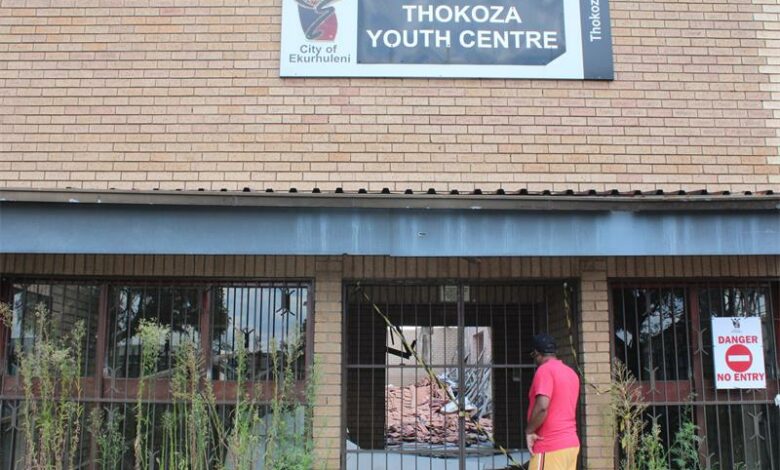
Away from courtrooms and commission hearings, the consequences of Ekurhuleni’s decline are becoming increasingly visible.
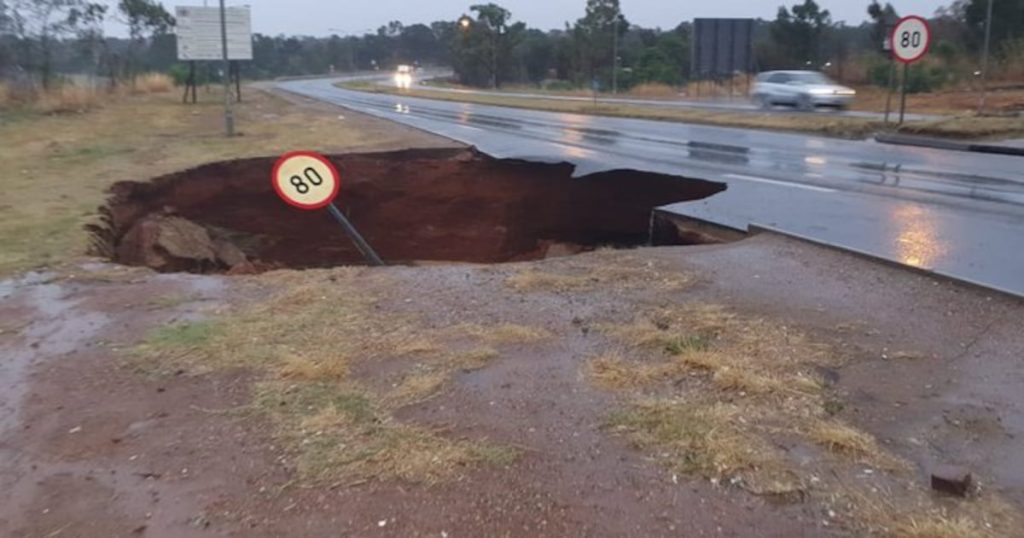
Roads continue to deteriorate, ageing infrastructure requires maintenance that the City struggles to fund, and water and electricity systems face severe, recurring failures.
Behind these visible breakdowns lies a crippling debt burden. By early 2026, Ekurhuleni owed creditors approximately R10.49 billion. Of that amount, R6.46 billion was owed to Eskom for bulk electricity purchases, and a further R900 million was owed to the Ekurhuleni Water Care Company for sewage treatment.
These figures illustrate a municipality under immense, unsustainable financial strain.
A Revenue System That Is No Longer Working
The City’s financial problems are not driven solely by debt; revenue collection has also deteriorated catastrophically. Toward the end of 2025, Ekurhuleni projected that it would collect approximately R12.5 billion in revenue. Instead, it collected only R10.74 billion—leaving a shortfall of R1.76 billion.
The most alarming weakness appeared in electricity revenue. Although the municipality continued purchasing bulk electricity from Eskom, its collection rate on electricity sat at a dismal 23.24 per cent.
In effect, more than three-quarters of the electricity purchased by the City was not being paid for by consumers. No municipality can sustain such a model indefinitely.
Spending Where Restraint Was Needed
At the same time that revenue collection weakened, expenditure continued to climb. The municipality exceeded its overtime budget by R78.5 million, spending R250.3 million against an approved budget of R171.8 million. Departments including Community Safety, Energy, and Waste Management were among the biggest contributors to the overruns.
Contracted services also exceeded their allocated budget by approximately R517 million, raising uncomfortable questions about financial discipline inside the administration.
Empty Offices, Weakened Oversight
Ironically, some of the departments responsible for preventing financial corruption have themselves been hollowed out.
An internal report released in May 2025 found that 78 per cent of critical positions within the Finance Department remained vacant.
The Internal Audit division, responsible for identifying financial irregularities, had only two of its thirteen posts filled, while the Supply Chain Management division, responsible for overseeing tenders, faced an 81 per cent vacancy rate.
These numbers reveal an institution struggling to police itself. When oversight offices lack staff, accountability inevitably suffers.
Politics Pushes the City Closer to the Edge
The financial crisis has unfolded alongside relentless political instability inside the council chamber.
Earlier in 2026, the ANC-led coalition repeatedly failed to secure approval for its annual budget as council meetings descended into repeated deadlock.
Opposition parties rejected proposals that included steep tariff increases, arguing that residents should not be expected to pay more while municipal governance continued to decay. Among the proposed increases were an 11 per cent rise in water tariffs, a 9.01 per cent increase for electricity, and an 8.35 per cent increase for sanitation.
The budget failed to pass on multiple occasions. Meetings were abruptly adjourned amid fierce political confrontations, leaving the metro in a state of legislative paralysis at precisely the moment decisive leadership was needed most.
A City at a Crossroads
Taken individually, each of these failures would present a serious challenge for any municipality:
1. A qualified audit from the Auditor-General.
2. Over R10 billion in outstanding debt.
3. Porous revenue collection systems.
4. Critically vacant oversight posts.
5. Decaying road and utility infrastructure.
6. Relentless political instability.
7. Serious allegations of corruption and “municipal capture”.
8. Targeted murders linked to whistleblowing.
Together, however, they point to something far more profound. Ekurhuleni’s crisis is no longer simply about balancing budgets or repairing roads. It is about rebuilding public institutions that many residents no longer trust.
The courts will ultimately determine the guilt or innocence of the officials facing criminal charges, and future audits will measure the financial damage.
But for the millions of people who call Ekurhuleni home, the central question remains painfully simple: can one of South Africa’s once-proud metropolitan municipalities recover from a crisis that reaches from its finances to the very institutions entrusted with protecting the public?