

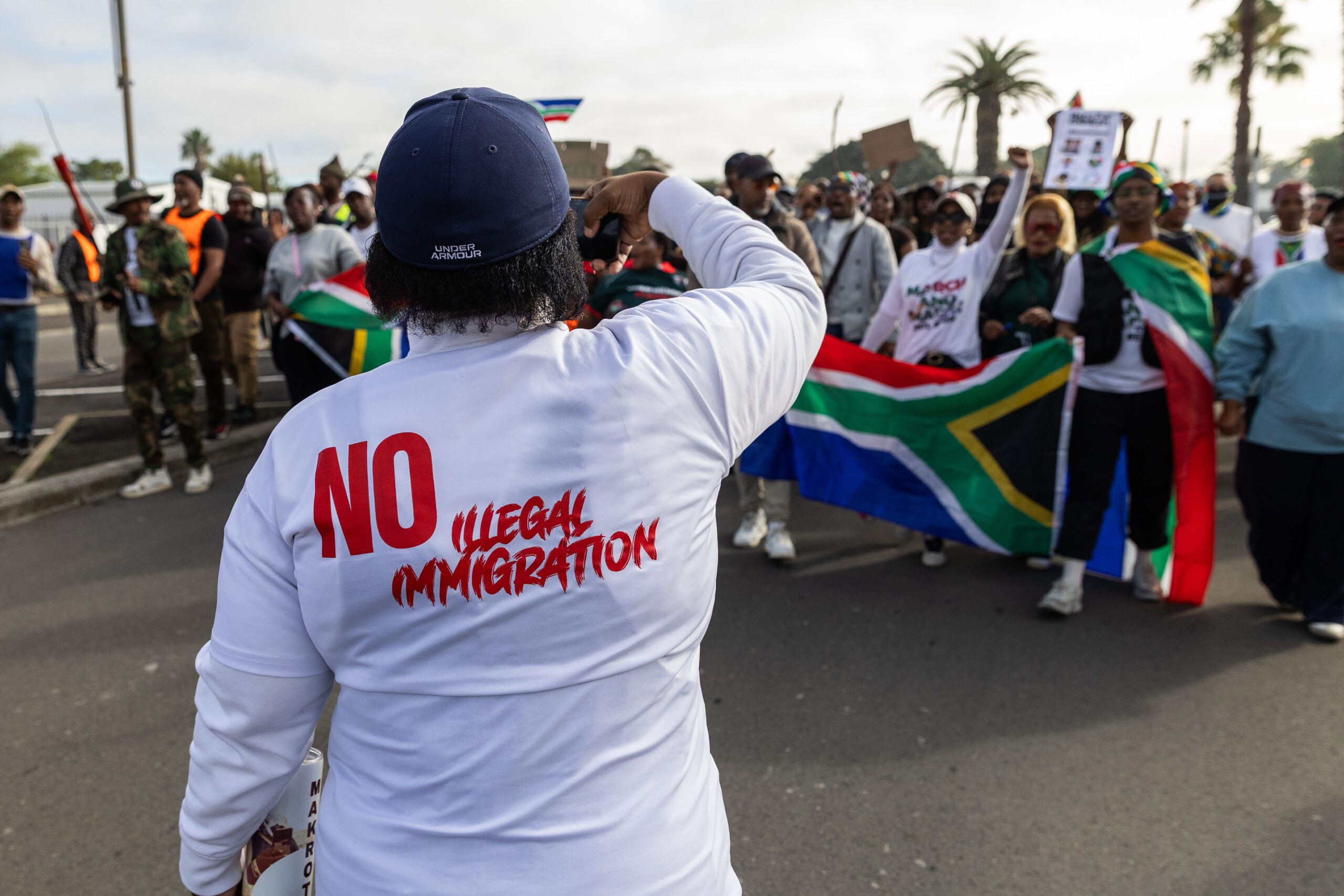
A petition asking the International Criminal Court to investigate South Africa over anti-illegal migrant protests has drawn a swift rebuke from Pretoria. The government insists the application lacks legal merit, while international law experts say the Court is unlikely to intervene where domestic authorities continue investigating and prosecuting criminal offences.
By Staff Reporter
South Africa has dismissed as “opportunistic” a petition lodged at the International Criminal Court (ICC) by two Ghanaian nationals seeking an investigation into recurring anti-illegal migrant protests, insisting the application fails to meet the Court’s legal and jurisdictional requirements.
The filing, submitted under Article 15 of the Rome Statute, has nevertheless reignited long-standing regional tensions over the treatment of foreign nationals in South Africa.
While the petitioners contend that repeated attacks warrant an ICC investigation, international legal experts and political analysts say the case faces formidable legal hurdles and is unlikely to progress beyond the Court’s preliminary assessment.
The Petitioners’ Allegations: A Call for ICC Scrutiny
The complaint was formally delivered to the Office of the Prosecutor on 15 July 2026 by Dr Palgrave Boakye-Danquah, a former Ghanaian government spokesperson on governance and security, and Emmanuel Kotin, a counter-terrorism analyst with the Africa Centre for Security and Counter Terrorism.
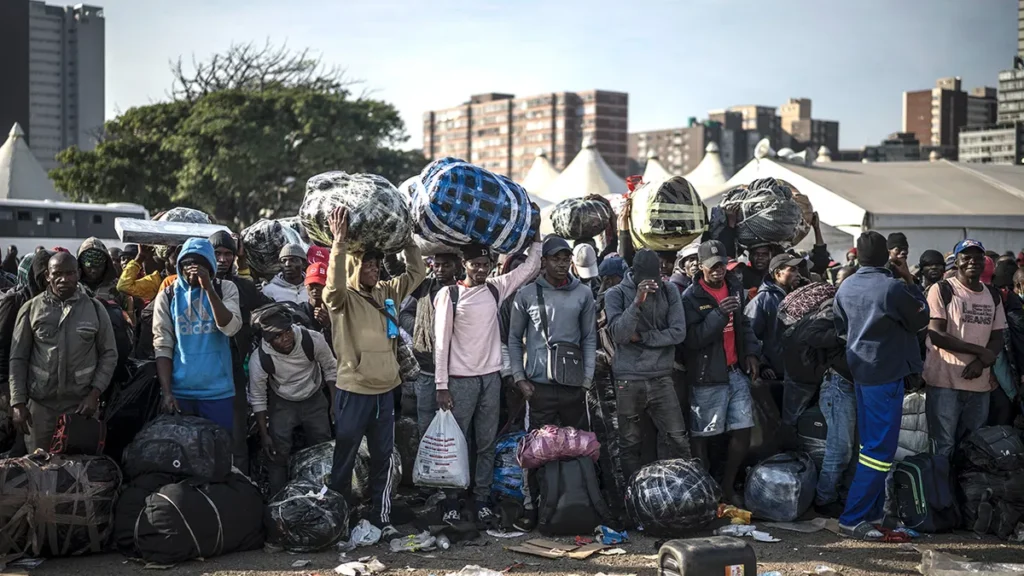
According to the petition, repeated attacks on foreign nationals—including physical assaults, deaths, forced displacement and the destruction of property—reflect a recurring pattern that the petitioners believe warrants investigation as possible crimes against humanity under Article 7 of the Rome Statute.
Rather than focusing solely on individual perpetrators, the submission contends that repeated failures to prevent attacks, protect vulnerable communities and ensure accountability raise serious questions about whether the South African state has adequately discharged its obligations under international law.
“For years, African brothers and sisters have been killed, beaten and driven from their homes in South Africa,” the petitioners said in a joint statement. “While we acknowledge the efforts of individuals in South Africa who have condemned these acts, the pattern, the scale and the recurrence of the violence raise serious questions about the failure of state authorities to prevent, investigate and punish these crimes.”
Speaking on the scope of the legal action, Kotin stressed that the initiative was entirely private.
“We are simply asking the ICC to investigate these allegations,” Kotin said, adding that the filing was undertaken independently and does not have the official backing of the Ghanaian government.
Under the Rome Statute, private individuals and civil society organisations may submit information to the ICC Prosecutor without government sponsorship. Such submissions are routinely assessed by the Office of the Prosecutor, although only a small number proceed beyond the preliminary examination stage.
Pretoria’s Response: Domestic Courts and Local Laws
Pretoria argues that the petition ignores both the ICC’s jurisdictional limits and the principle of complementarity, under which the Court intervenes only when national authorities are unwilling or genuinely unable to investigate and prosecute serious international crimes.
Government officials maintain that South Africa’s police, prosecutors and courts remain fully capable of fulfilling those responsibilities.
Chrispin Phiri, spokesperson for South Africa’s Department of International Relations and Cooperation (DIRCO), dismissed the application as opportunistic and legally unsustainable.
“South Africa notes that this filing fails to satisfy the statutory legal triggers and jurisdictional requirements necessary for action by the Court,” Phiri said. “Furthermore, under the foundational principle of complementarity, South Africa maintains full confidence in its domestic legal framework. Legislation such as the Prevention and Combating of Hate Crimes and Hate Speech Act directly provides for distinct offences as hate crimes and hate speech, ensuring the prosecution of any persons who commit such offences.”
International Relations Minister Ronald Lamola also insisted that law enforcement agencies are responding to incidents of anti-migrant violence.
“This has just been individuals who have taken the law into their own hands,” Lamola said. “In terms of South African law, this is illegal, and that is why the police are acting on it. We have various domestic laws that outlaw this kind of conduct.”

Government officials argue that ongoing investigations, arrests and prosecutions arising from incidents of anti-migrant violence demonstrate that South Africa’s justice system is functioning as intended, leaving no basis for ICC intervention.
Expert Opinions: High Legal Bars and Hard Realities
Independent legal and political experts who reviewed the petition say it faces two major obstacles: jurisdiction and evidence.
Even if repeated attacks against foreign nationals are accepted as serious and deeply concerning, the Rome Statute requires prosecutors to establish that they formed part of a widespread or systematic attack directed against a civilian population and carried out pursuant to a state or organisational policy.
Demonstrating that the threshold is substantially more demanding than proving recurring outbreaks of mob violence or criminal conduct.
Dirk Kotze, a professor of political science at the University of South Africa (UNISA), noted that the filing remains at the earliest stage of the ICC process.
“It has been referred to the Office of the Prosecutor for an initial assessment, so it is not a case that has been accepted for prosecution,” Kotze explained.
He said the petition should be viewed as much through a diplomatic lens as a legal one.
“South Africa has generally faced strong criticism from other African states regarding the treatment of foreign nationals,” Kotze said. “However, migration tensions are increasingly understood as a global issue. What we are seeing is an effort by civil society to increase diplomatic pressure, even if the legal process itself remains at a very early and uncertain stage.”
Professor Angelo Dube, an international law and human rights scholar, said the petition would also have to overcome the ICC’s long-established principle of complementarity.
“Where national authorities are investigating offences, arresting suspects and prosecuting cases, the ICC generally has no legal basis to replace those institutions,” Dube explained.
He added that the legal threshold for crimes against humanity extends well beyond demonstrating repeated acts of violence.
“The legal question is not simply whether attacks occurred, but whether prosecutors can prove they formed part of a widespread or systematic attack carried out pursuant to a state or organisational policy. That is an exceptionally demanding evidentiary standard.”
Diplomatic Impact and Regional Strategy
Whatever its legal fate, the petition has already revived a difficult continental debate over migration, economic inequality and the responsibility of African states to protect one another’s citizens.
Governments in West Africa continue to face mounting domestic pressure to respond to recurring attacks on their nationals, prompting Ghana and Nigeria to push for xenophobia to be placed on the formal agenda of the African Union Summit.
Pretoria, meanwhile, argues that regional leaders should confront the structural economic and governance challenges that drive migration across the continent.
“A dedicated agenda item at the Summit to address the primary push and pull factors—focusing squarely on good governance, democracy and economic stability—will enable a pragmatic and comprehensive approach to continental migration,” Phiri said.
The Office of the Prosecutor at the ICC has acknowledged receipt of the petition as part of its standard administrative procedures, but has given no indication that it intends to proceed beyond the preliminary assessment stage.
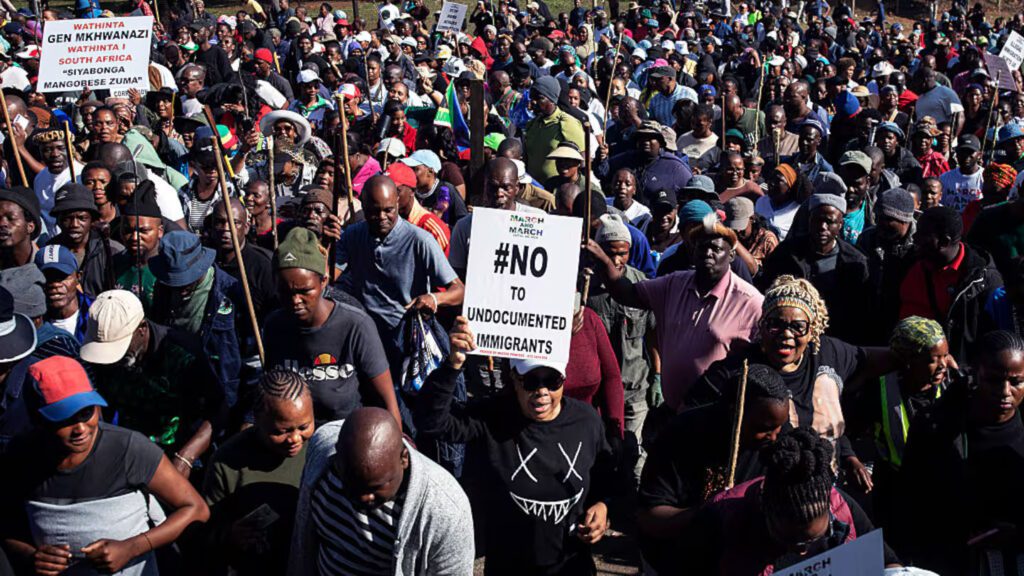
For now, no investigation has been opened, no charges have been brought, and no findings have been made against South Africa.
Regardless of whether the petition ultimately survives the ICC’s stringent legal tests, it has already succeeded in elevating a long-running continental dispute from the realm of diplomacy into the language of international criminal law.