

From legal action against a journalist to questions over procurement processes and whistleblower investigations, the NYDA’s appearance before Parliament became far more than a routine accountability exercise. It became a test of transparency, leadership and public trust.
By Themba Khumalo
In one of the Seventh Parliament’s most contentious oversight sessions, the National Youth Development Agency (NYDA) executive leadership faced a barrage of questions on Wednesday, 24 June 2026, over procurement practices, governance failures, whistleblower complaints, and the use of public resources.
Appearing before a five-hour joint sitting of the Portfolio Committee on Women, Youth and Persons with Disabilities and the Standing Committee on Public Accounts (SCOPA) in Room M514 of the Marks Building, Parliament, Cape Town, the agency’s leadership faced sustained cross-examination from MPs across party lines.
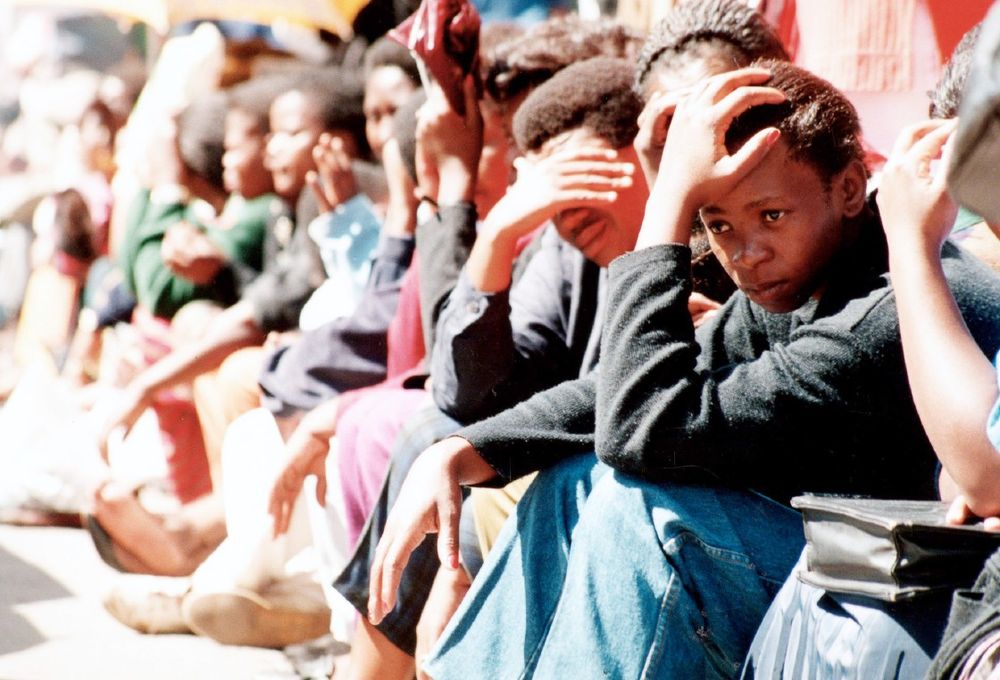
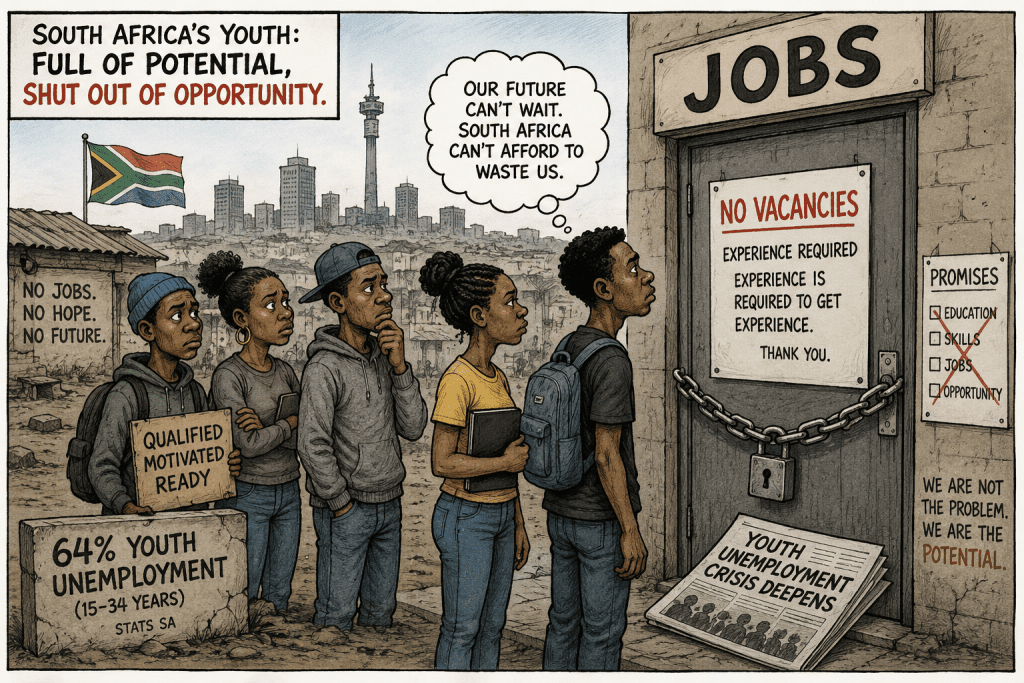
Rather than focusing solely on initiatives to address the youth unemployment crisis, which continues to hover around 46%, the hearing was dominated by allegations of governance failures, concerns about the use of public funds in litigation involving the agency’s board chairperson, and sharp disagreements over the handling of whistleblower complaints.
The Statistical Context Behind the Crisis
The baseline youth unemployment rate for the broad 15–34 age group stands at 45.8%, representing approximately 4.7 million young people without work. The public perception that the crisis exceeds 50% stems largely from conditions facing younger job seekers.
According to Statistics South Africa’s latest Quarterly Labour Force Survey (QLFS), the unemployment rate among those aged 15–24 stands at 60.9%.
This economic reality formed the backdrop to the NYDA’s strategic briefing, which included proposals for a youth-responsive budgeting framework to track state spending, and a policy aimed at incorporating youth development indicators into the performance agreements of provincial premiers.
Yet those policy discussions were ultimately eclipsed by the governance and compliance concerns that dominated the hearing.
The Core Flashpoint: Procurement Questions Around the Sunday Times Litigation
The most politically charged segment of the hearing centred on ActionSA MP Alan Beesley’s questioning of NYDA Board Executive Chairperson, Dr Sunshine Minenhle Myende.
The focus was on an interim protection order obtained by Myende against Sunday Times journalist Sisanda Mbolekwa. The order restricts certain forms of contact and publication in relation to reporting that Myende argued infringed upon her rights.
The Procurement Omission
To pursue the litigation, Myende utilised legal services from Phakedi and Associates Attorneys, a law firm that forms part of the NYDA’s panel of approved service providers.
MPs focused considerable attention on whether the instruction complied with procurement requirements and whether a competitive Request for Quotation (RFQ) process had been followed before the legal mandate was awarded.
During the hearing, committee members repeatedly questioned NYDA executives on whether public resources had been used in support of litigation that Myende’s own court papers described as being brought in her personal capacity.
The Contradictory Sworn Evidence
When pressed by Beesley on whether public funds were being used in a matter pursued in a personal capacity, Myende initially sought to distinguish between her role as chairperson and the litigation itself.
However, MPs drew attention to a passage in her affidavit stating: “I am an applicant in these proceedings, which I bring in my personal capacity for the vindication and protection of my rights.”
Confronted with the wording of her affidavit, Myende acknowledged that the application had been brought in her personal capacity, while maintaining that the matter remained connected to her responsibilities as chairperson of the NYDA.
The exchange raised broader questions about whether public resources can lawfully be used to support litigation pursued by public office-bearers in their personal capacity, and whether procurement processes were properly followed in appointing legal representation.
Should it ultimately be established that procurement requirements were bypassed, or that public funds were used for purposes not authorised by the governing framework, the matter could carry implications under the Public Finance Management Act (PFMA).
Inverting the Lens: Investigating Leaks Instead of Allegations
The controversy surrounding the Sunday Times reporting emerged against the backdrop of whistleblower complaints that had already been brought to Parliament’s attention earlier in the year.
Those complaints included allegations of:
• Political interference by board members in operational matters.
• Irregular appointments to the Audit and Risk Committee.
• Procurement deviations allegedly favouring specific service providers.
• Questions surrounding expenditure linked to official travel, including a trip to New York.
Instead of focusing exclusively on the substance of those allegations, MPs questioned why significant attention appeared to have shifted towards identifying the source of internal leaks.
While the NYDA had issued an RFQ for forensic investigation services, committee members expressed concern that investigative resources were being directed towards tracing whistleblowers rather than resolving the allegations that had triggered the controversy.
The independent investigators were reportedly granted access to internal systems and communications as part of the exercise.
Myende defended the process, arguing that concerns regarding the possible compromise of electronic devices and email systems necessitated an investigation.
Many MPs were unconvinced.
Portfolio Committee Chairperson Liezl van der Merwe was among those who sharply criticised the agency’s approach, arguing that the focus appeared to have shifted away from the underlying allegations and towards identifying those who had disclosed information.
The Legal Debate
One of the most significant moments of the hearing came during discussions on whistleblower protections.
Parliament’s legal advisers raised concerns regarding the implications of using public resources to identify individuals who may have made protected disclosures in good faith.
The discussion centred on whether aspects of the NYDA’s approach were compatible with the protections afforded by the Protected Disclosures Act and whether the agency had adequately safeguarded whistleblower rights.
The exchange added to growing concern among MPs that the agency appeared more focused on uncovering the source of disclosures than on addressing the substance of the allegations themselves.
A Fractured Front
The hearing also exposed visible divisions within the NYDA’s leadership structures.
In a development that attracted considerable attention from MPs, the deputy chairperson provided Parliament with a narrative that differed in material respects from the position advanced by the executive leadership.
The divergence reinforced concerns already expressed by committee members regarding governance instability and internal disagreement at board level.
What emerged was not the image of a board speaking with one voice, but an institution struggling to present a coherent account of key decisions relating to procurement, governance and whistleblower complaints.
Despite attempts by the Minister in the Presidency for Women, Youth and Persons with Disabilities, Sindisiwe Chikunga, to defend aspects of the chairperson’s conduct, MPs remained dissatisfied with several of the answers provided by the delegation.
Parliament’s Next Steps
By the conclusion of the hearing, both committees had demanded further documentation relating to the appointment of legal representatives, procurement processes, whistleblower investigations and internal decision-making.
Committee members indicated that the additional documentation would be used to determine whether procurement requirements had been breached, whether any expenditure should be classified as irregular, and whether further accountability measures would be required.
The committees also sought access to documentation capable of clarifying who authorised key decisions, how legal services were procured, and whether governance processes were followed.
With the NYDA overseeing significant youth development programmes, including the Presidential Youth Service initiative, MPs signalled that the matter was far from concluded.
The broader concern for Parliament is not merely whether individual decisions were flawed, but whether the agency’s governance architecture is capable of withstanding sustained scrutiny at a time when youth unemployment remains one of South Africa’s most pressing socio-economic challenges.
Should the requested documentation reveal deliberate misconduct, breaches of the PFMA or other statutory obligations, committee members indicated that further action could follow, including referrals to the appropriate authorities.
For an agency tasked with championing the interests of young South Africans, the hearing offered a stark reminder that public trust is not built through strategic plans and policy frameworks alone. It is earned through transparency, accountability and a demonstrable willingness to confront allegations of wrongdoing wherever they arise.