

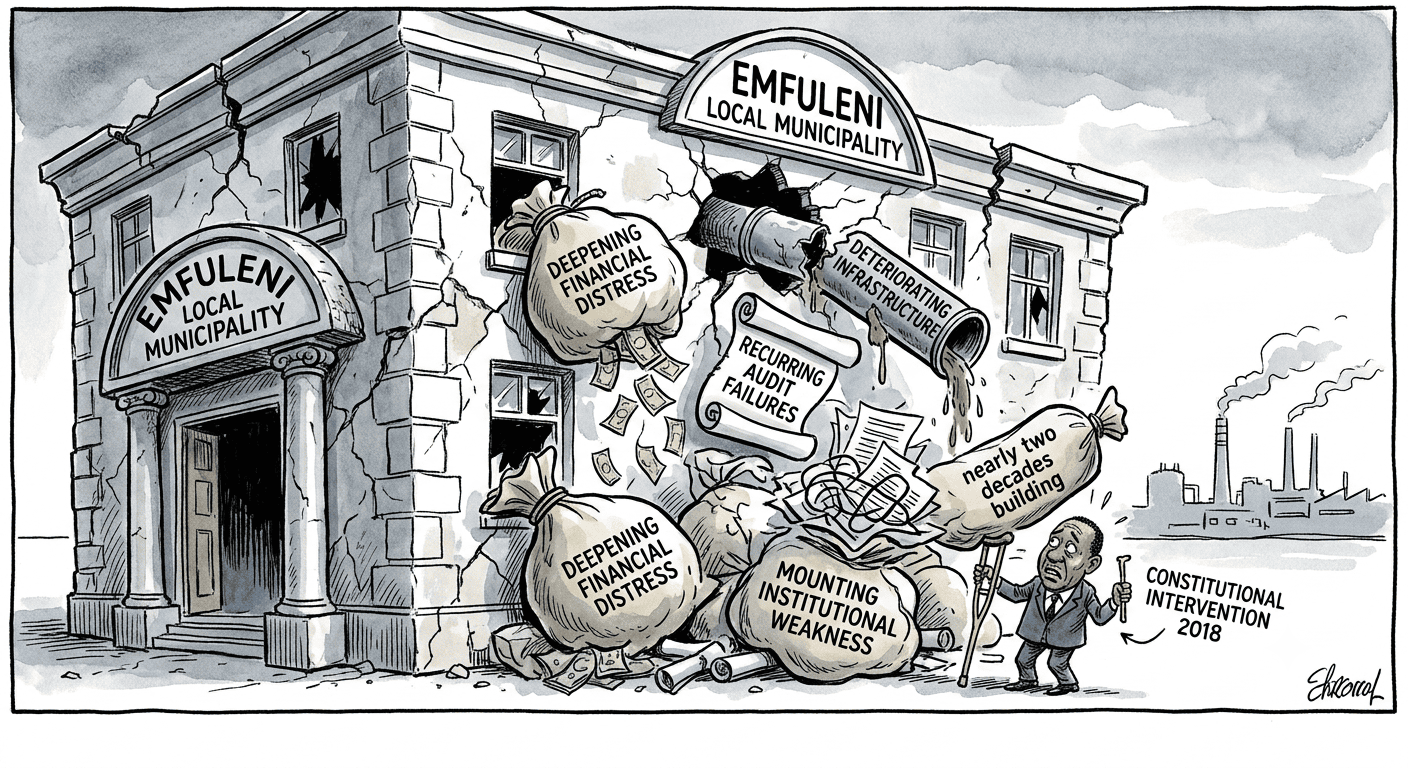
By the time Emfuleni Local Municipality was placed under constitutional intervention in 2018, the crisis confronting one of South Africa’s most strategically important municipalities had been building for nearly two decades. It emerged through mounting institutional weakness, deteriorating infrastructure, recurring audit failures and deepening financial distress.
By Themba Khumalo
The story of Emfuleni is often told through individual crises: a sewage spill into the Vaal River, mounting debt owed to bulk service providers, deteriorating roads, recurring audit findings or another intervention by the Gauteng provincial government. Seen together, these episodes point to a single longer decline rather than separate failures.
Viewed in isolation, each appears to be a separate administrative failure. Examined together, however, they reveal something far more profound. They tell the story of a municipality that gradually lost its ability to sustain the systems upon which local government depends.
Established in 2000 as part of South Africa’s post-apartheid municipal restructuring, Emfuleni Local Municipality brought together the former councils of Vereeniging, Vanderbijlpark, Sebokeng, Evaton and surrounding communities within the Sedibeng District Municipality.
It inherited an extensive engineering network, significant municipal assets, and one of the country’s most important industrial economies centred on the Vaal Triangle.
At its inception, the municipality carried substantial responsibilities. It was expected to maintain ageing yet extensive infrastructure, provide reliable water and sanitation services, distribute electricity, maintain roads, collect revenue, administer public finances and support communities whose economic fortunes had long been intertwined with heavy industry and manufacturing.
The challenges were considerable but not insurmountable.
Between 2001 and 2003, the municipal administration focused on integrating various administrative systems, budgets, and service delivery structures inherited from the former local authorities. The transition was substantial, requiring the consolidation of governance systems, financial management and operational responsibilities across a geographically and economically diverse municipality.
While these administrative processes continued, another reality quietly unfolded beneath the surface.
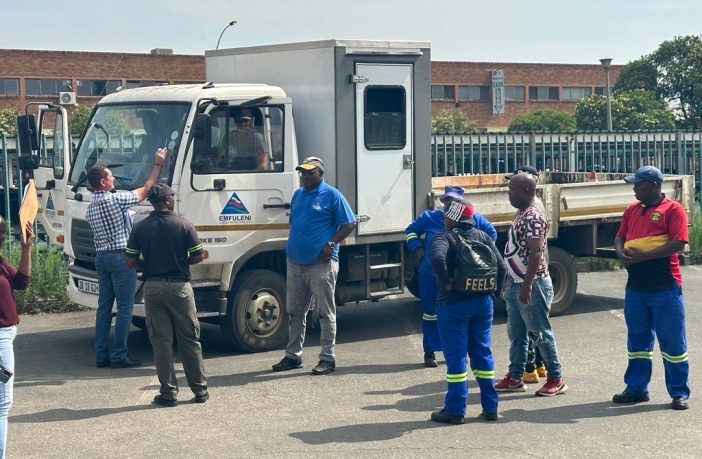
Much of the infrastructure inherited by the municipality was already ageing. Water and sanitation networks, roads, electrical infrastructure, and engineering assets increasingly required routine maintenance, rehabilitation, and eventual replacement. Although services continued to function, the cost of preserving these systems steadily increased, placing growing pressure on municipal finances and long-term planning.
By 2003, the first indications of structural strain began to emerge.
The municipality’s water and sanitation infrastructure continued to age without sufficient reinvestment. Maintenance backlogs expanded as operational expenditure increasingly competed with infrastructure renewal. Engineering capacity came under pressure, as municipalities across South Africa faced growing demands on ageing technical systems while balancing expanding service delivery responsibilities.
At this stage, the challenges remained largely technical rather than institutional. Ageing pipelines, maintenance requirements and infrastructure renewal were not yet symptoms of administrative collapse. Nevertheless, they established conditions that would later expose the municipality to much greater risk.
The period between 2003 and 2008 marked the emergence of warning signs that, in retrospect, illustrated the beginning of a much deeper institutional trajectory.
Maintenance backlogs became increasingly difficult to contain. Infrastructure renewal struggled to keep pace with ageing municipal assets. Operational priorities increasingly displaced long-term capital investment. Although these pressures did not immediately produce widespread service delivery failures, they gradually reduced the municipality’s resilience.
The consequences would become more apparent during the following decade.
Between 2009 and 2012, the municipality’s difficulties began shifting from technical challenges towards systemic governance concerns.
Audit findings started recurring instead of being resolved.
Rather than identifying isolated administrative shortcomings corrected during subsequent financial years, successive audits increasingly highlighted weaknesses that persisted across reporting cycles. Internal controls remained weak. Governance shortcomings became more apparent. Financial management deficiencies continued to recur, while legislative compliance weaknesses became increasingly visible.
Recurring audit findings represented more than technical observations contained within annual reports.
They demonstrated that known weaknesses were not being comprehensively addressed.
Each recurring finding suggested that management had been alerted to deficiencies, recommendations had been issued, and corrective action had been expected. Yet many of the same shortcomings continued reappearing, indicating that institutional learning and sustained corrective implementation were becoming progressively more difficult.
As these governance weaknesses accumulated, financial pressures also intensified.
The period between 2013 and 2016 marked a significant acceleration in institutional deterioration.
Revenue collection weakened while creditor balances continued growing. Debt owed to major bulk service providers increased steadily, placing additional strain on municipal finances and reducing operational flexibility.
At the same time, wastewater treatment performance deteriorated.
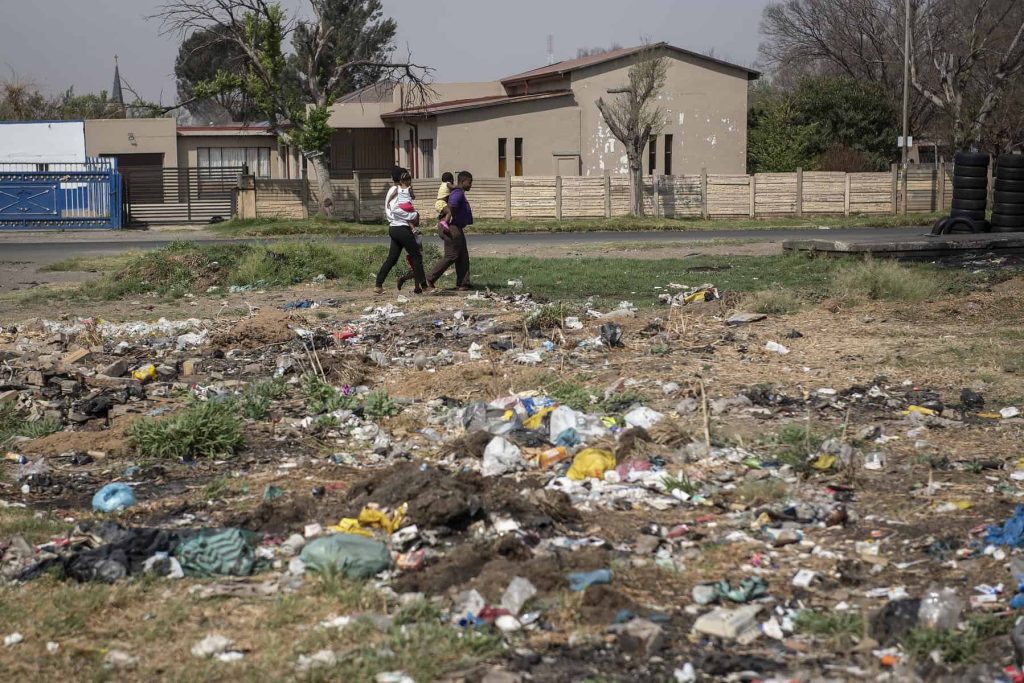
Ageing infrastructure experienced more frequent failures. Maintenance backlogs continued expanding. Environmental compliance weakened, while service delivery failures became increasingly visible to communities through sewage spillages, water interruptions and deteriorating municipal infrastructure.
The relationship between financial management and infrastructure condition became increasingly apparent.
Reduced financial resilience constrained maintenance expenditure.
Deferred maintenance accelerated infrastructure deterioration.
Infrastructure failures increased operational costs.
Growing operational pressures further constrained financial recovery.
Rather than operating as separate problems, financial instability and infrastructure decline increasingly reinforced one another.
By 2017, the municipality’s institutional distress had become unmistakable.
Financial management weaknesses, governance failures, declining service delivery and worsening infrastructure no longer represented isolated operational challenges. Collectively, they pointed towards a municipality experiencing broad institutional dysfunction that increasingly affected its ability to fulfil its constitutional responsibilities.
The cumulative nature of the crisis became impossible to ignore.
Years of recurring audit findings, weakening financial management, expanding maintenance backlogs, and declining service delivery had fundamentally altered the municipality’s operational capacity.
Provincial intervention soon followed.
In 2018, the Gauteng Provincial Executive invoked Section 139(1)(b) of the Constitution, placing Emfuleni Local Municipality under provincial intervention together with a mandatory financial recovery intervention in terms of Section 139(5).
The intervention followed provincial findings of significant financial deterioration, poor governance, weak credit control, declining service delivery, extensive outsourcing and ineffective administration.
The objective was clear.
The provincial government sought to restore financial stability, strengthen governance, improve revenue management and rebuild administrative capacity.
Yet the intervention also reflected a sobering reality.
By the time constitutional intervention became necessary, many of the municipality’s underlying weaknesses had been developing for well over a decade.
They had become embedded across financial systems, governance structures, infrastructure management and administrative processes.
Reversing such decline would require far more than administrative directives alone.
In 2019, financial recovery efforts formally commenced under provincial supervision.
Recovery measures focused on improving revenue collection, restoring financial controls, strengthening governance and stabilising municipal administration.
The programme sought to address financial sustainability while rebuilding the municipality’s institutional capacity.
However, years of accumulated structural weakness proved resistant to rapid correction.
Problems that had developed gradually over many years could not be resolved within a single financial cycle.
The complexity of institutional recovery became increasingly evident.
By 2020, parliamentary oversight had begun questioning whether the intervention itself was producing measurable improvements.
The National Council of Provinces concluded that, two years after intervention commenced, there was little evidence of meaningful recovery.
These concerns extended well beyond financial performance.
Members identified worsening service delivery, poor revenue collection, escalating debt owed to Eskom and Rand Water, sewer spillages affecting the Vaal River system, deteriorating electricity infrastructure, vacant senior management positions and inadequate consequence management.
The oversight findings suggested that the intervention had not yet succeeded in reversing the trajectory established during the preceding decade.
Instead, many of the municipality’s underlying institutional weaknesses remained firmly in place.
The years 2021 to 2023 demonstrated the persistence of those structural challenges.
Despite continued oversight and ongoing recovery efforts, financial and operational pressures continued.
Audit findings remained recurring.
Budgets stayed under severe pressure.
Infrastructure continued deteriorating.
Creditor obligations increased.
Parliamentary oversight in 2023 concluded that governance and financial controls had regressed further, describing the municipality as operating with an unfunded budget while critical oversight structures remained weak or dysfunctional.
The conclusion was difficult to ignore.
The municipality’s problems had evolved beyond individual administrative failures.
They now reflected an interconnected institutional crisis involving governance, financial sustainability, infrastructure management, organisational capacity and service delivery.
Recognising the continuing scale of the challenge, the municipality published a reviewed and amended Financial Recovery Plan in 2024.
The document acknowledged that the municipality’s distress stemmed from persistent weaknesses in financial management, governance, service delivery and organisational capacity.
Importantly, it recognised that these were not recent developments but longstanding institutional problems that had ultimately necessitated the original constitutional intervention in 2018.
The revised recovery programme continued pursuing financial sustainability, administrative strengthening and improved service delivery while acknowledging that significant structural challenges remained unresolved.
READ MORE: ANATOMY OF A MUNICIPAL COLLAPSE
By 2025 and 2026, Emfuleni continued operating under severe financial and operational strain.
Financial recovery initiatives remained in place.
Provincial and national monitoring continued.
Budget documents, Financial Recovery Plan implementation reports and performance monitoring reflected ongoing efforts to restore institutional stability.
Yet the municipality’s recovery agenda remained dominated by familiar themes.
Infrastructure deterioration.
Liquidity constraints.
Governance weaknesses.
Creditor obligations.
Financial sustainability.
Service delivery.
Together, they illustrated that the crisis confronting Emfuleni was neither sudden nor isolated.
It had unfolded gradually over more than two decades through the interaction of ageing infrastructure, recurring governance failures, weakening financial management and diminishing institutional capacity.
The municipality’s experience demonstrates how local government decline rarely begins with the collapse itself.
Rather, it develops incrementally as technical weaknesses become financial pressures, financial pressures become governance failures, governance failures weaken institutional capacity, and diminished institutional capacity ultimately compromises the municipality’s ability to perform its constitutional mandate.
Emfuleni’s story is therefore not defined by a single year, a single audit finding or a single intervention.
It is the story of a prolonged institutional deterioration in which unresolved weaknesses accumulated over time until they became a systemic challenge confronting every aspect of municipal governance.