

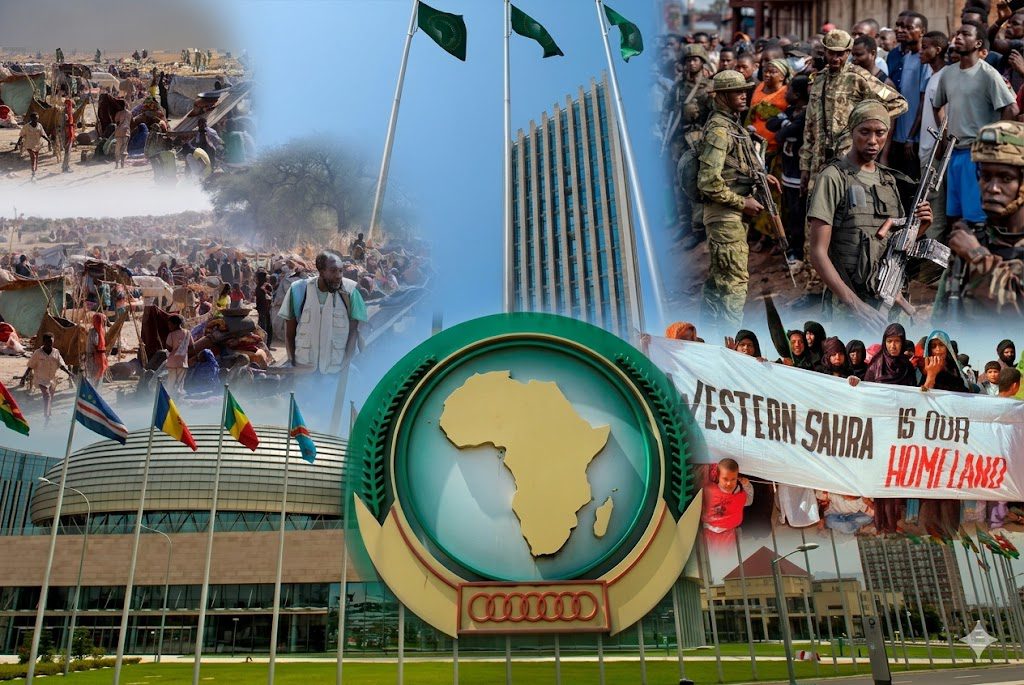
Once a symbol of hope and unity, the African Union (AU) faces growing criticism as wars, coups, and foreign influence destabilise the continent. With each new crisis, the question lingers: has the AU lost its way, or can it still shape Africa’s future?
By Themba Khumalo
When the African Union was launched in 2002, there was a genuine sense of hope—and not just among politicians in the continent’s capitals.
Across Africa, people believed this new body would finally put an end to the era when conflicts raged, and the world looked away. The Union was meant to be the answer to the Organisation of African Unity’s silence during Rwanda’s genocide and so many other tragedies: a promise that, this time, Africans will no longer be bystanders when conflicts arise.
African leaders at the time made sweeping pledges: no longer would Africans stand by as their own people suffered, were displaced, or left to fend for themselves. It was, in short, to be a new era of Africans solving African problems.
Now, nearly a quarter of a century later, that vision appears increasingly distant.
Across the continent, wars rage, coups proliferate, armed groups entrench themselves, and humanitarian emergencies grow ever more severe. Yet the AU often seems paralysed—issuing communiqués, hosting summits, and calling for dialogue while crises spiral out of hand.
This has brought about a difficult question in many circles, including among ordinary citizens and those on the ground in conflict zones: what is the AU for, if it cannot act decisively while Africa continues to drown in bloody crises?
From the violence-ridden eastern provinces of the Democratic Republic of the Congo to the devastated towns and villages of Sudan, the AU’s voice is frequently faint, cautious, and, some would argue, increasingly irrelevant. Into this silence, outside powers have stepped.
Today, Africa finds itself a stage for global competition, with foreign governments and private military interests vying for influence, mineral wealth, and strategic leverage. China, the United States, the European Union, Russia, Turkey, and the United Arab Emirates all now play outsized roles in African conflicts and negotiations.
The tragedy is that this was precisely the future the AU was meant to prevent.
Congo: Endless Statements, Little Action
Eastern Congo has become one of the clearest examples of the AU’s limitations.
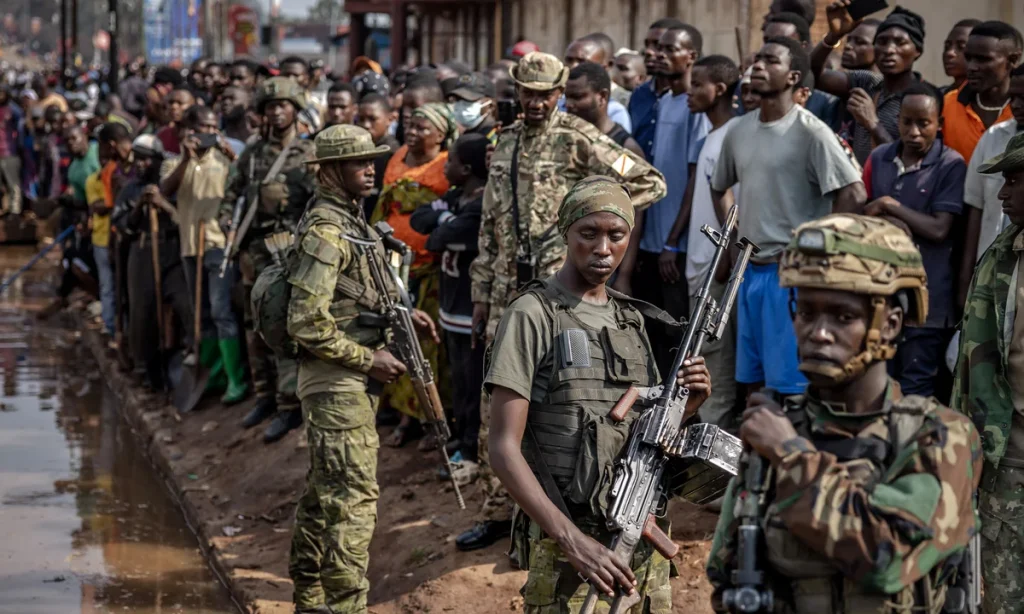
The region has suffered decades of armed conflict involving rebel groups, militias, foreign-backed insurgents, and criminal networks fighting over territory and vast mineral wealth. The current offensive by the Rwanda-backed M23 rebel group is only the latest chapter in a long-running catastrophe.
Humanitarian organisations, including Médecins Sans Frontières, have repeatedly warned of massacres, sexual violence, and mass displacement across eastern Congo.
Yet the AU’s Peace and Security Council has largely confined itself to communiqués, appeals for restraint, and diplomatic endorsements of regional talks.
The council exists precisely for crises like this. It has the authority to impose sanctions, coordinate interventions, and implement the AU’s common defence policies. But in practice, it has appeared hesitant to confront powerful member states or forcefully intervene in politically sensitive conflicts.
The result is a dangerous pattern: the AU talks while armed groups advance.
Sudan’s Catastrophe and Africa’s Absence
Nowhere is the AU’s weakness more glaring than in Sudan.
Since April 2023, Sudan has been consumed by a brutal civil war between forces loyal to General Abdel Fattah al-Burhan and the paramilitary Rapid Support Forces led by Mohamed Hamdan Dagalo, widely known as Hemedti.
The human toll has been staggering.
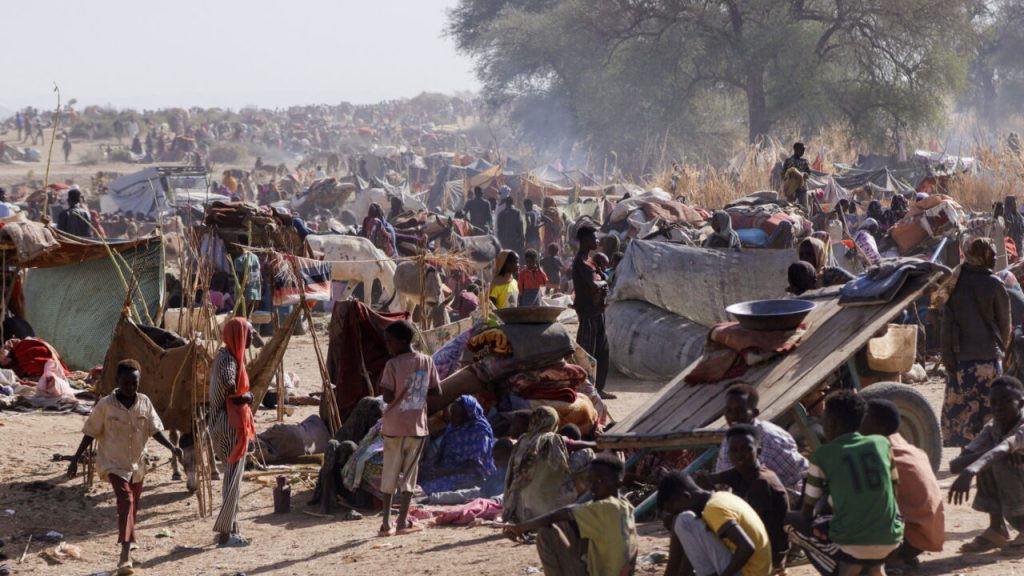
Millions have been displaced internally or forced to flee to neighbouring countries. Entire communities have been uprooted. Hunger has spread rapidly. Aid agencies have repeatedly warned of worsening famine conditions.
Yet the AU has struggled to position itself at the centre of peace efforts.
Instead, diplomatic initiatives have largely been driven by the United States and Saudi Arabia through talks held in Jeddah. While the AU has issued condemnations and calls for dialogue, it has not emerged as the primary broker in one of Africa’s worst humanitarian crises in decades.
For an organisation built on the principle of continental solidarity, that absence has become difficult to defend.
Western Sahara: Africa Watching from the Sidelines
The AU has also lost ground on one of Africa’s oldest unresolved political disputes: Western Sahara.
The territory has remained disputed since Spain withdrew in 1975, after which Morocco moved to control most of it. The independence-seeking Polisario Front, backed by Algeria, continues to push for self-determination for the Sahrawi people.
In recent years, diplomatic momentum has increasingly shifted away from a promised independence referendum towards Morocco’s autonomy proposal.
Once again, the AU has appeared marginal to negotiations despite the issue carrying profound implications for decolonisation, sovereignty, and regional stability.
The Sahel’s Democratic Collapse
Meanwhile, across the Sahel, democracy has steadily eroded.
Military coups in Mali, Burkina Faso, Niger, and Guinea have reshaped the political map of West Africa.
At the same time, violence has exploded across the region.
Groups have exploited poverty, weak governance, ethnic divisions, and public anger against political elites.
Here too, the AU has often looked reactive rather than strategic.
For years, security responses were heavily shaped by French military operations and regional initiatives such as the G5 Sahel force. But after relations between Paris and several Sahel governments collapsed, French troops were expelled from countries including Mali, Burkina Faso, and Niger.
The vacuum left behind has been filled by militias, mercenaries, and foreign military contractors.
The Rise of Foreign Mercenaries
One of the most alarming developments across Africa’s conflict zones has been the growing presence of private military companies and foreign mercenary networks.
Russia’s Africa Corps, which emerged from the remnants of the Wagner Group, now operates in several African countries, including Libya, Mali, and the Central African Republic.
Turkish-linked security actors, Emirati-backed contractors, and Western private military firms have also expanded their footprint across fragile states.
These groups often present themselves as trainers, security advisers, or stabilisation partners. But critics and observers argue that many are ultimately driven by access to minerals, energy resources, and strategic influence.
The more fragile African states become, the more attractive they become to competing foreign interests.
And the weaker the AU appears, the easier it becomes for outsiders to dominate the political and military landscape.
Why the AU Struggles
Part of the AU’s problem lies within Africa itself.
The organisation is made up of 55 member states with vastly different political interests, alliances, and priorities. Reaching consensus is often painfully slow. Some governments are reluctant to criticise fellow leaders, especially on issues involving coups, democratic decline, or human rights abuses.
Money is another major problem.
The AU still relies heavily on external funding for peacekeeping operations and institutional programmes. That dependence inevitably weakens its independence and negotiating power.
The consequence is that the AU frequently needs outside backing or funding before it can respond meaningfully to crises.
That contradiction sits at the heart of the AU’s credibility crisis.
A Continental Body at a Crossroads
To its credit, the AU has done some work, even though it is not something to write home about.
Its long-term development framework, Agenda 2063, outlines ambitions for greater self-reliance, deeper economic integration, stronger governance and African-led development. There have also been efforts to improve conflict prevention systems and strengthen regional cooperation.
But documents and declarations do not stop wars.
The AU’s greatest challenge is no longer vision. It is execution.
Because every time the organisation hesitates while civilians die, every time foreign powers dominate negotiations on African soil, and every time armed groups expand while diplomats issue carefully worded statements, the gap between the AU’s founding ideals and Africa’s lived reality grows wider.

The AU was created to ensure that Africa would never again become merely a playground for foreign interests and unchecked violence.
Yet in many parts of the continent, that is exactly what is happening.
And unless the organisation finds both the political courage and financial independence to act decisively, it risks becoming what its predecessor was often accused of being: an institution that watches history unfold rather than shaping it.