

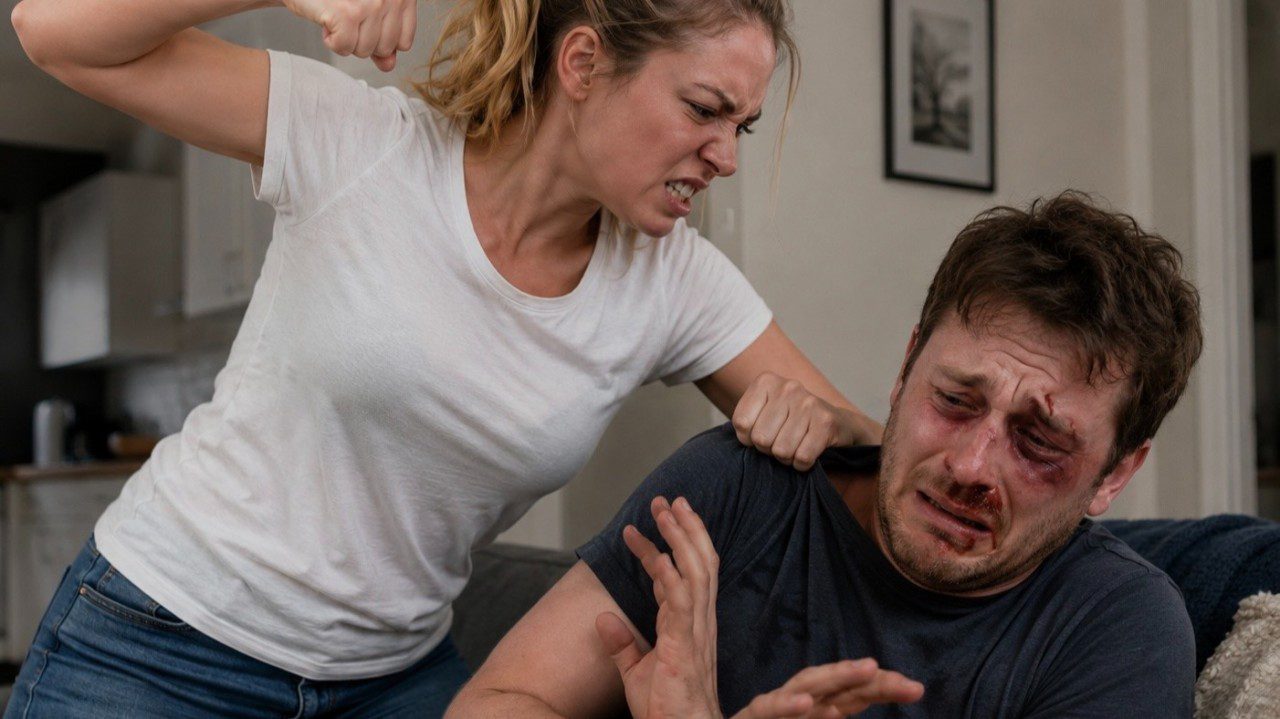
Many male victims of domestic violence remain silent due to stigma, fear, and disbelief. Halima Layeni sheds light on the prevalence of female-on-male abuse, its emotional and psychological impacts, and why society must recognise and support all survivors equally.

By Halima Layeni
Female-on-male domestic violence is not an isolated occurrence. It exists as a documented category of abuse, not a hypothetical or a rhetorical device. It refers to intimate partner violence in which the perpetrator is female, and the victim is male, occurring in heterosexual relationships across every socioeconomic and cultural context studied.
It is a reality that remains significantly underreported, under-recognised, and underserved. The challenge is not simply that these cases exist, but that many never make it into official statistics because victims do not report them.
The CDC’s National Intimate Partner and Sexual Violence Survey found that almost 1 in 2 women, 47.3 per cent, and more than 2 in 5 men, 44.2 per cent, reported experiencing contact sexual violence, physical violence, or stalking by an intimate partner at some point in their lifetime.
The gap between those two numbers is not the story most people have been told.
Separate data compiled by the National Sexual Violence Resource Centre National Domestic Violence Hotline found that nearly 3 in 10 women, 29 per cent, and 1 in 10 men, 10 per cent, reported that partner violence had a related impact on their daily functioning.
Men are experiencing this violence at rates close to women. Dr Murray Straus, using the Conflict Tactics Scale, found that women initiate and commit physical aggression against male partners at rates comparable to men.
This finding has been replicated across multiple studies over several decades. It remains controversial because it complicates a simpler, more familiar story. Controversy does not make it false.
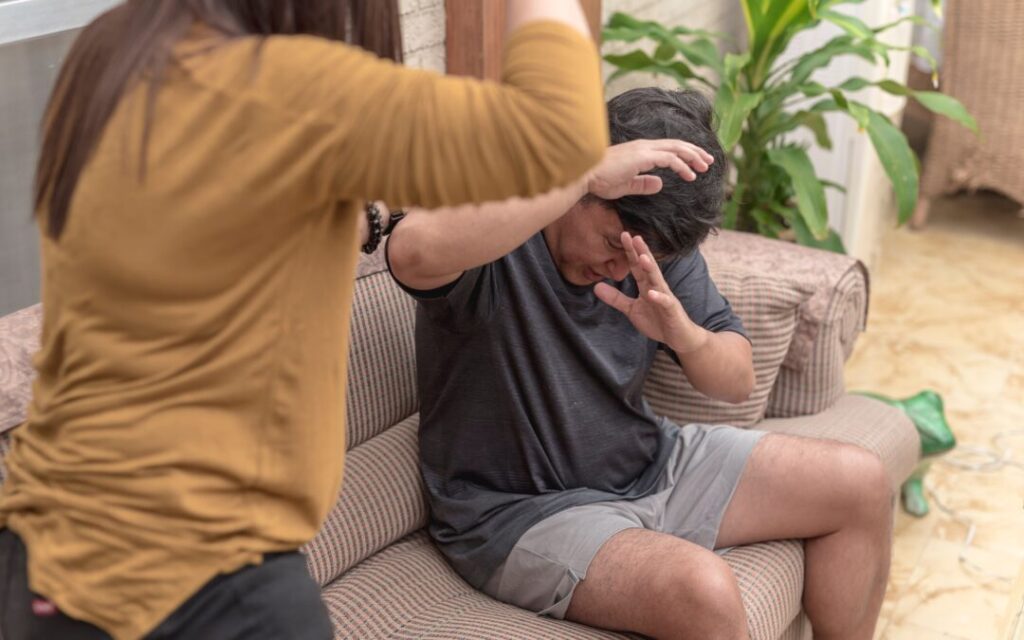
Abuse by a female partner takes the same range of forms that abuse by any partner takes. It includes physical violence: hitting, slapping, throwing objects, using weapons, and inflicting injury. It includes coercive control: monitoring a partner’s movements, restricting his access to money, isolating him from family and friends, and dictating the terms of his daily life. It includes emotional abuse: sustained humiliation, threats, and the deliberate erosion of a man’s confidence and sense of self.
It includes sexual coercion, a form of abuse rarely discussed in relation to male victims because it does not fit the assumed script of who initiates and who is denied. A form of abuse specific to how institutions treat male victims is the weaponisation of systems themselves.
A woman who makes false allegations, restricts a father’s access to his children, or uses the threat of a police call as a means of control is engaging in abuse, even though no bruise results. Dr Amy Baker’s research on parental alienation documents how children are used as instruments of control in exactly this way.
The consequences of this violence are not lesser for men. Clinical-forensic data from Europe found that in the majority of male IPV cases, the perpetrator was female, and most occurred within the home, yet more than half of the men had never sought healthcare for their injuries before presenting for medico-legal examination.
The Hotline’s compiled data found that just under 15 per cent of women and 4 per cent of men reported being injured as a result of intimate partner violence. Lower injury rates do not mean lower harm. They mean men absorb the physical cost of abuse silently, without treatment, for longer.
One of the primary reasons female-on-male domestic violence remains hidden is that many male victims never disclose what they are experiencing.
From an early age, men are often taught to be strong, self-reliant, and emotionally stoic. These expectations make it incredibly difficult for many to admit that they are being abused by a woman. Doing so can feel like a personal failure or a threat to their identity.
Many fear they will be laughed at, questioned, or told to “man up.” Others worry that family members, employers, or even law enforcement will not believe them. Some remain silent because they fear losing contact with their children or because they believe reporting the abuse will only escalate the situation.
In many cases, remaining silent appears less painful than facing the stigma attached to being a male victim.
Another reason these cases remain largely invisible is that domestic violence is still widely misunderstood. Abuse is often associated with physical injuries, yet domestic violence extends far beyond physical assault. Many men experience coercive control, emotional manipulation, psychological abuse, financial exploitation, verbal humiliation, threats, stalking, destruction of personal property, and false allegations.
Some are deliberately isolated from friends and family, while others are manipulated through their children or threatened with reputational damage if they attempt to leave the relationship. These forms of abuse can erode a person’s confidence over time, leading to anxiety, depression, chronic stress, and, in some cases, suicidal thoughts. The absence of visible injuries does not lessen the seriousness of the harm.
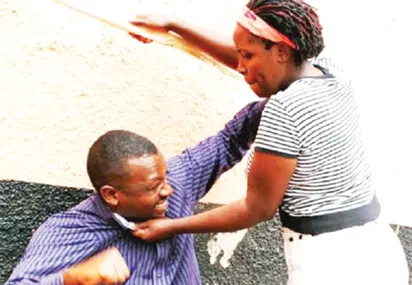
The consequences of domestic violence do not become less severe because the victim is male. Abuse affects men in many of the same devastating ways it affects women. Prolonged exposure to violence, intimidation, humiliation, and coercive control can lead to anxiety, depression, post-traumatic stress disorder (PTSD), substance misuse, chronic stress, sleep disorders, and suicidal thoughts.
Many male victims lose confidence in themselves, withdraw from family and friends, and struggle to trust others long after the abuse has ended. Their work performance may decline, their physical health may deteriorate, and their ability to parent, lead, and contribute fully to society can be significantly affected.
Some remain trapped in abusive relationships for years because they fear they will not be believed or that seeking help will only make their circumstances worse. Being male does not exempt anyone from the psychological, emotional, or physical consequences of abuse. Trauma does not discriminate by gender.
The human mind and body respond to sustained abuse in remarkably similar ways, regardless of whether the victim is a man or a woman.
Society’s understanding of domestic violence is still heavily influenced by gender stereotypes. There remains a widespread assumption that because men are generally physically stronger than women, they cannot be genuine victims of abuse. This assumption fundamentally misunderstands what domestic violence is.
Abuse is about power, fear, intimidation, and control rather than physical strength alone. A female partner may use psychological manipulation, financial dependence, threats involving children, weapons, or false accusations to exert control over a male victim.
Many men are also reluctant to defend themselves physically because they fear being arrested or viewed as the perpetrator if they attempt to restrain an abusive partner. In these situations, physical strength becomes largely irrelevant. The victim remains trapped by fear, manipulation, and the potential consequences of seeking help.
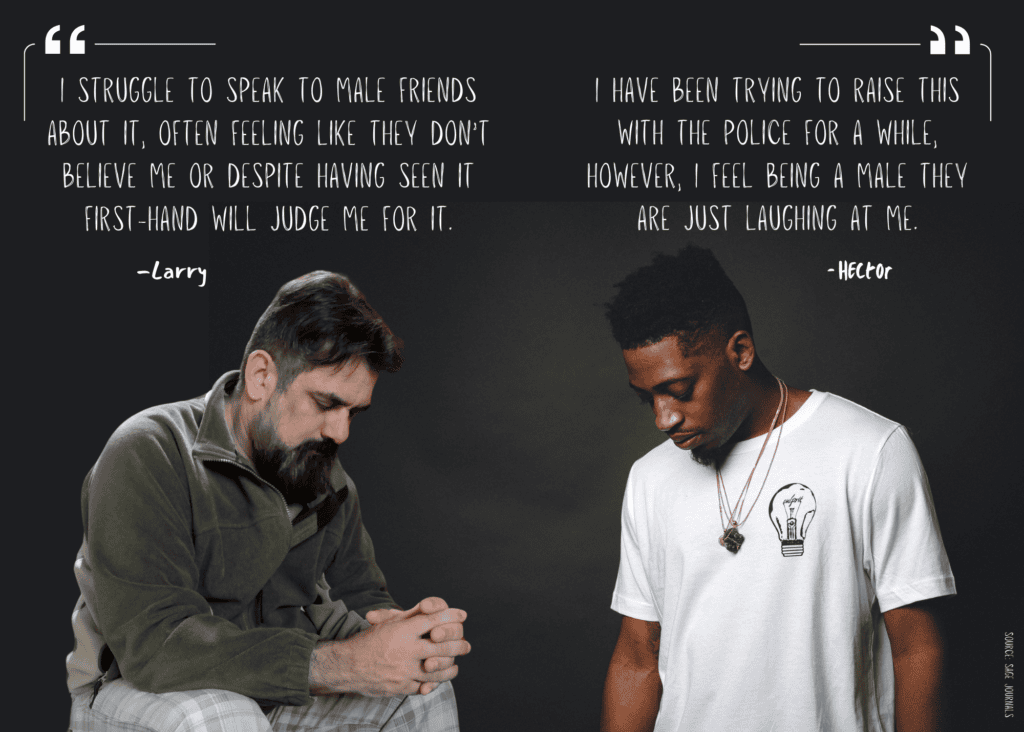
For many male victims, the greatest barrier is not the abuse itself but the expectation that no one will believe them. Men who reach out for support frequently describe encounters with disbelief, ridicule, or minimisation. Some are told that a woman could not possibly have abused them.
Others find that their experiences are dismissed as relationship conflict rather than recognised as domestic violence. In some cases, the victim is automatically assumed to be the aggressor before any meaningful investigation takes place.
These experiences reinforce the perception that seeking help is pointless, causing many victims to retreat further into silence. Every time a male victim is dismissed, it becomes less likely that the next victim will come forward.
The consequences of ignoring male victims extend far beyond individual relationships. Domestic violence is a significant public health issue that affects physical health, mental wellbeing, family stability, and workplace productivity.
Prolonged exposure to abuse increases the risk of depression, anxiety disorders, post-traumatic stress, substance misuse, sleep disturbances, social isolation, and suicidal behaviour.
These health consequences do not discriminate based on gender. Whether the victim is a man or a woman, the psychological and emotional effects of sustained abuse can be profound and long-lasting. Failing to recognise male victims simply leaves another vulnerable population without the support they need to recover.
Acknowledging one group of victims does not require ignoring another. Protecting male victims strengthens the principle that domestic violence is unacceptable regardless of who commits it or who experiences it. Every victim deserves to be heard, believed, protected, and supported.

The conversation surrounding domestic violence must evolve beyond outdated stereotypes. Female-on-male domestic violence is more common than reported because too many victims never feel safe enough to disclose what they are experiencing. Some fear ridicule. Others fear disbelief.
Many fear that asking for help will only make matters worse. Until society creates systems that respond to male victims with the same seriousness afforded to every other victim, many will continue to suffer behind closed doors.
Halima Layeni is a Speaker/ Global Voice For Men’s Mental Health & Policy Reform/ Author of Dear Man/ Executive Director, Life After Abuse Foundation/ Mental Health Coach For Professionals